
In This Article
Nobody mentions this at the baby shower: the stroller you pick for baby one has a second, quieter job. It has to survive baby two. Choose badly and you’ll be listing a barely used single online while ordering a bulkier double, all in the same sleep-deprived month. Choose well, and a single-to-double stroller for growing families simply expands with you, one clip-on seat at a time.
That’s the whole promise: one frame, one set of wheels, one trunk-packing routine you’ve already mastered. But the category is also a minefield of fine print. Second seats are sold separately. Weight limits differ by seat. Adapters fit only certain model years. And widths decide whether you can even enter your own front door.
I built this guide for two kinds of readers: parents who know number two is coming, and the “maybe someday” crowd who refuse to be boxed in. I researched seven real models for 2026, comparing manufacturer specs, add-on costs, and the review patterns that keep surfacing across independent testers and owners. One honesty note up front: this is analysis, not a diary. I haven’t pushed any of these down a sidewalk, and I won’t pretend otherwise.
Ahead you’ll find a side-by-side table, seven detailed picks, a second-child planning timeline, the add-on seat compatibility traps, and a straight look at long-term cost.
What Is a Single-to-Double Stroller for Growing Families?
A single-to-double stroller for growing families is a stroller that converts to double: you start with one seat, bassinet, or car seat, then add a second seat, rider board, or adapters when baby number two arrives. The frame stays; the configuration changes. Done well, it replaces two separate purchases with one planned upgrade path.
Modular design is the latest chapter in a long story. Wikipedia’s stroller overview traces it back to the first reversible seat in 1889.
Three Ways a Stroller Converts to Double
- Tandem (one seat in front of or above the other): This keeps the stroller narrow, which is why the Cybex Gazelle S 2, UPPAbaby Vista V3, and Baby Jogger City Select 2 are popular in cities. The trade-off is length.
- Side-by-side: The Bugaboo Donkey 6 is the standout. Both kids get equal views, and the stroller gets wider.
- Rider board hybrid: The Nuna DEMI Next ships with a board that lets an older sibling stand or perch, so you may not need a second full seat at all.
Why does this matter? Because the “right” layout depends less on brand and more on your sidewalks, your doorways, and your toddler’s stamina.
Quick Comparison: 7 Single-to-Double Strollers at a Glance
Here’s the cheat sheet. Specs come from manufacturer and retailer listings; weights are approximate and vary with the accessories you attach.
| Stroller | Single Weight | Second-Seat Limit | How It Converts | Best For |
|---|---|---|---|---|
| UPPAbaby Vista V3 | Mid-20s lb | Up to about 40 lb | Lower second seat plus adapters | Brand-ecosystem loyalists |
| Bugaboo Donkey 6 | About 34 lb | 50 lb per seat | Side-by-side sibling seat | Equal seating, big storage |
| Cybex Gazelle S 2 | 28.4 lb | 50 lb per seat | Second seat, no extra adapters | Narrow tandem, close-age kids |
| Nuna DEMI Next | About 26 lb (frame) | 50 lb (sibling seat or rider board) | Rider board included; seat sold separately | Toddlers who alternate walking and riding |
| Mockingbird Single-to-Double 3.0 | About 27 lb | 45 lb per seat as a double | Second seat kit | Value-minded families |
| Baby Jogger City Select 2 | About 26.5 lb | 45 lb per seat | Second seat kit | Twins, two infant car seats |
| Baby Trend Morph | About 38 lb listed | 50 lb | Second seat sold separately; built-in bench and board | Tight budgets |
Looking at the table, the Cybex Gazelle S 2 and Bugaboo Donkey 6 lead on seat capacity, which matters when your four-year-old is still napping on walks. The Mockingbird Single-to-Double 3.0 and Baby Jogger City Select 2 give up about five pounds of seat limit in exchange for friendlier pricing. If you want a toddler to ride without buying a second seat, the Nuna DEMI Next is the only model here with a rider board in the box.
💬 Just one click — help others make better buying decisions too!😊
Top 7 Single-to-Double Strollers for Growing Families: Expert Analysis
Every pick below pairs real specs with what they mean on an actual Tuesday: the grocery run, the curb, the car trunk. Review sentiment is summarized from published reviews and retailer feedback, never invented.
1. UPPAbaby Vista V3 — deepest add-on ecosystem
The Vista was UPPAbaby’s debut product, and the V3 shows what two decades of accessory-building looks like: nearly everything you’ll want later has a matching attachment.
The RumbleSeat V3 mounts on the bottom of the frame with large hubs and included adapters. It fits children from roughly three months up to about 40 lb or 36 inches in North America, faces either direction, and works with Vista frames from 2015 onward, which helps if you inherit a used frame. From birth, it needs the SnugSeat accessory. The 40-lb ceiling beats earlier generations but still sits below the main seat’s 50-lb limit, so the bigger sibling should ride up top.
Based on the spec comparison, this is the “buy once, accessorize forever” choice. It suits families who want one brand’s car seats, bassinet, and add-ons to click together without adapter roulette. Roundups credit it with adapter-free pairing for UPPAbaby infant car seats and a roomy basket. The complaint that keeps surfacing in rival comparisons is that the extras add up fast, and the second seat’s limit trails some competitors.
Pros:
- ✅ Huge accessory and car seat ecosystem
- ✅ Second seat works with Vista frames from 2015 on
- ✅ Large basket and dependable reputation
Cons:
- ❌ Second seat limit below the main seat’s
- ❌ Add-ons and adapters inflate the total
Expect roughly $900-$1,000 for the stroller with bassinet and around $300 for the RumbleSeat V3 (check current price); strong value if you’ll use the ecosystem, overkill if you won’t.

2. Bugaboo Donkey 6 — side-by-side double that clears standard doors
Side-by-side doubles are usually where good intentions go to die in narrow doorways. The Bugaboo Donkey 6 is engineered to dodge that fate.
It measures about 23.6 inches wide as a single and 29.1 inches in double mode, which Bugaboo says still fits standard doorways. Each seat holds up to 50 lb. The underseat basket is roughly 50% larger than the previous version (around 33 lb or 70 L), and the redesigned side bag doubles as a changing bag. It works from birth with the bassinet, and a twin bassinet plus a wheeled board for an older child (about 44 lb) round out the range. Car seat adapters are sold separately.
Here’s the honest take. Matching seats mean no sibling squabbles over “the good seat,” and the single-mode footprint stays slim until you need the width. Reviewers like ChildFriendlyGear praise the calm ride and big basket. They also flag the daily price of double-mode width in tight lifts and narrow shop aisles, and note the premium cost only pays off if sibling flexibility is a real plan, not abstract future-proofing.
Pros:
- ✅ Equal 50-lb seats for both children
- ✅ Slim in single mode, door-friendly in double
- ✅ Very large basket and changing-bag side pouch
Cons:
- ❌ Double-mode width tough in small elevators
- ❌ Premium price plus separate adapters
Premium tier, with the sibling seat in the $300-$400 range at the time of research; best if side-by-side is your non-negotiable.
3. Cybex Gazelle S 2 — equal 50-lb seats, no extra adapters
If the Vista V3 is the ecosystem pick, the Cybex Gazelle S 2 is the “everything is already in the box” pick.
The frame weighs 28.4 lb, measures 25.4 inches wide, and folds to about 32.5 × 25.4 × 12 inches. Both seats carry 50 lb, which is rare in tandems. Conversion needs no additional adapters, and Cybex lists 20-plus configurations. Newborns ride via the cot or a compatible infant car seat. The optional Kid Board adds a standing spot for a third child up to 44 lb, according to retail listings.
On paper, the narrow tandem layout suits sidewalks and shop aisles better than side-by-side rivals. Reviewers consistently praise the equal seat limits and built-in adapters, and one retailer-listed owner called the ride steady and smooth. The catch: some owners report fiddly reconfiguring, and competitor-hosted reviews note that larger kids can run short on legroom in some layouts. Double mode is also heavier and longer.
Pros:
- ✅ Matching 50-lb seats, great for close-age kids
- ✅ Adapter-free conversion saves hassle
- ✅ Narrow 25.4-inch frame
Cons:
- ❌ Heavier, longer in double mode
- ❌ Reconfiguring can feel fiddly
Roughly $900 for the stroller, mid-$300s for the second seat, and about $300 for the cot (check current price); excellent value for close-age siblings.
4. Nuna DEMI Next — rider board included from day one
Most families don’t need two full seats forever. The Nuna DEMI Next bets on that.
The frame is about 26 lb and 24 inches wide, folds to roughly 23.5 × 24 × 35 inches, and carries 22 lb in the basket. The included rider board holds up to 50 lb, flips into the basket when idle, and positions your child between your arms. The sibling seat is sold separately (around $300), weighs about 10 lb, and installs in the lower basket area without adapters. Nuna lists 25-plus modes, and the stroller is suitable from birth via bassinet or PIPA car seats.
My analysis: this is the smart pick for a toddler who is “done walking” but doesn’t want to be strapped in. Add-on seat compatibility has one wrinkle: the rider board isn’t compatible with the older DEMI grow. One parent reviewer reported a toddler thrilled by the board, but wished for a longer handle and the option to buy the second seat in the same purchase.
Pros:
- ✅ Rider board included in the box
- ✅ Slim 24-inch frame, compact fold
- ✅ 22-lb basket for gear
Cons:
- ❌ Sibling seat bought separately
- ❌ Handle can feel close with board attached
Premium tier; check current price, and budget around $300 more if you want the full second seat.
5. Mockingbird Single-to-Double 3.0 — matching seats at friendlier prices
The Mockingbird Single-to-Double 3.0 earns its reputation by feeling like a premium stroller without premium pricing, at least relative to the names above.
It weighs about 27 lb as a single and around 35 lb with two seats. One seat carries 50 lb; in double mode each seat is rated at 45 lb, with a 42-inch height limit. The basket holds 25 lb, the fold is one-handed, and retailers list up to 44 configurations. Notably, reviewers say a bassinet can sit up top with a toddler below, a layout many rivals discourage.
What most buyers overlook is how much heavier it feels in double mode. A Forbes reviewer with two older kids near the weight limit found turns difficult. Another reviewer’s verdict was that it’s better as a single than as a double. Still, comfort upgrades like magnetic buckles and longer canopy coverage earn praise.
Pros:
- ✅ Identical seats, great for twins
- ✅ Cavernous 25-lb basket
- ✅ One-hand fold, smooth single-mode ride
Cons:
- ❌ Bulky and heavy in double mode
- ❌ 45-lb cap per seat as a double
Priced below the premium names (an earlier generation was listed under $500 in reviews; check current price); best value for budget-conscious families.
6. Baby Jogger City Select 2 — built for twins and two infant seats
The Baby Jogger City Select 2 treats “two babies” as the default scenario, not an edge case.
It weighs about 26.4-26.7 lb, offers 24 configurations, and gives both seats a full-size 45-lb limit. It accepts two infant car seats or bassinets, and a glider board adds a third rider. Reviewers highlight that both seats recline independently, and many parents like that no child gets the “smaller” seat.
The warning sits in Baby Jogger’s own review section. Several buyers who purchased the original City Select in 2022-2023 expecting to expand later found the second seat kit incompatible with their older model. Treat this as a lesson in model-year verification, not a reason to avoid the City Select 2. Confirm the exact generation before ordering any second seat.
Pros:
- ✅ Two full-size 45-lb seats
- ✅ Handles two infant car seats or bassinets
- ✅ Glider board option for a third child
Cons:
- ❌ Second seat kits not interchangeable across generations
- ❌ Full-size footprint with both seats attached
Around the mid-$600s to $700s for the stroller, with the second seat kit roughly $225-$260 per a review roundup (check current price); solid value for twins.
7. Baby Trend Morph — budget-friendly modular with a built-in bench
The Baby Trend Morph is the “I need this solved without a mortgage” option.
It’s a modular stroller with a seat that converts to a bassinet, plus a built-in bench and standing board so an older child can sit or stand. The second seat is sold separately (about 8 lb), the maximum is listed at 50 lb, and the stroller is heavy: about 38 lb in a Consumer Reports listing, measuring roughly 45.8 × 26.75 × 44.88 inches. Baby Trend lists JPMA certification.
Here’s what the spec sheet won’t tell you, and what I can’t verify: I couldn’t find a large, trustworthy pool of owner reviews, so treat this pick as spec-led. If you choose it, lift-test the fold in your own trunk before the baby arrives. At nearly 40 lb, the weight is the real cost.
Pros:
- ✅ Budget-tier entry into single-to-double
- ✅ Built-in bench and standing board
- ✅ Seat converts to bassinet mode
Cons:
- ❌ Heavy for lifting and carrying
- ❌ Limited verified owner-review data
Lowest-cost tier of the seven (check current price); a sensible buy if budget outranks weight.
Second-Child Planning: Your Stroller Timeline, Month by Month
Second-child planning sounds like overkill until you’re 34 weeks pregnant, holding a toddler, and learning your second seat is back-ordered. Here’s a sequence built around how these systems actually work, and it doubles as a stroller upgrade path.
- Before you buy the single: Confirm a current-generation second seat exists and note your model year. The Baby Jogger City Select 2 reviews show why.
- Early pregnancy: Price the full double setup: frame, second seat, car seat adapters, cot or bassinet. Add them up honestly.
- Second trimester: Order the second seat. Do a trial conversion in the living room, not at the curb.
- Weeks 30-36: Test the double-mode fold in your trunk and measure doorways. Reviewers of the Mockingbird Single-to-Double 3.0 suggest removing seats before folding.
- Newborn weeks: Baby rides in a car seat or bassinet; the toddler takes the seat or board.
- Around six months: Baby graduates to a seat, per typical seat-unit minimums. Re-check weight limits then.
A quick maintenance habit helps throughout: every month, test brakes, check that seat hardware clicks fully, wipe fold hinges, and spin each wheel. It takes two minutes and catches most early problems.
Real-World Scenarios: Three Families, Three Smart Picks
The Walk-Up Apartment Commuter
You have a third-floor walkup, daily sidewalk trips, a two-year-old, and a baby due in spring. Budget is flexible, space isn’t. Narrow tandems win: the Cybex Gazelle S 2 (25.4 inches wide) or the Nuna DEMI Next (24 inches wide, with the rider board). Both fit tight aisles better than a side-by-side.
The Suburban Car-First Family
Weekly errands, trunk loading, paved-trail walks, and a three-year-old plus newborn. Budget matters most. The Mockingbird Single-to-Double 3.0 brings a 25-lb basket and matching seats. If cost is the only filter, the Baby Trend Morph is the budget tier, though you’ll lift more weight.
The Close-in-Age or Twin Household
Two infants, or an infant and a toddler under two, outdoors daily. The Baby Jogger City Select 2 takes two infant car seats, while the Bugaboo Donkey 6 offers a twin bassinet and equal side-by-side seats. Daily use justifies the premium.
Buyer’s Decision Framework: If This, Choose That
- If your doorways and elevators are tight, choose a narrow tandem like the Cybex Gazelle S 2 or Nuna DEMI Next, because width is a daily tax.
- If you want equal seating, choose the Bugaboo Donkey 6, because side-by-side removes “the better seat” arguments.
- If you love one brand’s car seats, choose the UPPAbaby Vista V3, because adapter-free pairing saves friction.
- If your toddler hates being strapped in, choose the Nuna DEMI Next, because the rider board comes included.
- If budget leads, choose the Mockingbird Single-to-Double 3.0 or Baby Trend Morph, and verify weight and trunk fit first.
How to Choose a Single-to-Double Stroller for Growing Families
The short answer: match seat limits, width, and add-on availability to your daily routes, not to a feature count. Follow these steps:
- Measure your tightest doorway and elevator. Double-mode width decides whether your stroller is usable or a lobby ornament.
- Compare seat limits per seat. A 50-lb cap on both seats (Cybex Gazelle S 2, Bugaboo Donkey 6) outlasts a 40- or 45-lb second seat.
- Price the full double, not the single. Add the second seat, adapters, and any cot.
- Confirm car seat compatibility. Some brands include adapters; others sell them separately.
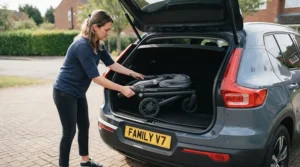
- Check the trunk and fold. Double-mode folds can be awkward and heavy.
- Verify the second seat’s availability and model year. This is the step that saves money.
Add-On Seat Compatibility: The Fine Print Behind Every Second Seat
Add-on seat compatibility is where well-meaning parents lose money, so check these three traps.
Model-Year Traps
The Baby Jogger City Select 2 story is the cautionary tale: buyers of the earlier City Select reported that the newer second seat kit didn’t fit. Always match your frame’s model year to the seat you buy.
Weight-Limit Mismatches
The UPPAbaby Vista V3‘s second seat tops out around 40 lb while the main seat reaches 50. The Cybex Gazelle S 2, by contrast, supports 50 lb per seat. Asymmetry means your older child must ride in the bigger seat.
Car Seat Adapters
The Bugaboo Donkey 6 sells car seat adapters separately, including a twin version. The Cybex Gazelle S 2 includes adapters for several brands. Neither is wrong, but the cost differs. For used frames, register products and verify recall status before attaching any seat.

Stroller Upgrade Path: Single Stroller With Add-On Option vs Buying a Double Later
A single stroller with add-on option gives you a built-in stroller upgrade path. The alternative is selling your single and buying a dedicated double.
| Option | Upfront Cost | Flexibility | Storage | Best For |
|---|---|---|---|---|
| Single with add-on seat | Moderate, then add seat | High: single or double | One frame | Planned second child |
| Dedicated double later | High at once | Low: always large | Bulky | Twins from day one |
| Keep single + cheap umbrella | Low | Limited | Two items | Short sibling gaps, tight budgets |
| Single with rider board | Moderate | Medium | Compact | Toddlers who walk part-time |
The add-on route wins on flexibility and resale simplicity, since you’re only adding a seat rather than replacing a stroller. A dedicated double later makes sense only if you’re sure you’ll never use the single mode again. If your older child already walks half the route, a rider board or umbrella stroller may be the cheapest answer.
✨ Ready to Plan Ahead?
🔍 Take your second-child planning to the next level with these carefully selected products. Click any highlighted product name to check current pricing and availability. These picks will help you build a stroller setup your family can grow into with confidence!
Future-Proof Single Stroller: Features That Actually Matter (And Those That Don’t)
A future-proof single stroller isn’t the one with the most buttons. It’s the one that still fits your life in year four.
Features That Matter
- Seat weight limits of 45-50 lb: these let the stroller survive past toddlerhood.
- Basket capacity: 22-33 lb baskets (Nuna DEMI Next, Bugaboo Donkey 6) matter for shopping with two kids.
- Fold size and weight: you’ll lift it hundreds of times.
- Smooth steering: Consumer Reports’ lab testing scores double strollers on ease of use and maneuverability while pushing a 40-lb child, which is a better yardstick than any marketing claim.
Features That Don’t
Configuration counts of “20+,” “23,” “25+,” or “44” sound impressive, but most households use three or four setups. Premium leatherette handlebars are nice, not necessary. And a gigantic canopy can’t compensate for a frame that won’t fit your trunk.
Long-Term Cost & Maintenance
The sticker price on the single is only chapter one. Add the second seat, adapters, a cot or bassinet, and a rain cover, and the total shifts.
| Setup | Typical Total as a Double | What You Add | Best For |
|---|---|---|---|
| UPPAbaby Vista V3 + RumbleSeat V3 | Roughly $1,200-$1,300 | Adapters, car seat | Ecosystem buyers |
| Cybex Gazelle S 2 + second seat | Roughly $1,200-$1,300 | Cot (optional) | Close-age siblings |
| Baby Jogger City Select 2 + seat kit | Roughly $875-$1,000 | Bassinet, car seat adapters | Twins |
| Bugaboo Donkey 6 + sibling seat | Highest of the group | Car seat adapters | Side-by-side fans |
| Mockingbird Single-to-Double 3.0 + second seat | Typically below premium (check current price) | Bassinet or infant insert | Budget-minded |
Looking at these totals, the Baby Jogger City Select 2 offers the lowest verified entry among the established options, while the Cybex Gazelle S 2 and UPPAbaby Vista V3 land close to each other. A hypothetical example: a $1,250 setup used daily across two children for five years costs less per use than replacing a single stroller with a double midway. Maintenance is modest: keep wheels clear of grit, wipe hinges, and check brakes monthly.
Safety, Regulations & Weight Limits
Stroller safety in the U.S. isn’t optional. Federal rules incorporate the ASTM F833 standard, covering stability, brakes, restraints, and latching. The CPSC’s final rule on carriages and strollers spells out how that standard became mandatory. Summaries of CPSC guidance note that the version enforced for products made after February 15, 2022 is ASTM F833-21.
For convertibles, three practical points stand out. First, never exceed per-seat weight limits, and remember that a second seat often has a lower cap. Second, use the five-point harness every time. Third, register your product and keep the manual, since durable infant products must include a registration card. If you buy a second seat secondhand, check the model year and recall status before attaching it. Safety standards set a baseline, not a guarantee that every stroller is equally good.

Frequently Asked Questions
❓ How much does a single-to-double stroller cost with the second seat?
❓ Can I add a second seat to my stroller later?
❓ Which single-to-double stroller has the highest weight limit per seat?
❓ Is a rider board enough instead of a second seat?
❓ Will a single-to-double stroller fit in my car trunk?
Conclusion
Here’s the bottom line. The right single-to-double stroller for growing families isn’t the fanciest or the cheapest. It’s the one whose width, weight limits, and add-on seat fit your doorways, your car, and your kids’ ages. The UPPAbaby Vista V3 rewards ecosystem loyalists. The Bugaboo Donkey 6 delivers equal side-by-side seating. The Cybex Gazelle S 2 pairs 50-lb seats with a narrow tandem. The Nuna DEMI Next includes a rider board, while the Mockingbird Single-to-Double 3.0 and Baby Jogger City Select 2 give you value and twin-friendly flexibility. The Baby Trend Morph covers the tightest budgets, with a weight penalty.
Before you buy, price the full double, confirm the second seat exists for your model year, and measure your tightest doorway. Do those three things and your stroller upgrade path will feel less like a gamble and more like a plan. 🚼
Recommended for You
- Twin Jogging Stroller For Infant Twins: 7 Safe Picks (2026)
- Twin Jogging Stroller Under $450: 7 Proven Picks 2026
- All-Terrain Twin Jogging Stroller For Trail Runs: 7 Proven Picks 2026
Disclaimer: This article contains affiliate links. As an Amazon Associate, I earn from qualifying purchases. If you purchase products through these links, we may earn a small commission at no additional cost to you.
✨ Found this helpful? Share it with your friends! 💬🤗
