
In This Article
Picture this: it’s 4:45 p.m., the baby is mid-meltdown, your toddler has decided that walking is a human-rights violation, and the only stroller you own seats exactly one person. Welcome to the problem a single-to-double stroller for close-in-age siblings was invented to solve.

When two kids land less than two years apart, you don’t get a graceful handoff from “baby phase” to “big kid phase.” You get overlap. A newborn who needs a lie-flat surface or a car seat, and a 20-month-old who needs somewhere to sit, snack, and complain. Buying a second full stroller feels wasteful, and strapping one kid to your chest while hauling the other is a cardio plan nobody asked for.
That’s the pitch for a single-to-double stroller for close-in-age siblings: start with one seat, then add a second when the family grows. The catch is that “convertible” means wildly different things from brand to brand. Some designs stack seats in a line. Some go side by side. Some bolt on a full second seat, while others only offer a standing board.
So this guide does the sorting for you. You’ll find seven real options, a plain-English breakdown of seat weight limits, and some honest sibling age gap planning, all built on published specs and aggregated review themes. Think of the history of baby transport as a long march from clunky prams toward exactly this kind of modular design. If you want a stroller for siblings under 2 years apart, you’re in the right place.
Quick Comparison: Best Single-to-Double Strollers for Close-in-Age Siblings
| Stroller | Layout | Seat Limit (Main / Second) | Price Range* | Best For |
|---|---|---|---|---|
| UPPAbaby Vista V3 + RumbleSeat V3 | Tandem | About 50 lb / 40 lb | $1,200-$1,700 | Premium all-rounder |
| Bugaboo Donkey 6 Duo | Side-by-side | About 48 lb / 48 lb (22 kg each) | $1,800-$2,300 | Equal seating, tight storage |
| Baby Jogger City Select 2 | Tandem, flexible | 45 lb / 45 lb | $750-$950 | Maximum seating configurations |
| Mockingbird Single-to-Double 3.0 | Tandem | 50 lb single / 45 lb each in double | $600-$900 | Value-minded families |
| Nuna DEMI next + Sibling Seat | Tandem | Check model; sibling seat up to 50 lb | $1,200-$1,700 | Smooth ride, easy seat install |
| Graco Ready2Grow LX 2.0 | Tandem | Front 50 lb / rear 40 lb (verify in manual) | $230-$330 | Tight budgets |
| Lascal BuggyBoard Maxi+ | Ride-on board | Rider up to 66 lb | $110-$130 | Toddlers who like to stand or sit |
*Ranges are approximate, based on research in October 2026. Check current prices before you buy.
Looking at the table, the Graco Ready2Grow LX 2.0 is the clear budget play, while the UPPAbaby Vista V3 and Bugaboo Donkey 6 sit at the premium end for a reason: build quality and long-term flexibility. The Mockingbird Single-to-Double 3.0 splits the difference with a lower price than the luxury brands and a real second seat. And the Lascal BuggyBoard Maxi+ isn’t a convertible at all, but for a toddler who’d rather stand, it’s the cheapest “second seat” on the list.
💬 Just one click — help others make better buying decisions too!😊
Top 7 Single-to-Double Strollers for Close-in-Age Siblings: Expert Analysis
1. UPPAbaby Vista V3 — most flexible tandem for growing families
The UPPAbaby Vista V3 earns its reputation by being a frame that keeps saying “yes.” Add the RumbleSeat V3 and you have a tandem double that handles a bassinet or car seat up top and a toddler below, or two toddler seats in whatever arrangement your kids tolerate.
The numbers matter here. The RumbleSeat V3 is rated to 40 lb, weighs about 8.4 lb on its own, and works with Vista models back to 2015. It reclines, faces forward or toward you, and swaps in a mesh liner for summer. The main seat’s limit is roughly 50 lb per UPPAbaby’s published specs; confirm in the manual for your model year.
On paper, that 40 lb ceiling covers most kids until around age 3 or a bit beyond, which comfortably spans the typical gap window. Reviewer chatter is mostly positive about the frame feel and easy attachment, though some parents note the RumbleSeat V3 runs smaller than the main seat, so a tall toddler may outgrow it first. If you expect a long stroller career across two or three kids, this is the tank.
Pros:
- ✅ Huge range of seat and car seat combinations
- ✅ Second seat attaches with large, intuitive hubs
- ✅ Backward-compatible with Vista frames from 2015
Cons:
- ❌ Second seat is smaller than the main seat
- ❌ Premium price before you add the second seat
Price range: roughly $1,200-$1,700 for the frame plus second seat. Worth it if you plan on keeping it for years.
2. Bugaboo Donkey 6 — side-by-side seating that fits through doors
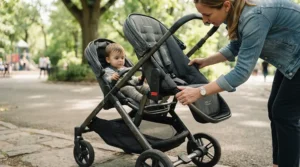
If tandem strollers feel like a bus with a bad turning radius, the Bugaboo Donkey 6 offers a different philosophy. Add the Duo extension set and both kids sit side by side, each with the same seat and the same view. That means no “back seat” resentment, which anyone with close-in-age siblings knows is a real thing.
The sibling seat takes children from 6 months up to 22 kg (about 48 lb), matching the main seat, per Bugaboo-linked product listings. Seats reverse, recline with one hand, and the system converts to the double in “three clicks,” according to retailer descriptions. One UK listing puts the fully assembled duo at about 32 lb with seats, and cites a roomy underseat basket that carries up to 15 kg.
What the spec sheet won’t tell you, but reviewers note, is that side-by-side layouts feel far less nimble in tight store aisles than a tandem. Bugaboo’s German product copy says even the Duo width clears standard doors, which is a relevant claim to verify with your own door measurements. For a stroller for siblings under 2 years apart, equal seating is the standout feature.
Pros:
- ✅ Identical seats for both kids
- ✅ Both seats reverse and recline independently
- ✅ Large underseat storage basket
Cons:
- ❌ Costs the most on this list
- ❌ Wider footprint than any tandem
Price range: complete Duo setups have been listed around $1,800-$2,300. Pricey, but built to last.
3. Baby Jogger City Select 2 — the shape-shifter for sibling seating
The Baby Jogger City Select 2 is the stroller equivalent of a Swiss Army knife with opinions. Its seats can face you, face the world, face each other, or sit back to back. For two kids who either adore or ignore each other depending on the hour, that’s practical, not gimmicky.
At about 26.4 lb as a single, it’s lighter than earlier City Select models, and each seat is rated to 45 lb (90 lb combined). The second seat kit includes mounting brackets, an extended UV 50+ canopy, and a reclining seat with rotating calf support. Many infant car seats work via adapters.
Here’s the real-world catch: reviewers point out the City Select 2 won’t fold as a double. You have to remove the second seat first. If you’re loading and unloading a trunk solo with a baby on your arm, that extra step is not nothing. One retail reviewer also wished the second seat’s height and weight limits were higher, which fits the 45 lb ceiling.
Pros:
- ✅ Seats rotate into many sibling configurations
- ✅ Matching 45 lb limit on both seats
- ✅ Second seat clicks on with brackets
Cons:
- ❌ Must remove second seat to fold
- ❌ Seat limit trails premium rivals
Price range: roughly $750-$950 for the complete double. Strong value if configuration flexibility matters.
4. Mockingbird Single-to-Double 3.0 — value pick with a real second seat
The Mockingbird Single-to-Double 3.0 takes a direct-to-consumer approach, which is how the brand keeps pricing below the luxury names. It starts as a single and becomes a double with the 2nd Seat Kit (sold separately), and it can accommodate a riding board for a third child.
Specs worth noting: the single weighs about 28 lb, the double about 36 lb. The single seat holds up to 50 lb, while each seat in double mode holds up to 45 lb. The optional riding board tops out at 55 lb for children roughly 3 to 5, with a minimum height of 26 inches. The seat reclines through five positions and has a ventilated canopy system.
Aggregated reviews skew positive on smooth pushing as a double, with common comments calling it a little bulky or heavy. One independent write-up describes it as best on sidewalks. At least one detailed parent review raised stability concerns in two-seat mode, so avoid hanging bags on the handle and follow the manual’s loading guidance.
Pros:
- ✅ Lower price than most premium convertibles
- ✅ Tool-free attachments swap quickly
- ✅ Riding board option for a third child
Cons:
- ❌ Bulkier than some tandems
- ❌ Second seat sold separately
Price range: roughly $600-$900 depending on the bundle. Good value, so long as you’re mostly a sidewalk family.
5. Nuna DEMI next — smooth ride with a no-adapter sibling seat
The Nuna DEMI next system is built around the idea that adding a second kid shouldn’t require a weekend of manual-reading. The sibling seat installs in the lower basket area with no adapters, and a retailer listing rates it to 50 lb, with four one-hand recline positions and adjustable calf support.
A few details matter more than they look. The seat has a quick-release 3-to-5-point harness and a no-rethread system, so adjusting for a squirmy 18-month-old takes seconds instead of minutes. A UPF 50+ canopy and rain cover come included. Worth double-checking: the older Nuna DEMI Grow’s second seat is listed at 15 kg (about 33 lb) in some markets, so confirm which model and year you’re actually buying.
I couldn’t verify a meaningful pool of independent reviews specific to the sibling seat, so treat this one as spec-driven rather than review-proven. Based on the specs, it suits parents who want a polished, relatively simple add-on for a toddler who’ll sit in the lower seat.
Pros:
- ✅ Sibling seat installs without adapters
- ✅ Four easy one-hand recline positions
- ✅ Rain cover included with the seat
Cons:
- ❌ Older DEMI Grow seat has a lower limit
- ❌ Sibling seat adds a notable cost
Price range: frame plus sibling seat roughly $1,200-$1,700. Premium, with a polished feel.
6. Graco Ready2Grow LX 2.0 — cheapest real double for newborn plus toddler
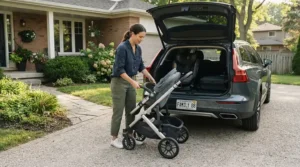
Not everyone has a thousand dollars earmarked for strollers. The Graco Ready2Grow LX 2.0 gives you an inline double that “rides like a double but folds like a single” (Graco’s own framing), accepts two Graco infant car seats, and costs a fraction of the luxury brands.
Here’s where the details get interesting. Retail listings put the front seat at 50 lb and the rear at 40 lb, though one roundup cites a lower 35 lb limit on the upper seat, so verify against the manual. Weight is listed anywhere from 26 to 32 lb depending on source; Graco’s comparison chart lists 32 lb. Remove the rear seat and you get a bench seat plus standing platform for an older sibling.
Independent testing from BabyGearLab flagged below-average maneuverability and a below-average score for weight and folded size, which fits the longer wheelbase. If your world is mostly car trips and sidewalks, that’s tolerable. If it’s cramped apartment lobbies, think twice.
Pros:
- ✅ Lowest price among true doubles
- ✅ Bench seat and standing platform options
- ✅ Works with all Graco infant car seats
Cons:
- ❌ Long wheelbase hurts maneuverability
- ❌ Bulky and heavy when folded
Price range: around $230-$330, depending on the version. Excellent value if you accept the size.
7. Lascal BuggyBoard Maxi+ — the single stroller add-on seat for toddler
The Lascal BuggyBoard Maxi+ is the odd one out, and that’s the point. It’s a ride-on platform that clips to a stroller you already own, turning a single into a quick-convert double stroller for the price of a nice dinner.
The Lascal BuggyBoard Maxi+ supports riders up to 66 lb, weighs about 6.4 lb, and is recommended from age 2 and up. Universal connectors reportedly fit more than 95% of stroller models, and the Maxi+ adds a foldaway saddle so a tired toddler can sit instead of stand. Additional connector kits let you move one board between strollers.
The honest analysis: a board is ideal for a sturdy, walking-age toddler, but it doesn’t help a 14-month-old who can’t hold on. That makes it a better fit for gaps of roughly two to three years than for the tightest ones. Retailer listings show strong ratings, though I wasn’t able to verify the review pool in depth.
Pros:
- ✅ Fits most strollers you already own
- ✅ Foldaway saddle for tired toddlers
- ✅ Moves between strollers with extra connectors
Cons:
- ❌ Not suitable for very young toddlers
- ❌ Fully exposed to weather
Price range: roughly $110-$130. The cheapest entry point to a double setup.
What Is a Single-to-Double Stroller for Close-in-Age Siblings?
A single-to-double stroller for close-in-age siblings is a stroller that starts with one seat and expands to carry two children, typically a baby and a toddler, using a second seat kit, extension set, or add-on board. It’s designed for families whose kids are less than two or three years apart, so both need a ride at once.

How to Choose a Single-to-Double Stroller for Close-in-Age Siblings
- Check both seats’ weight limits. The second seat is often rated lower than the main one, and your toddler will use it first.
- Decide on layout. Tandem fits through narrow spaces; side-by-side keeps kids equal and eye-to-eye.
- Measure your trunk and doorways. A stroller that doesn’t fit your car or entry is a very expensive coat rack.
- Confirm car seat compatibility. Most need adapters; confirm your infant seat works before buying.
- Test the fold. Some doubles must lose the second seat first, which matters when you’re juggling a baby.
- Match the second seat to your child’s age. A 12-month-old and a 3-year-old need different support.
- Price the whole system. Frame, second seat, adapters, and basket together are the real number.
Seat Weight Limits: What the Numbers Really Mean
Seat weight limits are the single most misread line on any spec sheet. A stroller might brag about 90 lb total capacity, but the number that matters is what each seat can hold, because your kids won’t split the load evenly. Here’s how the limits compare across this list.
| Stroller | Main Seat | Second Seat | Notes |
|---|---|---|---|
| UPPAbaby Vista V3 | About 50 lb | 40 lb (RumbleSeat V3) | Second seat runs smaller |
| Bugaboo Donkey 6 | About 48 lb | About 48 lb | Matched seats |
| Baby Jogger City Select 2 | 45 lb | 45 lb | Matched, 90 lb total |
| Mockingbird Single-to-Double 3.0 | 50 lb (single) | 45 lb each in double | Board up to 55 lb |
| Nuna DEMI next | Verify per model | Up to 50 lb | Older Grow seat lower |
| Graco Ready2Grow LX 2.0 | 50 lb | 40 lb (verify) | One roundup says 35 lb |
| Lascal BuggyBoard Maxi+ | N/A | 66 lb rider | Ages 2 and up |
Read it in practical terms: most seat limits land in the 40 to 50 lb range, which covers roughly a three-to-four-year-old. The real traps are the lower-limit seats, like the RumbleSeat V3 and the rear Graco Ready2Grow LX 2.0 seat, which will cap out sooner. If your older child is tall or heavy, choose matched seats like the Bugaboo Donkey 6 or Baby Jogger City Select 2. And since limits vary by model year, always read the manual rather than a retailer blurb.
Sibling Age Gap Planning: Matching Your Stroller to Your Timeline
Sibling age gap planning sounds clinical, but it’s really about one question: what will each child weigh, and what can they do, on the day you need the second seat?
For rough orientation, a 6-month-old typically sits around the mid-teens in pounds, and many 2-year-olds land in the high 20s. By 3, a lot of kids are around the low 30s. These are ballpark figures, not predictions, and every child differs.
- Gap under 12 months: Your older child is still a baby. You need two seats that recline, or a double with car seat capacity. Skip ride-on boards entirely.
- Gap of 12 to 24 months: The sweet spot for a full second seat. A stroller for siblings under 2 years apart should handle a toddler in one seat and a newborn in the other.
- Gap of 24 to 36 months: Now an add-on seat or board becomes viable, because your older child may want to walk part of the way.
Plan the second seat for the child who’ll ride longer, not the one who’s newest. If the older sibling is closer to the weight cap, pick matched seats. And consider where you are in the life of the stroller: a toddler who weighs 35 lb at age three is going to outgrow a 40 lb seat faster than you think.
Real-World Scenarios: Which Stroller Fits Which Family?
Here are three profiles showing how the analysis plays out.
The city apartment family. Two kids, 16 months apart, a walk-up with a small lobby, and a car they rarely use. A tandem like the Baby Jogger City Select 2 is easier to thread through narrow aisles than a wide side-by-side. Budget: moderate. Frequency: daily short trips. The seat rotation helps when the toddler wants to face the baby.
The suburban errand-runners. Kids 20 months apart, a minivan, and weekly big-box trips. Here the Graco Ready2Grow LX 2.0 stretches the budget, and its car-seat compatibility saves buying adapters. Accept the bulk, since the trunk handles it. Budget: tight.
The long-haul planners. Two kids now, maybe a third later, and willingness to invest. The UPPAbaby Vista V3 or Bugaboo Donkey 6 makes sense because both are built for multiple children and strong resale. Budget: high, spread over years, which helps the cost-per-use math.
Quick-Convert Double Stroller: A Practical Setup and 30-Day Guide
A quick-convert double stroller is only quick if you’ve practiced. Here’s a simple routine.
Before baby arrives. Attach the second seat once at home, in daylight, with no one crying. Check that brakes still lock and the frame stands stable. Registration cards matter, so register the stroller with the manufacturer for safety alerts.
First two weeks. Practice folding with and without the second seat. For models like the Baby Jogger City Select 2, remember the seat has to come off first. Time yourself; if it takes more than a minute, rehearse.
Days 15 to 30. Test your load. Keep bags in the basket, not on the handlebar, and watch how the stroller behaves going over curbs with both seats occupied. Common first-month mistakes include forgetting to relock adapters and assuming car seat adapters are included (they often aren’t).
If you rely on a single stroller add-on seat for toddler use, check the connection every outing. A rattle or looseness is your cue to re-seat it.
Single Stroller Add-On Seat for Toddler vs. Full Second Seat vs. Ride-On Board
| Option | Best For | Typical Weight Limit | Main Trade-Off |
|---|---|---|---|
| Full second seat (e.g., RumbleSeat V3) | Toddlers who nap or need a harness | 40-50 lb | Higher cost, more bulk |
| Dedicated sibling seat (e.g., Nuna DEMI next sibling seat) | Daily use, long outings | Up to 50 lb | Costs notable money |
| Ride-on board (Lascal BuggyBoard Maxi+) | Walking-age toddlers | 66 lb | No harness, exposed |
The key difference is containment. A seat with a five-point harness keeps a sleepy two-year-old safe and asleep; a board relies on the child holding on. For a single stroller add-on seat for toddler use, the Lascal BuggyBoard Maxi+ wins on cost and storage, while a full seat wins when naps or long trips are involved. If your kids are under two apart, lean toward a real seat.
Stroller for Siblings Under 2 Years Apart: Side-by-Side or Tandem?
Tandem strollers, like the UPPAbaby Vista V3 and Baby Jogger City Select 2, stack seats front and back. They’re slimmer, which helps in doorways, and they’re generally easier to push through crowded spaces. The downside: the child in back gets a worse view, and weight sits unevenly.
Side-by-side strollers, like the Bugaboo Donkey 6, give both kids equal seating and equal views, which tends to reduce squabbles. They take more width, though, and can be tougher in cramped spots.
Here’s the decision shortcut. If you live where doorways and aisles are tight, go tandem. If your kids are close enough to bicker over seats and you’ve got room, go side-by-side. Either way, confirm the stroller lets the older child see out and the baby recline fully. For a stroller for siblings under 2 years apart, comfort for both children beats clever features.
Common Mistakes When Buying a Double Stroller
- Ignoring the second seat’s limit. It’s often lower than the main seat.
- Skipping car seat adapters. They’re frequently sold separately.
- Buying for the baby, not the toddler. The older child will use the stroller longer.
- Forgetting the fold. Some models can’t fold with both seats attached.
- Overloading the handlebar. Hanging bags can tip the stroller, a point the American Academy of Pediatrics stresses in its stroller safety guidance.
Price Range and Value Analysis
| Setup | Approximate Range | Cost-Per-Year Logic |
|---|---|---|
| Graco Ready2Grow LX 2.0 | $230-$330 | Lowest upfront, shorter lifespan |
| Mockingbird Single-to-Double 3.0 | $600-$900 | Mid-range, good value |
| Baby Jogger City Select 2 | $750-$950 | Balanced |
| UPPAbaby Vista V3 + second seat | $1,200-$1,700 | High, strong resale |
| Nuna DEMI next + sibling seat | $1,200-$1,700 | High, polished |
| Bugaboo Donkey 6 Duo | $1,800-$2,300 | Highest, long-term |
Spread over two or three children and several years, the premium strollers narrow the gap with budget models, especially if you resell. But if this is your last baby and you’ll use the stroller for two years, the Graco Ready2Grow LX 2.0 or Mockingbird Single-to-Double 3.0 likely deliver better value. Total cost of ownership also includes adapters, rain covers, and maybe a Lascal BuggyBoard Maxi+ for later years, so price the whole system, not just the sticker.
Safety and Regulations: What to Check Before You Buy
In the U.S., strollers fall under a federal safety standard administered by the Consumer Product Safety Commission, which is built on the ASTM F833 voluntary standard. That standard covers things like tip-over, collapse, and sharp edges, and strollers must state the maximum weight of the intended user.
Practically, that means the label and manual are your final authority on seat weight limits, not marketing copy. Look for a five-point harness, brakes that lock, and a stable base. Always buckle both children, even for short trips, and never leave either unattended.

FAQ
❓ How long does it take to switch a quick-convert double stroller?
❓ What's the best option if my kids are 14 months apart?
❓ Do the second seat and main seat share the same weight limit?
❓ Is a ride-on board safe for a two-year-old?
❓ When should I buy the second seat?
Conclusion
Choosing a single-to-double stroller for close-in-age siblings comes down to three honest questions: how old will each child be when you need two seats, how much can you spend, and how tight is your daily terrain? Answer those, and the field narrows fast.
If you want maximum flexibility and plan to keep going, the UPPAbaby Vista V3 and Bugaboo Donkey 6 are the long-haul picks. If you want configurable seating without the luxury price, the Baby Jogger City Select 2 and Mockingbird Single-to-Double 3.0 hold up well. The Nuna DEMI next adds a polished sibling seat for families who value a smooth setup. And for tight budgets, the Graco Ready2Grow LX 2.0 is hard to beat, while the Lascal BuggyBoard Maxi+ is the clever add-on for a walking-age toddler.
Don’t skip the unglamorous homework either: read the seat weight limits, do your sibling age gap planning, and practice the conversion before the baby arrives. A stroller for siblings under 2 years apart should save your sanity, not test it.
Recommended for You
- Single-To-Double Stroller Under $300: 7 Smart Picks For 2026
- Single-to-Double Stroller For Growing Families: 7 Best Picks 2026
- Twin Jogging Stroller For Infant Twins: 7 Safe Picks (2026)
Disclaimer: This article contains affiliate links. As an Amazon Associate, I earn from qualifying purchases. If you purchase products through these links, we may earn a small commission at no additional cost to you.
✨ Found this helpful? Share it with your friends! 💬🤗
