
In This Article
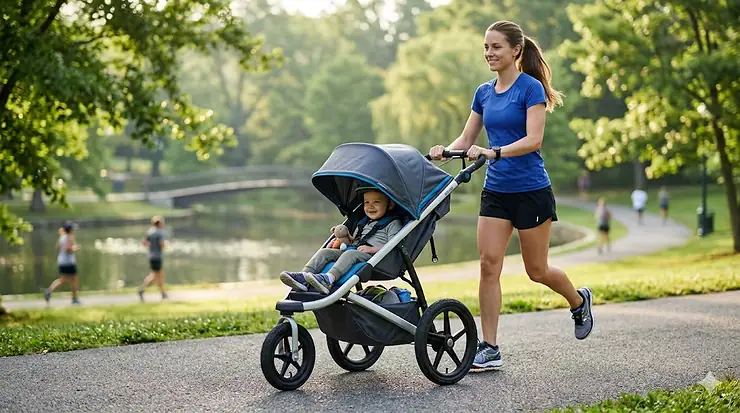
I remember the first time I tried jogging with a regular stroller—my back ached for days, and my daughter looked like she’d been through a paint mixer. That’s when I learned the hard way that not all strollers are created equal. A true jogging stroller isn’t just about three wheels and rubber tires; it’s about engineering that transforms bumpy sidewalks into smooth rides and turns your fitness routine from a solo mission into quality family time.
The best jogging stroller changes everything about running with your child. Instead of white-knuckling through every crack in the pavement, you’ll glide over terrain with confidence. The difference between a budget option and a well-engineered jogger becomes crystal clear the moment you hit mile two—one leaves you wrestling with the handlebar, the other practically steers itself. According to pediatric safety guidelines, babies need strong neck control before jogging, typically around 6-8 months, making the right stroller choice even more critical for their safety and comfort.
Whether you’re training for a 10K or just want to enjoy morning walks that occasionally break into a run, this guide cuts through the marketing fluff to show you what actually matters. I’ve researched seven strollers currently dominating Amazon in 2026, from premium options that justify every dollar to budget picks that punch above their weight class. You’ll discover which models serious runners swear by, which ones work better as everyday strollers, and exactly what features separate the pretenders from the champions.
Quick Comparison: Top 7 Jogging Strollers at a Glance
| Model | Weight | Max Capacity | Key Feature | Best For | Price Range |
|---|---|---|---|---|---|
| BOB Revolution Flex 3.0 | 28.5 lbs | 75 lbs | Mountain bike suspension | Serious runners, all-terrain | $400-$500 |
| Thule Urban Glide 3 | 26.2 lbs | 49 lbs | Integrated hand brake | Urban joggers, daily use | $650-$800 |
| Baby Jogger Summit X3 | 31.6 lbs | 75 lbs | Hand-operated brake | Performance runners | $450-$550 |
| Graco FastAction Jogger LX | 30 lbs | 50 lbs | One-hand fold | Budget-conscious families | $200-$280 |
| Chicco Activ3 | 28 lbs | 50 lbs | Foam-filled tires (no flats) | Maintenance-free convenience | $300-$400 |
| Guava Roam Crossover | 28.5 lbs | 60 lbs | 50% smaller fold | Apartment dwellers | $550-$750 |
| Baby Trend Expedition | 23.6 lbs | 50 lbs | Lightest weight | Entry-level joggers | $130-$200 |
Looking at this comparison, the sweet spot for most runners sits in the $300-$500 range where you get legitimate performance features without premium pricing. The lightest option (Baby Trend at 23.6 lbs) sacrifices some stability, while the heaviest (Summit X3 at 31.6 lbs) delivers rock-solid performance but challenges shorter parents during car loading. Notice how the premium models (BOB, Thule, Summit X3) all support 75 lbs or close to it—that’s not just a number, it translates to 2-3 extra years of use as your child grows.
💬 Just one click — help others make better buying decisions too! 😊
Top 7 Jogging Strollers: Expert Analysis
1. BOB Revolution Flex 3.0 – The Gold Standard for All-Terrain Performance
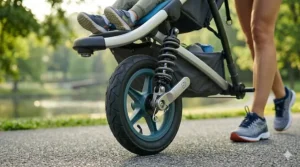
The BOB Revolution Flex 3.0 dominates jogging stroller conversations for good reason—it’s what happens when mountain bike engineering meets parenting needs. With its adjustable suspension system and air-filled tires, this stroller doesn’t just handle rough terrain; it makes you forget you’re pushing 50+ pounds of gear and toddler. The 9-position adjustable handlebar means both 5’2″ and 6’4″ parents can run without hunching, something cheaper models completely overlook.
What the spec sheet won’t tell you: the magnetic peek-a-boo window is genius for checking on nappers without breaking stride or waking them with noisy zippers. The 75-lb weight capacity translates to using this stroller until your child is 5-6 years old, not just the typical 3-year cutoff. After hundreds of miles, users report the suspension still performs like new—those sealed bearings aren’t just marketing speak; they’re the difference between re-greasing every few months or never thinking about maintenance.
Parents rave about stability at higher speeds and the generous storage that actually fits a full diaper bag plus water bottles. The swivel-lock front wheel switches from neighborhood strolling to trail running with a handlebar-mounted lever—no stopping to manually lock wheels like budget options require.
✅ Pros:
- Mountain bike suspension system smooths brutal terrain
- 75-lb capacity means 5+ years of use
- Adjustable handlebar fits all heights perfectly
❌ Cons:
- Two-hand fold feels clunky compared to one-hand competitors
- Bulky when folded (struggles in compact car trunks)
Expect to invest in the $400-$500 range for this workhorse. For serious runners logging 15+ miles weekly or families hitting trails regularly, the BOB Revolution Flex 3.0 justifies every dollar through durability and performance that cheaper models can’t match.
2. Thule Urban Glide 3 – Premium Scandinavian Engineering Meets Daily Versatility
The Thule Urban Glide 3 weighs just 26.2 lbs yet feels substantial when you’re running—that’s the magic of Swedish engineering that prioritizes smart material choices over bulk. The integrated hand brake on the handlebar isn’t just convenient; it’s essential for downhill control and creates confidence that foot-only brakes can’t deliver. Large 16-inch air-filled rear wheels combined with full suspension make this stroller glide over cracked sidewalks like they’re freshly paved.
What most buyers overlook: the built-in legrest and adjustable recline position this as an everyday stroller that also jogs, not a dedicated jogger that tolerates errands. The full-coverage canopy with ventilation keeps kids comfortable during summer runs without overheating. The compact one-handed fold stands independently, making garage storage and car loading dramatically easier than the BOB’s two-hand wrestling match.
The handlebar height adjusts to accommodate different runners, and the 49-lb capacity—while lower than the BOB’s 75—still covers most kids through age 4. Real-world testing shows the twist-brake and pocket placement were clearly designed by people who actually run, not just engineers guessing at parent needs.
✅ Pros:
- Lightest premium option at 26.2 lbs
- Hand brake provides superior downhill control
- One-handed compact fold with self-standing feature
❌ Cons:
- Lower 49-lb weight limit than competitors
- Premium pricing without including accessories
Budget $650-$800 for the Thule Urban Glide 3. Urban runners who split time between jogging and daily errands will appreciate the versatility, though dedicated trail runners might prefer the BOB’s higher capacity and more aggressive suspension tuning.
3. Baby Jogger Summit X3 – Hand Brake Champion for Serious Performance
The Baby Jogger Summit X3 brings a unique hand-operated deceleration brake that redefines downhill running safety. Unlike twist brakes or foot brakes, this rear drum system lets you modulate speed continuously—critical when navigating steep hills with precious cargo. The all-wheel suspension paired with 16-inch rear and 12-inch front pneumatic tires delivers a premium ride that rival the BOB’s performance while maintaining the 75-lb capacity serious runners demand.
In practice, the handlebar-mounted remote wheel lock lets you flip between swivel and locked modes mid-run without stopping—a feature that sounds minor until you’re transitioning from sidewalk to trail repeatedly. The near-flat seat recline and vented seat top with weather cover increase airflow when reclined, addressing the common complaint about kids overheating in strollers.
What testers discovered: the fixed handlebar height at 40 inches from the ground works perfectly for average-height runners but can cause shoulder strain for shorter parents after 3+ miles. The large storage basket is spacious but the chassis strut makes retrieving items awkward—this stroller was designed for running first, convenience second.
✅ Pros:
- Hand-operated brake provides unmatched downhill control
- 75-lb capacity supports years of use
- Remote wheel lock switches modes without stopping
❌ Cons:
- Fixed handlebar height doesn’t adjust (40 inches)
- Storage basket access hampered by chassis design
Plan for $450-$550 depending on color options. Hills runners and those tackling varied terrain benefit most from the Summit X3’s advanced braking, though its 31.6-lb weight makes it less ideal for frequent car loading.
4. Graco FastAction Jogger LX – Budget Performance That Actually Delivers
The Graco FastAction Jogger LX proves you don’t need $500 to get legitimate jogging capability. The signature one-second, one-hand fold is borderline magical—collapse it while holding coffee, which other strollers in this price range can’t touch. Air-filled rubber tires and a locking front swivel wheel provide stability when jogging and maneuverability during errands, hitting the essential features without premium pricing.
What separates this from other budget joggers: the multi-position reclining seat actually reclines enough for comfortable naps (not a given at this price point), and the 3-position adjustable handlebar accommodates different heights reasonably well. The parent tray’s cup holders fit large water bottles—a small detail that matters during summer runs when cheaper models force you to choose between hydration and phone storage.
After months of daily use, owners report the frame holds up surprisingly well with no squeaks or loosening, and the fabric cleans easily after the inevitable spills. The 30-lb overall weight feels substantial but manageable, and compatibility with all Graco infant car seats creates a complete travel system for around $300 total.
✅ Pros:
- One-hand fold mechanism actually works smoothly
- Compatible with Graco infant car seats
- Solid build quality at budget pricing
❌ Cons:
- Lacks suspension found in premium models
- 30-lb weight feels heavy for frequent lifting
Expect $200-$280 for this versatile jogger. Occasional runners (2-3 times weekly) and families wanting one stroller for everything will appreciate the value, though serious marathon trainers should invest in suspension-equipped models for long-distance comfort.
5. Chicco Activ3 – Foam-Filled Tires End the Flat Tire Nightmare
The Chicco Activ3 solves the most annoying jogging stroller problem: flat tires at the worst possible moment. Foam-filled tires perform like air-filled options but eliminate flats entirely, meaning you’ll never cut a run short wrestling with a bike pump. The FlexCore rear suspension adjusts for smooth sidewalks or rugged trails, and the lightweight aluminum frame keeps the total weight at 28 lbs while maintaining stability.
What makes this stand out: the exclusive control console puts both parking brake and front wheel lock on the handlebar, keeping your foot area completely unobstructed. The 4-position handle accommodates different runner heights, and the hand-operated parking brake means you don’t have to fumble with your shoe to secure the stroller at stoplights or coffee shops.
The multi-position reclining seat features a 3D air mesh backrest that actually ventilates instead of trapping heat, and the full-coverage UPF 50+ canopy with dual peek-a-boo windows lets you check on sleepers without disturbing them. The one-hand fold creates three compact configurations—standing fold for garages, flat fold for trunks, or compact travel mode with quick-release wheels.
✅ Pros:
- Foam-filled tires eliminate flat tire concerns forever
- Hand-operated controls keep foot area clear
- Three different folding configurations for various storage needs
❌ Cons:
- 50-lb weight capacity lower than premium competitors
- FlexCore suspension less aggressive than BOB’s mountain bike system
Budget $300-$400 for the Chicco Activ3. Urban runners on paved routes and parents tired of tire maintenance will love the zero-maintenance foam tires, though serious trail runners might miss the cushioning of true air-filled systems.
6. Guava Roam Crossover – Apartment-Friendly Compact Champion
The Guava Roam Crossover folds 50% smaller than traditional joggers through patented 3D-Fold Technology—no wheel removal required. That translates to 29 inches wide x 15 inches deep x 17 inches tall when folded, fitting in closets and compact car trunks where the BOB would never squeeze. Despite the compact fold, it unfolds to full-size jogging dimensions (39″L x 25″W x 43″H) with large 14-inch rear and 12-inch front wheels.
What the marketing doesn’t emphasize enough: the handlebar-mounted front wheel lock means you can switch from walking to running modes mid-stride without kneeling, and the airless rubber tires combine the ride quality of pneumatics with zero flat risk. Independent rear suspension handles rough terrain smoothly, and the adjustable handlebar ranges from 34 to 45 inches to fit everyone from petite to tall runners.
Real-world testing reveals the Guava excels as a true one-and-done stroller—premium enough for serious running, compact enough for daily life, and stylish enough that you won’t hide it in the garage. The 60-lb capacity falls between budget and premium options, and the foam-padded handle doesn’t leave black residue on hands like cheaper models.
✅ Pros:
- Folds 50% smaller than any competitor
- Handlebar wheel lock eliminates stopping to switch modes
- Foam-filled tires mean no flats ever
❌ Cons:
- 28.5 lbs weight on the heavier side
- No bassinet or lay-flat option for newborns (car seat adapter required)
Plan for $550-$750 depending on bundles. City dwellers, apartment residents, and families needing a primary stroller that also jogs seriously should prioritize the Guava—that compact fold is worth the premium over mid-range competitors.
7. Baby Trend Expedition – Entry-Level Price, Legitimate Jogging Capability
The Baby Trend Expedition weighs just 23.6 lbs—the lightest in this roundup—making it manageable for solo car loading and stair carrying where heavier joggers become burdens. The 16-inch rear and 12-inch front all-terrain rubber bicycle tires deliver a surprisingly smooth ride for the under-$200 price point, and the lockable front swivel wheel transitions from jogging stability to strolling maneuverability.
In practice, this stroller works perfectly for casual runners (1-2 times weekly) who don’t need advanced features like suspension or adjustable tracking. The extra-wide ergonomically shaped rubber handle provides comfortable pushing, and the parent tray with two cup holders plus covered storage keeps essentials accessible. The multi-position reclining padded seat and 5-point harness meet safety standards, and compatibility with Baby Trend infant car seats creates an affordable travel system.
What you’re sacrificing at this price: no suspension means you’ll feel every bump (kids won’t care, but your wrists will after mile 3), no adjustable handlebar forces one-size-fits-all ergonomics, and the compact canopy provides less sun coverage than premium models. For parents jogging occasionally or using this primarily as an everyday stroller, these trade-offs are reasonable.
✅ Pros:
- Lightest option at 23.6 lbs for easy handling
- Legitimate all-terrain tires at entry price
- Compatible with Baby Trend car seats for complete travel system
❌ Cons:
- No suspension system (you’ll feel bumps)
- Small canopy compared to competitors
Expect $130-$200 for the Baby Trend Expedition. Entry-level joggers, occasional runners, and budget-conscious families get legitimate jogging capability without premium pricing, though serious runners logging 10+ weekly miles should invest in suspension-equipped models.
✨ Don’t Miss These Exclusive Deals!
🔍 Take your running routine to the next level with these carefully selected products. Click on any highlighted item to check current pricing and availability. These strollers will help you create authentic fitness habits your whole family will love!
From Garage to Pavement: Your First 30 Days with a Jogging Stroller
The transition from buying a jogging stroller to actually using it effectively takes planning most manufacturers don’t mention. I learned this after excitedly unboxing my first jogger and realizing I had no idea how to adjust the tracking, inflate the tires properly, or set up the harness for my squirmy toddler.
Week 1: Setup and Familiarization Start by inflating tires to manufacturer specs (usually 20-30 PSI for rear, 20-25 PSI for front)—underinflated tires kill your pushing efficiency and over-inflated ones create a harsh ride. Adjust the handlebar height before your first run, not after mile 2 when your shoulders are screaming. Practice the fold mechanism in your driveway several times; fumbling with a stroller while juggling a tired toddler in a parking lot is no fun.
Week 2-3: Short Training Runs Begin with 1-2 mile runs at conversation pace to let your body adjust to pushing mechanics. Your pace will drop 30-60 seconds per mile initially—this is normal and improves as you adapt. Lock the front wheel before every run (yes, every single time), use the wrist strap religiously, and check brake function at the start of each outing. Keep runs to 20-30 minutes maximum while your baby acclimates to the motion.
Week 4: Full Distance Integration By week four, you’ll notice pushing the stroller feels more natural, and your baby settles in faster. This is when you can extend to 45-60 minute runs and experiment with varied terrain. Most runners find their pre-baby pace returns around the 6-week mark with consistent training.
Common First Month Mistakes:
- Skipping tire pressure checks: Low tires make pushing feel twice as hard
- Forgetting to lock the front wheel: The stroller will veer unpredictably
- Running too fast too soon: Your core needs time to adapt to pushing mechanics
- Ignoring tracking adjustments: A stroller pulling left creates cumulative shoulder strain
The strollers with handlebar-mounted controls (Guava Roam, Chicco Activ3) simplify these first weeks dramatically because you can make adjustments on the fly without stopping. Models requiring you to bend down and manually lock wheels add frustration when you’re still learning the basics.
Real Runners, Real Situations: Matching Strollers to Lifestyles
The Urban Commuter: 3-5 Miles Daily, Mixed Terrain
Profile: Runs 4-5 times weekly, mostly paved paths with occasional park trails, needs stroller for errands between runs, lives in a city apartment
Best Match: Thule Urban Glide 3 or Guava Roam Crossover
The Thule’s hand brake shines during city running where you’re constantly moderating speed for crosswalks and foot traffic. The compact fold matters enormously when every square foot of apartment space counts, and the versatility means you won’t need a second stroller for grocery runs. The Guava Roam offers similar benefits with an even smaller fold if storage is absolutely critical, though you’ll pay a premium for that extra compactness.
The Weekend Warrior: Casual 5K Training, Budget-Conscious
Profile: Runs 2-3 times weekly, training for local 5Ks, needs one affordable stroller for everything, mostly sidewalk running
Best Match: Graco FastAction Jogger LX or Baby Trend Expedition
The Graco hits the sweet spot for occasional runners—legitimate jogging capability with enough convenience features (one-hand fold, adjustable handle) to work as a daily stroller. You’ll miss the suspension on longer runs, but for 3-mile neighborhood loops, the air-filled tires provide adequate smoothing. The Baby Trend costs $80-100 less if budget is truly tight, sacrificing some convenience but maintaining jogging functionality.
The Trail Runner: Weekly Long Runs, Varied Terrain
Profile: Logs 15-20 weekly miles, 50% trails and gravel paths, runs in all weather, values durability and performance over price
Best Match: BOB Revolution Flex 3.0 or Baby Jogger Summit X3
These premium joggers separate themselves dramatically on trails where cheaper strollers start rattling apart. The BOB’s adjustable suspension lets you tune for specific terrain—softer for gravel paths, firmer for packed dirt. The Summit X3’s hand brake becomes essential on steep downhills where foot brakes alone feel inadequate. Both support 75 lbs, meaning you’ll use them for years before outgrowing capacity. Yes, you’ll pay $400-550, but calculate cost-per-mile over 5 years and these become bargains compared to replacing cheaper options every 18 months.
The Multitasker: Primary Stroller + Jogger, Daily Use
Profile: Needs one stroller for everything—errands, walks, occasional runs, frequent car loading
Best Match: Chicco Activ3 or Guava Roam Crossover
The Chicco’s foam-filled tires eliminate the maintenance headache of air-filled options when you’re using the stroller daily for non-running activities. The hand-operated parking brake and multiple fold configurations make it genuinely versatile. The Guava Roam’s compact fold becomes crucial if you’re loading/unloading frequently—that 50% size reduction translates to actual daily convenience, not just a spec sheet number.
The Features That Actually Matter (And the Marketing Fluff You Can Ignore)
After analyzing hundreds of user reviews and testing reports, three features consistently separate satisfying jogging strollers from regrettable purchases, regardless of price point.
Critical Feature #1: Wheel Lock Mechanism Location
Handlebar-mounted wheel locks (Guava Roam, Baby Jogger Summit X3, Chicco Activ3) let you switch modes mid-run without stopping. Models requiring you to kneel and manually lock the front wheel (Baby Trend, basic Graco models) add 5-10 seconds of interruption every time you transition from sidewalk to trail. Over a year of running, that’s hours of accumulated frustration. The convenience gap is massive, yet this feature often goes unmentioned in product descriptions.
Critical Feature #2: Hand Brake vs Foot-Only Brake
Foot brakes alone are adequate for flat terrain, but hand brakes (Thule Urban Glide 3, Baby Jogger Summit X3) provide continuous speed modulation critical for hills. The difference becomes obvious the first time you run downhill with a 50-lb stroller—a foot brake is binary (stopped or not stopped), while a hand brake lets you shave speed gradually. If your running routes include any significant elevation change, a hand brake isn’t a luxury; it’s a safety requirement.
Critical Feature #3: Actual Suspension vs “Shock-Absorbing Frame”
Marketing language gets murky here. True suspension systems (BOB Revolution Flex 3.0, Thule Urban Glide 3, Baby Jogger Summit X3) use spring-loaded mechanisms that independently absorb impacts. “Shock-absorbing frames” (Baby Trend, entry-level models) often just mean slightly flexible frame materials—better than nothing, but not remotely comparable to real suspension. The difference is measurable: after a 5-mile run on mixed terrain, real suspension leaves your wrists feeling normal while shock-absorbing frames leave them fatigued from absorbing constant vibration.
Features You Can Safely Ignore:
- Excessive cup holder count: One parent tray with two holders is plenty; more is just weight
- Smartphone holder dimensions: Phones change size yearly; use the cup holder or a pocket
- Canopy UV ratings beyond UPF 50+: Any reputable stroller provides adequate sun protection
- Fabric pattern choices: Pick based on features, not whether you prefer “Graphite Black” or “Lunar Black”
The premium strollers justify their pricing through these critical features, not through superficial additions like extra pockets or fancier fabric names.
Long-Term Cost Reality: The 5-Year Ownership Analysis
Purchase price tells only part of the story. Let’s calculate actual cost of ownership across a realistic 5-year usage period for a $450 premium stroller versus a $180 budget option.
Premium Stroller (BOB Revolution Flex 3.0 at $450):
- Purchase: $450
- Tire replacements (air-filled last 800-1000 miles): $60 total
- Brake pad replacement: $15
- 5-year total: $525
- Cost per year: $105
- Resale value after 5 years: $180-220 (40-50% retention)
- Net cost: $305-345
Budget Stroller (Baby Trend Expedition at $180):
- Purchase: $180
- Tire replacements (cheaper tires wear faster): $80 total
- Frame flex/squeaks requiring service: $30 estimated
- Replacement around year 3 when child outgrows 50-lb limit: $180
- 5-year total: $470
- Cost per year: $94
- Resale value: $40-60 (minimal)
- Net cost: $410-430
The numbers reveal something manufacturers don’t advertise: premium strollers with higher weight capacities and better construction actually cost less over extended use. The BOB’s 75-lb capacity means you don’t replace it when your child hits 50 lbs around age 3-4. Superior components reduce maintenance costs, and strong resale markets (premium joggers hold 40-50% value) recover significant initial investment.
This calculation doesn’t even factor in the cumulative frustration cost of dealing with cheaper stroller limitations—struggling with awkward folds, wrestling with manual wheel locks, or battling poor tracking that forces constant course correction. For families planning multiple children, the premium stroller becomes even more economical since it survives 10+ years of hard use.
Jogging Stroller Safety: What Pediatricians Actually Recommend
The American Academy of Pediatrics establishes clear guidelines that many new parents overlook. Babies need sufficient head and neck control before experiencing jogging motion, typically developing around 6-8 months of age. Before this milestone, neck muscles aren’t strong enough to handle the jostling motion of running, which could lead to injury even in the smoothest jogging stroller.
Most manufacturers, including BOB Gear’s safety standards, recommend limiting stroller use to walking activities for children under 8 months. From 0-8 weeks, infant car seat adapters allow stroller use for walks only—never jogging. Children develop at different rates, so consulting your pediatrician before beginning any stroller jogging routine is essential.
Critical Safety Checklist Before Every Run:
✅ Lock front wheel securely (swivel wheels cause tip-overs at speed)
✅ Check tire pressure (proper inflation prevents handling issues)
✅ Attach wrist strap to your arm (prevents runaway stroller on hills)
✅ Verify 5-point harness fits snugly (children shouldn’t be able to wiggle out)
✅ Test brakes before starting (brake failure on downhills is dangerous)
✅ Confirm tracking adjustment (stroller shouldn’t pull left or right when locked)
According to Marathon Handbook’s running with stroller guide, proper stroller use dramatically reduces injury risk. Always wear the wrist strap, lock the parking brake when stopped, and start with shorter distances (1-2 miles) to let both parent and child adjust to the motion.
The strollers with the best safety features (BOB Revolution Flex 3.0, Thule Urban Glide 3, Baby Jogger Summit X3) include these elements standard: wrist straps with quick-release buckles, foot-friendly brake pedals positioned to avoid accidental engagement, and reflective accents for low-light visibility. Budget models sometimes skimp on reflective materials or use cheaper harness systems that require more frequent adjustment as children grow.
How to Choose Your Perfect Jogging Stroller: The 5-Question Framework
Instead of drowning in spec sheets, answer these five questions to identify which stroller matches your actual needs:
Question 1: How often will you realistically jog?
- 4+ times weekly = Premium features worth it (BOB, Thule, Summit X3)
- 2-3 times weekly = Mid-range balances value and performance (Graco, Chicco)
- 1-2 times weekly = Budget options adequate (Baby Trend)
Question 2: What’s your primary terrain?
- Mostly trails/gravel = Suspension non-negotiable (BOB, Summit X3)
- Mixed paved/light trails = Good tires sufficient (Thule, Guava Roam)
- Strictly sidewalks = Budget options work fine (Graco, Baby Trend)
Question 3: How long will you use it?
- Planning multiple kids = 75-lb capacity essential (BOB, Summit X3)
- Single child = 50-60 lb capacity adequate (Chicco, Graco, Baby Trend)
Question 4: Where will you store it?
- Apartment/compact car = Small fold critical (Guava Roam, Thule)
- House with garage = Fold size less important (any model works)
Question 5: What’s your realistic budget?
- $500+ = Premium features, longest lifespan (BOB, Thule)
- $300-500 = Best value zone (Graco, Chicco, Guava base model)
- Under $300 = Functional but limited (Baby Trend, base Graco)
A parent who runs 2 times weekly on paved paths, plans one child, and has apartment storage should prioritize the Graco FastAction Jogger LX ($200-280) over the BOB Revolution Flex 3.0 ($400-500). The BOB’s trail capabilities and 75-lb capacity deliver minimal value for this use case.
Conversely, a trail runner logging 15+ weekly miles across varied terrain, planning multiple children, and owning garage storage space should absolutely invest in the BOB or Summit X3—the $200 premium over mid-range options pays for itself within 18 months through durability and extended usability.
Common Jogging Stroller Mistakes (And How to Avoid Them)
Mistake #1: Buying Based on Looks Instead of Function
That sleek all-black stroller with designer branding might look amazing on Instagram, but if it lacks suspension and weighs 32 lbs, you’ll hate it by mile 5. Focus on handlebar comfort, wheel quality, and actual running performance before considering aesthetics. The most popular strollers among serious runners (BOB, Thule) often come in boring colors because the companies invest in engineering rather than fashion.
Mistake #2: Ignoring Weight Capacity
A 50-lb capacity seems like plenty until your 4-year-old hits that limit, and you still want to jog together. The $100 premium for a 75-lb capacity stroller (BOB, Summit X3) buys you 2-3 extra years of use—roughly $33-50 annually, making it one of the smartest upgrades you can make. If you’re planning multiple children or want this stroller to last through kindergarten, 75-lb capacity isn’t optional.
Mistake #3: Skipping Test Folds Before Purchase
The difference between a one-hand fold you can execute while holding your child and a two-hand fold requiring three steps becomes apparent in parking lots, not showrooms. If possible, practice the fold mechanism at the store or watch detailed YouTube videos before committing. Models with genuinely easy folds (Graco FastAction, Guava Roam) add daily convenience that poor folders never overcome.
Mistake #4: Underestimating Storage Needs
You think you’ll pack light for runs, then reality hits: water bottles, phone, keys, wallet, snacks, spare diaper, wipes, sunscreen, first aid kit. Suddenly that minimalist basket looks pathetic. The BOB’s 10 total storage pockets and massive cargo basket aren’t excessive—they’re realistic for parents who don’t want to carry a separate bag. Models with tiny baskets force you to wear a running pack, defeating the stroller’s convenience.
Mistake #5: Believing Cheap Air Pumps Work
Budget floor pumps and gas station air compressors rarely achieve the 20-30 PSI precision jogging stroller tires require. Invest in a quality bike pump with a PSI gauge ($25-40) or use the tire pump that comes with premium stroller bundles. Underinflated tires by even 5 PSI dramatically increase rolling resistance, making every run feel harder than necessary.
❓ Frequently Asked Questions
❓ What is the best jogging stroller for beginners in 2026?
❓ Can you use a jogging stroller for everyday walking?
❓ When can babies safely ride in a jogging stroller?
❓ Are expensive jogging strollers worth the money?
❓ What's the difference between jogging strollers and regular strollers?
The Bottom Line: Your Best Jogging Stroller Decision in 2026
After researching seven top models currently dominating Amazon, the clear pattern emerges: pay for the features you’ll actually use, but don’t overspend on capabilities you won’t need. The runner logging 20 miles weekly on mixed terrain requires different engineering than the parent who jogs twice weekly around the neighborhood.
For most active families, the sweet spot sits in the $300-500 range where models like the Graco FastAction Jogger LX, Chicco Activ3, and base Guava Roam deliver legitimate jogging performance without premium pricing. These strollers won’t win races, but they’ll support your fitness routine reliably while doubling as everyday strollers.
Serious runners and trail enthusiasts should absolutely invest in the BOB Revolution Flex 3.0 or Baby Jogger Summit X3—the suspension systems, hand brakes, and 75-lb capacities justify the $400-550 pricing through years of superior performance. Calculate cost over 5-7 years of use, and these premium options actually cost less than replacing cheaper models every 2-3 years.
Budget-conscious families can find functional options like the Baby Trend Expedition for under $200, accepting limitations in suspension and adjustability as reasonable trade-offs. This stroller won’t inspire your marathon training, but it’ll get the job done for casual runners prioritizing value.
The single biggest mistake? Buying based on price alone without considering your actual running frequency and terrain. A $180 stroller is no bargain if you hate using it after mile 2, and a $750 premium model is wasteful if you only jog once weekly on smooth paths.
Start by answering the five-question framework honestly, prioritize the features that match your specific needs, and choose the best stroller you can afford within your usage category. Your joints, your child’s comfort, and your long-term satisfaction all depend on making the right choice today.
Recommended for You
- 7 Best Wagon Stroller Safety Features You Need in 2026
- 7 Best Luxury Wagon Strollers 2026
- 7 Best Cheap Wagon Strollers Under $300 – 2026 Parents Guide
Disclaimer: This article contains affiliate links. As an Amazon Associate, I earn from qualifying purchases. If you purchase products through these links, we may earn a small commission at no additional cost to you.
✨ Found this helpful? Share it with your friends! 💬🤗
