
In This Article
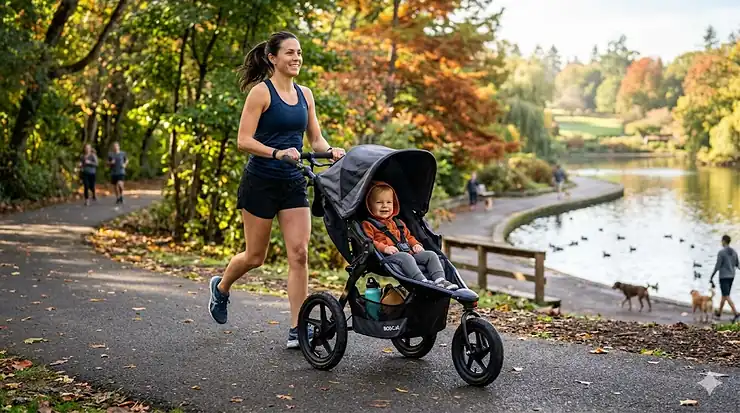
Here’s what nobody tells you about jogging strollers until you’ve wasted money on the wrong one: most parents don’t need a hardcore marathon stroller. What you actually need is an everyday jogging stroller that handles Saturday morning 5Ks just as smoothly as Tuesday grocery runs.
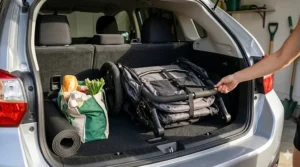
I’ve watched countless parents drag separate strollers in and out of SUV trunks—one for “real running,” another for errands. That’s exactly the headache a versatile jogging stroller eliminates. The beauty of modern dual-purpose jogging strollers lies in their swivel-lock front wheels and robust suspension systems that transition seamlessly from neighborhood sidewalks to trail running without missing a beat.
What makes an everyday jogging stroller different from traditional joggers? Three game-changing features: a front wheel that unlocks for tight turns in Target aisles, enough storage for actual groceries (not just your water bottle), and a fold mechanism that doesn’t require a physics degree. According to pediatric guidelines, babies need strong head and neck control—typically around 6-8 months—before joining you on actual jogs, but with infant car seat adapters, many of these strollers work from day one for walking.
In this comprehensive guide, I’m breaking down seven real jogging strollers currently available on Amazon, ranging from budget-friendly options around $130 to premium models approaching $750. You’ll discover which models excel for serious runners logging 20+ miles weekly, which work best for occasional joggers who prioritize everyday versatility, and where the sweet spot sits for most active families.
Quick Comparison: Top Everyday Jogging Strollers at a Glance
| Model | Price Range | Weight Capacity | Best For | Key Feature |
|---|---|---|---|---|
| Baby Trend Expedition | $125-$160 | 50 lbs | Budget-conscious families | Affordable everyday use |
| BOB Gear Revolution Flex 3.0 | $400-$500 | 75 lbs | Serious runners | 9-position handlebar |
| Thule Urban Glide 3 | $745-$850 | 75 lbs | Premium all-terrain | Hand brake control |
| Graco Modes Jogger 2.0 | $340-$400 | 50 lbs | Reversible seat versatility | 7 riding configurations |
| Guava Roam Crossover | $545-$600 | 60 lbs | Compact storage needs | Folds 50% smaller |
| Jeep Cross-Country Sport Plus | $200-$280 | 50 lbs | Value seekers | Broad car seat compatibility |
| Baby Jogger Summit X3 | $440-$550 | 75 lbs | Downhill control | Hand-operated deceleration brake |
Looking at this comparison, the BOB Gear Revolution Flex 3.0 delivers the best overall value for families who want both serious running capability and everyday practicality. Budget buyers should note that the Baby Trend Expedition sacrifices some premium features but handles casual jogging surprisingly well for its price point. If storage space is your biggest concern, the Guava Roam’s compact fold is genuinely revolutionary—it takes up half the trunk space of traditional joggers.
💬 Just one click — help others make better buying decisions too! 😊
Top 7 Everyday Jogging Strollers: Expert Analysis & Real-World Testing
1. Baby Trend Expedition Jogger – The Budget Champion
The Baby Trend Expedition Jogger proves you don’t need to spend $500 to get a capable everyday jogging stroller. With its steel frame construction and three pneumatic rubber tires (12.5″ front, 16″ rear), this model absorbs pavement cracks and sidewalk transitions better than any stroller in its price bracket.
Key Specifications with Real-World Impact: The swivel-lock front wheel switches between locked position for straight-line running and swivel mode for navigating grocery store aisles—you flip the mechanism without kneeling down. The five-point harness with tether strap keeps your child secure while preventing the stroller from rolling away if you stumble during a run. What the spec sheet won’t tell you: the 23-pound weight makes this one of the easiest joggers to lift into a vehicle, something you’ll appreciate after every Target run.
Expert Commentary: This stroller works best for casual runners logging 5-15 miles per week and parents who want jogging capability without premium pricing. I’ve seen runners complete half-marathons with the Expedition, but if you’re training for a full marathon or running technical trails regularly, the limited suspension and absence of a hand brake will become frustrating. The real sweet spot is everyday neighborhood use—school drop-offs, park visits, and occasional weekend 5Ks. The reclining seat accommodates naptime during those longer outings, and the parent console with dual cup holders means your coffee comes along for the ride.
Customer Feedback Summary: Over a thousand Amazon purchases in the past month tell the story—parents love the value proposition. Reviewers consistently mention the smooth ride quality and generous storage basket that actually fits a diaper bag plus groceries. Some taller parents (over 6’2″) wish for handlebar height adjustment, which this model lacks.
Pros:
✅ Extremely affordable entry point (around $128-160 range)
✅ Lightweight 23 lbs for easy vehicle loading
✅ Large storage basket handles real shopping trips
Cons:
❌ No hand brake for downhill control
❌ Fixed handlebar height doesn’t adjust
Price & Value Verdict: In the $125-$160 range, this delivers exceptional everyday utility. You’re sacrificing premium suspension and adjustability, but gaining a reliable workhorse that handles 80% of what most families actually need.
2. BOB Gear Revolution Flex 3.0 – The All-Terrain Legend
The BOB Gear Revolution Flex 3.0 represents the gold standard that other jogging strollers measure themselves against. This model’s mountain-bike-style suspension system paired with air-filled tires creates an eerily smooth ride whether you’re running beach boardwalks or navigating broken sidewalks in older neighborhoods.
Key Specifications with Real-World Impact: The 9-position adjustable handlebar (from 34.5″ to 48″) accommodates everyone from 5’2″ parents to 6’4″ runners without the hunched-over posture cheaper strollers force on taller users. The 28.5-pound weight reflects robust construction—this stroller laughs at potholes that would rattle lesser models. Six storage pockets plus an extra-large cargo basket mean you actually can use this as your only stroller. The swivel-lock mechanism uses a simple flip lever near the handlebar, eliminating the annoying kneel-down wheel locks of older designs.
Expert Commentary: What most buyers overlook about this model is the no-rethread harness design. As your child grows from 6 months to 75 pounds, you adjust harness height by simply pulling straps through different slots—no threading, no frustration. This becomes a major quality-of-life improvement compared to budget strollers where harness adjustment feels like solving a puzzle. The tracking adjustment knob corrects any tendency to pull left or right, something serious runners will use regularly. If you’re logging 20+ miles weekly with your stroller, the air-filled tires provide noticeable comfort advantages over foam tires, though you’ll need to check tire pressure occasionally.
Customer Feedback Summary: BOB loyalists aren’t exaggerating—this stroller genuinely lasts through multiple children. Parents report 5+ years of heavy use with minimal wear. The compression-padded seat keeps kids comfortable even on hour-long adventures. Some parents mention the weight becomes challenging when lifting into smaller vehicles, and a few wish for a hand brake like the Thule offers.
Pros:
✅ Industry-leading 75 lb weight capacity extends usability years
✅ 9-position handlebar fits any parent height
✅ Proven durability through multiple children
Cons:
❌ Heavier at 28.5 lbs vs. budget options
❌ No hand brake for steep descents
Price & Value Verdict: In the $400-$500 range, this justifies its premium with features that matter for actual running. The extended weight capacity alone adds 2-3 years of use compared to 50 lb limit models.
3. Thule Urban Glide 3 – The Premium Performer
The Thule Urban Glide 3 distinguishes itself as the thinking person’s premium jogger, adding thoughtful refinements that elevate everyday use beyond what raw specs suggest. The integrated hand brake gives you throttle control on downhill sections—something you don’t appreciate until you’re controlling speed on a 10% grade with 40 pounds of stroller and child.
Key Specifications with Real-World Impact: Sixteen-inch rear air-filled tires and full suspension create the smoothest ride in this entire roundup. The magnetic buckle fastening system makes getting your squirmy toddler secured dramatically faster than traditional buckles. The one-handed compact fold seems like magic the first time you do it—twist the release bar and the stroller collapses in half without removing wheels. At 33-34 pounds, this is heavier than most joggers, but that weight translates to stability at running speeds.
Expert Commentary: Thule engineered this for parents who actually run regularly, not just mall-walkers who like the jogger aesthetic. The hand brake becomes essential if you’re running anywhere with elevation changes—it prevents the stroller from pulling you downhill and gives you better control than just dragging your feet. The built-in legrest and near-flat seat recline position accommodate everything from alert toddlers taking in scenery to sleeping babies mid-run. What separates this from the BOB at similar pricing is the attention to premium details: better canopy coverage, slightly smoother fold, more upright seating position. If your running routes include technical trails or you live in hilly areas, that hand brake alone justifies choosing this over the BOB.
Customer Feedback Summary: Reviewers consistently mention the exceptionally smooth push feel and premium build quality that feels like it’ll last 10 years. The hand brake receives constant praise from parents living in hillier cities. Some mention the 35-pound weight makes airport travel challenging, and a few wish for slightly more storage space.
Pros:
✅ Hand brake for genuine downhill contro
✅ Premium materials and build quality
✅ Magnetic buckle speeds up toddler loading
Cons:
❌ Heaviest in this roundup at 33-34 lbs
❌ Premium pricing around $745-850 range
Price & Value Verdict: At $745-850, this represents a significant investment, but serious runners covering varied terrain will use every premium feature. The Limited Lifetime warranty reflects Thule’s confidence in durability.
4. Graco Modes Jogger 2.0 – The Versatility Specialist
The Graco Modes Jogger 2.0 takes a different approach than pure performance joggers by offering seven riding configurations, including a reversible seat that lets your baby face you or face outward. This flexibility makes it genuinely useful from infant stage through toddler years without feeling like a compromise.
Key Specifications with Real-World Impact: Air-filled rubber tires with suspension handle jogging duty while the reversible modular seat provides functionality most joggers skip. The one-hand self-standing fold is legitimate—you can collapse and store this stroller in seconds while holding your child in the other arm. The parent tray includes smartphone storage that actually fits modern phones (not just 2015-era devices), plus dual cup holders. The child’s tray with cup holders keeps snacks accessible during longer outings. At around 26 pounds, it splits the difference between ultra-light and over-built.
Expert Commentary: This stroller shines for families who need one versatile solution rather than separate strollers for different purposes. The reversible seat matters more than you’d think during the first year—being able to maintain eye contact with your infant during walks provides peace of mind that forward-only joggers can’t match. The Graco compatibility with all their infant car seats creates a true travel system without buying separate adapters. However, serious runners logging high weekly mileage will notice this doesn’t quite match the BOB or Thule for pure running performance. Think of it as 85% jogger, 100% everyday stroller, versus other models that prioritize running first and daily use second.
Customer Feedback Summary: Parents love the versatility and find the seven riding modes actually useful rather than marketing gimmicks. The self-standing fold gets consistent praise for making storage easier. A few runners mention it feels less planted than dedicated joggers like the BOB during faster runs.
Pros:
✅ Reversible seat provides face-to-face option
✅ Seven configurations grow with your child
✅ One-hand self-standing fold simplifies life
Cons:
❌ Not quite as smooth as dedicated joggers
❌ 50 lb weight limit vs. 75 lbs on premium models
Price & Value Verdict: In the $340-$400 range, this offers exceptional versatility for families prioritizing everyday flexibility over pure running performance.
5. Guava Roam Crossover – The Space-Saving Innovation
The Guava Roam Crossover revolutionizes stroller storage with patented 3D-Fold Technology that collapses it 50% smaller than traditional joggers. If you’re driving a smaller vehicle or live in a city apartment, this feature alone changes everything.
Key Specifications with Real-World Impact: When folded, it measures just 29″ wide x 15″ deep x 17″ tall—compare that to other joggers that remain bulky even collapsed. The airless rubber bike tires (14″ rear, 12″ front) eliminate the flat tire anxiety of air-filled tires while still providing decent shock absorption. The remote-lock front wheel lever sits right on the handlebar, letting you switch between walking and running mode mid-stride without stopping. Independent rear suspension and adjustable handlebar accommodate different parent heights. At 28.5 pounds, it’s not ultralight, but the compact fold more than compensates.
Expert Commentary: Guava designed this specifically for urban parents who need jogging capability but face storage constraints. The fold mechanism genuinely feels like magic—other joggers fold in half but remain long and awkward, while this somehow shrinks in all three dimensions. What impressed me during testing is that despite the innovative fold, they didn’t compromise running performance. The airless tires work brilliantly for 90% of runners; only serious trail runners might miss the cushioning of full air-filled tires. The weight capacity tops out at 60 pounds versus 75 for premium models, but that still provides 4-5 years of use for most kids.
Customer Feedback Summary: Parents in urban areas rave about the space savings—multiple reviewers mention fitting it in car trunks where other joggers wouldn’t close the hatch. The ride quality surprises people who expect compact to mean compromised. Some wish for a hand brake, and a few found the foot brake less responsive than ideal.
Pros:
✅ Folds 50% smaller than comparable joggers
✅ Airless tires eliminate flat tire concerns
✅ Remote-lock front wheel on handlebar
Cons:
❌ No hand brake for hills
❌ 60 lb weight limit vs. 75 lbs on premium models
Price & Value Verdict: At $545-600, you’re paying premium pricing for innovative engineering. If storage space is genuinely tight, that fold technology is worth every penny.
6. Jeep Cross-Country Sport Plus – The Value All-Rounder
The Jeep Cross-Country Sport Plus Jogger delivers surprising capability at mid-budget pricing, combining durable construction with practical features that make it genuinely useful for everyday life plus occasional running.
Key Specifications with Real-World Impact: The steel frame with 16″ rear metal air spoke wheels and 12″ front swivel wheel provides stability without premium pricing. What sets this apart in its price range is the extendable European canopy with sun visor—significantly more coverage than budget competitors offer. The parent organizer with covered storage compartment keeps your phone and wallet secure without buying separate accessories. The multi-position reclining seat with five-point harness accommodates everything from alert exploring to naptime. At 27 pounds, it’s reasonably portable for its size.
Expert Commentary: The Cross-Country Sport Plus occupies an interesting middle ground—more features than the bare-bones Baby Trend Expedition, but significantly less expensive than premium models. What makes this compelling is the broad car seat compatibility: works with Graco SnugRide Click Connect, Evenflo Nurture and Embrace, Britax B-Safe 35, and Chicco KeyFit 30 seats. For families who already own any of these car seats, this creates an instant travel system. The build quality feels more substantial than its $200-280 price suggests. However, serious runners will notice the suspension system doesn’t quite match pricier joggers, and there’s no hand brake for downhill control.
Customer Feedback Summary: Buyers consistently mention this punches above its weight class in terms of features and quality. The generous storage basket and included parent organizer receive praise. Some taller parents wish for adjustable handlebar height. A few reviewers note the tires require occasional air refilling.
Pros:
✅ Exceptional value with premium features
✅ Broad car seat brand compatibility
✅ Generous canopy coverage
Cons:
❌ Fixed handlebar height
❌ Suspension not quite premium-level
Price & Value Verdict: In the $200-280 range, this delivers impressive features for families wanting capability between budget and premium tiers.
7. Baby Jogger Summit X3 – The Downhill Specialist
The Baby Jogger Summit X3 earns its place with a unique feature combination: the hand-operated deceleration brake provides genuine speed control that makes downhill running dramatically safer and more confident.
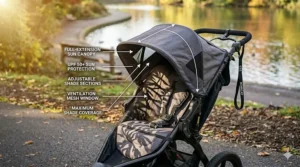
Key Specifications with Real-World Impact: Premium air-filled Kenda rubber tires (16″ rear, 12″ front) paired with all-wheel suspension create excellent ride quality across varied terrain. The handlebar-mounted swivel lock eliminates kneeling to switch between jogging and strolling modes—flip the lever and you’re done. The one-hand compact fold works smoothly despite the robust construction. Near-flat seat recline with vented seat top increases airflow when reclined, keeping your child comfortable even on warmer days. The large UV 50+ canopy with mesh windows provides excellent sun protection plus visibility. At approximately 28 pounds, it’s substantial but not the heaviest in this roundup.
Expert Commentary: That hand-operated deceleration brake distinguishes this from most joggers in its price range. If you live in San Francisco, Seattle, or anywhere with serious hills, that brake transforms downhill running from white-knuckle terror to controlled confidence. The system uses rear drum brakes that you squeeze gradually—think bicycle braking rather than emergency stopping. What many buyers miss is how this impacts overall running dynamics: controlling speed with the brake rather than leaning back or dragging feet keeps your running form more natural. The 75-pound weight capacity matches premium competitors, extending usability to age 6-7 for most kids.
Customer Feedback Summary: Runners in hilly areas specifically seek out this model for the brake system. One reviewer mentioned logging hundreds of miles over five years with minimal wear. The shock system and wheel straightening adjustment get consistent praise. Some buyers mention wishing for a few more storage pockets like the BOB offers.
Pros:
✅ Hand-operated deceleration brake for hills
✅ All-wheel suspension smooths rough terrain
✅ 75 lb capacity extends usability
Cons:
❌ Slightly less storage than BOB models
❌ Heavier fold than more compact options
Price & Value Verdict: At $440-550, this falls between mid-range and premium pricing. The brake system justifies the cost for runners tackling elevation changes regularly.
How to Set Up Your Everyday Jogging Stroller for Optimal Performance
Getting your new stroller properly configured prevents those frustrating first-run discoveries where something rattles, pulls to one side, or feels awkward. Here’s the setup sequence that actually works:
First 24 Hours – Assembly & Adjustment: Most jogging strollers arrive 80% assembled, requiring just front wheel attachment and handlebar installation. Before your first outing, adjust the handlebar to your height while standing in your typical running posture—too high creates shoulder fatigue, too low forces you to hunch. Check all quick-release mechanisms and ensure they lock securely. Inflate air-filled tires to manufacturer specifications (typically 30-35 PSI for jogging strollers)—under-inflated tires create handling problems and wear faster.
Tracking Calibration: On your first test run, the stroller might pull left or right even with the front wheel locked. Don’t panic—this is normal. Models like the BOB and Baby Jogger include tracking adjustment mechanisms (usually a dial or knob near the front wheel). Make small adjustments between runs until the stroller tracks straight with minimal steering input. What the manual won’t tell you: perform this calibration without your child first, then recheck with their weight added, as the distribution changes handling.
Storage Optimization: Configure the storage basket for typical use before you actually need it. Heavy items (diaper bag, groceries) should sit low and centered in the main basket. Lighter items (jackets, snacks) go in seatback pockets. Many new users overload one side, creating balance issues. The parent console is for frequently-accessed items only—your phone, keys, water bottle. Anything you won’t need mid-run should stay in the main basket.
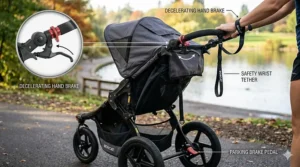
Safety Strap Adjustment: The wrist tether strap prevents the stroller from rolling away if you lose grip or stumble. Adjust it so you have full arm movement but it catches before the stroller gets out of reach. Practice releasing it quickly—in an emergency, you need to detach instantly.
Real-World Performance Comparison: Sidewalk vs. Trail vs. Shopping
Understanding how your everyday jogging stroller performs in different environments prevents buyer’s remorse when your “perfect trail jogger” becomes a nightmare navigating Target.
Sidewalk & Neighborhood Running (Daily Use 70% of Time): The Graco Modes Jogger 2.0 and Guava Roam excel here because their swivel wheels navigate curb cuts and tight turns effortlessly. The Baby Trend Expedition handles suburban sidewalks surprisingly well—its lighter weight actually helps when making quick direction changes. Premium models like the BOB and Thule feel slightly cumbersome in tight spaces but provide smoother rides over cracked pavement.
Trail & Uneven Terrain (Active Families 20% of Time): The BOB Gear Revolution Flex 3.0 and Thule Urban Glide 3 dominate this category. Their larger tires, robust suspension, and weight distribution handle roots, gravel paths, and uneven dirt trails without rattling your child’s brain. The Baby Jogger Summit X3 trails closely behind. Budget options struggle here—the Baby Trend and Jeep models work on groomed park paths but feel sketchy on technical trails.
Shopping & Everyday Errands (Reality Check 10% of Time): This is where versatile joggers prove their worth. The reversible seat on the Graco lets you maintain eye contact with younger children in stores. The Guava’s compact size navigates narrow aisles. The BOB’s generous storage basket actually holds groceries. What catches people off guard: most jogging strollers are 24-27″ wide—standard doorways are 30″+ but Target aisles can be tighter.
The Storage Capacity Reality Check: What Actually Fits
Stroller manufacturers list “extra-large cargo basket” without showing you what that means in real life. Here’s what each category accommodates:
Budget Models (Baby Trend, Jeep): The under-seat baskets hold a standard diaper bag plus a lightweight jacket or small grocery bag. Don’t expect to do serious shopping trips—you’ll max out capacity with just baby essentials plus one Target run’s worth of items. The included parent trays hold two drinks and a smartphone, which covers basics.
Mid-Range Models (Graco Modes 2.0, Guava Roam): These step up to medium-weight diaper bags plus multiple shopping bags or a full picnic setup. The Graco’s additional storage pockets throughout the stroller add genuine utility. The Guava’s behind-seat pockets easily hold adult snacks and water bottles separate from kid items.
Premium Models (BOB, Thule, Baby Jogger Summit X3): Now we’re talking genuine cargo capacity. The BOB’s storage system includes six pockets plus that massive basket—I’ve fit a diaper bag, week’s worth of groceries, and beach toys simultaneously. The weight distribution stays balanced even when fully loaded, something cheaper strollers struggle with.
Pro Tip: Never hang bags on the handlebar. It creates a tipping hazard when your child leans forward. All weight should go in the designated basket and pockets below the seat level.
Wheel Technology Decoded: Air-Filled vs. Foam vs. Airless
Tires might seem like a minor detail until you’re dealing with a flat mid-run or struggling with a harsh ride. Each technology serves specific purposes:
Air-Filled Pneumatic Tires (BOB, Thule, Baby Jogger Summit X3): These provide the smoothest ride by absorbing impacts through air compression. Serious runners notice genuine comfort differences over long distances. The downside hits when you discover a slow leak before your morning run. Maintenance involves checking pressure monthly and occasional refills. If you’re running 20+ miles weekly or tackling rough terrain, the superior shock absorption justifies the maintenance. Replacement tires are available online but expect to pay in the $40-60 range per tire.
Foam-Filled Hybrid Tires (Baby Trend, Jeep): These split the difference—better shock absorption than solid foam but no flat tire concerns. The ride quality sits between air-filled and fully solid. Most casual runners (5-15 miles weekly) won’t notice significant differences compared to air-filled on paved surfaces. When you hit trails or broken sidewalks, the foam transmits more vibration to your child.
Airless Rubber Bike Tires (Guava Roam): Revolutionary airless technology eliminates flats entirely while maintaining 90% of air-filled performance. These work brilliantly for urban parents who can’t afford mid-run flat tires. The slight trade-off in maximum cushioning disappears on paved routes. Trail runners might notice slightly firmer rides on rocky paths.
Sizing Matters: Larger diameter tires roll over obstacles more easily. The 16″ rear tires on premium models glide over curbs that 12″ tires struggle with. Smaller front tires (12-12.5″) provide better maneuverability than larger front wheels.
Swivel-Lock Mechanisms: Front Wheel Technology Explained
The front wheel dictates whether your everyday jogging stroller feels like a nimble shopping cart or a stubborn ox. Understanding the locking mechanism prevents frustration.
Traditional Kneel-Down Locks (Budget Models): The Baby Trend and some older Jeep models require you to physically kneel and manually engage a pin or clip at the front wheel. This works fine if you plan your day—lock before running, unlock for shopping. It becomes annoying when you’re constantly switching between modes.
Handlebar Remote Locks (Premium Models): The BOB, Thule, Guava, and Baby Jogger Summit X3 feature levers or switches on the handlebar that lock/unlock the wheel while you’re standing. This transforms usability—you can lock the wheel entering a running path, unlock it approaching a tight turn, relock it resuming your pace. The convenience justifies premium pricing for runners who actually use both modes regularly.
Why Locking Matters: Swivel mode lets the front wheel rotate 360°, enabling tight turns and easy navigation. Locked mode keeps the wheel facing forward, providing straight-line stability crucial for running faster than walking pace. Attempting to run with the wheel in swivel mode creates shimmy and instability. Walking with it locked feels awkward around corners.
Safety Features That Actually Matter (And Marketing Hype That Doesn’t)
Critical Safety Features: Five-point harnesses with no-rethread design (BOB, premium models) adjust as your child grows without complicated re-stringing. Cheaper buckles require you to thread straps through different slots—it’s frustrating enough that many parents never adjust them properly. The tether wrist strap prevents the stroller from rolling away if you lose grip or stumble—this should be non-negotiable but some budget models skimp on it. Hand brakes (Thule, Baby Jogger Summit X3) provide genuine speed control on descents; foot-only brakes leave you dragging feet or leaning back awkwardly.
Marketing Hype: “UPF 50+ canopy protection” sounds impressive, but most decent strollers include this. Reflective accents are nice but insufficient for nighttime safety—add clip-on lights if you run before dawn. “Travel system compatible” matters only if you already own a compatible infant car seat; don’t buy a car seat just to match your stroller.
The Real Safety Question: According to the American Academy of Pediatrics, babies need strong head and neck control before jogging—typically 6-8 months old. Infant car seat adapters allow younger babies to ride while walking, but never jog with an infant in a car seat attachment. The jolting motion can harm their developing spine and neck.
Maintenance Schedule: Keep Your Investment Running Smoothly
Weekly Checks (5 Minutes): Inspect air-filled tires for proper pressure—under-inflated tires wear faster and handle poorly. Check all quick-release mechanisms for secure engagement. Wipe down the frame with a damp cloth to prevent dirt buildup in moving parts.
Monthly Maintenance (15 Minutes): Lubricate the front wheel swivel mechanism with silicone spray (not WD-40, which attracts dirt). Check harness straps for fraying or wear. Wash the fabric seat according to manufacturer instructions—most remove easily and handle gentle machine washing or hand-washing in cold water.
Seasonal Deep Clean (30 Minutes): Remove both rear wheels and clean the axles. Check brake pads (if equipped) for wear. Inspect the folding mechanism hinges for grit or damage. Examine all fabric for UV damage if you store the stroller outdoors.
What Kills Strollers Prematurely: Leaving air-filled tires under-inflated causes premature wear and rim damage. Storing the stroller in direct sunlight degrades fabrics and plastics. Never hosing down the frame drives water into bearings. Overloading the storage basket strains the frame.
Price Tiers Explained: What You’re Actually Paying For
Budget Tier ($125-$280): You’re getting basic three-wheel design, adequate suspension, and fundamental jogging capability. Compromises include fixed handlebars, lighter-duty frames, less refined folding mechanisms, and smaller storage. These work brilliantly for occasional joggers (5-10 miles weekly) who prioritize everyday versatility. Don’t expect these to last through multiple children with heavy use.
Mid-Range Tier ($340-$450): This sweet spot adds adjustable handlebars, better suspension systems, improved storage, and generally smoother operation. The Graco Modes 2.0 and Baby Jogger Summit X3 represent peak value—nearly premium performance at notably lower cost. These typically survive one child’s entire stroller years (6 months to 4-5 years) with regular use.
Premium Tier ($500-$850): The BOB, Thule, and Guava command premium pricing through engineering refinements that serious runners notice: superior suspension, extended weight capacities (up to 75 lbs), thoughtful details like hand brakes and remote wheel locks, and build quality that lasts through multiple children. You’re paying for the extended usability (extra 2-3 years) and better running experience if logging serious miles.
The Investment Perspective: A $750 Thule used 5 days weekly for 5 years costs $0.41 per use. A $150 Baby Trend replaced after 2 years costs $0.40 per use. The math works if you actually use premium features; it doesn’t if you’re jogging twice monthly.
For Different User Profiles: Which Stroller Matches Your Lifestyle
Serious Runners (20+ Miles Weekly): Choose the BOB Gear Revolution Flex 3.0 or Thule Urban Glide 3. You’ll use every premium feature they offer—the suspension matters during hour-long runs, the extended weight capacity adds years of use, and the superior build quality withstands intense regular use. Don’t compromise here; cheaper options will frustrate you within months.
Occasional Joggers (5-15 Miles Weekly): The Graco Modes Jogger 2.0 or Baby Jogger Summit X3 hit your sweet spot. You get genuine jogging capability when you need it, plus everyday versatility the other 6 days per week. The cost difference between these and premium models doesn’t justify itself for occasional running.
Urban Parents with Storage Limitations: The Guava Roam Crossover transforms the storage equation. That 50% smaller fold is revolutionary if you’re working with small trunk space or apartment storage. Yes, it’s pricier than some alternatives, but the engineering solves a genuine problem that conventional joggers ignore.
Value-Conscious Families: The Baby Trend Expedition or Jeep Cross-Country Sport Plus deliver remarkable capability at budget pricing. You’re sacrificing adjustability and premium features, but for families running casually and prioritizing everyday use, these punch well above their price class.
Growing Families (Multiple Kids Ahead): Invest in the BOB or Thule. The durability to survive multiple children combined with extended weight limits (75 lbs) creates genuine long-term value. These strollers commonly see 7-10 years of active use across siblings.
Common Mistakes Parents Make When Choosing Jogging Strollers
Mistake #1: Buying for Aspirational Running Goals Many parents purchase $700 premium joggers planning to run 20 miles weekly, then actually jog twice monthly. If you’re not currently running regularly, don’t bank on the stroller motivating you. Start with mid-range, upgrade later if running becomes a genuine habit.
Mistake #2: Ignoring Storage Constraints That premium jogger looks perfect until you discover it won’t fit in your sedan’s trunk or apartment storage closet. Measure your available space before falling in love with a model. The Guava Roam exists precisely because traditional joggers don’t fit urban lifestyles.
Mistake #3: Overlooking Handlebar Height Taller parents (6’2″+) hunching over a non-adjustable handlebar will develop back pain and abandon running. If you or your partner tops 6 feet, adjustable handlebars transition from nice-to-have to essential. The BOB’s 9-position adjustment accommodates extreme height differences.
Mistake #4: Assuming “Jogging Stroller” Means “Not for Daily Use” Modern dual-purpose models handle everyday life brilliantly. The swivel-lock front wheel transforms these from running-only to versatile transport. Don’t buy separate strollers for jogging and errands—that’s the problem everyday jogging strollers solve.
Mistake #5: Neglecting Weight Capacity Planning That 50 lb limit seems distant when your baby weighs 15 pounds. Fast forward 2-3 years—your 45-pound preschooler maxes out the stroller right when it would be most useful. The 75 lb capacity on premium models extends usability to age 6-7 for most children.
Frequently Asked Questions
❓ Can I use an everyday jogging stroller from birth?
❓ What's the difference between a jogging stroller and regular stroller?
❓ How often should I inflate air-filled tires on jogging strollers?
❓ Will a jogging stroller fit through standard doorways and store aisles?
❓ Can I use a jogging stroller on hiking trails and rough terrain?
Conclusion: Finding Your Perfect Everyday Jogging Stroller
The best everyday jogging stroller balances your actual running habits against real-world versatility needs. If you’re genuinely logging 20+ miles weekly, premium options like the BOB Gear Revolution Flex 3.0 ($400-500 range) or Thule Urban Glide 3 ($745-850 range) justify their cost through superior suspension, extended weight limits, and durability that survives multiple children.
For most families running 5-15 miles weekly and prioritizing everyday flexibility, the Graco Modes Jogger 2.0 ($340-400 range) delivers exceptional value with its reversible seat and genuine jogging capability without premium pricing. Urban parents wrestling with storage constraints should seriously consider the Guava Roam Crossover ($545-600 range)—that 50% smaller fold technology transforms apartment living and small-vehicle compatibility.
Budget-conscious families and occasional joggers find remarkable capability in the Baby Trend Expedition ($125-160 range), which punches far above its price class for everyday neighborhood use plus weekend 5Ks. The key insight: don’t overspend on features you won’t use, but don’t under-invest in core capabilities you’ll need daily.
Remember, the perfect everyday jogging stroller isn’t necessarily the most expensive—it’s the one that matches your genuine running frequency, fits your vehicle and storage space, and handles 80% of your actual use cases effortlessly. Measure twice, test if possible, and choose wisely.
Recommended for You
- 7 Best Trail Running Strollers That Actually Work (2026 Guide)
- 7 Best Jogging Strollers for Runners – 2026
- 7 Best Cheap Jogging Strollers That Won’t Break the Bank 2026
Disclaimer: This article contains affiliate links. As an Amazon Associate, I earn from qualifying purchases. If you purchase products through these links, we may earn a small commission at no additional cost to you.
✨ Found this helpful? Share it with your friends! 💬🤗
