
In This Article
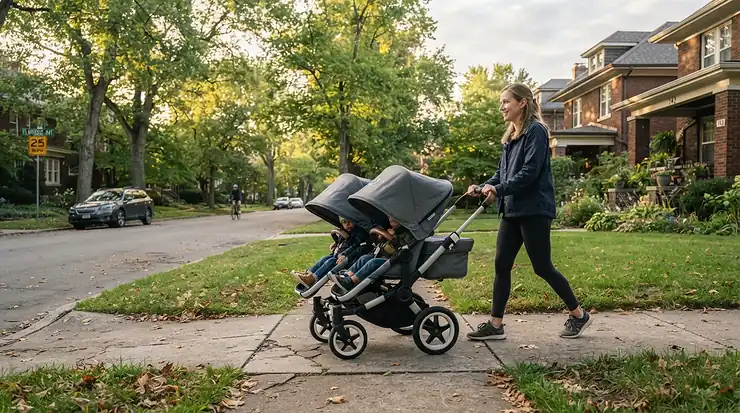
Bringing two newborns home changes math you didn’t know you’d have to do — two feeding schedules, two nap windows, and, very quickly, two car seats that both need to leave the car at the same time. That’s the exact moment most parents start Googling an infant twin stroller with car seat adapters, usually from a hospital parking lot or a pediatrician’s waiting room. Twin births have actually been declining for roughly a decade after peaking around 2014, but that’s cold comfort when you’re the family holding two carriers and one set of hands. What is an infant twin stroller with car seat adapters? It’s a double stroller frame that uses brand-specific hardware to click one or two rear-facing infant car seats directly onto the chassis, letting you move a sleeping baby from car to sidewalk without waking either one. Some strollers build this in for free; others need a separate accessory purchase, and picking wrong means discovering — mid-parking-lot — that your car seat simply won’t click into the frame you bought. This guide breaks down seven real, currently sold models across budget, mid-range, and premium tiers, with honest analysis of what the spec sheets actually mean for two babies riding together.

Quick Comparison Table
Before the deep dives, here’s the fast version for parents who need an answer before the coffee gets cold.
| Stroller | Layout | Adapter Needed? | Best For |
|---|---|---|---|
| Chicco Cortina Together | Tandem | No (direct click-in) | Budget twin families using Chicco seats |
| Graco Ready2Grow 2.0 | Tandem | No (direct click-in) | Growing families wanting long-term flexibility |
| Contours Curve V2 | Tandem, 360° turning | Yes, sold separately | Multi-brand car seat households |
| Baby Jogger City Mini GT2 Double | Side-by-side | Included in box | All-terrain daily strolling |
| BOB Gear Revolution Flex 3.0 Duallie | Side-by-side, jogging | Yes, sold separately | Active parents who run or hike |
| UPPAbaby Vista V3 + RumbleSeat V3 | Modular, in-line | No for Mesa/Aria seats | Premium buyers wanting years of use |
| Bugaboo Donkey 5 | Convertible single-to-double | Yes, sold separately | Families who may only have one child needing a seat now |
Looking at the table, the split really comes down to whether you’d rather pay more upfront for a stroller that already does everything (Baby Jogger, UPPAbaby) or pay less initially and add a compatible car seat adapter stroller accessory later (Contours, BOB, Bugaboo). Direct-click models like the Chicco and Graco remove a shopping step entirely but lock you into their own car seat ecosystem, while adapter-based systems from BOB and Bugaboo trade that convenience for cross-brand flexibility.
✨ Ready to see full specs? Scroll down for the complete breakdown of all 7 travel systems! 🍼
Top 7 Infant Twin Strollers With Car Seat Adapters: Expert Analysis
1. Chicco Cortina Together — no adapter needed for KeyFit seats
The standout here is simplicity: this is one of the few genuinely budget-friendly options that accepts two infant car seats without buying a single extra part. Chicco built the front seat to fold forward and the rear seat to recline flat, so both Chicco Cortina Together positions accept a KeyFit 30 or Fit2 seat through integrated click-in hardware rather than aftermarket brackets. Each seat holds a child up to 40 pounds, and the stroller itself weighs in around 34-35 pounds, which is reasonable for a full tandem frame with all-wheel suspension.
Based on the spec comparison, this is the strongest pick for parents who already own (or plan to buy) Chicco’s KeyFit line, since it removes the adapter-shopping step entirely — something dual car seat adapter stroller buyers on other brands still have to sort out. What most buyers overlook is that this convenience is also the catch: it doesn’t flex if you later receive a hand-me-down Graco or Nuna seat from a relative. Reviewers consistently report solid build quality and easy folding, with an aggregated rating hovering in the high 3-star range, and a recurring theme in feedback is that the canopy coverage could be deeper for sun protection.
Pros:
- ✅ Accepts two infant seats with zero adapter purchase
- ✅ One-hand standing fold saves trunk-loading hassle
- ✅ All-wheel suspension smooths out sidewalk cracks
Cons:
- ❌ Locked into the Chicco KeyFit/Fit2 ecosystem
- ❌ Canopy coverage runs shallower than pricier rivals
At around $350-$420 depending on colorway and retailer, the Chicco Cortina Together delivers the best straightforward value for twin parents already committed to Chicco’s infant seat line.

2. Graco Ready2Grow 2.0 — accepts two Graco infant seats directly
The standout advantage is modularity: this stroller rides as a full double but folds down to nearly single-stroller size, and it’s one of the very few frames on the market built to click in two Graco Click Connect infant seats simultaneously without adapters. The front seat holds up to 50 pounds and the rear holds 40, so as your twins grow past car-seat age, the rear position converts into a bench seat or standing platform for an older sibling.
Here’s what to weigh: the trade-off for that flexibility is a narrower compatibility window, since the direct click-in only works with Graco’s own infant seat line, not third-party brands. Based on the spec comparison, this makes it an outstanding infant twin travel system for families who standardize on one car seat brand from day one, but a poor match if grandparents already gifted a Britax or Nuna seat. Reviewers consistently note that the stroller’s biggest real-world quirk is that the rear fold-down seat can’t be used simultaneously with a front-mounted infant car seat reclined all the way back — several parents specifically mention a toddler’s head bumping the reclined seat back in that configuration.
Pros:
- ✅ Fits two Graco infant seats without a separate adapter
- ✅ Converts to bench seat or standing platform later
- ✅ Rides like a double, folds nearly like a single
Cons:
- ❌ Only works with Graco’s own infant seat lineup
- ❌ Rear seat and reclined front infant seat can conflict
Priced in the $400-$480 range, the Graco Ready2Grow 2.0 is the modular budget pick for families planning ahead past the newborn stage.
3. Contours Curve V2 — 360-degree turning tandem
The standout feature is maneuverability: a six-wheel design gives this tandem stroller one-hand 360-degree turning and a curb-assist mechanism most side-by-side frames simply can’t match in tight aisles. As a dual car seat adapter stroller, the Curve V2 doesn’t come with built-in car-seat compatibility — instead, Contours sells brand-specific click-in adapter mechanism accessories separately, with options covering Chicco KeyFit/Fit2, Britax B-Safe, and a multi-brand universal adapter compatible with Baby Trend, Cybex, Evenflo, Graco, Maxi-Cosi, Orbit Baby, Peg Perego, and Safety 1st seats.
What most buyers overlook about this model is that the adapter system is exclusive to Contours’ own strollers — you can’t use a Contours adapter on a different stroller brand, and not every adapter fits every Contours model, so checking your exact model number before ordering matters more here than almost anywhere else in this guide. On paper this means better long-term flexibility than single-brand direct-click strollers, provided you’re willing to do the compatibility homework upfront. Aggregated feedback on the Curve V2 tends to praise the curb-climbing feature specifically, though the review pool for this model is smaller than the mainstream Graco and Chicco listings, so treat any star average here as a rough signal rather than a settled verdict.
Pros:
- ✅ One-hand 360-degree turning radius
- ✅ Curb-assist feature eases uneven sidewalks
- ✅ Wide multi-brand adapter options available
Cons:
- ❌ Car seat adapter sold separately, adds cost
- ❌ Adapter compatibility varies by exact model number
Expect a $480-$600 range once you add the correct adapter, positioning the Contours Curve V2 as the mid-tier pick for households juggling more than one car seat brand.
4. Baby Jogger City Mini GT2 Double — all-terrain with adapter included
The standout advantage is that the car seat adapter ships in the box rather than as an add-on purchase, making this one of the more complete out-of-the-gate infant twin travel systems in the mid-range tier. Each seat supports up to 50 pounds, and Baby Jogger built the compatibility list wide, covering Britax, Cybex, Graco, and Maxi-Cosi infant car seat brands — a meaningfully broader net than most competitors offer standard.
The spec sheet won’t tell you this, but the all-wheel suspension is what actually separates this from flatter-riding tandem models: it’s rated for gravel paths and grass, not just sidewalks, which matters if your neighborhood includes parks with unpaved trails. A certified child passenger safety technician quoted by Forbes called it a workhorse, noting it folds well, rolls on good wheels, and has stayed on the market this long for good reason. That kind of durability reputation is echoed across owner reviews, where the recurring praise is smooth handling over rough ground and a recurring complaint is the roughly 30-inch width, which won’t clear every standard doorway.
Pros:
- ✅ Car seat adapter included, no extra purchase
- ✅ Compatible with four major infant car seat brands
- ✅ All-terrain suspension handles grass and gravel
Cons:
- ❌ 30-inch width won’t fit every doorway
- ❌ Heavier to lift than lightweight umbrella doubles
At roughly $750-$900, the Baby Jogger City Mini GT2 Double earns its spot as the best all-around mid-range pick for daily errands and park trips alike.
5. BOB Gear Revolution Flex 3.0 Duallie — built for running with two
The standout feature is the running-specific engineering: mountain-bike-style suspension and air-filled tires make this the strongest choice in this list for parents who actually jog or hike with two kids rather than just stroll the block. Each seat holds up to 50 pounds for a combined 100-pound capacity, and BOB’s own literature states the infant car seat adapter mechanism, sold separately, pairs with BOB Gear, Britax, Chicco, Graco, and Peg Perego infant seats.
Here’s what to weigh before buying: BOB recommends against jogging with any child under 8 months regardless of car seat use, so if running is your actual motivation for buying, the adapter only buys you walking-pace mobility until your twins hit that developmental milestone. Based on the spec comparison, the 33-pound stroller weight sits mid-pack, and the near-flat recline plus one-handed adjustment genuinely helps with mid-run naps once jogging is cleared. Aggregated owner sentiment describes the stroller as well-built and easy to push even loaded with two children, though a recurring theme in reviews is that folding the frame feels heavier and more fiddly than the unfolding process.
Pros:
- ✅ All-terrain suspension built for running and trails
- ✅ 100-pound combined weight capacity across both seats
- ✅ Compatible with five major infant car seat brands
Cons:
- ❌ Car seat adapter sold as a separate accessory
- ❌ Folding the frame is heavier and less intuitive
Budget around $850-$950 for the stroller alone, plus roughly $50-70 for the adapter, making the BOB Gear Revolution Flex 3.0 Duallie the clear premium pick for active, outdoorsy twin parents.

6. UPPAbaby Vista V3 with RumbleSeat V3 — direct click-in for Mesa and Aria seats
The standout advantage is a genuinely adapter-free travel system, at least if you stick with UPPAbaby’s own infant car seats: Mesa and Aria models click straight onto the Vista V3 frame without any bracket purchase, while the RumbleSeat V3 attachment turns the single stroller into a true double. The RumbleSeat V3 holds a child up to 40 pounds, and the main Toddler Seat separately holds up to 50, giving this system unusually long usable life compared to strollers built strictly around infant seats.
What most buyers overlook is that “no adapter” only applies to UPPAbaby’s own car seat line — if your twins were gifted a Nuna, Cybex, or Chicco seat instead, you’re back to buying brand-specific adapters just like with any other system on this list. On paper, the modular design (bassinet, RumbleSeat, Toddler Seat, and optional Piggyback board) is what justifies the price for growing families rather than the car seat compatibility alone. Reviewers consistently praise the smooth, one-handed push even fully loaded with two children, and the most common criticism across owner feedback is simply the overall system weight once both seats and a full storage basket are in play.
Pros:
- ✅ Mesa/Aria infant seats click in with no adapter
- ✅ RumbleSeat and Toddler Seat both recline independently
- ✅ Modular system grows from newborn through toddler years
Cons:
- ❌ Full system weight adds up once fully loaded
- ❌ Non-UPPAbaby car seats still require a separate adapter
The full Vista V3 and RumbleSeat V3 bundle typically lands in the $1,100-$1,400 range, positioning it as the premium modular pick for families planning to use one system for years.
7. Bugaboo Donkey 5 — the only convertible single-to-double on this list
The standout feature is transformation: this is the rare stroller that starts as a single frame and expands sideways into a genuine side-by-side double stroller in a few clicks, which matters if your twins arrived while you already owned the single-child Bugaboo Donkey. Each seat in the twin configuration holds up to 48 pounds, and the manufacturer’s twin infant car seat adapter mechanism is rated for children up to roughly 28.7 pounds, compatible with car seats including the Nuna Pipa series, Cybex Cloud Q and Cloud Z, and Maxi-Cosi’s Pebble and Mico lines.
Based on the spec comparison, the mono-versus-twin adapter distinction is the detail most buyers overlook: a mono adapter handles one car seat for a parent with a toddler and a newborn, while the twin adapter is the one actually required for two infants riding side by side, and pricing them separately from the stroller frame catches some shoppers off guard. What the spec sheet won’t tell you, but reviewers note, is that the horizontal single-to-double conversion mechanism, while genuinely clever, adds real bulk and weight compared to strollers built as doubles from the start. Owner sentiment across retailer listings tends to split along expected lines: strong praise for the flexibility and ride quality, paired with comments about the cumulative cost once the frame, second seat, and twin adapter are all purchased together.
Pros:
- ✅ Converts from single to true side-by-side double
- ✅ Compatible with Nuna, Cybex, and Maxi-Cosi infant seats
- ✅ Independent reversible, reclinable seats for each child
Cons:
- ❌ Twin adapter and second seat are separate purchases
- ❌ Total system cost climbs quickly once fully configured
All-in pricing often lands north of $1,700 and can climb past $2,000 with the twin adapter and second seat included, making the Bugaboo Donkey 5 the top-tier splurge for families who value long-term convertibility over sticker price.
Practical Usage Guide: Mastering the Click-In Adapter Mechanism
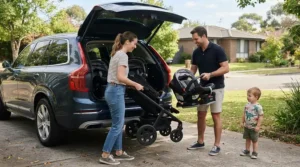
Getting the click-in adapter mechanism right on the first try saves you from the most common early frustration twin parents report: a car seat that seems secure but isn’t actually locked. Start by confirming your exact stroller model number before ordering any adapter — as the Contours and Bugaboo examples above show, adapters are frequently model-specific, not just brand-specific, and a mismatched part will either not fit at all or fit loosely enough to feel unsafe. Once the correct adapter arrives, snap it onto the stroller frame first, listening and feeling for two audible clicks on most systems (one per side), before ever placing the car seat itself into the brackets.
A common first-30-days mistake is skipping the tug test: after seating the car seat onto the adapter, grip the carrier handle and pull upward firmly. It should not lift, rock, or shift — if it does, the adapter isn’t fully seated and needs to be reattached. Maintenance-wise, adapter hinges collect stroller-basket debris and sidewalk grit over time, so a quick wipe-down every few weeks keeps the click mechanism from feeling sticky or requiring extra force. One optimization trick many new parents don’t discover for months: practicing the click-in and release motion at home, with an empty seat, before your first real outing removes the fumbling that otherwise happens curbside with a fussy newborn watching.
Real-World Scenarios: Which Twin Travel System Fits Your Family?
Different family situations point toward genuinely different picks, and the “best” infant twin stroller with car seat adapters really depends on your specific routine. Consider a few common profiles.
If you’re a first-time twin parent living in a walk-up apartment with tight hallways, the Contours Curve V2‘s 360-degree turning radius and curb-assist feature solve a daily problem that side-by-side strollers can’t — squeezing through narrow building corridors without three-point turns. If you’re an active parent who ran half-marathons before pregnancy and wants to get back to it, the BOB Gear Revolution Flex 3.0 Duallie is built specifically for that use case, though the adapter only unlocks walking-pace mobility until your twins clear the 8-month jogging threshold. And if you’re a budget-conscious family bringing home twins on one income while a toddler waits at home, the Graco Ready2Grow 2.0‘s bench-seat conversion means the same stroller serves your newborns now and your older child later, without buying a second stroller down the line.
A fourth profile worth naming: grandparents or a nanny who’ll be pushing the stroller as often as the parents. In that case, weight and one-handed folding matter more than terrain capability, which tips the scales toward the Chicco Cortina Together‘s standing, one-hand fold over bulkier all-terrain frames.
How to Choose an Infant Twin Stroller With Car Seat Adapters
Picking the right system comes down to a handful of decision points, roughly in this order of importance.
- Confirm your car seat brand first. Adapter availability is the single biggest constraint, so check compatibility before falling in love with a stroller’s looks.
- Decide side-by-side versus tandem. Side-by-side gives both babies equal visibility; tandem clears narrower doorways and hallways.
- Weigh direct click-in versus adapter-based systems. Direct click-in (Chicco, Graco, UPPAbaby’s own seats) skips a purchase but locks you into one brand.
- Check the combined weight capacity. Twins grow at the same pace, so both seats hitting their limit simultaneously is common — don’t just check one seat’s rating.
- Test the fold in-store if possible. A stroller you can’t lift into your trunk one-handed becomes a daily source of friction.
- Factor in total system cost, not sticker price. Adapters, second seats, and accessories can add several hundred dollars beyond the base frame.
- Read the manufacturer’s minimum-age guidance. Jogging, off-road use, and even basic walking often carry different age thresholds than the car seat compatibility alone suggests.
Working through these criteria in order — brand compatibility, layout, adapter model, weight limits, foldability, total cost, and age guidance — filters the seven options above down to two or three realistic finalists for most households fairly quickly.
Infant Car Seat Brands Compatibility Explained
One of the more confusing parts of shopping for a twin travel system for twins is realizing that “compatible” rarely means universal. Infant car seat brands compatibility works through a licensing and hardware-matching relationship between the stroller manufacturer and specific car seat models, not a general industry standard. Graco’s Click Connect system, for instance, only clicks into strollers explicitly built or adapted for it; a Chicco KeyFit 30 needs Chicco-specific brackets even when riding in a completely different stroller brand.
Because rear-facing infant seats are designed for babies who can sit safely in a semi-reclined position, with smaller preemies sometimes needing extra hospital screening before travel, matching the right seat shell to your stroller’s adapter geometry isn’t just a convenience question — it affects how securely the whole system holds together. As a rule of thumb: Chicco, Graco, and UPPAbaby all offer at least one direct click-in twin stroller option within their own ecosystems, while Britax, Nuna, Cybex, and Maxi-Cosi infant seats more commonly pair with third-party or manufacturer adapters sold separately, as seen with the BOB and Bugaboo systems above. Before buying either the stroller or the car seat, cross-reference the exact model numbers on the manufacturer’s own compatibility chart — model refreshes (a “V2” versus original, for example) frequently break compatibility that existed on a previous generation.
Common Mistakes When Buying a Dual Car Seat Adapter Stroller
The most expensive mistake twin parents make is buying the stroller and car seats separately, from different research sessions, without checking cross-compatibility until the adapter box arrives. A dual car seat adapter stroller purchase should always start with the car seat, not the stroller, since car seat safety features (rear-facing angle, side-impact protection) matter more for daily use than stroller aesthetics.
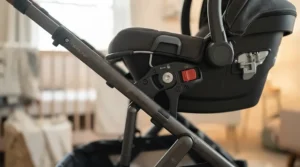
A second common error is assuming one adapter fits both stroller seat positions identically. As the UPPAbaby example shows, upper and lower position adapters are frequently different parts entirely, and using the wrong one can mean a seat that looks installed but isn’t rated for it. A third mistake, especially with tandem models like the Contours Curve or Chicco Cortina, is forgetting to test how the stroller folds with both infant seats attached — some frames fold fine empty but require removing both car seats first, which defeats the point of a quick, one-handed exit from the car. Finally, many parents skip reading the minimum-age and jogging restrictions entirely, discovering only after purchase that “compatible with an infant car seat” doesn’t mean “cleared for running,” a distinction BOB and similar jogging strollers spell out but buyers often skim past.
Side-by-Side vs Tandem: Which Twin Stroller Layout Wins?
There’s no universal answer here — it genuinely depends on your doorways, sidewalks, and parenting style. Side-by-side strollers, like the Baby Jogger City Mini GT2 Double and BOB Revolution Flex 3.0 Duallie, give both twins equal visibility and equal distance from the parent, which many caregivers find emotionally important in the early months. The trade-off is width: most side-by-side doubles run 28-31 inches wide, which can be genuinely too wide for older apartment buildings, narrow store aisles, and some bus doors.
Tandem strollers, like the Chicco Cortina Together, Graco Ready2Grow 2.0, and Contours Curve V2, stack seats front-to-back instead, clearing any standard doorway without a second thought. The compromise is that one child — usually the rear seat occupant — sits further from the parent and often has a partially obstructed view forward. For families in dense urban housing or anyone who’ll be navigating narrow hallways daily, tandem wins on pure practicality. For families with wider homes, driveway parking, and a priority on both twins feeling equally “in the conversation” during walks, side-by-side is worth the extra doorway planning.
Long-Term Cost & Safety Compliance for Your Travel System for Twins
Sticker price is only the beginning of what a twin travel system actually costs. Beyond the stroller and any separate adapters, budget for a second infant car seat base for a second vehicle, replacement canopy or seat liner fabric as twins outgrow the newborn insert, and eventually a bench seat or toddler seat upgrade once the infant seats are retired. Because the federal stroller safety standard incorporates ASTM International’s voluntary specification and specifically addresses hazards like broken wheels, parking brake failures, and structural stability, it’s worth checking that any stroller — new or secondhand — still meets current requirements, since older hand-me-down frames predating 2015 may not.
Total cost of ownership varies dramatically by tier: budget direct click-in systems like the Chicco Cortina Together or Graco Ready2Grow 2.0 typically stay under $500 all-in since no adapter purchase is needed, while adapter-based mid-range systems land in the $500-$950 range once the correct bracket is added. Premium modular systems like the UPPAbaby Vista V3 or Bugaboo Donkey 5 frequently exceed $1,100-$2,000 once the second seat and adapter are factored in, though their multi-year usable lifespan — often stretching from newborn through age four — can make the effective cost-per-month competitive with replacing a cheaper stroller twice.
What to Expect: Real-World Performance
Spec sheets rarely capture what actually changes day to day once you’re pushing two infant car seats instead of one. Expect the fully loaded stroller — frame plus two infant seats plus two babies — to weigh notably more than the empty stroller weight listed on any product page, often 20-25 pounds heavier once seats and children are added, which affects how the stroller handles curbs and inclines. Expect the first two or three uses of any adapter mechanism to feel slower than advertised, since the “quick click” motion genuinely does get faster with repetition but rarely feels instant on day one.
Reviewers across nearly every model in this guide mention that folding a double stroller one-handed, while marketed as standard, is meaningfully harder with two car seats still attached — most parents remove at least one seat before folding for storage or car trunk loading. On the positive side, the click-in adapter mechanism itself, across every brand covered here, tends to become second nature within the first couple of weeks, and the ability to transfer a sleeping newborn from car to stroller without waking either twin is consistently the single most-praised real-world benefit parents report.
Frequently Asked Questions
❓ Can one stroller take two infant car seats without buying two separate strollers?
✅ Yes. Several models, including the Chicco Cortina Together and Graco Ready2Grow 2.0, accept two infant seats directly, while others like the BOB Duallie need a separate twin car seat adapter…
❓ Do all infant car seats fit every twin stroller with adapters?
✅ No. Compatibility is brand-and-model specific, so always check the manufacturer’s current compatibility chart before buying either the stroller or the car seat…
❓ How much do dual car seat adapters cost separately?
✅ Most single or twin adapters range from around $40 to $100 depending on the stroller and car seat brand combination, sold apart from the stroller frame itself…
❓ Is a side-by-side or tandem twin stroller better for infant car seats?
✅ Side-by-side gives equal visibility to both babies but is wider for doorways; tandem clears doorways easily but seats one child further from the parent…
❓ When can twins ride in the stroller seat without car seats?
✅ Most manufacturers recommend waiting until a baby has full head and neck control, generally around 4-6 months, though this varies by specific stroller model…
Conclusion
Choosing an infant twin stroller with car seat adapters really comes down to matching three things: the car seat brand you already own or plan to buy, the layout that fits your doorways and daily routine, and how much total system cost you’re comfortable with once adapters and a second seat are factored in. Budget-conscious families standardizing on one car seat brand will do well with the Chicco Cortina Together or Graco Ready2Grow 2.0, both of which skip the adapter step entirely. Families juggling multiple car seat brands, or needing tighter turning in narrow spaces, should look toward the Contours Curve V2, while active households leaning toward jogging or all-terrain use will get more mileage from the Baby Jogger City Mini GT2 Double or BOB Gear Revolution Flex 3.0 Duallie. For families ready to invest in a system meant to last years, the UPPAbaby Vista V3 and Bugaboo Donkey 5 both offer genuine long-term modularity, at a correspondingly higher price.
Whichever direction you go, the adapter compatibility check matters more than any other single spec on this list — confirm your exact car seat model against your exact stroller model before checkout, not after.
Recommended for You
- Twin Stroller for First-Time Parents of Twins: 7 Best 2026 Picks
- Twin Stroller For Narrow City Sidewalks: 7 Genius Picks (2026)
- Twin Stroller Under $300: 7 Picks That Actually Deliver (2026)
Disclaimer: This article contains affiliate links. As an Amazon Associate, I earn from qualifying purchases. If you purchase products through these links, we may earn a small commission at no additional cost to you.
✨ Found this helpful? Share it with your friends! 💬🤗
