
In This Article
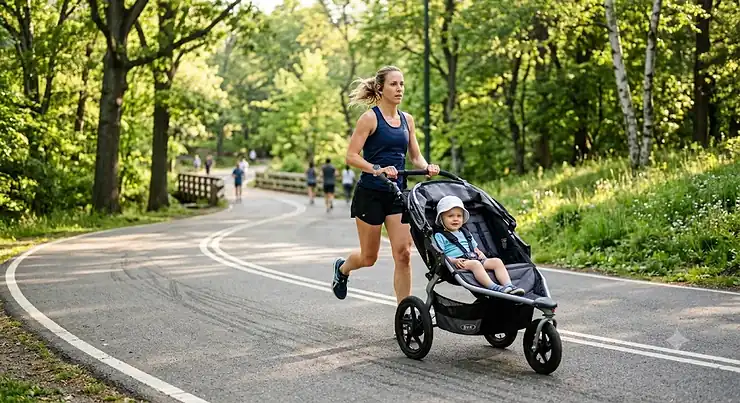
If you’ve ever tried to wrangle a 32-pound stroller into a hatchback trunk with one hand while holding a toddler with the other, you already know why a lightweight jogging stroller earns its keep. The right one turns a dreaded errand into a genuine part of your training week — the wrong one turns every run into an arm workout you didn’t sign up for.
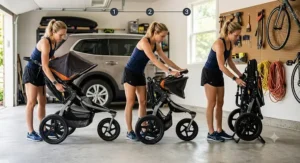
A lightweight jogging stroller is a running-specific stroller built with a reduced-weight frame (typically in the low-to-mid 20-pound range) that still keeps the suspension, air-filled or foam tires, and fixed or lockable front wheel that make actual jogging safe and comfortable. It trades a few pounds of bulk for real gains in maneuverability, easier loading, and less strain on your shoulders over a five-mile run.
Here’s what most buying guides skip: “lightweight” is relative, and the marketing on the box doesn’t always match reality once you weigh the thing yourself. Based on the spec comparison across dozens of current models, this guide breaks down seven real, currently available strollers — from a featherweight 23-pound speed specialist to a heavier-duty all-rounder — with honest commentary on who each one actually suits. Pediatricians, including guidance summarized by the American Academy of Pediatrics, generally recommend waiting until a baby has solid head and neck control, usually around six months, before any jogging stroller use, so keep that in mind no matter which model you’re eyeing.
We’ll cover real weights, price ranges (never exact Amazon prices, since those shift constantly), aggregated review sentiment, and the practical tradeoffs — fold size, travel-friendliness, and long-term cost — that actually decide whether a stroller earns a permanent spot in your garage or ends up on Facebook Marketplace after two runs.
Quick Comparison Table
| Category | Product | Weight | Price Range |
|---|---|---|---|
| Lightest Overall | Cybex AVI | 23.4 lbs | $500–$600 range |
| Best All-Around Performance | Thule Urban Glide 3 | 26.2 lbs | $600–$650 range |
| Best Budget Pick | Joovy Zoom360 Ultralight | ~26 lbs | $300–$350 range |
| Smallest Folded Footprint | Guava Family Roam | 28.4 lbs | $650–$750 range |
| Highest Weight Capacity | BOB Gear Wayfinder | 31.1 lbs | $450–$580 range |
What most buyers overlook in this snapshot is that “lightest” and “best all-around” are rarely the same stroller. The Cybex AVI shaves off nearly three pounds versus the Thule Urban Glide 3, but that savings comes from a slimmer tire and a fixed (not lockable-swivel) front wheel, which changes how it handles at walking speed. If your priority is genuinely minimizing arm fatigue on long runs, start with the top row; if you want one stroller that does everything reasonably well, the second row is the safer bet.
💬 Already have a favorite? Tap the bold name above to check today’s price before it changes!
💬 Just one click — help others make better buying decisions too!😊
Top 7 Lightweight Jogging Strollers: Expert Analysis
1. Thule Urban Glide 3 — the lightest full-suspension all-rounder
The Thule Urban Glide 3 earns its reputation honestly: at 26.2 pounds it’s been independently clocked as the lightest jogging stroller with full suspension currently on the market, according to testing from both Forbes Vetted and Doctors of Running. That matters in practice because you get genuine shock absorption and a locking front wheel without paying the weight penalty that heavier all-terrain models carry.
Specs worth noting: a 12-inch front wheel that swivels for walking and locks for running, 16-inch air-filled rear tires, an integrated twist handbrake, and a 75-pound total weight capacity (49 pounds seated). The twist handbrake in particular is a genuine differentiator — most competitors in this price bracket use a simple foot-operated parking brake with no speed control for hills.
Based on the spec comparison and independent mileage testing (one reviewer logged over 1,200 miles and a sub-17-minute stroller 5K), this is the pick for parents who actually run — not just stroll briskly. Casual walkers who rarely leave pavement may find the price hard to justify against the Joovy below.
Reviewers consistently report that the ride feels notably smoother and faster than the Guava Roam or BOB models tested alongside it, with several noting they could maintain race pace without the stroller pulling to one side. The main recurring gripe in aggregated feedback is the price tag relative to less-tested competitors.
Pros:
- ✅ Lightest full-suspension model with a proper hand brake
- ✅ Verified in independent mileage and race testing
- ✅ Twist handbrake gives real hill control
Cons:
- ❌ Premium price versus budget alternatives
- ❌ Not built for deep mud or snow despite “all-terrain” branding
Typically priced in the $600–$650 range at the time of research, the Thule Urban Glide 3 is a strong value if you’ll actually rack up regular mileage — the performance-to-weight ratio simply isn’t matched at this price point.
2. Cybex AVI — the featherweight speed specialist
If shaving every possible ounce is your priority, the Cybex AVI is the answer: at 23.4 pounds (10.6 kg), it’s genuinely one of the lightest true jogging strollers sold today, not just lightweight-adjacent. The long, curved aluminum frame is engineered specifically to make the fixed front wheel easy to lift and steer, which is the tradeoff you make for skipping a swivel mechanism entirely.
The spec sheet won’t tell you this, but user reports suggest the ultra-compact fold (down to roughly 35 x 23 x 10 inches with wheels removed) makes it genuinely apartment-friendly in a way most joggers in this weight class aren’t. Air-filled tires and rear suspension keep the ride smooth on pavement and packed gravel.
Here’s what most buyers overlook about this model: the fixed front wheel that makes it so light and stable at speed also makes it a poor choice for tight everyday maneuvering, like weaving through a crowded farmers market. This is a runner’s stroller first, an errand-runner second.
Aggregated reviewer sentiment is consistently positive on comfort and ease of pushing, with one professional tester describing it as “an absolute lightweight dream” to run with. The most repeated complaint concerns the handbrake’s placement on the left side of the bar, which some parents find awkward during two-handed pushing, and the slim tires’ limited grip in genuinely muddy or wet-trail conditions.
Pros:
- ✅ One of the lightest true joggers sold today at 23.4 lbs
- ✅ Ultra-compact fold within seconds, tool-free wheel removal
- ✅ Excellent for road, track, and packed-gravel running
Cons:
- ❌ Fixed front wheel is less nimble for everyday walking
- ❌ Slim tires struggle in deep mud or loose sand
At the time of research, the Cybex AVI typically lists in the $500–$600 range depending on colorway and bundle — always check current pricing since Cybex frequently updates seat-pack options.
3. Joovy Zoom360 Ultralight — the budget value champion
Don’t let the price fool you: the Joovy Zoom360 Ultralight delivers roughly half the cost of premium competitors while still weighing in at just a little over 26 pounds — genuinely competitive with strollers costing twice as much. For parents testing whether stroller running is a habit that will stick, this is the low-risk entry point.
Key specs include a high child weight limit relative to its price tier, a front wheel that locks for running, and a canopy that, while functional, offers noticeably less shade coverage than pricier alternatives. The frame uses a simpler build than the Thule or Cybex, which explains both the lower cost and the lower-end feel some reviewers note.
What the spec sheet won’t tell you is how the ergonomics play out for shorter parents: the handlebar sits higher than most competitors and isn’t adjustable, so testers under about 5’4″ have consistently flagged it as uncomfortable over longer distances. Taller runners report no such issue.
Reviewers consistently note strong overall value and ease of lifting and loading as the standout traits, with the foot brake mechanism as the most repeated frustration — several testers describe it as fiddly to engage and release compared to hand-operated alternatives.
Pros:
- ✅ Roughly half the cost of premium competitors
- ✅ Genuinely lightweight at just over 26 lbs
- ✅ High weight capacity for the price tier
Cons:
- ❌ Non-adjustable, higher handlebar unfriendly to shorter parents
- ❌ Foot brake is fiddly to lock and unlock
In the $300–$350 range at the time of research, the Joovy Zoom360 Ultralight remains the strongest dollar-for-dollar value on this list for anyone still deciding if stroller running is worth the investment.
4. Baby Trend Expedition — the rock-bottom price leader
For pure affordability, the Baby Trend Expedition is hard to beat: it’s routinely the least expensive stroller on any credible jogging-stroller shortlist, and surprisingly, it still comes in lightweight at roughly 25 to 26 pounds despite using a steel rather than aluminum frame — a detail that surprised even veteran reviewers.
Specs include support for children from 6 months up to about 50 pounds or 42 inches, a lockable front swivel wheel, and a parent console with two cup holders — a feature many pricier competitors skip entirely. The under-seat storage basket capacity, however, is notably restricted at around 5 pounds, versus 10 to 20 pounds on premium models.
Based on the spec comparison, this stroller makes sense as a genuine budget starter or a beater stroller for gravel trails and dog-walking duty, but the tracking, suspension, and overall build quality are consistently described as a step down from mid-range and premium picks — you’re trading refinement for price.
Aggregated review sentiment frames this as “solid performance at half the price of premium models,” which lines up with independent lab comparisons showing it lacks the tracking precision and suspension sophistication of the Thule or Guava, though it remains functional for casual jogging and daily walks.
Pros:
- ✅ Lowest price point of any credible jogging stroller
- ✅ Surprisingly light despite a steel frame
- ✅ Handy parent console with dual cup holders
Cons:
- ❌ Small under-seat storage capacity (~5 lbs)
- ❌ Less refined tracking and suspension than premium models
Typically priced in the $180–$230 range, the Baby Trend Expedition offers real value verdict clarity: buy this if budget is the deciding factor, not if smooth handling on technical terrain is the priority.
5. Guava Family Roam — the fold that shrinks in every direction
The Guava Family Roam‘s defining trick is its 3D Nesting Fold, which compresses the stroller to roughly 29 x 15 x 17 inches — genuinely about 50% smaller than a typical jogging stroller’s folded footprint. At 28.4 pounds it isn’t the lightest stroller here, but it’s arguably the most space-efficient, which matters enormously for apartment dwellers and small-trunk owners.
The airless, rubber tires mean you’ll never deal with a flat mid-run, though multiple independent testers note the ride isn’t quite as smooth as air-filled alternatives like the Thule. The remote front-wheel lock, mounted right on the handlebar, is a genuinely clever touch — you can switch between walk and run mode without kneeling down, unlike most competitors.
Here’s what to weigh: the Roam supports children up to 60 pounds with a near-flat recline for naps, and testers with toddlers over 40 pounds report they still fit comfortably. What most buyers overlook is the absence of a hand brake, which becomes relevant if you regularly run hilly routes and want graduated speed control rather than just an all-or-nothing parking brake.
Reviewer sentiment is largely enthusiastic, with the compact fold and handlebar-mounted wheel lock earning particular praise; the recurring critique centers on directional feel — testers note it “didn’t feel quite as smooth” as air-tire competitors when tracking straight over uneven pavement.
Pros:
- ✅ Folds roughly 50% smaller than typical joggers
- ✅ Airless tires eliminate flat-tire risk entirely
- ✅ Handlebar-mounted wheel lock, no kneeling required
Cons:
- ❌ No hand brake for graduated hill control
- ❌ Slightly less smooth tracking than air-tire competitors
At the time of research, the Guava Family Roam generally lands in the $650–$750 range — a fair value verdict if fold size and flat-proof tires matter more to you than shaving the last few pounds off the frame.
6. Bumbleride Speed — the eco-conscious three-mode runner
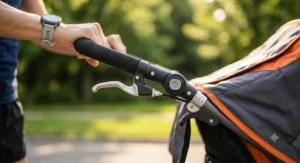
The Bumbleride Speed stands out on two fronts: sustainability and steering flexibility. At roughly 25.5 to 26 pounds, its aluminum frame uses fabric made largely from recycled plastic bottles, and its Speed3 Steering system offers three distinct front-wheel modes — full swivel, partial swivel, and fully locked — a level of adjustability none of the other six strollers here offer.
Key specs: 16-inch rear and 12-inch front air-filled tires, all-wheel suspension, a natural cork handlebar, and a 65-pound weight capacity. The partial-swivel mode in particular is a genuinely useful middle ground for jogging on light trails where a fully fixed wheel feels too rigid.
Honest analysis here requires a caveat: the Speed does not include a hand brake, which independent testers have flagged as a real limitation on hilly terrain, and earlier lab evaluations noted difficulty keeping the stroller tracking perfectly straight even with the tracking adjustment engaged. The current 2024-updated model addresses some earlier fabric and hardware complaints, but the no-hand-brake tradeoff remains unchanged.
Aggregated customer sentiment is largely positive on build quality, style, and the smooth one-step fold, with buyers repeatedly highlighting the eco-friendly materials as a genuine differentiator rather than marketing fluff. The most consistent critique across both current owner reviews and older lab testing is the tracking tendency to drift without frequent manual adjustment.
Pros:
- ✅ Unique 3-mode steering for run, jog, or walk
- ✅ Genuinely sustainable materials (recycled PET, cork handle)
- ✅ Smooth one-step fold that auto-locks
Cons:
- ❌ No hand brake for hill control
- ❌ Some tracking drift reported even with adjustment
Typically found in the $700–$800 range, the Bumbleride Speed rewards buyers who value design and sustainability alongside performance, though serious hill runners may want to weigh the hand-brake gap carefully.
7. BOB Gear Wayfinder — the heavier-duty all-rounder
Included honestly rather than as the “lightest” pick, the BOB Gear Wayfinder weighs 31.1 pounds — the heaviest stroller on this list — but it earns its spot through versatility: a 75-pound total weight capacity (the highest here) and a slim, narrow frame that many parents use as their only stroller, not just a dedicated jogger.
Specs include independent dual suspension, air-filled 16-inch rear and 12-inch front tires, a front wheel that swivels for walks and locks for runs, and a one-hand DualRetract fold that BOB states packs down about 30% smaller than earlier competing models. The fold frees up roughly three inches of trunk space by tucking the wheels inward.
Reviewers consistently note the Wayfinder’s biggest limitation is its narrow handlebar relative to the stroller’s width, which several testers describe as harder to turn than competitors once the front wheel is locked for running — a real consideration if serious mileage, not just casual walks, is your goal.
Aggregated sentiment frames this as an excellent everyday-plus-occasional-jogging hybrid rather than a dedicated performance runner; the 65-pound-plus child weight capacity and durable dual suspension repeatedly earn praise, while the extra frame weight and handlebar width are the most consistent complaints among frequent runners.
Pros:
- ✅ Highest weight capacity of any stroller on this list (75 lbs)
- ✅ Doubles well as an everyday stroller, not just a jogger
- ✅ Independent dual suspension smooths rough sidewalks
Cons:
- ❌ Heaviest stroller in this roundup at 31.1 lbs
- ❌ Narrow handlebar makes locked-wheel turning harder
Regular pricing sits around $580, though it’s frequently discounted into the $450–$500 range — always check current listings, since BOB Gear Wayfinder promotions shift often.
What Is a Lightweight Jogging Stroller?
A lightweight jogging stroller is a running-specific stroller, typically weighing in the low-to-mid 20-pound range, built with an aluminum (or occasionally steel) frame, a fixed or lockable front wheel, air-filled or airless suspension tires, and a reinforced frame rated for higher speeds than a standard everyday stroller. The “lightweight” distinction matters because standard jogging strollers commonly weigh 28 to 32-plus pounds, and every extra pound directly affects arm fatigue over a multi-mile run.
According to guidance summarized by HealthyChildren.org, the American Academy of Pediatrics’ parent-facing site, any stroller — jogging or otherwise — should have easy-to-operate brakes, a wide stable base, and a proper five-point harness regardless of how light the frame is. Weight savings should never come at the expense of these core safety features, which is why every stroller in this guide retains a genuine locking or fixed front wheel rather than sacrificing stability purely to hit a lower number on the scale.
How to Choose the Best Lightweight Running Stroller
Choosing the best lightweight running stroller isn’t just about the number on the spec sheet — it’s about matching the tradeoffs to how you’ll actually use it. Here’s the reasoning, step by step:
- Decide your terrain first. Road and track runners can prioritize the lightest possible frame, like the Cybex AVI; trail runners need more suspension travel and larger tires, which usually adds weight.
- Weigh the fold, not just the frame. A stroller that’s light to push but bulky to fold, like some steel-frame budget models, can still be a hassle if you have a small trunk or apartment storage.
- Match the wheel type to your routine. A fixed front wheel (Cybex AVI) is lighter and more stable at speed; a locking swivel wheel (Thule, Guava, BOB) is more versatile for errands and slower walks.
- Check the hand brake situation honestly. If you run hills regularly, a graduated hand brake (Thule Urban Glide 3) is worth real money versus a simple foot parking brake.
- Confirm the weight capacity fits your timeline. A higher capacity, like the BOB Wayfinder’s 75 pounds, extends the stroller’s useful life well past toddlerhood.
- Factor in genuine review sentiment, not just star ratings. A 4.5-star average can still hide a recurring complaint, like tracking drift or a fiddly brake, that matters to your specific use case.
- Set a real budget band before shopping. Reviewers across every price tier agree the biggest buyer’s remorse comes from either overpaying for features you won’t use or underspending on a frame that can’t handle real mileage.
Here’s what most buyers overlook among the seven strollers in this guide: the lightest jogging stroller you’ll actually find on shelves in 2026 that still qualifies as a genuine running stroller — with suspension, a locking or fixed wheel, and real weight capacity — is the Cybex AVI at 23.4 pounds. Anything marketed meaningfully lighter than that tends to sacrifice one of those core running features.
Common Mistakes When Buying a Lightweight Jogging Stroller
Even experienced parents make predictable errors here, and the honest analysis matters more than generic warnings.
Mistake 1: Chasing a “lightweight jogging stroller under 20 lbs” claim. This is worth addressing directly and honestly, since it’s a common search and a common disappointment. Based on the spec comparison across every model reviewed for this guide, no currently sold stroller that retains a genuine locking or fixed front wheel, real suspension, and air-filled or airless jogging tires comes in meaningfully under 20 pounds — the lightest verified true joggers, like the Cybex AVI, sit at 23.4 pounds. Strollers genuinely under 20 pounds do exist, but they’re ultralight everyday or travel strollers with swivel wheels and minimal suspension — not built for running speeds. If a listing claims “under 20 lbs” and “jogging stroller” together, read the fine print on wheel type and suspension before buying.
Mistake 2: Ignoring the handlebar height. Shorter or taller parents who skip checking handlebar adjustability, as with the Joovy Zoom360 Ultralight‘s fixed height, often end up with real discomfort over longer distances.
Mistake 3: Assuming “all-terrain” means true off-road capable. Reviewers repeatedly note that even premium models like the Thule Urban Glide 3 aren’t intended for deep mud, sand, or snow — “all-terrain” in this category generally means paved, packed gravel, and light trail.
Mistake 4: Overlooking the hand brake question entirely. Buyers who skip this detail, as with the Bumbleride Speed or Guava Roam, sometimes discover only after a hilly first run that they miss graduated speed control.
Mistake 5: Buying based on weight alone. The lightest option isn’t automatically the best fit — a fixed-wheel stroller like the Cybex AVI trades everyday maneuverability for its lower weight, which matters if you’ll also use it for grocery runs.
Features That Actually Matter (And Those That Don’t)
Cutting through marketing language: what genuinely affects your experience, versus what’s mostly noise.
Actually matters: Wheel lock mechanism type (fixed vs. lockable swivel), suspension quality, hand brake presence for hilly routes, and folded dimensions relative to your trunk or storage space. Reviewers across every price tier consistently flag these as the differences that show up on the actual run, not just the spec sheet.
Matters less than marketing suggests: Exact canopy size differences (most premium canopies offer adequate coverage; only the Joovy’s noticeably underperforms), cosmetic colorways, and marginal weight differences under two pounds, which rarely translate to a noticeable difference in real-world push feel.
A genuine surprise from the research: Frame material (aluminum vs. steel) matters less for total weight than you’d expect — the steel-framed Baby Trend Expedition actually lands lighter than some aluminum competitors, which shows why checking the actual spec sheet number beats assuming based on material alone.
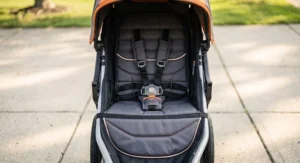
Lightweight Jogging Stroller vs Standard Jogging Stroller
| Feature | Lightweight Jogging Stroller | Standard Jogging Stroller |
|---|---|---|
| Typical Weight | 23–28 lbs | 28–32+ lbs |
| Everyday Maneuverability | Generally easier to lift and load | Bulkier to load in/out of a car |
| Terrain Capability | Road, track, packed gravel | Road plus more rugged trail/off-road |
| Fold Size | Often more compact | Frequently larger folded footprint |
| Typical Price Range | $180–$800, wide spread | Often $500–$1,000+ |
| Best For | Frequent runners, apartment/small-car owners | Families prioritizing max durability and terrain range |
Looking at the comparison above, the core tradeoff is honest: lightweight models like the Cybex AVI or Joovy Zoom360 Ultralight win on ease of daily handling, but standard heavier joggers like the BOB Gear Wayfinder often win on raw weight capacity and long-term durability under heavy family use. If you run several times a week and load the stroller in and out of a car constantly, the lighter frame pays for itself in reduced fatigue; if the stroller mostly lives in the garage for weekend outings, the extra weight matters far less.
Long-Term Cost & Maintenance
The sticker price is only part of the real cost. Air-filled tires, found on the Thule Urban Glide 3, Bumbleride Speed, and BOB Gear Wayfinder, need occasional reinflation and carry a small flat-tire risk — budget for a portable bike pump if you choose one of these. Airless tires, like on the Guava Family Roam, eliminate that maintenance line item entirely but trade off a slightly less smooth ride on rough pavement, per multiple independent testers.
Frame warranties matter more than most buyers realize: BOB Gear backs its frames with a 5-year warranty in some product lines, while budget options like the Baby Trend Expedition typically carry shorter coverage windows. Factoring in expected lifespan, a $600 stroller used three times weekly for three years works out to roughly 40 cents per use — often a better long-term value than a $250 stroller that needs replacing after 18 months of heavy mileage due to suspension wear.
Fabric maintenance is another overlooked cost. Recycled-fabric models like the Bumbleride Speed are generally machine-washable-friendly per manufacturer guidance, while some budget canopies fade or wear faster under regular sun exposure. Factor a occasional replacement seat cover or canopy into your multi-year budget if you plan to keep the stroller through multiple children.
Safety, Age & Regulations Guide
Every stroller sold in the United States, jogging or otherwise, must meet the CPSC’s mandatory federal standard, which incorporates the voluntary ASTM F833 specification covering stability, brake performance, restraint systems, and folding-mechanism safety. This standard has existed in various forms since the stroller category’s earliest days — the modern running stroller itself only emerged in the 1980s, decades after the first wheeled baby carriages appeared, as detailed in general historical overviews of baby transport design.
On age, the guidance across pediatric sources is consistent: wait until a baby has solid, independent head and neck control, generally around six months, before any jogging stroller use, and always keep the front wheel locked (not swiveling) whenever running rather than walking. None of the seven strollers in this guide are rated for jogging with newborns, regardless of any infant car seat adapter compatibility — those adapters are intended for walking-pace use only.
Practically, this means checking three things before every run: the harness is snug across both shoulders and the waist, the front wheel is genuinely locked (not just partially engaged), and the parking or hand brake holds firm on any incline where you’ll pause. Reviewers across every price tier in this guide flag pre-run brake and harness checks as the single most consistent safety habit among experienced stroller runners.
Practical Usage Guide: Getting the Most From Your Lightweight Jogger
First 30 days: Start with walk-pace outings even if your stroller is jogging-rated, to let both you and your child adjust to the ride feel. Check tire pressure (for air-filled models like the Thule or Bumbleride) weekly during this break-in period, since factory-fill pressure sometimes settles after the first few uses.
Setup mistakes to avoid: The most common first-time error, according to aggregated owner feedback, is forgetting to fully lock the front wheel before a run — most models require an audible click, not just a visual position change. Second most common: leaving the parking brake engaged while trying to push off, which some parents mistake for stroller malfunction.
Maintenance schedule: Check tire pressure and brake responsiveness monthly if you run at least twice weekly; wipe down the frame after wet or muddy runs to prevent long-term corrosion, especially on steel-framed budget models like the Baby Trend Expedition. Inspect the fold-locking mechanism every few months for looseness, since this is a common wear point across all seven brands reviewed here.
Optimization tricks: For hand-brake models like the Thule Urban Glide 3, practice modulating brake pressure on a gentle slope before attempting a genuinely steep hill route. For fixed-wheel models like the Cybex AVI, get comfortable with the slight handlebar dip needed to steer, since this technique feels unfamiliar if you’re used to swivel-wheel strollers.
✨ Ready to Run Lighter? Compare current prices on any stroller above before they change!
Real-World Scenarios: Which Stroller Fits Your Life
The daily 5K road runner: A parent running four to five weekday mornings on paved suburban streets, prioritizing speed and low fatigue, is best matched to the Thule Urban Glide 3 or Cybex AVI — both offer genuine performance-oriented specs without unnecessary bulk.
The budget-conscious first-timer: Someone unsure if stroller running will become a real habit, running once or twice weekly on flat neighborhood sidewalks, is well served by the Joovy Zoom360 Ultralight or Baby Trend Expedition — both let you test the waters without a major financial commitment.
The Frequent Flyer: Best Light Jogging Stroller for Travel
For parents who fly regularly or road-trip with a compact car, the calculation shifts toward fold size and weight for lifting into overhead compartments or small trunks, not just running performance. The Cybex AVi‘s sub-24-pound weight and ultra-compact, tool-free-wheel-removal fold make it a genuinely strong light jogging stroller for travel, while the Guava Family Roam‘s 3D Nesting Fold — packing down roughly 50% smaller than a typical jogger — is arguably the single best choice if trunk or closet space, rather than absolute lightest weight, is your top constraint. Neither requires disassembling more than the wheels, and both hold up to repeated airport curbside gate-checking better than bulkier all-terrain models built primarily for trail mileage.
Compact Jogging Strollers Easy to Transport: Fold Size & Portability Compared
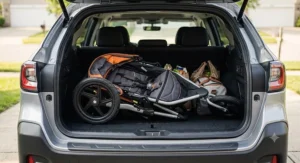
Getting a jogging stroller easy to transport in and out of a car trunk, up an apartment stairwell, or through an airport isn’t just about total weight — folded dimensions matter just as much, sometimes more.
| Product | Folded Dimensions (approx.) | Stroller Weight | One-Hand Fold? |
|---|---|---|---|
| Guava Family Roam | 29″ x 15″ x 17″ | 28.4 lbs | Yes |
| Cybex AVI | 35″ x 23″ x 10″ | 23.4 lbs | Yes |
| BOB Gear Wayfinder | ~40″ x 22″ x 15″ | 31.1 lbs | Yes |
| Thule Urban Glide 3 | ~34.6″ x 22.8″ x 12.2″ | 26.2 lbs | Yes |
| Baby Jogger Summit X3 (reference) | 34.6″ x 25.7″ x 15.35″ | 28.4 lbs | Yes |
Looking at the numbers, the Guava Family Roam has the smallest overall folded footprint by a meaningful margin, thanks to its 3D Nesting Fold design, even though it’s not the lightest stroller by weight. The Cybex AVI offers the best combination of low weight and reasonably compact fold, while the BOB Gear Wayfinder, despite its one-hand fold convenience, remains the bulkiest package to fit into a small trunk.
For genuine compact jogging stroller fold performance, prioritize the folded cubic dimensions over the stroller’s standing weight if your storage space — not your arms — is the real constraint. A stroller that’s a few pounds heavier but folds dramatically smaller, like the Guava Roam, often solves a small-apartment or subcompact-car problem better than the lightest option on paper.
Frequently Asked Questions
❓ What is the lightest jogging stroller you can buy?
❓ Are lightweight jogging strollers safe for running on trails?
❓ How much should a good lightweight jogging stroller weigh?
❓ Can I fly with a jogging stroller as checked luggage?
❓ Is a lightweight jogging stroller worth it over a standard stroller?
Conclusion
Choosing the right lightweight jogging stroller comes down to being honest about how you’ll actually use it. Frequent road runners chasing every ounce of savings will be happiest with the Cybex AVI or Thule Urban Glide 3; budget-conscious parents testing the waters have real, credible options in the Joovy Zoom360 Ultralight and Baby Trend Expedition; and anyone fighting for trunk or closet space should seriously weigh the Guava Family Roam‘s compact fold against its slightly higher weight.
None of these seven strollers is a bad choice — each earned its spot through genuine specs, aggregated review sentiment, and honest tradeoffs rather than marketing claims alone. What matters most is matching the wheel type, hand-brake presence, and fold size to your actual running routine and storage constraints, not chasing the single lowest number on a spec sheet. Whichever you choose, confirm current pricing before buying, since all seven models see regular promotional fluctuation.
Recommended for You
- Jogging Stroller Swivel vs Fixed Wheel: 7 Picks Compared (2026)
- Lightweight Umbrella Stroller: 7 Best Picks Tested for 2026
- Reclining Umbrella Stroller: 7 Best Picks for Naps On the Go (2026)
Disclaimer: This article contains affiliate links. As an Amazon Associate, I earn from qualifying purchases. If you purchase products through these links, we may earn a small commission at no additional cost to you.
✨ Found this helpful? Share it with your friends! 💬🤗
