
In This Article
Somewhere between the third diaper bag and the second stroller you never wanted to buy, you start asking the same question every parent eventually asks: does it have to weigh this much? A lightweight umbrella stroller is, at its core, a compact folding stroller built around one obsession — shedding pounds and bulk without shedding safety. Most models land between 7 and 17 pounds, fold down small enough for a trunk or an overhead bin, and trade some of the plush padding of a full-size stroller for a frame you can sling over one shoulder while holding a toddler, a coffee, and your dignity with the other arm.
This guide skips the marketing fluff and goes straight to the research: real models, real specs, and real aggregated reviewer sentiment pulled from testing labs and thousands of verified purchases. We’re not going to pretend every umbrella stroller can do everything — an ultra light umbrella stroller under 10 lbs, for instance, is a different animal than a plush aluminum-frame model built for daily strolling. So we grouped our seven picks by what they’re actually good at: air travel, everyday errands, and the “my in-laws need something at their house” category that nobody talks about enough. If you’re weighing options for grandparents, comparing an umbrella stroller aluminum frame against a steel one, or just trying to figure out what “carry on” compliant actually means at 30,000 feet, you’re in the right place.
What Is a Lightweight Umbrella Stroller?
A lightweight umbrella stroller is a compact, foldable stroller — usually under 17 pounds — designed for babies and toddlers roughly 6 months and older who can sit upright unassisted. It folds into a narrow shape (originally resembling a closed umbrella) for easy storage, air travel, and quick errands, trading some comfort and storage for portability.
Quick Comparison Table
| Stroller | Weight | Price Range | Best For |
|---|---|---|---|
| BabyZen YOYO2 | ~13.6 lbs | $400-$450 range | Frequent flyers, carry-on compliance |
| gb Pockit+ All-City | ~13.1 lbs | $200-$300 range | Smallest possible fold |
| Chicco Liteway | ~17 lbs | $130-$150 range | Grandparents, roomy comfort |
| Summer Infant 3Dlite | ~14-15 lbs | $100-$130 range | Everyday value, aluminum frame |
| UPPAbaby G-Luxe | ~15-16 lbs | $200-$230 range | Smoothest ride quality |
| Kolcraft Cloud Plus | ~11-13 lbs | Under $80 | Tightest budget |
| Dream On Me Aero Travel | ~7.4 lbs | Under $90 | Lightest overall, under 10 lbs |
Looking at the spread above, there’s a clear split between strollers optimized for airline carry-on rules (BabyZen YOYO2, gb Pockit+ All-City) and strollers optimized for daily comfort and a lower price point (Chicco Liteway, Summer Infant 3Dlite, Kolcraft Cloud Plus). If pure gram-counting is your priority, the Dream On Me Aero Travel undercuts everything else here by several pounds. But weight isn’t the only variable — a 7-pound frame usually means thinner padding and a smaller weight limit, so the “lightest” option on paper isn’t automatically the best fit for a heavier toddler or a bumpy sidewalk. According to Consumer Reports’ testing lab, umbrella strollers as a category range from about 12 to 18 pounds, which puts several of our budget and premium picks near opposite ends of that spectrum.
💬 Already have a favorite from the table above? Scroll down to its full breakdown, or keep reading for the honest trade-offs behind each pick.
💬 Just one click — help others make better buying decisions too!😊
Top 7 Lightweight Umbrella Strollers: Expert Analysis
We narrowed a crowded field down to seven real, currently available models spanning budget, mid-range, and premium tiers. Every product below includes genuine spec interpretation, aggregated review sentiment (never invented quotes), and honest analysis of who each stroller actually suits.
1. BabyZen YOYO2 — cabin-approved fold that beats airline carry-on rules
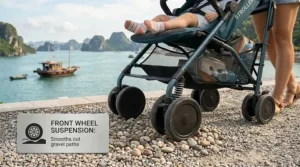
The BabyZen YOYO2 built its reputation on one number: 20.5 x 17.3 x 7.1 inches folded, small enough to slide into most domestic overhead bins without a gate-check tag. That’s not a marketing claim — independent lab testing measured it at roughly 13.6 lbs with a folded footprint well under the typical 22 x 14 x 9-inch airline carry-on allowance. The aluminum-alloy and fiberglass-reinforced frame accommodates kids from 6 months up to 48.5 lbs, and with the optional newborn pack, it works from birth. Based on the spec comparison, what sets the YOYO2 apart isn’t just the fold — it’s the independent four-wheel suspension, which smooths out cobblestones and curb cuts that flatten cheaper strollers’ ride quality. This is the stroller for parents who fly often, live in walk-up apartments, or simply refuse to check a stroller at the gate ever again. Aggregated reviewer sentiment is largely positive: owners on major retail sites consistently praise how it “fits in the overhead bin on multiple airlines” and call the one-hand fold intuitive after the first few tries, though a recurring complaint is that the storage basket is cramped and split by two support bars. Lab testers at BabyGearLab independently confirmed the basket is one of the smaller ones in its class.
Pros:
- ✅ Cabin-approved fold fits most airline overhead bins
- ✅ Independent 4-wheel suspension smooths rough terrain
- ✅ Grows with child via car seat and newborn adapters
Cons:
- ❌ Small, split storage basket frustrates daily use
- ❌ Premium price puts it out of reach for budget buyers
At around $400-$450, the BabyZen YOYO2 sits at the top of this list price-wise, but for families who fly multiple times a year, the math often works out: fewer gate-check risks and a frame built to survive years of use can offset the higher upfront cost.
2. gb Pockit+ All-City — smallest fold on the market, period
If the YOYO2 is small, the gb Pockit+ All-City is smaller — independent testing measured its folded volume at roughly 2,215 cubic inches, more than a thousand cubic inches tighter than the next-smallest competitor in side-by-side lab comparisons. At about 13.1 lbs tested weight, it’s not the lightest stroller here, but the two-step folding mechanism collapses it into a package closer to a large purse than a stroller. What most buyers overlook about this model is that its compact size comes with real trade-offs: the fold requires two hands and a bit of practice, and the storage basket is small enough that only a medium bag fits. Reviewers consistently note that the front-wheel suspension noticeably smooths city sidewalks and that the semi-recline seat, while not fully flat, handles naps reasonably well for a stroller this size. The Pockit+ accepts CYBEX infant car seat adapters, making it a genuine 2-in-1 option from 6 months up to roughly 55 lbs depending on configuration.
Pros:
- ✅ Folds into the smallest package in this entire roundup
- ✅ Front-wheel suspension improves city sidewalk comfort
- ✅ Self-stands when folded, unlike most umbrella strollers
Cons:
- ❌ Two-handed fold takes practice to master
- ❌ Small storage basket limits daily errand capacity
Priced in the $200-$300 range depending on retailer and bundle, the gb Pockit+ All-City earns its premium through sheer portability rather than ride comfort — it’s a specialist’s tool, not a do-everything stroller.
3. Chicco Liteway — roomiest seat and easiest recline for grandparents
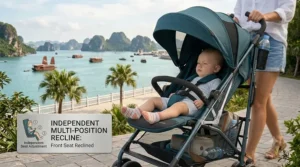
At roughly 17 lbs with an aluminum frame, the Chicco Liteway is one of the heavier strollers on this list, and independent lab testing has flagged that weight as a real drawback for parents chasing ultra-portability. But here’s what the spec sheet won’t tell you: that extra weight buys a wider, deeper seat, a one-hand four-position recline, and rear-wheel suspension that most lighter competitors simply can’t match. This stroller accommodates children from birth (with proper padding) up to 40 lbs, with an adjustable footrest and hideaway boot for napping toddlers. Reviewers consistently rate the recline mechanism as one of the easiest to operate one-handed in this category, which matters enormously for anyone who isn’t strolling every single day and doesn’t want to relearn a fussy latch system each visit. That’s exactly why this is our pick for grandparents: durability, a forgiving learning curve, and toe-tap brakes that don’t require precision footwork. On the downside, aggregated review sentiment and lab measurements both flag a tendency to veer slightly off a straight line compared to lighter competitors, and the storage basket has a lower weight allowance — around 6.6 to 7 lbs — than its size would suggest.
Pros:
- ✅ Roomy, deeply reclining seat comfortable for napping
- ✅ One-hand recline mechanism is easy to relearn
- ✅ Rear-wheel suspension smooths daily sidewalk use
Cons:
- ❌ Heaviest umbrella-style fold in this roundup
- ❌ Slight tendency to veer during straight-line pushing
Available around $130-$150, the Chicco Liteway is a value play for households that keep a stroller at a second location — a grandparent’s house, a vacation home — where portability matters less than ease of use.
4. Summer Infant 3Dlite — best all-around value with an aluminum frame
The Summer Infant 3Dlite occupies the sweet spot between price and features: an aluminum frame that keeps tested weight around 14 to 15 lbs, a 5-point harness rated to 50 lbs, and a fold that collapses both laterally and vertically for a genuinely compact stored size. What most buyers overlook about this model is that its aluminum construction — rather than the heavier steel frames used on some rival budget strollers — is the real reason it stays under 15 lbs while still surviving daily wear. The multi-position recline (up to four positions) and anti-shock front wheels handle light terrain like dirt paths and cobblestone reasonably well, though manufacturer guidance and independent testers both caution against gravel or genuinely rough terrain. Aggregated reviewer sentiment is strong on value: buyers frequently mention it as a worthy alternative to pricier umbrella strollers, praising the one-handed fold and the larger-than-average storage basket. The recurring criticism, echoed across multiple testing sources, is that the canopy offers less sun coverage than its size suggests and the overall build feels a notch below premium competitors like the UPPAbaby G-Luxe.
Pros:
- ✅ Aluminum frame keeps weight down without steel’s heft
- ✅ Large-for-its-class storage basket handles errands
- ✅ Four recline positions accommodate naps on the go
Cons:
- ❌ Canopy provides less sun coverage than competitors
- ❌ Build quality feels a step below premium models
At around $100-$130, the Summer Infant 3Dlite is arguably the best entry point for parents who want an aluminum-frame stroller without paying premium-tier prices — a genuinely balanced middle-of-the-road pick.
5. UPPAbaby G-Luxe — smoothest ride quality in the umbrella class
Manufacturer listings for the UPPAbaby G-Luxe cite a weight near 11 lbs, but independent lab testing consistently measures it closer to 15-16 lbs fully assembled — a gap worth flagging honestly rather than repeating the lighter number uncritically. What that extra material buys is real: rear suspension, thicker foam-rubber handles, and a one-hand recline-and-raise mechanism that testers have called one of the smoothest in the category. The seat accommodates children up to roughly 50 lbs with genuinely padded fabric rather than the thin liner found on cheaper competitors. Here’s what the spec sheet won’t tell you: the G-Luxe requires two hands and two simultaneous ring-pulls to fold, which is objectively less convenient than the single-latch designs on the Chicco Liteway or Kolcraft Cloud Plus, even though the resulting fold is compact and self-standing once collapsed. Reviewers consistently praise the ride quality and near-silent wheels, while the recurring complaint centers on that two-hand folding process being awkward with a child on one hip.
Pros:
- ✅ Smoothest ride quality among true umbrella-fold strollers
- ✅ Thick, comfortable padded handles reduce hand fatigue
- ✅ Large storage basket outperforms most direct competitors
Cons:
- ❌ Two-hand fold is genuinely awkward one-handed
- ❌ Heavier in independent testing than manufacturer claims
Priced around $200-$230, the UPPAbaby G-Luxe is a strong pick for parents prioritizing ride comfort over gram-counting — just don’t expect the lightest lift when it’s time to fold and go.
6. Kolcraft Cloud Plus — lightest price tag without a flimsy feel
The Kolcraft Cloud Plus is the budget anchor of this roundup, tested at just under 13 lbs and regularly priced under $80 — a fraction of what premium competitors like the BabyZen YOYO2 command. Reviewers consistently note that despite the low price, it doesn’t feel like a bargain-bin product: it includes a multi-position reclining seat, a 5-point harness rated to 50 lbs, front-wheel suspension, and a large storage basket accessible from both front and back. Based on the spec comparison, this is one of the few sub-$100 strollers with genuine all-terrain wheel styling rather than the thin, hard casters typical of this price bracket. Independent lab testing found real limitations, though: maneuverability and steering responsiveness lag behind pricier competitors, and testers noted the folding buttons can become sticky with repeated use over time. It’s also not compatible with infant car seats, so it’s strictly a 6-months-and-up stroller. What most buyers overlook is that Kolcraft has manufactured crib mattresses and juvenile products domestically for decades, which shows up in the stroller’s straightforward, no-frills construction rather than flashy but fragile add-ons.
Pros:
- ✅ Lowest price point of any stroller in this roundup
- ✅ Multi-position recline and 5-point harness included
- ✅ Front and rear storage basket access aids errands
Cons:
- ❌ Maneuverability lags noticeably on uneven surfaces
- ❌ Folding mechanism can become sticky over time
For families who need a genuinely reliable backup stroller — car trunk, grandma’s house, theme park day — without breaking a budget, the Kolcraft Cloud Plus consistently punches above its under-$80 price tag.
7. Dream On Me Aero Travel Umbrella Stroller — under 8 pounds, the lightest of the bunch
At roughly 7.4 lbs, the Dream On Me Aero Travel Umbrella Stroller is the lightest model in this entire roundup, and it’s not particularly close — most competitors here land in the 11 to 17-lb range. Here’s what the spec sheet won’t tell you: hitting that weight required real compromises, including a 300D polyester fabric build and a 3-point harness rather than the 5-point harnesses standard on heavier competitors, along with a lower weight limit around 33 lbs. That makes it best suited for children roughly 6 to 36 months rather than a stroller you’ll use through the preschool years. Front suspension and dual rear brakes help offset the ultra-light frame’s inherent flex, and the one-hand compact fold is genuinely fast — a real advantage for anyone juggling a squirmy toddler solo. Because this is a newer entrant in the ultra-light category, verified aggregated review data is thinner than for long-established models like the Kolcraft Cloud Plus or Chicco Liteway; we’d encourage checking current buyer ratings directly before purchase rather than relying on early impressions alone.
Pros:
- ✅ Lightest stroller in this roundup at roughly 7.4 lbs
- ✅ Genuinely fast one-hand compact fold
- ✅ Removable, adjustable canopy offers real sun coverage
Cons:
- ❌ Lower weight limit than every other stroller here
- ❌ 3-point harness offers less containment than 5-point designs
Typically priced under $90, the Dream On Me Aero Travel is the clear answer to “what’s the lightest umbrella stroller I can actually buy” — just go in knowing you’re trading harness security and longevity for that headline weight number.
Top 7 Products: Spec, Price & Best-For Comparison
| Stroller | Frame | Weight Limit | Price Range | Best For |
|---|---|---|---|---|
| BabyZen YOYO2 | Aluminum alloy | 48.5 lbs | $400-$450 | Air travel |
| gb Pockit+ All-City | Aluminum | 55 lbs | $200-$300 | Smallest fold |
| Chicco Liteway | Aluminum | 40 lbs | $130-$150 | Grandparents |
| Summer Infant 3Dlite | Aluminum | 50 lbs | $100-$130 | Everyday value |
| UPPAbaby G-Luxe | Steel/aluminum blend | 50 lbs | $200-$230 | Ride comfort |
| Kolcraft Cloud Plus | Steel | 50 lbs | Under $80 | Tight budgets |
| Dream On Me Aero Travel | Steel | 33 lbs | Under $90 | Lightest overall |
Notice that weight limit and price don’t move in lockstep: the budget Kolcraft Cloud Plus matches the pricier UPPAbaby G-Luxe on weight capacity, while the ultra-light Dream On Me Aero Travel trades capacity for its headline-grabbing 7.4-lb frame. If your child is already a sturdy 30-pounder, the lower-limit models drop out of contention regardless of how appealing their weight is on paper — check that number before falling for a lightweight umbrella stroller for travel that your toddler will outgrow in a season.
🔍 Ready to compare real-time pricing?
Check current availability on any of the seven picks above before your next trip.
Practical Usage Guide: Getting the Most From Your Stroller
Buying the right lightweight umbrella stroller is half the job — using it well is the other half, and it’s the part most product listings skip entirely. During the first 30 days, the most common mistake is folding the stroller without engaging the safety latch fully, which can cause the frame to pop back open mid-carry; get in the habit of listening for the audible click every single time. Second, resist the urge to hang a heavy diaper bag directly on the handlebars. Independent testers have documented lightweight frames tipping backward under loads as light as 12 lbs, since a lighter stroller inherently has less counterweight up front.
For maintenance, wipe down the wheel axles every few weeks if you’re using the stroller outdoors regularly — sand and grit are the number-one cause of sticky folding mechanisms, a complaint that shows up repeatedly in reviews of budget models like the Kolcraft Cloud Plus. Check the fabric care instructions before washing; most umbrella strollers require the seat pad to be removed and hand- or delicate-cycle washed rather than tossed in with a full load. One underrated optimization trick: practice folding and unfolding your stroller at home three or four times before your first flight or big outing. The two-handed folds on models like the gb Pockit+ All-City and UPPAbaby G-Luxe genuinely get faster with repetition, and you don’t want to be learning that curve at airport security with a line building behind you.
Real-World Scenarios: Which Stroller Fits Your Life
The frequent-flying family of three. Two work trips a month, a toddler in tow, and zero patience for gate-checking. This household should be looking hard at the BabyZen YOYO2 or the gb Pockit+ All-City — both are built around cabin-luggage compliance first, comfort second, and the higher price tag amortizes quickly across a year of flights.
The budget-conscious first-time parent. A single stroller for errands, park visits, and the occasional car trip, without much disposable income to spare. The Kolcraft Cloud Plus covers the essentials — recline, harness, storage — at a price that doesn’t sting if it gets a scuff or two.
The grandparent who watches the kids twice a week. Comfort and an easy learning curve matter more than gram-counting here. The Chicco Liteway‘s forgiving one-hand recline and roomy seat make it the natural fit for someone who isn’t folding and unfolding a stroller daily and doesn’t want to relearn a finicky mechanism every visit.
How to Choose a Lightweight Umbrella Stroller
- Confirm the weight limit fits your child’s growth curve. A stroller rated to 33 lbs, like the Dream On Me Aero Travel, may only last a season for a sturdily built toddler.
- Decide if air travel compliance actually matters to you. If you fly rarely, paying a premium for cabin-approved folding on the BabyZen YOYO2 may not be worth it.
- Check the harness type. A 5-point harness, standard on most models here except the ultra-light Dream On Me, offers meaningfully better containment for an active toddler.
- Test the fold in-store if possible. One-handed umbrella folds (Chicco Liteway, Kolcraft Cloud Plus) suit solo parents; two-handed folds (UPPAbaby G-Luxe, gb Pockit+) suit households with a second set of hands.
- Match the frame material to your terrain. Aluminum frames generally shave weight versus steel without sacrificing much durability — worth prioritizing if sidewalks, not gravel, are your daily route.
- Look at storage basket capacity realistically. Compact-fold strollers like the gb Pockit+ sacrifice basket space for portability; factor that into your daily errand routine.
- Set a real budget band before you shop. Prices here span from under $80 to over $400 for genuinely comparable use cases — decide which features justify the jump for your family.
Lightweight Umbrella Stroller vs Traditional Full-Size Stroller
The core trade-off is portability versus plushness. A traditional full-size stroller can weigh as much as 38 lbs and typically offers a full recline suitable for newborns, a larger storage basket, and bigger wheels that handle grass, mulch, and curbs with less effort, according to CPSC’s stroller safety guidance. A lightweight umbrella stroller sacrifices some of that recline depth and terrain capability in exchange for a frame you can lift with one arm and store in a coat closet.
| Category | Umbrella Stroller | Full-Size Stroller |
|---|---|---|
| Typical Weight | 7-17 lbs | Up to 38 lbs |
| Recline | Partial (most models) | Often fully flat |
| Storage Basket | Small to medium | Large |
| Best For | Travel, errands, backup use | Daily primary stroller from birth |
The analysis here is straightforward: if you need one stroller to do everything from newborn naps to years of daily use, a full-size stroller (or a hybrid travel system) is still the better foundation. An umbrella stroller shines as a second stroller — the one you keep in the trunk, take on flights, or leave at a relative’s house — rather than a full replacement for households with infants under 6 months.
Common Mistakes When Buying an Ultra Light Umbrella Stroller
The single most common mistake is chasing the lowest weight number without checking the harness type or weight limit that comes with it — an ultra light umbrella stroller under 10 lbs, like the Dream On Me Aero Travel, typically ships with a 3-point harness and a lower capacity than heavier competitors. The second mistake is skipping the fold test before buying: a stroller that looks compact in photos can require real practice to collapse, as testers found with the gb Pockit+ All-City‘s two-handed mechanism. Third, buyers frequently overlook storage basket size, only to discover mid-errand that a diaper bag barely fits. Finally, don’t assume “lightweight” means “for newborns” — most umbrella strollers, including several on this list, are designed for children 6 months and older who can sit upright unassisted, not infants.
Umbrella Stroller Aluminum Frame: What the Material Actually Buys You
Frame material is one of the more overlooked specs on a stroller listing, but it’s doing real work. An umbrella stroller aluminum frame, used on the BabyZen YOYO2, gb Pockit+ All-City, Chicco Liteway, and Summer Infant 3Dlite, generally shaves several pounds off the equivalent steel-frame design without a proportional loss in structural rigidity — aluminum’s strength-to-weight ratio is simply better suited to a product that gets folded, lifted, and stowed daily. The trade-off is usually price: aluminum frames cost more to manufacture, which is part of why budget models like the Kolcraft Cloud Plus and Dream On Me Aero Travel stick with steel. Steel isn’t inherently worse — it’s simply heavier for the same strength, which is why those two models, despite using steel, still land near the lightest end of this roundup by trimming weight elsewhere, like smaller wheels and thinner padding. If daily lifting in and out of a car trunk is part of your routine, the extra cost of an aluminum frame tends to pay for itself in reduced strain over months of use.
Best Umbrella Stroller for Grandparents: What to Look For
Strollers bought for a grandparent’s house have different priorities than a primary daily-use stroller, and it’s worth saying so plainly rather than assuming one-size-fits-all advice applies. The best umbrella stroller for grandparents typically prioritizes an intuitive, low-effort fold over an ultra-compact one, a roomy and forgiving recline for naps during visits, and sturdy construction that tolerates infrequent, sometimes rushed use. That’s exactly why the Chicco Liteway stands out in this use case: its one-hand recline lever and toe-tap brakes don’t require remembering a fussy two-step sequence, and its 40-lb weight limit comfortably covers most toddler visits. Avoid recommending an ultra-compact, two-handed fold like the gb Pockit+ All-City for this scenario — the learning curve that a daily-use parent masters in a week can remain frustrating for someone using the stroller once or twice a week. A secondary consideration: check that whichever stroller you choose doesn’t require frequent battery changes, app pairing, or anything beyond straightforward mechanical operation, since simplicity is the actual feature grandparents are shopping for, even if it’s rarely listed as one.
Long-Term Cost & Maintenance
Sticker price only tells part of the ownership story. A $79 Kolcraft Cloud Plus and a $429 BabyZen YOYO2 can both last two to three years of regular use, but their failure points differ: budget steel-frame models tend to show wheel wear and sticky folding mechanisms first, based on aggregated review patterns, while premium aluminum models more often need replacement fabric or harness parts as the primary wear item. Neither category typically requires professional maintenance — most repairs are DIY wheel or axle cleaning, which costs nothing but a few minutes with a damp cloth. Cost-per-use math favors the budget tier for short-term needs (a single trip, a temporary backup stroller) and favors the premium tier for households that will log years of near-daily use, where a sturdier frame and better warranty support offset the higher upfront price over time.
Safety, Regulations & Compliance Guide
All strollers sold in the United States, including every model in this roundup, must meet the mandatory federal safety standard codified at 16 C.F.R. Part 1227, which incorporates ASTM F833 by reference and covers stability, brakes, restraint systems, and folding-mechanism safety, according to the Consumer Product Safety Commission. That standard specifically addresses hinge and pinch-point hazards — a real-world concern reviewers repeatedly flag on umbrella-fold strollers, since the classic scissor-style fold creates more moving joints near small fingers than a single-hinge design. Always keep children clear of the stroller during folding and unfolding, regardless of how “safe” a specific model’s mechanism is marketed to be. Beyond federal minimums, look for JPMA certification (several models here, including the Kolcraft Cloud Plus, carry it) as an additional third-party quality signal, and always register your stroller with the manufacturer so you receive direct notice of any future recall.
FAQ
❓ Is a lightweight umbrella stroller good for a newborn?
❓ What is the lightest umbrella stroller you can buy?
❓ Are umbrella strollers carry-on compliant for flights?
❓ How much should I spend on a lightweight umbrella stroller for travel?
❓ Do umbrella strollers meet the same safety standards as full-size strollers?
Conclusion
There’s no single best lightweight umbrella stroller — there’s a best one for your specific mix of budget, terrain, and how often that fold actually needs to happen. Frequent flyers gravitate toward the cabin-compliant BabyZen YOYO2 or gb Pockit+ All-City. Families anchoring a second household — a grandparent’s place, a vacation home — do better with the forgiving, roomy Chicco Liteway. Budget-conscious buyers get real value from the Kolcraft Cloud Plus, and anyone chasing the absolute lowest weight number lands on the Dream On Me Aero Travel, provided they’re comfortable with its trade-offs. The Summer Infant 3Dlite and UPPAbaby G-Luxe round things out as the aluminum-frame, everyday-comfort middle ground.
Whichever you choose, weigh the honest trade-offs above against how you’ll actually use it — not just the headline weight on the box. A stroller that’s technically lighter but wrong for your terrain, your child’s size, or your patience for a fussy fold isn’t actually the lighter choice in practice.
✨ Don’t Miss These Exclusive Deals!
🔍 Take your search for the perfect lightweight umbrella stroller to the next level with the seven picks above. Click through to check current pricing and availability before your next trip or busy errand day!
Recommended for You
- Reclining Umbrella Stroller: 7 Best Picks for Naps On the Go (2026)
- Best Umbrella Stroller 2026: 7 Top Picks That Won’t Let You Down
- Stroller for Cruise: 7 Best Picks That Actually Survive 2026
Disclaimer: This article contains affiliate links. As an Amazon Associate, I earn from qualifying purchases. If you purchase products through these links, we may earn a small commission at no additional cost to you.
✨ Found this helpful? Share it with your friends! 💬🤗
