
In This Article
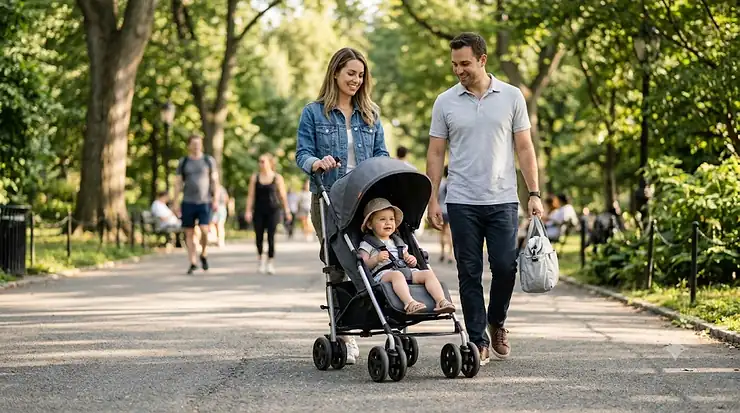
Somewhere between “I’ll just carry the diaper bag AND the toddler AND the stroller” and full-blown meltdown (yours, not the kid’s), there’s a better way to move through the world. That’s the entire promise of a good umbrella stroller: a compact, lightweight, fold-in-three-seconds ride that turns airports, aisles, and afternoon errands from a wrestling match into an actual walk. A best umbrella stroller isn’t just a smaller version of your everyday stroller — it’s a purpose-built, minimalist frame (usually 10-18 pounds) designed to collapse into a slim, umbrella-shaped bundle you can sling over one shoulder while the other arm is full of toddler, groceries, or both. Most models are built for kids six months and older, once they can sit up unassisted, and none of the picks in this guide recline flat enough for newborns.
We spent real hours cross-referencing lab testing data, aggregated customer sentiment, and manufacturer specs to find the seven models actually worth your money in 2026 — not just the ones with the flashiest Amazon thumbnail. According to Consumer Reports’ umbrella stroller testing, which evaluates strollers for safety, maneuverability, and how easily they fold and carry, the category has genuinely improved in the last few years, with some models now closing the gap on full-size strollers in comfort while staying dramatically lighter. This umbrella stroller review roundup covers budget picks, travel-obsessed picks, and a couple of “yes, it costs more, but here’s exactly why” premium options — plus the pros, cons, and weight limits you actually need before you tap “buy.”
Quick Comparison Table
| Stroller | Weight | Best For | Price Range |
|---|---|---|---|
| Chicco Liteway | ~14.5 lbs | Best overall / daily reliability | Budget-mid ($70-$110 range) |
| Summer Infant 3D Lite | ~16 lbs | Cheap backup stroller | Budget (under $60) |
| Kolcraft Cloud Plus | ~10 lbs | Theme parks & long days out | Budget-mid ($60-$95 range) |
| Baby Jogger City Tour 2 | ~14 lbs | Travel & easy maneuvering | Mid ($130-$180 range) |
| UPPAbaby G-Luxe | ~16 lbs | Full-featured comfort | Mid-premium ($210-$270 range) |
| BabyZen Yoyo2 | ~13 lbs | Best umbrella stroller for travel | Premium ($380-$470 range) |
| gb Pockit+ All City | ~9-10 lbs | Tightest fold, gate-check dodger | Premium ($300-$380 range) |
A quick glance at that table tells its own little story: weight and price move together almost every time, but not perfectly. The Kolcraft Cloud Plus proves you can get near the lightest weight in the category without paying premium prices, while the UPPAbaby G-Luxe shows that “full-featured” sometimes just means “heavier and bulkier when folded.” If your top priority is squeezing a stroller into an airplane overhead bin, weight alone won’t tell you enough — folded volume matters just as much, which is exactly why the gb Pockit+ and BabyZen Yoyo2 earn their premium price tags despite not being the single lightest strollers on this list.
💬 Just one click — help other cruising parents make better packing decisions too!😊
💬 Already leaning toward one? Jump to its full breakdown below — or keep reading for the honest trade-offs.
Top 7 Umbrella Strollers: Expert Analysis
Here’s where the rubber meets the sidewalk. Each of these seven made the cut for a specific reason — not because it topped a generic “best of” list, but because it does one job better than its competitors. We’ve pulled in real specs, aggregated review sentiment, and honest trade-off analysis for each, because a spec sheet without context is just a wall of numbers nobody asked for.
1. Chicco Liteway — the reliable classic that just works
The Chicco Liteway earns its “best overall” reputation the boring way: by nailing the fundamentals instead of chasing gimmicks. This made-in-USA classic is rated a best umbrella stroller overall thanks to simple folding, reliability, and ease of cleaning, and it comes with a rain shield that attaches and detaches quickly, a roll-up window for curious toddlers, and premium ventilation. On paper, that combination means you’re not digging through a junk drawer for a separate rain cover, and you’re not sweating through summer walks because the seat traps heat like a lot of budget frames do.
Based on the spec comparison against the rest of this list, the Liteway sits in the sweet spot of “light enough to carry, sturdy enough to trust for years.” The adjustable closure straps keep the folded bundle tight instead of flopping open in your trunk, which sounds minor until you’re the parent chasing a rogue wheel across a parking lot. Reviewers consistently note that the brand’s customer service and easy maintenance stand out, which matters more than people expect once a stroller has survived two kids and one particularly ambitious toddler who tried to “help” fold it.
Here’s what most buyers overlook: this isn’t the lightest or the most compact-folding stroller here, so if your single obsession is overhead-bin travel, look further down this list. But for a daily-use, secondary, or first umbrella stroller for toddler use, it’s hard to beat the balance.
Pros:
- ✅ Reliable one-handed fold that holds up over years of daily use
- ✅ Rain shield and roll-up window included, not sold separately
- ✅ Strong customer service reputation and easy long-term maintenance
Cons:
- ❌ Heavier and bulkier folded than dedicated travel-focused models
- ❌ Storage basket is smaller than some rivals on this list
At around $70-$110, the Liteway isn’t the cheapest option here, but the value math works out well if you want one stroller that lasts through multiple kids without a mid-toddlerhood replacement.

2. Summer Infant 3D Lite — budget-friendly, but know its limits
This is the model everyone’s cousin already owns, and for good reason: it’s genuinely inexpensive while still packing in features that pricier strollers charge extra for. It has a one-handed fold, four recline positions, a parent console with cupholders, a storage pocket, and a larger-than-most storage basket, plus anti-shock front wheels that handle light terrain like cobblestone and dirt reasonably well — though the brand itself warns against using them on gravel or rough ground.
What most buyers overlook about this model is that its reputation splits hard depending on how you plan to use it. For neighborhood strolls, quick store runs, and being a lightweight backup in the trunk, aggregated review sentiment is largely positive: parents call it a genuinely solid value for the price. But here’s the honest counterpoint worth flagging — one independent travel-stroller test specifically singled out the 3D Lite for air travel, noting it compresses sideways into a long, narrow shape rather than folding compactly, and describing the frame as a tangle of support bars fighting each other. That’s not a knock on the stroller as a budget everyday option; it’s a warning that “cheap and light” isn’t automatically “great for the airport.”
Reviewers consistently describe the build as feeling a bit cheap compared to pricier alternatives on this list, and the canopy coverage is on the smaller side. If you’re buying this specifically to fly with, skip to our travel-focused pick instead.
Pros:
- ✅ Genuinely low price point for the feature set included
- ✅ Four recline positions plus built-in cupholders and storage pocket
- ✅ One-handed fold that’s fast for everyday errands
Cons:
- ❌ Frame and fabric feel noticeably cheaper than premium models
- ❌ Poor choice specifically for air travel or checked-bag folding
At under $60, this is the classic “second stroller for grandma’s house” pick — just don’t expect it to survive six connecting flights gracefully.
3. Kolcraft Cloud Plus — lightest of the budget bunch, best for long days out
If your priority is “as light as humanly possible without spending premium money,” the Cloud Plus is the name to know. It weighs about 10.1 pounds, making it one of the lightest strollers tested against a group averaging around 14 pounds, though its longer fold style produces a larger folded volume than more compact competitors. In practice, that trade-off means you’ll feel the weight savings every single time you lift it into a trunk, even if it doesn’t tuck away quite as neatly as the ultra-compact travel models later on this list.
What the spec sheet won’t tell you, but independent testing suggests, is that the light weight comes with a real compromise. Testers found the flexible frame and softer wheel materials made it harder to maneuver even on flat surfaces, despite a reasonably sized six-inch wheel. One tester’s blunt assessment: it can handle an airport or museum trip, but anything more demanding starts to feel frustrating. That’s a useful reality check against the marketing photos.
Where it does shine, per Today’s Parent’s editorial picks, is theme parks and long outdoor days — the combination of a big canopy and a roomy basket rated for around 10 pounds of gear means you can actually pack snacks, jackets, and souvenirs without the whole thing tipping backward.
Pros:
- ✅ One of the lightest umbrella strollers in its price bracket
- ✅ Large canopy and roomy basket, great for theme-park-length days
- ✅ Budget-friendly pricing relative to its weight class
Cons:
- ❌ Flexible frame and softer wheels reduce maneuverability
- ❌ Not the best pick for uneven sidewalks or crowded, fast-paced navigation
Expect a price in the $60-$95 range, which makes it one of the better value plays here if your main use case is parks and long walks rather than tight urban navigation.
4. Baby Jogger City Tour 2 — the crowd favorite for travel and daily maneuvering
There’s a reason this stroller keeps showing up on best-of lists year after year. With about 1,400 ratings and a loyal following, the City Tour 2 offers a lightweight, compact design at only about 14 pounds, with what reviewers describe as the easiest-to-maneuver design in its class. That maneuverability rating isn’t a throwaway line — it’s the difference between confidently weaving through a crowded farmers market and apologizing to strangers every ten feet.
Based on the aggregated feedback, three things consistently come up: the compact fold, the included carry bag, and how easy it is to push even one-handed with a coffee in the other. That combination is exactly why it earns “best umbrella stroller for travel” consideration even though it’s not the absolute lightest or smallest-folding option here — sometimes reliability and control matter more in an actual airport than shaving off one more pound.
Here’s the honest analytical trade-off: at 14 pounds and a mid-tier price, it splits the difference between the ultra-budget options above and the ultra-premium travel strollers below. For families who want serious travel credibility without stepping into $400 territory, this is usually where the search ends.
Pros:
- ✅ Easiest-to-maneuver design among comparable travel-ready strollers
- ✅ Compact fold with an included carry bag for flights and car trunks
- ✅ Nearly 1,400 real customer ratings backing its reliability
Cons:
- ❌ Costs more than basic budget umbrella strollers
- ❌ Storage basket is modest compared to bulkier full-size options
Typical pricing lands in the $130-$180 range — a reasonable middle ground for a stroller that’s genuinely built with travel days in mind.
5. UPPAbaby G-Luxe — full-featured comfort, if you don’t mind the bulk
The G-Luxe is the model most likely to already be sitting in a friend’s garage, because UPPAbaby built its reputation on padded comfort and premium materials, not just minimalist weight-shaving. It’s a genuinely popular full-featured umbrella stroller, and reviewers consistently praise the plush seat and overall ride quality compared to bare-bones budget frames.
Here’s what the spec sheet won’t advertise loudly: at roughly 16.1 pounds, it was the heaviest stroller in one independent test group averaging about 14 pounds, and its traditional long umbrella-style fold produces one of the largest folded volumes in that same comparison. In plain terms, that means less “toss it over your shoulder and sprint for the gate” and more “this is happily living in your trunk between errands.” That’s not a flaw so much as a design choice — it’s simply not built primarily around portability the way our travel-focused picks are.
Based on that trade-off, the G-Luxe makes the most sense for parents who want umbrella-stroller convenience without sacrificing seat comfort on daily walks, rather than families whose single top priority is fitting a stroller in an overhead bin.
Pros:
- ✅ More padded, comfortable seat than most umbrella-category rivals
- ✅ Strong reputation for daily-use comfort and ride quality
- ✅ Popular, well-established model with a large review base
Cons:
- ❌ Heaviest stroller among comparable tested models
- ❌ Largest folded size, making true travel use less convenient
Expect a price in the $210-$270 range, positioning it as a comfort-first choice rather than a grab-and-go travel companion.
6. BabyZen Yoyo2 — best umbrella stroller for travel, full stop
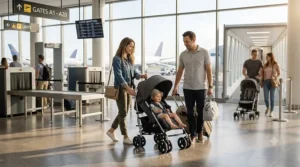
If frequent flying with a toddler is your actual lifestyle, this is the model parents keep recommending to each other in airport lounges. The Yoyo2 folds down small enough for many airplane overhead bins, letting families skip gate-checking entirely and roll right off the plane — a genuinely rare feature in this category, since most umbrella strollers, however light, still fold into a shape too long or bulky for overhead storage.
What most buyers overlook about this model is that its price isn’t really paying for extra features — it’s paying for engineering that solves one specific, expensive-to-solve problem: an ultra-tight, ultra-fast fold in a frame light enough to lift one-handed while holding a squirming toddler and a boarding pass. At around 13 pounds, it’s not the single lightest stroller on this list, but its folded footprint is what earns it repeat mentions in dedicated travel-stroller testing.
Aggregated sentiment across parenting communities consistently frames it as an investment piece rather than an impulse buy — the kind of stroller families specifically research before an international trip rather than grab off a store shelf. If your travel schedule justifies it, the math tends to work out over years of use.
Pros:
- ✅ Folds compactly enough for many airline overhead bins
- ✅ Lightweight one-handed fold, ideal for solo-parent travel days
- ✅ Strong long-term resale value thanks to brand reputation
Cons:
- ❌ Premium price tag well above most umbrella strollers
- ❌ Smaller storage basket than bulkier, comfort-focused models
Prices typically fall in the $380-$470 range at the time of research — a serious investment, but one specifically built around the “best umbrella stroller for travel” use case rather than general daily errands.
7. gb Pockit+ All City — the tightest fold you’ll find in this category
Some strollers claim to be compact. This one actually proves it. In one side-by-side comparison of eleven travel-friendly strollers, the gb Pockit+ All City produced the smallest folded volume of the entire group, meaning it takes up meaningfully less space in a trunk, closet, or overhead bin than every other model tested alongside it — including several other strollers marketed specifically as travel-ready.
Based on that spec comparison, this is the stroller for parents whose living situation or travel pattern makes every cubic inch matter — a small apartment entryway, a compact rental car, a train system with no elevator in sight. The trade-off is exactly what you’d expect: that engineering-heavy compact fold comes at a premium price, and the trimmed-down frame means less plush padding and a smaller canopy than comfort-focused rivals like the G-Luxe.
Here’s the honest read: if space is your binding constraint, nothing here beats it. If comfort and daily-use padding matter more to you than folded size, one of the mid-range picks above will serve you better for less money.
Pros:
- ✅ Smallest folded volume of any stroller in this comparison
- ✅ Genuinely light enough for true one-handed carrying
- ✅ Ideal for small living spaces and tight travel logistics
Cons:
- ❌ Premium pricing relative to its more minimal feature set
- ❌ Smaller canopy and less padding than comfort-first models
Expect pricing in the $300-$380 range, which puts it squarely in premium territory justified almost entirely by its fold size.
Getting the Most Out of Your Umbrella Stroller: Setup, Maintenance & the First 30 Days
Buying the right umbrella stroller is only half the equation — the other half is not accidentally wrecking it in month one. Setup is usually painless (most unfold in seconds, which is the entire point), but a few habits will keep yours running smoothly for years instead of one rough summer.
Start by practicing the fold-unfold motion at home, not for the first time in a crowded parking lot with a screaming toddler and a stranger watching. Most umbrella strollers use a squeeze-trigger or button-release mechanism near the handle, and muscle memory matters more than reading the manual twice. Within the first 30 days, common mistakes include folding the stroller with the canopy still extended (which stresses the frame joints) and storing it in direct trunk heat for hours, which can warp cheaper plastic components over time.
For maintenance, wipe down the wheels monthly — grit and hair wrap around axles faster than you’d expect, especially on models with smaller wheels like most budget picks on this list. A quick spray of silicone lubricant (never oil-based, which attracts more dirt) on fold hinges twice a year keeps the mechanism smooth. If you’re rotating between a lightweight everyday model and a premium travel stroller for flights, inspect the locking mechanism before every trip — a fold latch that’s slightly loose is far more annoying at security screening than at home.
Which Umbrella Stroller Fits Your Life? Real-World Scenarios
Specs are useful, but most parents actually shop by scenario. Here are three real situations and how the math tends to work out.
The city-dwelling parent with no elevator and a fourth-floor walkup needs weight over everything else — the Kolcraft Cloud Plus or gb Pockit+ All City make daily stair-carrying bearable in a way heavier full-featured models simply don’t. The family flying twice a year for holidays with a toddler between ages one and three needs fold size and durability more than ultra-light weight — this is where the BabyZen Yoyo2 or Baby Jogger City Tour 2 consistently earn their price tags. And the parent buying a simple backup umbrella stroller for toddler use at grandma’s house, or for quick trips to the store, doesn’t need premium engineering at all — the Chicco Liteway or Summer Infant 3D Lite covers that use case at a fraction of the cost.
✨ Don’t Miss These Exclusive Deals!
🔍 Take your stroller search to the next level with these carefully selected picks above. Click on any highlighted model to check current pricing and availability. The right umbrella stroller will make your daily outings smoother than you thought possible!

Umbrella Stroller Problems (and How to Actually Fix Them)
Even the best umbrella stroller runs into predictable snags. Here’s the honest problem-solution breakdown.
Problem: the fold won’t lock, and the stroller flops open in the trunk. This is almost always debris in the locking mechanism rather than a defect — a quick cleaning with compressed air, followed by a light silicone spray, resolves it on most models including the Chicco Liteway and Summer Infant 3D Lite.
Problem: the stroller pulls to one side while pushing. On lighter-frame models like the Kolcraft Cloud Plus, this usually traces back to slightly uneven wheel wear rather than frame damage — rotating the front wheels (on models that allow it) or replacing a worn wheel cap often solves it.
Problem: the canopy doesn’t provide enough shade. This is a known limitation across nearly every umbrella-category stroller, since the trade-off for lightness is almost always a smaller canopy. A clip-on aftermarket sun shade is the most common practical fix parents land on.
Problem: it doesn’t fit in the airline overhead bin like advertised. Airlines vary wildly in bin size, and this is the single most common regret purchase in this category. If overhead-bin fit is non-negotiable, stick with strollers specifically tested for compact folded volume, like the gb Pockit+ All City or BabyZen Yoyo2, rather than assuming any “umbrella stroller” will automatically qualify.
How to Choose the Best Umbrella Stroller
What is an umbrella stroller, really, once you strip away the marketing? It’s a lightweight, compact-folding stroller — typically 10-18 pounds — designed for children roughly six months and older who can sit up independently, built to prioritize portability over the extra padding and storage of a full-size stroller. Choosing the right one comes down to matching a handful of criteria to your actual life, not chasing the highest star rating in isolation.
- Confirm the age and weight range first. Most umbrella strollers aren’t suitable for infants who can’t yet sit unassisted, so check the manufacturer’s minimum age guidance before anything else.
- Weigh portability against comfort. Lighter, more compact-folding models like the gb Pockit+ trade some seat padding for portability; comfort-focused models like the UPPAbaby G-Luxe do the reverse.
- Think about your actual terrain. Smaller wheels handle sidewalks and smooth store floors fine but struggle on gravel, grass, or cobblestone — check terrain-specific feedback before assuming any model handles rough ground.
- Test the fold mechanism, even virtually. Look for demo videos of the one-handed fold in action; a stroller you can’t collapse solo while holding a child isn’t actually convenient, no matter how light it is on paper.
- Match canopy size to your climate. If you live somewhere sunny, prioritize models with reviewers noting solid canopy coverage rather than the smallest, thinnest options.
- Decide if travel is a core use case. If you’re flying multiple times a year, folded volume matters as much as weight — don’t assume “umbrella stroller” automatically means “fits in an overhead bin.”
- Set a realistic budget band, not a single number. Expect roughly $50-$100 for solid budget options, $130-$270 for mid-range comfort or travel picks, and $300-$470 for premium travel-engineered models.
Umbrella Stroller vs Lightweight Stroller: What’s the Actual Difference?
This is one of the most common points of confusion, and honestly, the line has blurred in recent years. Traditionally, umbrella strollers weigh 15 pounds or less and fold into a long, narrow shape resembling a closed umbrella, while newer lightweight stroller designs sometimes weigh only barely more but fold into a different, often more compact, shape. In other words, “umbrella stroller” originally described a specific fold style, not just a weight class — but in casual shopping conversation, most people now use the terms almost interchangeably.
Here’s the practical distinction that actually matters for your decision: some newer lightweight strollers, despite not folding into the classic umbrella shape, offer more storage, easier one-step folding, and better overall maneuverability than traditional umbrella designs — while weighing nearly the same. If a listing calls something a “lightweight stroller” rather than an “umbrella stroller,” don’t assume it’s heavier or less portable; check the actual weight and folded dimensions rather than the category label. The real decision driver isn’t the name — it’s whether the specific model’s weight, fold size, and storage match your situation.
Umbrella Stroller Weight Limits Explained
Weight limits get overlooked constantly, and it’s one of the most expensive mistakes parents make in this category — buying a stroller that fits their toddler today but not eighteen months from now. Many umbrella strollers on the market today support weight limits between 40 and 55 pounds, which typically covers use well into the toddler and preschool years, though budget models sometimes cap lower, closer to the 35-40 pound range.
Here’s what most buyers overlook: the weight limit printed on the box isn’t just about the child’s body weight tipping the frame — it’s about harness stress and frame fatigue over thousands of fold-unfold cycles. A stroller technically rated for 50 pounds that’s already three years old and heavily used may not perform identically to a brand-new unit at that same weight. If you have a bigger, taller-than-average toddler, err toward models with weight limits at the higher end of their category rather than cutting it close, and re-check the harness fit periodically rather than assuming “it still closes” means “it still fits safely.”
Umbrella Stroller Pros and Cons: The Honest Breakdown
Zooming out from any single model, here’s the category-wide trade-off every parent should walk in understanding.
Pros:
- ✅ Dramatically lighter and more portable than full-size strollers
- ✅ Fold quickly, often one-handed, for fast errands and transitions
- ✅ Generally far cheaper than full-featured travel systems
Cons:
- ❌ Limited recline options, unsuitable for infants under about six months
- ❌ Smaller storage baskets and less padding than full-size alternatives
The honest takeaway: an umbrella stroller almost never replaces your primary stroller entirely — it’s a second stroller built for speed and portability, and treating it as anything else usually leads to disappointment.
Best Umbrella Stroller for Travel: What to Actually Look For
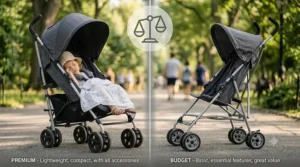
If travel is your primary use case, weight alone is a misleading metric — folded volume, fold speed, and included carry accessories matter just as much, sometimes more. Independent travel-stroller testing has found that a stroller’s real-world travel usability depends heavily on whether it fits in an overhead bin at all, since anything that doesn’t will require gate-checking regardless of how light it is, which changes your entire airport routine.
Based on the spec comparison across this guide, the BabyZen Yoyo2 and gb Pockit+ All City consistently earn “best for travel” recommendations specifically because of their engineered fold size, not just their weight — a pattern echoed in Today’s Parent’s annual stroller roundup, which repeatedly flags compact folded size as the deciding factor for travel-worthy picks. The Baby Jogger City Tour 2 earns a strong secondary recommendation as a more affordable travel-capable option for families who fly occasionally rather than constantly. If your child is on the older end of the umbrella-stroller age range — say, four or five — prioritize a sturdier frame over the absolute lightest option, since an older, stronger toddler pushing against a flimsy frame creates different stress than a compliant one-year-old would.
Safety, Regulations, and What CPSC Actually Requires
This is the part of stroller shopping nobody enjoys reading, but it’s worth two honest minutes. In the United States, manufacturers and importers of strollers must certify compliance with the federal safety rule at 16 CFR Part 1227, which incorporates the ASTM F833 voluntary standard covering stability, brakes, restraint systems, and folding mechanisms. In plain English: any legitimately sold stroller in the US has already been tested against tip-over risk, brake reliability, harness strength, and whether the folding mechanism can collapse unexpectedly while a child is seated.
For a deeper look at exactly what that standard covers and how it’s enforced, the CPSC’s official carriages and strollers guidance is worth a read if you want the regulatory detail rather than just the marketing summary. Practically speaking, look for a permanent tracking label on the frame (manufacturer, model, manufacture date) — it’s what lets you check for recalls later, and its absence on an off-brand or secondhand stroller is a genuine red flag rather than a minor oversight.
Features That Actually Matter (And Those That Don’t)
Marketing copy loves to bury the features that genuinely affect daily life underneath ones that sound impressive but rarely matter. BabyGearLab’s side-by-side stroller testing methodology rates weight, folded size, maneuverability, and ease of use separately, which is exactly the right way to think about trade-offs instead of chasing a single overall score. Based on the spec and review patterns across all seven models above, fold speed and one-handed operation consistently separate a stroller parents love from one they resent — a two-hand, multi-step fold gets old fast when your other arm is occupied. Wheel size and material matter more than most buyers expect too, since softer, smaller wheels on lighter frames can genuinely hurt maneuverability even on flat ground, not just rough terrain.
What tends to matter less than the marketing suggests: cupholder count, color options, and “designer collaboration” branding. None of those affect whether the stroller actually survives daily use or folds one-handed at a crowded gate. If you’re choosing between two otherwise similar models, spend your comparison time on weight, folded volume, wheel quality, and weight limit — not on which one has a slightly nicer print pattern.
Frequently Asked Questions
❓ What age is an umbrella stroller good for?
❓ Are umbrella strollers good for daily use?
❓ What is the best umbrella stroller for airplane travel?
❓ How much weight can an umbrella stroller hold?
❓ Do umbrella strollers recline for naps?
Conclusion
There’s no single “best umbrella stroller” that wins for every family — there’s just the one that matches your actual life. If you want a dependable daily companion, the Chicco Liteway earns its reputation honestly. If travel days define your calendar, the BabyZen Yoyo2 and gb Pockit+ All City are worth the premium. And if you’re simply after a reliable, affordable backup for grandma’s house or quick errands, the Summer Infant 3D Lite or Kolcraft Cloud Plus won’t let you down — as long as you’re realistic about what each is, and isn’t, built for.
The real lesson across all seven models is that “lightweight” and “travel-ready” aren’t automatically the same thing, and neither is “expensive” and “better for you specifically.” Match the weight limit, fold size, and terrain needs to your real routine, and you’ll end up with a stroller you actually reach for — not one gathering dust in the garage after month two.
✨ Ready to Simplify Your Next Outing?
🔍 Compare your top picks from this guide one more time, click through to check current pricing, and pick the umbrella stroller that actually fits your family’s pace. Your future self, sprinting through a terminal one-handed, will thank you!
Recommended for You
- Stroller for Cruise: 7 Best Picks That Actually Survive 2026
- Stroller for Disney World: 7 Picks That Survive the Parks (2026)
- 7 Best Travel System Strollers of 2026
Disclaimer: This article contains affiliate links. As an Amazon Associate, I earn from qualifying purchases. If you purchase products through these links, we may earn a small commission at no additional cost to you.
✨ Found this helpful? Share it with your friends! 💬🤗
