
In This Article
A sit-and-stand stroller under $200 is a tandem stroller with a regular seat up front for a baby and a bench or standing platform in back for an older sibling, letting one parent push two kids without hauling around a bulky side-by-side rig. If you’ve got two kids roughly two to five years apart, you already know the math problem: buy a $600 luxury double, or find something that actually works for the school run, the grocery trip, and the zoo without wrecking your budget. The good news is that this category has quietly been one of the more affordable corners of the stroller world for almost two decades, and there are still several genuinely well-reviewed options that land comfortably under two hundred bucks.
This guide skips the fluff and gets specific. We researched seven real, currently sold sit-and-stand strollers (plus one standing-board attachment that turns a stroller you already own into a two-kid setup), pulled their actual specs and aggregated review sentiment, and compared them head-to-head so you’re not guessing. We’ll also walk through the safety standards that govern these products — strollers sold in the U.S. must meet a federal safety standard for carriages and strollers — so you know what “under $200” doesn’t have to mean “under-protected.” By the end, you should know exactly which model fits your family, your car trunk, and your actual budget.
Quick Comparison Table
Before we dig into the details, here’s the fast version. Every stroller below is a genuine, currently available model, and prices reflect research at the time of writing — always check the current price before buying, since retailers adjust pricing constantly.
| Stroller | Price Range | Weight Capacity | Best For |
|---|---|---|---|
| Baby Trend Sit N’ Stand Ultra | $150–$190 range | 50 lbs front, 50 lbs rear | Overall best value |
| Baby Trend Sit N’ Stand Double 2.0 | $150–$180 range | 50 lbs per seat | Lightest budget pick |
| Baby Trend Sit N’ Stand 5-in-1 Shopper | $150–$190 range | 50 lbs front seat | Most configuration modes |
| Baby Trend Sit N’ Stand 2.0 DLX | $150–$190 range | 50 lbs per seat | Everyday commuting |
| Lascal BuggyBoard Maxi | $80–$130 range | Up to 55–66 lbs rider | Standing board attachment |
| Graco Ready2Grow 2.0 | $240–$260 range | 50 lbs per seat | Stretch-budget splurge |
| Joovy Caboose Ultralight | $230–$260 range | 45 lbs per seat | Lightest full tandem |
Looking at the spread, the four Baby Trend models dominate the true under-$200 territory, which makes sense given the brand essentially invented the sit-and-stand category decades ago and has kept iterating on the same affordable formula. The Lascal BuggyBoard Maxi isn’t a full stroller at all, but if you already own a single stroller you love, it’s the cheapest possible route to a low-cost sibling stroller setup. The Graco Ready2Grow 2.0 and Joovy Caboose Ultralight both run past $200, and we’ve included them honestly as “if you can stretch it” comparisons rather than pretending they fit the budget line — transparency matters more than hitting an arbitrary number.
💬 Found a favorite already? Save this comparison and come back before checkout — prices shift daily.
Top 7 Sit-and-Stand Strollers Under $200: Expert Analysis
1. Baby Trend Sit N’ Stand Ultra Stroller — best all-around value
The Sit N’ Stand Ultra is the model most parenting-gear reviewers point to first, and once you look at the spec sheet, it’s easy to see why. Both the front seat and the rear standing platform carry a 50-pound weight limit, and unlike a lot of budget doubles, you can mount an infant car seat in either the front or back position — useful if your older child still wants the front seat’s better sightlines. Based on the spec comparison against other Baby Trend models, the Ultra’s main edge is flexibility: dual foot-activated rear brakes, a large under-seat basket, and a front seat that partially reclines for nap time.
Reviewers consistently report that the one-handed fold is faster than competing sit-and-stands, though several also note the stroller is noticeably longer than a standard double, which can make tight grocery-store aisles or narrow sidewalks a bit of a squeeze. What most buyers overlook is that the reclining front seat eats into the rear child’s legroom when fully reclined — a real trade-off, not a flaw, but worth planning around if your older child is tall for their age.
Pros:
- ✅ 50-lb capacity on both front and rear positions
- ✅ Accepts an infant car seat in front or back
- ✅ Fast one-handed fold reported across reviews
Cons:
- ❌ Longer footprint than most sit-and-stand competitors
- ❌ Reclined front seat reduces rear child’s space
At around $150–$190, the Ultra represents the strongest value-per-feature ratio in this roundup — check current price before buying, since it fluctuates by color and retailer.
2. Baby Trend Sit N’ Stand Double Stroller 2.0 — lightest budget pick
If the Ultra feels like more stroller than you need, the standard Sit N’ Stand Double 2.0 trims things down without losing the core sit-and-stand function. Each seat carries a 50-pound maximum (22 kg) with a 34-pound minimum for the rear standing or jump-seat position, and Walmart’s aggregated customer data shows a 4.2-star average across more than 1,300 reviews — a large enough sample that the number is meaningful rather than a fluke from a handful of five-star ratings.
Here’s what to weigh: this model skips some of the Ultra’s premium touches, like the dual-position car seat mounting, but it keeps the essentials — five-point harnesses on both seats, a removable canopy up front, and a fixed rear canopy with visors. Reviewers consistently mention that it’s genuinely easier to lift into a trunk than bulkier tandem competitors, which matters more than it sounds like it should when you’re doing this twice a day.
Pros:
- ✅ 4.2-star average across 1,300+ verified reviews
- ✅ Lighter and easier to lift than most rear-seat tandems
- ✅ Five-point harness on both seating positions
Cons:
- ❌ No dual-position car seat mounting
- ❌ Rear canopy is fixed rather than adjustable
Priced in the $150–$180 range, this is the pick for parents who want the affordable sit-and-stand stroller experience without paying for features they won’t use.
3. Baby Trend Sit N’ Stand 5-in-1 Shopper Stroller — most configuration modes
The 5-in-1 Shopper earns its name honestly: it converts between a travel system, a solo stroller seat, a bench-seat double, and a full stand-on configuration, which is a genuinely useful range for a family whose needs shift month to month. On paper, this means you’re not locked into one setup the way you are with some cheaper doubles — the stroller adapts as your kids grow rather than getting replaced.
The standout feature here is the MagneTec basket, which uses magnets instead of zippers or snaps to close, and it holds up to 30 pounds of gear on top of the 50-pound front-seat capacity. Reviewers of the Cassis Pink colorway rate it at 4.6 stars across nearly 300 reviews, and the aggregated sentiment leans heavily toward praise for the UPF 50+ canopy and the multi-directional phone holder — small conveniences that add up on long outings. The spec sheet won’t tell you this, but user reports suggest the compact, self-standing fold is a genuine time-saver compared to strollers that flop over when you try to lean them against a wall.
Pros:
- ✅ 4.6-star rating across nearly 300 reviews
- ✅ Magnetic basket closure holds up to 30 lbs
- ✅ Five distinct modes for a growing family
Cons:
- ❌ More moving parts than simpler sit-and-stand models
- ❌ Learning curve to switch between all five modes
Expect a price in the $150–$190 range, putting it squarely among the most affordable sit-and-stand stroller options with genuine versatility.
4. Baby Trend Sit N’ Stand 2.0 DLX Double Stroller — best for daily errands
The DLX trim adds canopy visors and a swing-away child tray that doubles as a car-seat adapter surface, which is a small but genuinely practical upgrade if your daily routine involves a lot of in-and-out — daycare drop-off, quick errands, that kind of thing. Based on the spec comparison with its non-DLX sibling, the core weight limits stay the same (50 lbs per seat), so you’re paying the modest price difference purely for convenience features, not additional capacity.
What most buyers overlook about this model is the pair of integrated cup holders — one for each child — which sounds minor until you’re the parent refereeing a spilled juice box on a hot sidewalk. Aggregated review sentiment for the broader Sit N’ Stand 2.0 line consistently highlights the storage basket size as a strength, with several parents noting it comfortably fits a diaper bag plus a grocery run, which isn’t something every budget standing platform stroller can claim.
Pros:
- ✅ Swing-away tray doubles as car seat surface
- ✅ Two integrated child cup holders
- ✅ Storage basket fits diaper bag plus groceries
Cons:
- ❌ Only a modest upgrade over the base 2.0 model
- ❌ Visor canopy offers less shade than a full hood
Typical pricing sits in the $150–$190 range, making it a solid middle option among the Baby Trend lineup.
5. Lascal BuggyBoard Maxi — best standing board attachment
Not every family needs a second full seat, and that’s where the standing board attachment category comes in. The Lascal BuggyBoard Maxi clips onto roughly 95% of single strollers using a universal connector system, turning your existing single stroller into a two-kid rig for a fraction of the cost of buying a whole new tandem. It holds up to 55–66 pounds depending on the exact BuggyBoard version, and the quick-release mechanism means you can pop it off in seconds when your older child wants to walk.
Here’s what the spec sheet doesn’t fully capture: because you’re keeping your current stroller’s frame, you also keep its wheel size, suspension, and fold mechanism — so if you already love how your single stroller handles bumpy sidewalks, that experience carries over. Reviewers consistently note that the board itself is sturdy, though a genuine trade-off is that most single strollers weren’t engineered with a rear board’s added leverage in mind, so tight turns can feel different than what you’re used to. Families considering this route should also budget for a Universal Connector Kit if they plan to move the board between multiple strollers.
Pros:
- ✅ Fits roughly 95% of strollers via universal connector
- ✅ Holds up to 55–66 lbs depending on model
- ✅ Cheapest route to a low-cost sibling stroller setup
Cons:
- ❌ Doesn’t include its own seat or harness
- ❌ Can affect turning radius on existing stroller
Priced around $80–$130, this is the budget alternative worth considering before committing to a full sit-and-stand stroller under $200.
6. Graco Ready2Grow 2.0 Double Stroller — worth the stretch
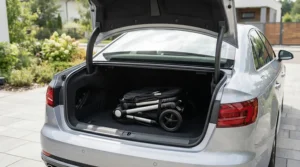
If your budget has a little give, the Ready2Grow 2.0 is the kind of model that shows up on “best of” lists specifically because it splits the difference between a sit-and-stand and a full double. It offers both a bench seat and a standing platform option in the rear position, each rated for up to 50 pounds, plus a compact fold designed for smaller trunks — a detail that matters more than marketing copy usually lets on, since fold size is one of the top complaints in this category generally.
Based on the spec comparison against the Baby Trend lineup, the Ready2Grow’s main advantage is build quality perception; it reads as a step up in materials and finish, which aligns with its higher price point. What buyers should weigh honestly is whether that upgrade is worth roughly $70–$90 more than the Baby Trend options — for families who plan to use the stroller daily for several years, the extra durability may pay for itself, but for occasional or backup use, it’s a harder case to make.
Pros:
- ✅ Bench seat and standing platform in one unit
- ✅ Compact fold built for smaller trunks
- ✅ Perceived build-quality step above entry-level models
Cons:
- ❌ Runs $40–$90 above true budget models
- ❌ Standing platform still adds notable overall length
Expect a price in the $240–$260 range — a genuine splurge relative to the under-$200 target, but a fair one if longevity is your priority.
7. Joovy Caboose Ultralight — lightest full tandem
The Joovy Caboose Ultralight earns its “splurge” spot here on a single number: at roughly 22 pounds, it’s nearly five pounds lighter than the original Caboose and among the lightest full tandem sit-and-stand strollers sold anywhere, budget or premium. That matters enormously if you’re the one lifting it into a trunk or up a flight of stairs multiple times a day — a factor that’s easy to underweight when comparing spec sheets but hard to ignore in real life.
The standout feature is that it keeps a full-size reclining front seat plus a genuine bench-and-standing-platform combo in back, with a 90-pound total capacity split across both positions. Aggregated sentiment for the broader Caboose line (the closely related Caboose LX averages 4.3 stars across 58 ratings) consistently praises the narrow, trunk-friendly folded profile, while a smaller number of reviewers mention the narrower wheelbase feels less planted than boxier competitors on loose gravel or uneven grass. Reviewers consistently note the included universal car seat adapter is a genuine cost-saver, since you’re not buying that piece separately.
Pros:
- ✅ Roughly 22 lbs — lightest full tandem available
- ✅ Full-size reclining front seat plus rear platform
- ✅ Includes universal car seat adapter
Cons:
- ❌ Priced above the true $200 budget line
- ❌ Narrower wheelbase feels less stable off pavement
Pricing runs in the $230–$260 range, positioning it as the premium alternative for parents prioritizing weight over price.
Setting Up and Getting the Most from Your New Stroller
Getting a sit-and-stand stroller under $200 home is only step one — how you set it up in the first week determines whether it becomes a daily workhorse or a garage regret. Start by adjusting the rear harness before your older child ever climbs aboard; most sit-and-stand models ship with the harness set for a mid-range height, and a too-loose strap on the standing platform is one of the more common early complaints in aggregated reviews. Next, test the fold-and-unfold motion three or four times in your driveway before you’re doing it one-handed in a parking lot with a crying toddler — muscle memory matters here.
A common first-month mistake is overloading the storage basket past its rated limit, which shifts the stroller’s center of gravity and can affect the tip-resistance testing every stroller sold in the U.S. is required to pass. Check tire pressure on any model with air-filled wheels monthly, and wipe down the rear platform’s grip surface regularly, since sunscreen and snack residue build up fast and reduce traction exactly where your standing child needs it most. Finally, register your stroller with the manufacturer — it’s a thirty-second step that ensures you’re notified directly if a recall or safety bulletin is ever issued.
Real Families, Real Strollers: Which Pick Fits Your Situation
Consider a family with a newborn and a three-year-old living in a third-floor walkup with street parking two blocks away. Weight matters more than almost anything else here, which points toward the Joovy Caboose Ultralight or the Baby Trend Sit N’ Stand Double 2.0 — both are meaningfully easier to carry up stairs than heavier competitors, even if it means paying a bit more for the Joovy.
Now picture a family that already owns a stroller they love for their toddler and just had a second baby. Buying an entirely new tandem might be overkill; the Lascal BuggyBoard Maxi lets the older child ride along on demand while keeping the existing single stroller for the baby, making it the most genuinely low-cost sibling stroller solution of the bunch. Finally, think about a family doing frequent grocery runs and daycare pickups with two kids close in age — the Baby Trend Sit N’ Stand 5-in-1 Shopper or the Baby Trend Sit N’ Stand 2.0 DLX cover that daily-errand use case well, with storage and configuration flexibility that a lighter, more minimal model can’t match.
How to Choose a Sit-and-Stand Stroller Under $200
Picking the right model comes down to a handful of concrete questions, not gut feeling. Here’s the reasoning that actually matters:
- Check both weight capacities separately. Front and rear limits often differ, and the rear standing platform’s limit is usually the one families hit first as kids grow.
- Measure your trunk before you measure the stroller. Folded length varies more than people expect within this category — a few extra inches can be the difference between “fits” and “doesn’t.”
- Decide if you need a car seat mount. Not every sit-and-stand model accepts an infant car seat in both positions, and retrofitting one later usually isn’t possible.
- Weigh the stroller yourself, mentally. If you’re regularly lifting it solo up stairs, an extra five pounds compounds fast over a year of daily use.
- Read the storage basket’s real capacity, not just its size. A basket rated for 15 pounds looks the same as one rated for 30, but only one survives a real grocery run.
- Consider a standing board attachment first if you already own a single stroller. It’s frequently the more affordable sit-and-stand stroller path for families who don’t need two full seats.
- Confirm the age and height limits on the standing platform. Most require a child to be at least 2.5 years old and under 40 inches tall, which catches some families by surprise.
✨ Ready to compare specs side by side? Bookmark this guide and revisit it once you’ve measured your trunk and narrowed your top two picks!
Common Mistakes When Buying an Affordable Sit-and-Stand Stroller
The most frequent mistake is buying based on price alone without checking the rear platform’s minimum age and height requirements — a stroller can be perfectly safe and still be the wrong fit if your child doesn’t meet those thresholds yet. A close second is ignoring folded dimensions entirely; several of the models in this guide fold to genuinely different lengths, and a stroller that seems identical to a competitor in every other spec can be five inches longer folded, which matters enormously for smaller trunks or narrow front hallways.
Parents also commonly assume all “sit-and-stand” branding means the same weight capacity across brands, when in reality it varies from 40 to 50 pounds per seat depending on the model. What most buyers overlook is checking whether the harness on the rear seat is a genuine five-point system or a simpler two- or three-point design — the difference matters more as kids get older and more mobile while riding.
Standing Board Attachment vs Full Sit-and-Stand Stroller: Which Wins?
This is one of the more practical decisions in the whole category, and it genuinely depends on what you already own. A standing board attachment like the Lascal BuggyBoard Maxi is cheaper, adds almost no bulk to your existing stroller, and lets an older child hop on and off freely — but it doesn’t include its own harness or seat, meaning it’s better suited to a child who can stand independently and hold on, not one who still needs to be strapped in. A full sit-and-stand stroller like the Baby Trend Sit N’ Stand Ultra gives every child their own harnessed seat, which matters if your older child is still young enough to need that restraint, or if they’ll want to nap mid-outing.
| Factor | Standing Board Attachment | Full Sit-and-Stand Stroller |
|---|---|---|
| Typical price | $80–$130 range | $150–$260 range |
| Harness for older child | Not included | Five-point harness included |
| Added bulk | Minimal | Moderate to significant |
| Best for | Independent standers, occasional use | Younger riders, daily use |
The math here favors the Lascal BuggyBoard Maxi for families with an independent, sturdy walker who just needs an occasional lift, while the Baby Trend Sit N’ Stand Ultra or Baby Trend Sit N’ Stand 5-in-1 Shopper make more sense for families who need genuine daily, harnessed seating for both kids. If your older child is right at that 2.5-to-3-year transition age, the attachment route is often the more affordable sit-and-stand stroller alternative worth trying first.
Stroller Weight Capacity Explained: What the Numbers Actually Mean
Stroller weight capacity gets tossed around as a single number, but it’s actually two separate figures that matter: the per-seat limit and the stroller’s total rated capacity, which is sometimes lower than simply adding both seat limits together. On the models in this guide, per-seat capacity ranges from 45 to 50 pounds, with most rear standing platforms also carrying a minimum weight and age requirement — typically around 34 pounds and 2.5 years old — because a child too light or too young may not have the balance or strength to safely use the platform.
What the spec sheet won’t tell you is that weight capacity is tested under controlled lab conditions, not real-world use with an actively bouncing toddler, so manufacturers build in a safety margin. Reviewers consistently report that stroller weight capacity starts to feel tight well before a child hits the stated maximum, simply because taller or more active kids need more physical space than the number alone suggests. When comparing two models with identical stated capacities, the one with a wider or deeper platform often has more practical, real-world life left in it.
Budget Standing Platform Strollers for Growing Families
Families expecting a close second child, or already juggling one, are the core audience for this entire category, and the calculus is a little different than for a first-time stroller buyer. On paper, this means prioritizing models with a genuinely wide age range on the rear platform — the Baby Trend Sit N’ Stand Ultra and Baby Trend Sit N’ Stand 5-in-1 Shopper both accommodate a broad span from toddler to early elementary age, which extends the useful life of the purchase by a year or more compared to narrower-range competitors.
For families who know they’ll want to remove the rear seating entirely once the older child outgrows it, a model like the Joovy Caboose Ultralight — built around a genuinely modular rear section — offers more long-term flexibility, even at its higher price point. Budget standing platform stroller buyers should also factor in resale value: Baby Trend’s models, thanks to sheer sales volume and brand recognition, tend to hold value reasonably well on the secondhand market once a family is done with them.
Features That Actually Matter (And Those That Don’t)
Cup holders, phone mounts, and canopy window flaps are nice, but they’re not what determines whether a stroller serves your family well for two or three years. What actually matters: the rear harness quality, the folded footprint relative to your car, and whether the basket capacity matches your real usage, not the marketing photo. A magnetic basket closure, like the one on the Baby Trend Sit N’ Stand 5-in-1 Shopper, sounds like a gimmick until you’re closing it one-handed with a toddler on your hip — then it’s a genuine quality-of-life upgrade.
What doesn’t matter nearly as much as marketing suggests: the number of “modes” a stroller claims to offer, if you’ll realistically only use two or three of them. Reviewers consistently note that they settle into one or two configurations within the first month regardless of how many the box advertises, which is worth remembering before paying extra for versatility you may not use.
Safety, Certification, and Regulations Guide
Every stroller legally sold in the U.S. must meet the federal safety standard incorporated from ASTM F833, covering stability testing, parking brake performance, and hazards like hinge entrapment — the same standard referenced in the CPSC rule linked earlier in this guide. Beyond the legal minimum, many manufacturers also submit products for Baby Safety Alliance certification (the organization formerly known as JPMA), a voluntary program involving independent lab testing and on-site manufacturing inspections.
The American Academy of Pediatrics offers its own practical guide to choosing a safe stroller, and its core recommendations apply directly here: always use the five-point harness, keep bags off the handles to prevent tip-back, and register any new stroller with the manufacturer so you’re notified of recalls. For sit-and-stand models specifically, also check that the standing platform’s grip surface remains textured and hasn’t worn smooth — a wear pattern that develops faster than most parents expect with daily outdoor use.
Long-Term Cost & Maintenance: What You’ll Actually Spend After the Purchase
The purchase price is only part of the real cost of owning a sit-and-stand stroller under $200. Budget for occasional replacement parts — wheels and canopy fabric are the most common wear items across this category — along with the eventual cost of a Universal Connector Kit if you go the Lascal BuggyBoard Maxi route and want to move it between multiple strollers. Most families report needing zero major repairs within the first two years if the stroller is stored indoors and the harness buckles are kept free of debris.
Total cost of ownership favors the Baby Trend lineup simply on volume — replacement parts and accessories are widely available and reasonably priced compared to boutique brands, where a single replacement canopy can cost a meaningful fraction of the stroller’s original price. For families planning to use a stroller daily for three-plus years, the extra $70–$90 for something like the Graco Ready2Grow 2.0 can be a reasonable long-term-value trade, but for shorter-term or backup use, the entry-level Baby Trend models remain the better return on investment.

Frequently Asked Questions
❓ What is the best sit and stand stroller under $200?
❓ Can a sit-and-stand stroller hold two kids over 40 pounds each?
❓ Is a stroller board attachment cheaper than a full sit-and-stand stroller?
❓ What age is a sit-and-stand stroller good for?
❓ Do budget sit-and-stand strollers meet the same safety standards as expensive ones?
Conclusion
A genuinely good sit-and-stand stroller under $200 isn’t hard to find once you know what to actually compare — weight capacity per seat, folded dimensions, harness quality, and whether a car seat mount matters for your family. The Baby Trend Sit N’ Stand Ultra remains the strongest all-around pick for most families, the Lascal BuggyBoard Maxi is the smartest route if you already own a stroller you love, and the Joovy Caboose Ultralight or Graco Ready2Grow 2.0 are worth the stretch if weight or build quality matters more to you than staying strictly under budget.
Whichever model you land on, the research above should save you from the most common regret in this category: buying based on price or looks alone, then discovering six months in that the folded length doesn’t fit your trunk or the rear harness isn’t the five-point system you assumed. Measure first, compare the real specs, and choose the stroller that fits your actual daily routine — not just the one with the lowest sticker price.
Recommended for You
- Sit-and-Stand Stroller for Toddler and Preschooler: 7 Top Picks 2026
- Jogging Double Stroller for Marathon Training Parents: 7 Best (2026)
- 7 Best Jogging Double Stroller Under $400 Picks for 2026
Disclaimer: This article contains affiliate links. As an Amazon Associate, I earn from qualifying purchases. If you purchase products through these links, we may earn a small commission at no additional cost to you.
✨ Found this helpful? Share it with your friends! 💬🤗
