
In This Article
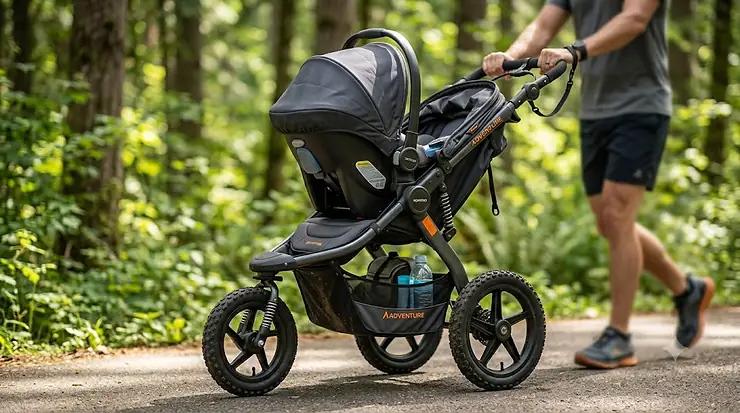
Somewhere between the hospital discharge papers and your first attempt at pushing a stroller one-handed while holding a diaper bag, coffee, and your sanity, you start wondering if you’ll ever run again. A jogging stroller for infant use is exactly what it sounds like: a three-wheeled, suspension-equipped stroller built to handle a moving parent, adapted so it can safely carry a baby who isn’t sitting up on their own yet — usually through a car seat adapter, an infant insert, or a compatible bassinet. It’s the piece of gear that quietly answers the question “how do I keep my body and my baby happy at the same time?”
Here’s the catch nobody tells you at the baby shower: not every jogging stroller works for newborns straight out of the box, and the ones that do aren’t all built the same way. Some brands bolt on a car seat adapter as an afterthought. Others engineer the whole frame around it. And the age you’re actually allowed to run with your baby is a completely different number than the age you can walk with them. We dug through real product specs, verified compatibility charts, and aggregated customer feedback to build this guide — no invented reviews, no fluff, just the research a tired, sleep-deprived parent doesn’t have time to do at 2 a.m.
Below, you’ll find seven real jogging strollers spanning budget to premium, a breakdown of how car seat adapters actually work, the honest age guidelines pediatricians recommend, and the mistakes that trip up first-time buyers most often. According to a pediatrician interviewed by Healthline, jogging strollers are generally considered safe for babies once they’re 6 to 8 months old and have solid head and neck control — which matters a lot for how you’ll actually use whichever stroller you pick.
Quick Comparison Table
If you’re short on time, here’s the fast version. This snapshot ranks our top picks by price tier so you can jump straight to the category that matches your budget and lifestyle.
| Stroller | Price Range | Best For | Infant Ready? |
|---|---|---|---|
| BOB Revolution Flex 3.0 | $500–$600 range | Best overall performance | Yes, with Britax car seat adapter |
| Thule Urban Glide 3 | $550–$650 range | Serious runners & rough terrain | Yes, with bassinet or car seat adapter |
| UPPAbaby Ridge | $700–$900 range | Families already in the UPPAbaby ecosystem | Yes, with bassinet or Mesa/Aria adapter |
| Baby Jogger Summit X3 | $450–$550 range | All-terrain daily walkers | Yes, with Baby Jogger/Graco adapter |
| Chicco Activ3 Jogging Stroller | $400–$500 range | Best bundled value travel system | Yes, includes KeyFit 30 seat |
| Graco FastAction Fold Jogger | $200–$320 range | Tightest budget | Yes, includes SnugRide infant seat |
| Baby Trend Expedition2 Jogger | Under $250 range | Budget + big family use | Yes, includes EZ-Flex-Loc seat |
Looking at the spread above, the pattern is clear: budget-friendly picks like the Graco FastAction Fold Jogger and Baby Trend Expedition2 Jogger bundle an infant car seat directly into the box, while premium options like the UPPAbaby Ridge and Thule Urban Glide 3 expect you to buy a separate adapter but reward you with noticeably smoother suspension. If you already own a car seat, checking brand compatibility first will save you from an expensive mismatch.
💬 Just one click — help other parents find the right stroller too!😊
Top 7 Jogging Strollers for Infant Use: Expert Analysis
We picked these seven real, currently available models to cover every budget and every version of “infant-ready” — car seat adapters, bassinets, and bundled infant seats included. Every product name below stays bolded throughout the article so you can scan back to it easily.
1. BOB Revolution Flex 3.0 — best all-around performance for daily runners
The standout here is genuinely the ride quality — this is the stroller runners recommend to other runners, not just parents. At 29 pounds with 3 inches of suspension travel and a locking front wheel, the frame soaks up cracked sidewalks and gravel trails without transmitting every bump straight to the seat. The stroller supports babies as small as 8 weeks old when used with a compatible Britax infant car seat, then transitions to walking-only use in the main seat from roughly 2 to 8 months, and becomes suitable for actual running once your child hits 8 months and can hold their head steady.
Based on the spec comparison, the nine-level adjustable handlebar is what separates this from cheaper joggers — it means both a 5’2″ and a 6’2″ parent can push comfortably without hunching. Reviewers consistently note that the peek-a-boo canopy window is a nice touch for checking on a sleeping infant mid-run, though the plastic can fog slightly in bright sun. This is the pick for parents who already run regularly and don’t want their hobby to disappear once the baby arrives.
Pros:
- ✅ Best-in-class suspension for serious daily mileage
- ✅ Nine-level handlebar fits nearly any parent’s height
- ✅ Britax car seat compatibility from 8 weeks old
Cons:
- ❌ Heavier than lighter everyday strollers at 29 lbs
- ❌ Car seat adapter sold separately, adding to total cost
Expect to pay in the $500–$600 range for the stroller alone, with the adapter as a separate purchase — a fair value verdict given how many miles this frame is built to handle before it wears out.
2. Thule Urban Glide 3 — most refined ride for mixed terrain
What most buyers overlook about the third-generation Urban Glide is how much of the redesign focused on the newborn stage specifically, not just the running experience. Suitable from 6 months up to 49 pounds, with a maximum stroller capacity of 75 pounds, the Urban Glide 3 weighs about 26 pounds and rolls on 16-inch rear tires with a 12-inch front wheel that locks for jogging. For younger infants, it pairs with Thule’s own bassinet or a range of car seats through separately sold adapters.
Here’s what the spec sheet won’t tell you outright: the seat now reclines nearly flat and includes a built-in leg rest, which genuinely matters if you’re using it for stroller naps rather than jogging in the early months. Reviewers who’ve owned multiple generations of this stroller describe the fold as noticeably more compact than the outgoing model, which matters if your trunk space is already eaten up by a stroller-and-diaper-bag combo. This is the jogger for parents who split their time between pavement runs and genuinely rough trails.
Pros:
- ✅ Near-flat recline works well for early infant naps
- ✅ Compact fold compared to the previous generation
- ✅ Locking front wheel with easy knob-based control
Cons:
- ❌ Bassinet and car seat adapters are separate purchases
- ❌ Premium price puts it out of reach for tight budgets
Priced around $550–$650 for the stroller frame, this is a long-haul investment — the kind of jogger you’ll still be using comfortably when your infant becomes a sturdy three-year-old.
3. UPPAbaby Ridge — smartest pick for families already using UPPAbaby gear
The advantage that jumps out immediately is ecosystem synergy. The UPPAbaby Mesa V3 infant car seat pairs directly with the UPPAbaby Ridge jogging stroller with the addition of adapters, which means if you’re already carrying a Mesa or considering the ultra-light Aria seat, the Ridge slots in with far less trial and error than mixing brands.
On paper, this means less compatibility research for you — a real time-saver during the newborn haze. Reviewers who tested the bassinet configuration note that the seat fabric removes cleanly to switch between bassinet and car-seat modes, and the closed storage basket keeps diaper-bag contents dry on wet-weather runs. The tradeoff is price: this sits at the top of our lineup, and the payoff is mostly in fit-and-finish rather than raw jogging performance compared to the BOB or Thule.
Pros:
- ✅ Seamless compatibility with UPPAbaby’s own car seats
- ✅ Bassinet-compatible for true newborn use
- ✅ Closed storage basket and included snack tray
Cons:
- ❌ Highest price point in this lineup
- ❌ Adapter needed even within the UPPAbaby lineup
At $700–$900 for the stroller, the value case rests on brand loyalty and long-term durability rather than being the cheapest way to get infant-ready jogging capability.
4. Baby Jogger Summit X3 — best everyday all-terrain option
The standout feature here is the suspension “summit wheels” paired with a hand-operated deceleration brake — a detail that matters more than it sounds on downhill stretches with a baby on board. The near-flat reclining seat and vented seat top increase airflow, which reviewers frequently mention as a comfort win during warm-weather strolls.
Based on real spec comparison, this frame creates a travel system using Baby Jogger or Graco infant car seats once you add the separately sold adapter — worth noting before you buy, since some owners have reported the adapter going temporarily out of stock, which is a legitimate supply-chain frustration to factor in if you need infant compatibility immediately. What most buyers overlook is that the one-hand compact fold genuinely simplifies solo outings, a detail that matters far more once you’re managing a car seat, a diaper bag, and a squirming infant by yourself.
Pros:
- ✅ All-terrain suspension wheels smooth out rough paths
- ✅ Near-flat recline plus vented seat top for airflow
- ✅ One-hand compact fold for solo parent outings
Cons:
- ❌ Car seat adapter sold separately and occasionally back-ordered
- ❌ Bulkier folded size than some lighter-weight competitors
In the $450–$550 range, this is a strong middle-ground choice — most of the premium performance without the top-tier price tag.
5. Chicco Activ3 Jogging Stroller Travel System — best bundled value
The standout advantage is simplicity: this comes as a complete travel system with the KeyFit 30 infant car seat already included, so there’s no separate adapter to hunt down or accidentally mismatch. Reviewers who tested it at baby expos highlighted the fabric parent console with built-in cupholders, which folds flat with the stroller instead of adding bulky weight the way rigid plastic consoles do.
Here’s what stands out in practice: the front wheel swivel lock sits right at the handlebar rather than down near the wheel itself, meaning you’re not bending over mid-jog to switch modes. On paper, that’s a small ergonomic detail, but reviewers describe it as one of those “why doesn’t every brand do this” features once you’ve used it. The seating fabric also earns consistent praise for airflow, a genuine plus for infants who run warm.
Pros:
- ✅ Includes the KeyFit 30 infant car seat and base
- ✅ Front wheel lock reachable from the handlebar
- ✅ Breathable seat fabric praised in aggregated reviews
Cons:
- ❌ Overall frame feels less premium than Thule or BOB
- ❌ Suspension less refined on genuinely rough trails
At $400–$500 range for the full bundle, this is arguably the strongest dollar-for-dollar value if you don’t already own a compatible infant car seat.

6. Graco FastAction Fold Jogger Travel System — tightest budget pick
The standout here is the one-second, one-hand FastAction fold — a genuinely useful feature when you’re juggling a car seat in one arm. The travel system comes bundled with the lightweight SnugRide Lite LX infant car seat, rated for rear-facing infants from 4 to 30 pounds and up to 32 inches, and you simply remove the jogger’s seat pad to click the infant car seat directly onto the frame.
Reviewers consistently note real satisfaction with the value-to-price ratio here; aggregated feedback describes the stroller as stable, easy to fold, and comfortable for everyday errands rather than serious mileage running. What the spec sheet won’t spell out clearly is that this is closer to a “crossover” stroller than a dedicated racing jogger — the front wheel locks for stability, but the frame and tires aren’t built for the same punishment as the BOB or Thule. For walking, errands, and light jogging on smooth pavement, though, it’s a genuinely solid budget entry.
Pros:
- ✅ Infant car seat bundled in — no adapter shopping needed
- ✅ One-second, one-hand fold for solo parents
- ✅ Lowest price point among true travel-system joggers
Cons:
- ❌ Suspension not built for aggressive trail running
- ❌ Heavier folded footprint than premium lightweight joggers
Typically found in the $200–$320 range depending on retailer promotions, this is the pick for parents who want jogging-stroller styling and infant compatibility without a four-figure line item.
7. Baby Trend Expedition2 Jogger Travel System — lesser-known budget alternative
The standout feature is sheer accessibility: this bundle includes the EZ-Flex-Loc infant car seat and consistently lands as one of the most affordable true jogging-stroller-plus-car-seat combinations on the market. It’s not a brand every parent immediately thinks of, but that’s exactly why it deserves a spot here as the “budget alternative” pick — Baby Trend has built infant travel systems for decades and their compatibility ecosystem is more mature than the brand name might suggest.
Based on aggregated buyer feedback, the frame handles neighborhood jogs and stroller-fitness classes reasonably well, though it won’t match the suspension sophistication of the BOB or Thule on genuinely uneven trails. What most buyers overlook is that Baby Trend’s EZ-Flex-Loc base uses a simple, forgiving install process that first-time parents tend to rate highly for reducing installation stress — a meaningfully underrated feature during the newborn adjustment period.
Pros:
- ✅ Full travel system at the lowest price point in this list
- ✅ EZ-Flex-Loc base known for a forgiving, simple install
- ✅ Solid option for parents outfitting multiple caregivers’ cars
Cons:
- ❌ Suspension noticeably softer on rough terrain
- ❌ Fewer premium touches like closed storage or leg rests
Usually available under $250, this is the realistic pick for budget-conscious families who still want the reassurance of true infant jogging-stroller compatibility from day one.
Jogging Stroller Car Seat Compatible: How Adapters Actually Work
A jogging stroller car seat compatible setup isn’t automatic just because a brand name matches — compatibility depends on the exact adapter, the exact car seat model, and sometimes the exact model year of the stroller frame. Baby Jogger, for example, sells separate car seat adapters specifically engineered for Baby Jogger and Graco infant car seats, and using an unlisted combination isn’t just a fit issue — it’s a genuine safety risk, since the click-in mechanism is only crash-tested with approved pairings.
Here’s the practical breakdown: adapters typically snap onto the stroller frame where the seat would normally sit, and the car seat then clicks directly into the adapter brackets, no base or belt required for that connection. Reviewers on Baby Jogger Summit X3 adapter listings describe the process as quick once you’ve done it the first time, though matching an older stroller model to a current adapter can take a bit of research. Before buying any jogging stroller as your infant’s ride, check the manufacturer’s published compatibility chart rather than assuming “same brand” automatically means “fits.”
Jogging Stroller Infant Insert: Do You Actually Need One?
A jogging stroller infant insert is a padded, contoured cushion designed to fill the extra space around a small newborn’s body in a seat built for an older, bigger toddler — essentially propping up head support and narrowing the harness gap until your baby grows into the seat properly. Not every jogging stroller ships with one, and not every stroller needs one if you’re relying on a car seat or bassinet attachment instead.
Here’s the honest distinction: an infant insert is for strollers where the baby sits directly in the jogger’s main seat, while a car seat adapter or bassinet is for babies too young to sit upright at all. If your chosen stroller’s minimum age (say, 6 months for many models) still feels too advanced for your baby’s current head control, an insert alone won’t fix that — it’s a comfort and fit accessory, not a substitute for proper neck strength. Reviewers who’ve used inserts on models like the Baby Jogger Summit X3 describe them as genuinely helpful for narrow newborn torsos once the baby is old enough to be in the main seat, but they’re not a workaround for jogging with a baby who can’t hold their head up yet.
When Can Baby Use a Jogging Stroller? Minimum Age & Safety Guide
This is the single most-searched question in this category, and the honest answer has two parts. The American Academy of Pediatrics does not recommend actually running with a baby in a jogging stroller until they’re at least six months old, though babies under six months can still be walked in a jogging stroller if it has a compatible car seat or bassinet attachment. A pediatrician quoted by Healthline explains that at 6 to 8 months, babies typically have the neck and head control needed to withstand fast movements and sharp turns without risking whiplash or head injury.
Manufacturer age minimums vary by model — the BOB Revolution Flex 3.0, for instance, supports an attached infant car seat from 8 weeks old for walking use, shifts to walking-only in the main seat from roughly 2 to 8 months, and becomes running-appropriate only from 8 months onward. That’s a useful pattern to recognize: “infant compatible” almost always means walking-compatible for a car seat rider, not running-compatible, until your baby’s own neck strength catches up. For the full federal safety framework governing how strollers must be built and tested, CPSC’s carriages and strollers business guidance outlines the mandatory stability, brake, and restraint requirements every compliant stroller must meet before it reaches shelves.
Practical safety checklist before your first run:
- Confirm your pediatrician has cleared your baby for jogging-stroller motion, not just car rides.
- Verify your baby has independent head and neck control — not just occasional head-lifting.
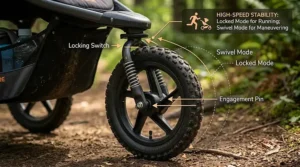
- Lock the front swivel wheel every single time you jog; only unlock it for slow walking on smooth ground.
- Start on flat, paved surfaces before attempting trails or gravel.
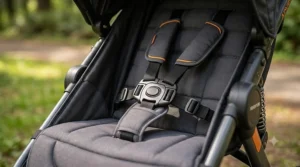
- Buckle the five-point harness snugly — one finger should fit between strap and chest, no more.
- Bring water and check your baby frequently on warm days, since infants regulate temperature less efficiently than adults.
How to Choose an Infant Compatible Jogging Stroller
Picking an infant compatible jogging stroller comes down to matching the stroller’s design to your baby’s current age, not just your own running goals. Here’s the decision framework we’d walk a friend through:
- Check the minimum age for your intended use. Walking with a car seat attached is often allowed from a few weeks old; actual jogging almost always waits until 6–8 months.
- Confirm car seat or bassinet compatibility before you buy either piece. Cross-brand mixing usually requires an adapter, and not every combination is available.
- Weigh suspension quality against your typical terrain. Smooth sidewalks need less suspension sophistication than gravel trails or unpaved paths.
- Consider your own height range. An adjustable handlebar (like the BOB Revolution Flex 3.0‘s nine-level design) prevents back strain for tall or short parents alike.
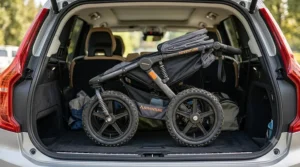
- Factor in fold size and storage space. A compact fold matters enormously if you’re working with a small trunk or apartment storage.
- Decide between a bundled travel system and a standalone jogger plus adapter. Bundles like the Chicco Activ3 Jogging Stroller save you compatibility guesswork; standalone frames often deliver better long-term suspension performance.
- Read the weight capacity, not just the age range. Most jogging strollers accommodate 50–75 pounds, meaning the stroller will likely outlast your child’s toddler years entirely.
Jogging Stroller for Newborn vs Running Stroller for Newborn: What’s Actually Different
Here’s a distinction that trips up a lot of first-time buyers: “jogging stroller” and “running stroller” are almost always marketing synonyms for the exact same three-wheeled, suspension-equipped product category — the terms are used interchangeably by manufacturers and retailers alike. The real differences worth caring about live inside that category, not between two supposedly separate product types.
| Feature | Standard Everyday Stroller | Jogging/Running Stroller for Newborn |
|---|---|---|
| Wheel count & style | Four small wheels, often swivel | Three large air-filled wheels, front locks |
| Suspension | Minimal or none | Dedicated suspension travel |
| Newborn compatibility | Often reclines flat natively | Usually needs a car seat, bassinet, or insert |
| Best terrain | Smooth pavement, malls, sidewalks | Trails, parks, uneven ground, long distances |
| Typical weight | Lighter, more compact | Heavier due to larger wheels and frame |
Interpreting the table above, a standard stroller is often the better everyday choice for quick errands and mall trips, while a genuine jogging stroller earns its keep on longer walks, uneven terrain, and — eventually — actual running once your baby is old enough. Common mistakes we see buyers make include assuming any three-wheeled stroller counts as “jogging-ready” (many aren’t suspension-rated for real running) and skipping the car seat compatibility check entirely, only to discover after purchase that their existing seat isn’t on the adapter list.
Long-Term Cost & Maintenance
Buying a jogging stroller for infant use is rarely a one-time expense, and understanding the full cost picture upfront prevents budget surprises later. Beyond the stroller itself, most infant-ready setups require a separately purchased car seat adapter (typically $30–$60), occasional replacement tires or tubes on air-filled models, and periodic seat fabric cleaning or replacement over years of use.
| Cost Factor | Budget Tier (Graco/Baby Trend) | Premium Tier (BOB/Thule/UPPAbaby) |
|---|---|---|
| Stroller + bundled seat | $200–$500 | $500–$900 |
| Separate adapter (if needed) | Often included | $30–$70 additional |
| Expected suspension lifespan | 2–4 years of regular use | 4–6+ years of regular use |
| Resale value | Lower | Higher, especially UPPAbaby |
Looking at the numbers, premium frames like the Thule Urban Glide 3 cost more upfront but tend to hold resale value and suspension quality longer, which can make the effective cost-per-year comparable to a budget model you’d replace sooner. For families who plan to have more than one child, this total-cost-of-ownership math often tips the scale toward investing in a sturdier frame the first time around.
✨ Ready to compare current prices side by side? Tap through and check availability now!
Practical Usage Guide: Setting Up Your Travel System Right
Getting your jogging stroller for infant use ready for its first outing takes more than unboxing it. Start by installing the car seat base in your vehicle first, following the manufacturer’s angle indicators exactly, then practice clicking the car seat into both the vehicle base and the stroller adapter a few times before your baby is actually in it — muscle memory matters when you’re juggling a fussy infant.
In the first 30 days, common mistakes include forgetting to lock the front wheel before a run, leaving the harness too loose “for comfort,” and skipping the recommended tire pressure check on air-filled models. A quick maintenance routine — checking tire pressure monthly, wiping down the frame after wet-weather use, and inspecting the harness buckle for wear — keeps the stroller performing safely for years. Regular maintenance checks on tires, brakes, and fasteners before each use are consistently listed among the top safety priorities for infant jogging stroller use, and it only takes a minute once it becomes habit.
Real-World Scenarios: Matching Parents to Strollers
Scenario one: the marathon-training new parent. If you’re an experienced runner who logged 30+ weekly miles pre-baby and wants to return to serious training once cleared by your doctor, the BOB Revolution Flex 3.0 or Thule Urban Glide 3 make sense — both offer the suspension sophistication that survives genuine mileage without breaking down early.
Scenario two: the budget-conscious first-time parent. If you’re outfitting a nursery on a tight budget and mainly want neighborhood walks with occasional light jogging, the Graco FastAction Fold Jogger or Baby Trend Expedition2 Jogger deliver real infant compatibility without the premium price tag — and both include the car seat, cutting out a separate purchase entirely.
Scenario three: the multi-caregiver household. If grandparents, a nanny, or a co-parent will also be using the stroller regularly, prioritize ease of fold and universal car seat compatibility — the Chicco Activ3 Jogging Stroller‘s bundled KeyFit 30 system removes the guesswork for anyone unfamiliar with adapters.
Problem → Solution: Fixing Common Infant Jogging Stroller Frustrations
Problem: the car seat adapter won’t click in securely. Double-check you’re using the exact adapter model listed for both your stroller and car seat — mismatched generations are the most common cause, and forcing an incompatible fit is a genuine safety hazard rather than a minor inconvenience.
Problem: my baby seems uncomfortable or fussy during rides. This often points to an insert that’s too thick for your baby’s current size, or a harness adjusted too loose. Revisit your jogging stroller infant insert sizing and re-check harness snugness before assuming the stroller itself is the issue.
Problem: the adapter is listed as out of stock. This has been a documented frustration with certain Baby Jogger Summit X3 configurations; consider a bundled travel system alternative like the Chicco Activ3 Jogging Stroller if you need infant compatibility immediately rather than waiting on backordered parts.
Problem: the front wheel wobbles during a run. Confirm the wheel is actually locked, not just aligned straight — an unlocked swivel wheel can shimmy at running speed even when it looks centered. Locking the front wheel before every jog is one of the most consistently recommended safety habits across stroller brands and pediatric guidance alike.
Problem: overheating on warm-weather runs. Babies regulate body temperature less efficiently than adults, so bring water, check on your baby often, and consider Happiest Baby’s guidance on running with your baby for pacing and hydration tips tailored to infants specifically.
✨ Don’t Miss These Exclusive Deals!
🔍 Take your jogging stroller for infant search to the next level with these carefully compared picks. Click on any highlighted model to check current pricing and availability — the right travel system makes every walk, run, and errand smoother for your family!
Frequently Asked Questions
❓ When can baby use a jogging stroller for actual running?
❓ Is a jogging stroller car seat compatible with any brand of infant seat?
❓ Do I need a jogging stroller infant insert if I already have a car seat adapter?
❓ What's the real difference between a jogging stroller for newborn and a running stroller for newborn?
❓ What is the jogging stroller minimum age safety rule I should follow?
Conclusion
Choosing a jogging stroller for infant use really comes down to three honest questions: how old is your baby right now, what car seat or bassinet do you already own, and how much rough terrain do you actually plan to cover. Premium picks like the BOB Revolution Flex 3.0, Thule Urban Glide 3, and UPPAbaby Ridge reward serious runners with suspension that holds up over years of mileage, while budget-friendly bundles like the Graco FastAction Fold Jogger and Baby Trend Expedition2 Jogger get new parents infant-ready without a steep price tag.
Whichever you choose, the safety fundamentals stay the same: confirm your pediatrician’s clearance, verify real compatibility before buying an adapter, and never unlock that front wheel until your baby’s genuinely ready for the bumps of an actual jog. Take the research you’ve done here, match it to your own budget and terrain, and get back out there.
Recommended for You
- Lightweight Jogging Stroller: 7 Top Picks Runners Trust in 2026
- Jogging Stroller Swivel vs Fixed Wheel: 7 Picks Compared (2026)
- Lightweight Umbrella Stroller: 7 Best Picks Tested for 2026
Disclaimer: This article contains affiliate links. As an Amazon Associate, I earn from qualifying purchases. If you purchase products through these links, we may earn a small commission at no additional cost to you.
✨ Found this helpful? Share it with your friends! 💬🤗
