
In This Article
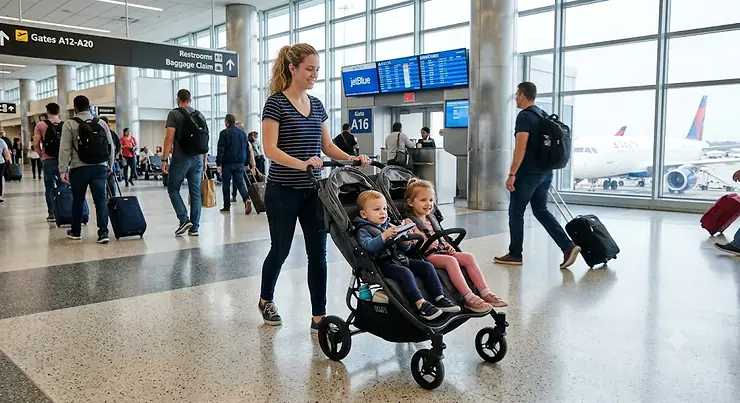
Here’s the moment every parent of two small kids eventually hits: you’re standing in an airport hallway, one kid asleep on your shoulder, the other one negotiating for a snack at full volume, and the stroller you brought is either too bulky to fold one-handed or too flimsy to survive the trip. A travel double stroller for toddlers and preschoolers exists to solve exactly that problem — it’s a two-seat stroller built to be light enough to lift into a trunk or overhead bin, sturdy enough to hold kids well past the baby stage, and simple enough to fold without a wrestling match. Most models in this category weigh under 35 pounds and support each child up to 40-50 pounds, which means they can realistically serve a family from the toddler years into kindergarten.

The tricky part isn’t finding a double stroller — Amazon alone lists hundreds. The tricky part is finding one that survives cobblestones in Rome, clears the gate at Disney World, and doesn’t throw your back out when you’re folding it curbside with a toddler tugging at your sleeve. That’s a narrower list than the marketing copy suggests.
Below, we’ve dug into seven real, currently available models spanning budget, mid-range, and premium price points, with an eye specifically toward families who need something for travel days, theme park visits, and the awkward middle years when one kid has outgrown a stroller but still can’t walk five miles unassisted. We’ll break down real specs, aggregated review sentiment (not invented quotes), and honest trade-offs — plus practical guidance on weight limits, umbrella-stroller alternatives, and what actually changes once your “toddler” starts insisting he’s basically a preschooler now, thank you very much.
Quick Comparison Table
| Stroller | Best For | Stroller Weight | Per-Seat Weight Limit | Price Range |
|---|---|---|---|---|
| Zoe Twin+ (Zoe XL2) | Disney-approved & lightest overall | ~19.5 lbs | 50 lbs | $350-$450 |
| UPPAbaby Minu Duo | Best build quality for daily use | ~27 lbs | 50 lbs | $700-$900 |
| Graco Ready2Grow LX 2.0 | Big age gaps, growing families | ~33 lbs | 50 lbs (front/bench) / 40 lbs (rear) | $300-$400 |
| Jeep Destination Ultralight | All-terrain, flat-proof tires | ~28 lbs | around 40 lbs | $200-$300 |
| Kolcraft Cloud Plus Double | Tightest budget | ~20 lbs | around 40 lbs | under $220 |
Looking at this snapshot, the split comes down to what you’re optimizing for. If a Disney trip or an airport gate check is the priority, the Zoe Twin+ and its sub-20-pound frame are hard to beat. If you’re outfitting a family that will use this stroller daily for years — not just on vacation — the UPPAbaby Minu Duo and Graco Ready2Grow LX 2.0 justify their higher weight and price with sturdier builds and higher seat capacities. Budget-conscious parents shouldn’t feel shortchanged either; the Kolcraft Cloud Plus covers the fundamentals without the premium markup.
💬 Found a pick you like already? Share this comparison with another stroller-shopping parent — it’ll save them hours of tab-hoarding!😊
Top 7 Travel Double Strollers for Toddlers and Preschoolers: Expert Analysis
1. Zoe Twin+ (Zoe XL2) — lightest true Disney-approved double
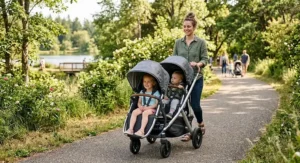
The standout here is weight: at roughly 19-19.5 pounds, the Zoe Twin+ is genuinely one of the lightest side-by-side doubles sold in the U.S., which matters enormously the moment you have to hoist it into a trunk or up a curb. Each seat is rated to 50 pounds, with a 165-degree recline and independently adjustable four-panel canopies, and the whole thing measures about 29 inches wide — narrow enough to glide through a standard doorway without the sideways shuffle so many doubles require. Based on the spec comparison, this is the rare stroller that manages both a high weight ceiling and a genuinely low overall weight, which is usually a trade-off manufacturers can’t avoid.
Who should care: parents doing frequent flights, Disney trips, or apartment living where hallway width and closet space are real constraints. Reviewers consistently report that the fold is fast once you learn the reclining-seat trick (the seats must be reclined before folding, which trips up first-time owners), and that the extendable canopies genuinely block sun during long stroller naps. A common complaint in user reviews is that the brakes need a firm, deliberate push to engage — something to double-check every time you park on a slope.
Pros:
- ✅ Among the lightest doubles on the market at under 20 lbs
- ✅ 50 lb per-seat limit stretches use well into preschool years
- ✅ Disney-approved width fits most standard doorways
Cons:
- ❌ Two-handed fold, and seats must be reclined first
- ❌ Brakes require deliberate engagement, per owner reports
At around $350-$450, the Zoe Twin+ delivers premium-feeling materials at a mid-range price, making it one of the strongest value picks for travel-focused families.
2. UPPAbaby Minu Duo — best build quality for daily use
The UPPAbaby Minu Duo trades a bit of the Zoe’s featherweight advantage for noticeably sturdier hardware — it weighs about 27.3 pounds and folds down to roughly 6,654 cubic inches, small enough for many car trunks and some overhead compartments. What most buyers overlook about this model is that its seats hold up to 50 pounds each, matching pricier full-size doubles, while the stroller itself remains genuinely liftable with one arm. The fast fold/unfold mechanism is the kind of detail that only shows its value on day 40 of ownership, when you’re doing it half-asleep with a toddler under one arm.
Independent testing has rated the Minu Duo among the better performers in its class for ease of use, quality, and everyday comfort, and it’s frequently cited as a top pick specifically for families who travel often but still want a stroller that holds up to years of daily errands rather than occasional vacation use. On paper, this makes it the stroller for parents who resent buying two strollers — one nice, one for travel — and would rather own a single well-built option that does both jobs.
Pros:
- ✅ 50 lb per-seat capacity in a genuinely lightweight frame
- ✅ Compact fold that fits many car trunks and some overhead bins
- ✅ Reviewer and lab-tested reputation for build quality
Cons:
- ❌ Premium price compared to most travel doubles
- ❌ Narrower storage basket than bulkier full-size strollers
In the $700-$900 range, this isn’t a budget buy, but reviewers and testers alike treat it as one of the more dependable long-haul investments in this category.
3. Graco Ready2Grow LX 2.0 — most seating configurations for growing families
If your two kids aren’t close in age, the math changes. The Graco Ready2Grow LX 2.0 solves the “one’s a preschooler, one’s still riding in an infant seat” problem by offering two full stroller seats, a pull-out bench seat, and a standing platform — twelve total riding configurations, according to Graco’s own specs. The front seat, bench, and standing platform each hold up to 50 pounds, while the rear seat is rated to 40 pounds, and the frame accepts two Graco infant car seats at once if you’re starting from newborn.
Here’s what the spec sheet won’t tell you, but reviewers note: at around 33 pounds, this is a heavier stroller to lift and maneuver than the Zoe or Minu Duo, and lab testing has flagged it as harder to push than lighter competitors, with a storage basket that looks enormous but is functionally capped at about 10 pounds of contents. Based on the spec comparison, though, no other stroller on this list matches its flexibility for an age-gap family — a preschooler can ride, stand, or sit on the bench while a younger sibling rides up front, all on the same frame.
Pros:
- ✅ 12 seating configurations for kids of very different ages
- ✅ Accepts two infant car seats for newborn-to-preschooler use
- ✅ Front seat and bench both rated to 50 lbs
Cons:
- ❌ Heaviest stroller on this list at roughly 33 lbs
- ❌ Storage basket capacity (10 lbs) undersells its visual size
Priced around $300-$400, it’s a strong mid-range pick specifically for families with a wider age gap between kids.
4. Jeep Destination Ultralight Double Stroller — best for uneven ground and sidewalks
Not every trip happens on smooth airport tile. The Jeep Destination Ultralight Double Stroller leans into an aluminum frame paired with puncture-proof tires and rear suspension, aimed squarely at families who’ll be pushing this thing over cracked sidewalks, gravel parking lots, or a bumpy campground path. Reviewers consistently report that the flat-proof tires are a genuine relief compared to air-filled tires that need occasional pumping, and that the independent reclining seats let one child nap while the other stays upright and alert.
What most buyers overlook about all-terrain-leaning double strollers is that the extra suspension and sturdier wheel assemblies add real weight and width compared to pure travel models — this isn’t the stroller you’re sliding into an airplane overhead bin. A common complaint in aggregated reviews is that the seats run a little snug for larger or older toddlers, and that overall durability has been inconsistent across units, which is worth flagging to a partner or grandparent who might also be pushing it.
Pros:
- ✅ Puncture-proof tires eliminate flat-tire maintenance
- ✅ Rear suspension smooths out rough sidewalks and gravel
- ✅ Independent recline lets each child set their own position
Cons:
- ❌ Seats can feel snug for bigger toddlers
- ❌ Durability reports are mixed across individual units
At a typical $200-$300 range, it’s a reasonable mid-range value if your travel involves more nature trails than jet bridges.
5. Joovy Scooter X2 — most affordable proper side-by-side
The Joovy Scooter X2 occupies the value tier that a lot of first-time double-stroller parents are actually shopping in: a real side-by-side frame, snack trays for both kids, and a manageable fold, all without the premium-brand price tag. It’s consistently listed among the more affordable side-by-side options that don’t feel like a toy-aisle compromise, and its straightforward two-wheel-per-side design keeps the learning curve short for parents who’ve never wrestled a double stroller fold before.
Here’s what the spec sheet won’t tell you: at this price tier, you’re generally trading some recline depth and canopy coverage for the lower cost, so don’t expect the near-flat nap position or oversized sun protection you’d get from the Zoe Twin+ or UPPAbaby Minu Duo. Reviewers note that the trays are a genuinely useful inclusion at this price point, since many economy doubles skip them entirely and expect you to buy accessories separately.
Pros:
- ✅ Real side-by-side seating at a budget-friendly price
- ✅ Snack trays included instead of sold separately
- ✅ Straightforward fold for first-time double-stroller owners
Cons:
- ❌ Shallower recline than premium travel doubles
- ❌ Less generous canopy coverage than pricier models
Around $329, it’s one of the smartest entry points if you’re double-stroller shopping for the first time and don’t want to overspend before you know your kids’ preferences.

6. Kolcraft Cloud Plus Double — best pick for a tight budget
For parents counting every dollar, the Kolcraft Cloud Plus Double covers the essentials: a lightweight frame around 20 pounds, two storage baskets, extendable canopies for nap coverage, and a compact fold that’s genuinely manageable up a flight of stairs — a detail that matters more than it sounds like if you live in a walk-up apartment. It’s frequently recommended specifically for tight budgets because it doesn’t try to compete on premium materials; it just handles the basics reliably.
Based on the spec comparison, the trade-off here is exactly what you’d expect at this price: fewer premium touches like leatherette handles or ball-bearing wheels, and a per-seat weight limit that runs closer to the industry-standard 40-45 pounds rather than the 50-pound ceiling of pricier competitors. That’s still enough for most toddlers and younger preschoolers, but tall or heavier four- and five-year-olds may outgrow it sooner than they would a higher-capacity model.
Pros:
- ✅ One of the lightest budget doubles at roughly 20 lbs
- ✅ Two storage baskets plus extendable canopies
- ✅ Easy to carry up stairs, a rarity at this price
Cons:
- ❌ Lower per-seat weight ceiling than premium options
- ❌ Fewer premium material touches (handles, wheel bearings)
At under $220, it’s the clearest budget-tier answer on this list, and a smart choice if you need a double stroller for a season rather than a lifetime.
7. Baby Trend Sit N’ Stand Double Stroller 2.0 — best for big age gaps between kids
When one child still needs a car seat and the other is old enough to want some independence, the Baby Trend Sit N’ Stand Double Stroller 2.0 answers with exactly that layout: a front seat for the younger rider (dual infant-car-seat compatible) and a rear seat-or-standing option for an older toddler or preschooler who alternates between sitting down and standing up when they get restless. Its compact fold is aimed at parents who need to get it in and out of a trunk quickly, without wrestling a bulkier sit-and-stand frame.
What most buyers overlook about sit-and-stand strollers generally is that the standing position genuinely reduces meltdowns for kids who feel “too big” to be strapped into a seat — reviewers note that many preschoolers actively prefer standing over sitting once they’re offered the choice. On the spec sheet, this reads as a minor footnote; in practice, aggregated review sentiment suggests it’s one of the more meaningful comfort features for the 3-to-5 age range specifically.
Pros:
- ✅ Front seat compatible with two Baby Trend infant car seats
- ✅ Standing option genuinely reduces restlessness in older kids
- ✅ Compact fold relative to other sit-and-stand designs
Cons:
- ❌ Rear standing position isn’t ideal for long naps
- ❌ Narrower rear footprint can feel tight for taller preschoolers
At roughly $194, it’s the most budget-friendly way to bridge a wide age gap without buying two separate strollers.
Getting the Most Out of Your Travel Double Stroller: Setup and First 30 Days
Most stroller frustration in the first month has nothing to do with the stroller itself — it’s unfamiliarity. Before your first outing, practice the fold and unfold at home, in a hallway, at least five times. Every travel double has a specific motion (often “recline both seats before folding”), and skipping that step is the single most common reason new owners think their stroller is defective when it’s actually just user error.
Next, set the harness height correctly for each child before day one; a harness sitting at the wrong shoulder level is both a safety issue and a comfort issue that will manifest as constant squirming. If your model uses a hand-operated parking brake, get in the habit of checking it every single stop, not just on hills — brakes on lighter aluminum frames sometimes need a firmer push than parents expect.
For maintenance, wipe down wheels monthly if you’re using the stroller outdoors regularly; grit in the axle is the leading cause of that annoying squeak that develops around month three. Finally, resist the urge to overload the storage basket. Every model on this list lists a basket weight limit for a reason — exceeding it shifts the stroller’s center of gravity and can affect stability on inclines, which matters more with two kids’ worth of weight already up top.
Real Families, Real Strollers: Matching Your Situation to the Right Pick
Consider a family flying twice a year with a 2-year-old and a 4-year-old, budget around $400, mostly using the stroller in airports and hotel lobbies. The Zoe Twin+ fits well here — its sub-20-pound frame and Disney-compliant width solve the two biggest travel pain points, and the 50-pound seat limit means it won’t be outgrown mid-trip.
Now picture a family with a newborn and a 3-year-old, living in a suburb with cracked sidewalks, using the stroller daily rather than occasionally. The Graco Ready2Grow LX 2.0 or Jeep Destination Ultralight make more sense — the Graco’s dual car-seat compatibility covers the newborn stage, while the Jeep’s suspension handles daily terrain better than a pure travel model built for smooth floors.
Finally, a budget-conscious family with two preschoolers close in age, using the stroller mostly for zoo trips and errands rather than flights, is well served by the Kolcraft Cloud Plus or Joovy Scooter X2 — both cover core functionality without paying for travel-specific engineering they won’t actually use.
✨ Not sure which profile fits you? Compare your travel frequency, terrain, and budget against the table above before you decide.
How to Choose a Travel Double Stroller for Toddlers and Preschoolers
What is a travel double stroller for toddlers and preschoolers? It’s a two-seat stroller engineered to be lightweight and compact enough for frequent transport — flights, car trunks, theme parks — while still supporting children in the 25-to-55-pound range typical of toddlers and preschoolers, rather than only infants.
Picking the right one comes down to five practical criteria, in roughly this order of importance:
- Per-seat weight and height limits. Check both numbers, not just weight — a stroller can technically hold 45 pounds but still feel cramped for a tall 4-year-old.
- Folded dimensions versus your actual constraints. Measure your trunk, your closet, and (if relevant) your airline’s gate-check dimensions before assuming a stroller will fit.
- Total stroller weight. Anything under 25 pounds is genuinely one-hand liftable; anything over 30 pounds should be budgeted as a two-person task on tough days.
- Recline depth and canopy coverage, especially if naps happen mid-outing.
- Fold complexity. A stroller that requires two hands and a specific sequence is fine at home, but becomes a real liability in a crowded terminal with a toddler wandering.
Buyers upgrading from a single stroller often overlook width — a double stroller for preschoolers needs enough shoulder room for two growing kids without ballooning past standard doorway width, which is where models like the Zoe Twin+ earn their reputation.
Travel Stroller for Older Toddlers: What Changes After Age Two
A travel stroller for older toddlers has to solve a different problem than one built for infants. Kids in the 2-to-3 range are heavier, taller, and considerably more opinionated about being strapped in — which means seat depth, upright sitting angle, and harness adjustability matter more than the recline-heavy designs built around infant naps.
Look specifically at seat-back height, not just weight limit. A stroller advertising a 45-pound capacity but a shallow 16-inch seat back will feel outgrown by a tall toddler well before the weight limit is reached, because their head and shoulders clear the canopy and top rail. Reviewers consistently point to taller seat backs as the detail that actually determines how long a stroller stays comfortable — not the number printed on the weight tag.
Second, an upright seating option matters more for this age group than for babies. Older toddlers generally want to see the world around them rather than lie back reclined, so a stroller that locks into a genuinely upright position (not just “less reclined”) tends to get less resistance at buckle-up time. Both the Zoe Twin+ and UPPAbaby Minu Duo offer this kind of adjustable range, which is part of why they extend usefully into the preschool years rather than being outgrown by age three.
Double Stroller High Weight Capacity: Why It Matters More Than the Price Tag
It’s tempting to shop by brand name or looks, but double stroller high weight capacity is arguably the single biggest factor in how long a stroller actually lasts you. A model rated to 35 or 40 pounds per seat might look identical to one rated to 50 pounds — same fabric, similar frame — but the internal reinforcement, axle strength, and seat stitching differ enough that the cheaper-rated model will show wear (sagging seat fabric, wobbly frames) well before the higher-capacity one does, even at the same child weight.
This is also where the regulatory side matters. In the U.S., all carriages and strollers sold must meet the federal safety standard incorporated at 16 CFR Part 1227, which requires manufacturers to test stability, static load, and structural integrity — including how the frame performs under load near its rated weight limit, not just at a light infant weight. A stroller’s advertised per-seat limit isn’t a marketing number; it’s tied to actual load testing.
Practically, this means a 50-pound-rated seat isn’t just “for bigger kids” — it’s a signal of sturdier engineering across the board, which benefits every child riding in it, regardless of their current weight. If your kids are close in age and likely to both approach 35-40 pounds simultaneously, prioritizing total combined capacity (both seats’ limits added together) over either single number gives a more honest picture of what the frame can actually handle day to day.
Stroller Weight Limit by Age: What the Numbers Actually Mean
Stroller weight limit by age is a genuinely confusing topic because weight and age don’t track together as cleanly as product listings imply. According to CDC growth chart references, toddlers typically gain around 4 to 6 pounds a year between ages 1 and 3, while preschoolers between 3 and 5 add roughly 4 to 5 pounds annually — but individual variation is wide, and a tall, solidly built 3-year-old can easily outweigh an average 5-year-old.
That’s exactly why shopping by weight limit alone, without checking height and seat-back measurements, leads to strollers being “outgrown” long before the printed number is reached. A rough practical guide:
- Ages 1-2: Most standard stroller seats (35-40 lbs) comfortably cover this range.
- Ages 2-3: This is where 45-50 lb capacity starts mattering, especially for taller kids.
- Ages 3-4 (preschool): A 50 lb capacity with a tall seat back (18+ inches) becomes the safer bet, since height often becomes the limiting factor before weight does.
- Ages 4-5+: Most double strollers are being phased out around here in favor of umbrella strollers or walking, unless the stroller specifically advertises extended-use seat backs.
Reviewers who’ve used a stroller across multiple years consistently note that seat-back height and canopy clearance — not the weight rating printed on the box — are what actually determined when their kid “aged out” of the stroller.
Umbrella Stroller for Older Kids vs a Full-Size Double
An umbrella stroller for older kids is the lightweight, no-frills alternative that a lot of families reach for once a child is closer to 4 or 5 and mostly needs a stroller for occasional long-walk backup rather than daily transport. The trade-offs versus a full-size double travel stroller are fairly stark: umbrella strollers are dramatically lighter (often under 15 pounds for a single, 20ish for a double), fold down to almost nothing, and cost less — but they typically sacrifice recline depth, storage capacity, and sometimes stability on rough terrain.
For a genuinely older toddler or a preschooler who mostly walks but occasionally needs to be contained (crowded markets, long museum halls, theme parks at the end of a tiring day), an umbrella-style double can be the smarter buy over a heavier travel double — you’re not paying for napping-grade recline or all-terrain wheels you’ll rarely use. On the other hand, if naps still happen mid-outing, or if you’re regularly navigating uneven sidewalks, the deeper recline and sturdier build of a full double stroller — like the Zoe Twin+ or Jeep Destination Ultralight — will hold up better over the long haul.
The honest answer: age isn’t really the deciding factor here, frequency of use is. A stroller used daily deserves the sturdier full-size build; one used occasionally for backup is a reasonable candidate for the lighter, cheaper umbrella-style alternative.
👉 Weighing an umbrella double against a full-size travel double? Check the comparison table above before you commit to either.
Theme Park Stroller Rentals vs Bringing Your Own
Theme park stroller rentals solve a real logistical problem — you don’t have to fly with a stroller, and most parks offer both single and double options at the gate. But there are trade-offs worth knowing before you decide. Disney’s own official stroller rules cap dimensions at 31 inches wide and 52 inches long, and prohibit stroller wagons entirely, regardless of size — a detail that catches families off guard every peak season, since some popular wagon-style products are banned outright rather than just size-restricted.
Rental strollers at the parks are typically hard plastic, without recline, which becomes a real problem if your toddler or younger preschooler still naps mid-day — a common complaint among parents who’ve tried rentals for a full eight-hour park day. Bringing your own solves the nap problem and gives you a stroller your kids are already used to, but only if it fits the size limits above; every model on this list falls comfortably within Disney’s restrictions, with the Zoe Twin+ and UPPAbaby Minu Duo both well under the 31-inch width cap.
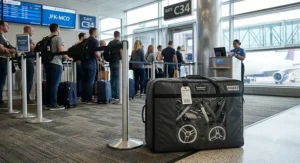
The practical calculus: for a single-day visit with light packing, a rental is genuinely convenient. For a multi-day trip, especially with a napping toddler in the mix, bringing a compliant travel double — checked at the gate or gate-checked on the flight — tends to save both money and meltdown-related stress by day three.
Frequently Asked Questions
❓ What is the best travel double stroller for toddlers and preschoolers?
❓ How much weight can a double stroller hold per seat?
❓ Are double strollers allowed at Disney World?
❓ What age can a toddler switch from a single stroller to a double?
❓ Is an umbrella stroller good for a 4 year old?
Conclusion
Choosing a travel double stroller for toddlers and preschoolers really comes down to being honest about how you’ll actually use it. If your stroller life is mostly airports, theme parks, and the occasional weekend trip, weight and fold-simplicity should outrank everything else — which is exactly why the Zoe Twin+ earns its reputation among frequent-flying families. If this stroller is going to be your daily driver for years, across an age gap between siblings, sturdier builds like the UPPAbaby Minu Duo or the configuration-heavy Graco Ready2Grow LX 2.0 justify their higher price and weight with genuine longevity.
Budget shouldn’t be treated as a compromise, either — the Kolcraft Cloud Plus and Joovy Scooter X2 both cover the fundamentals reliably without premium markup, and the Baby Trend Sit N’ Stand 2.0 solves the specific problem of wildly different sibling ages better than almost anything else on this list. Whatever you land on, check the per-seat weight limit against your kids’ actual height and build, not just the number on the box, and measure your car trunk or closet before you buy rather than after.
Recommended for You
- Travel Double Stroller That Fits Airline Overhead Compartments: 7 Picks (2026)
- Compact Double Stroller for Cruise Vacations: 7 Winning Picks (2026)
- Travel Double Stroller for Airplane Gate Check: 7 Best Picks (2026)
Disclaimer: This article contains affiliate links. As an Amazon Associate, I earn from qualifying purchases. If you purchase products through these links, we may earn a small commission at no additional cost to you.
✨ Found this helpful? Share it with your friends! 💬🤗
