
In This Article
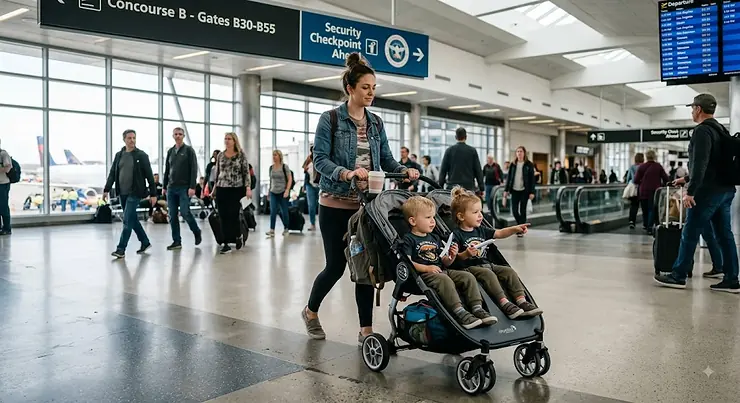
Somewhere between the check-in counter and the security line, every parent of two small kids learns the same hard lesson: your everyday double stroller was never built for an airport. It’s too wide for the fast-track lane, too heavy to hoist onto an X-ray belt, and too bulky to squeeze down a jet bridge without holding up the boarding line behind you. A lightweight double stroller for air travel solves that specific problem — it’s a stroller engineered to fold small, weigh little, and survive the gate-check-to-baggage-claim gauntlet without falling apart or tipping over your kids.
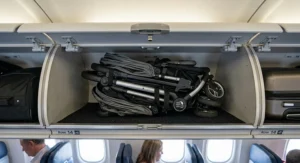
That’s a genuinely different design brief than “double stroller for the mall.” A good travel double typically weighs under 30 pounds, folds down with one hand (often while you’re holding a toddler and a boarding pass), and measures narrow enough to clear a standard 30-inch airplane doorway or jet bridge without a fight. Some fold flat enough to fit through the X-ray tunnel at TSA; others are built to be gate-checked and rolled suitcase-style right up to the aircraft door.
Below, we’ve researched seven real, currently available lightweight double strollers spanning budget, mid-range, and premium price points, matched against the specific demands of flying — gate-check durability, one-hand folds, doorway width, and how they actually hold up according to real owner reviews. We’ll also walk through what TSA and airlines actually require, because a stroller that looks “travel-friendly” on the box doesn’t always match what happens at the checkpoint. Whether you’re navigating a layover with twins or a Disney trip with two toddlers close in age, there’s a stroller ahead built for exactly that.
Quick Comparison: Lightweight Double Strollers for Air Travel
| Stroller | Weight | Fold Type | Best For |
|---|---|---|---|
| Silver Cross Jet Double | 19.7 lbs | Self-standing, suitcase-style | Premium buyers wanting the lightest full-size double |
| UPPAbaby Minu Duo | 27.4 lbs | One-hand, self-standing | From-birth travel with damage protection built in |
| Zoe Twin V2 | 23 lbs | Quick-pull fold | Best all-around value for frequent flyers |
| Mompush Lithe Double | 25.4 lbs | One-step, self-standing | Budget-lightweight with a leather-feel handlebar |
| Beberoad Love R1 | 23.5 lbs (11.5 lbs per single) | Auto-fold | Splitting into two solo strollers mid-trip |
| Joovy Scooter X2 | 32–35 lbs | One-hand fold | Families who need maximum storage over minimum weight |
| Delta Children LX Plus | 18.3–18.7 lbs | Compact umbrella fold | Tightest travel budgets |
The spread above tells its own story: the lightest strollers on this list — the Silver Cross Jet Double and Delta Children LX Plus — sit under 20 pounds, while the storage-heavy Joovy Scooter X2 trades some of that portability for a genuinely huge basket and sturdier build. If your main airport pain point is lifting the stroller into an overhead bin or up a jet bridge staircase, weight should outrank every other spec on this table. If your pain point is surviving a full week away from home with two kids’ worth of gear, storage capacity and seat weight limits matter just as much as the number on the scale.
💬 Just one click — help others make better buying decisions too!😊
Top 7 Lightweight Double Strollers for Air Travel: Expert Analysis
1. Silver Cross Jet Double — lightest full-size double on this list
At 19.7 pounds, the Silver Cross Jet Double undercuts nearly every other side-by-side double stroller built for two kids simultaneously, not just one at a time. It folds down to roughly 9 inches deep and 31 inches wide, then self-stands on its own wheels so you can roll it suitcase-style down the jet bridge instead of dragging it under one arm. Each seat holds up to 50 pounds with an independent deep recline, and the wider seat accepts infant car seat adapters from several major brands, which matters if you’re flying with a newborn and an older sibling on the same trip.
Based on the spec sheet, the standout here isn’t just the weight — it’s the self-standing suitcase fold, a detail most competitors skip. That single feature changes the actual airport experience: instead of wrestling a folded stroller against your hip while pushing a luggage cart, you pull it beside you like carry-on luggage. Reviewers consistently note the fold is genuinely one-handed and that the stroller holds its size claim without the “close enough” fudging some brands do with folded dimensions. What most buyers overlook about a stroller this light is the trade-off in ride cushioning; ultra-light frames generally sacrifice some of the shock absorption you’d get from a heavier all-terrain double, which is a fair trade for airport concrete and hotel hallways but worth knowing before a cobblestone-heavy trip.
Pros:
- ✅ Lightest full-size double stroller in this roundup at 19.7 lbs
- ✅ Self-standing, suitcase-style fold built specifically for gate-checking
- ✅ Independent deep recline lets one child nap while the other sits up
Cons:
- ❌ Premium price point compared to most travel doubles here
- ❌ Car seat adapters for the second seat are sold separately
Check current price before you buy, since Silver Cross positions this stroller at the premium end of the category — expect an investment well above the budget picks on this list. For families who fly several times a year and want the lightest possible full-size double, the Silver Cross Jet Double earns its price through the time and back strain it saves at every single checkpoint.
2. UPPAbaby Minu Duo — best from-birth travel protection program
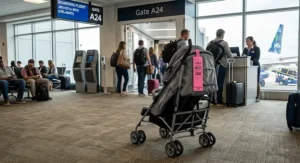
The UPPAbaby Minu Duo weighs 27.4 pounds and fits through a standard 29-inch doorway, which is narrower than most side-by-side doubles manage while still seating two children from birth up to 50 pounds each. The fully flat recline works for newborns, and the one-step, one-handed fold collapses the frame into a shape that self-stands for storage or gate-checking.
Here’s what the spec sheet won’t tell you, but UPPAbaby’s own program does: the brand backs this stroller with its Travel Safe Program, meaning damage that happens while the stroller is inside its official travel bag during transit gets repaired by UPPAbaby directly. That’s a meaningful difference from most competitors, where gate-check damage is simply your problem. Based on the spec comparison with the rest of this list, the Minu Duo isn’t the lightest option, but it’s the only one here explicitly designed and warrantied for the exact abuse airline baggage handlers put strollers through. Reviewers consistently point to the smooth push and generously sized storage basket as standout everyday features that make this less of a “trip-only” stroller and more of a daily driver that also happens to travel well.
Pros:
- ✅ Travel Safe Program repairs damage from official gate-check bag use
- ✅ Fully flat recline works for newborns from day one
- ✅ Fits through a narrower 29-inch doorway than most doubles
Cons:
- ❌ Heavier than the true ultralight options on this list
- ❌ Among the more expensive picks here, in the $700–$800 range
The value case strengthens the more often you fly: if damage protection during transit matters more to you than shaving the last few pounds off your carry weight, the UPPAbaby Minu Duo justifies its price with a warranty structure competitors simply don’t offer.
3. Zoe Twin V2 — best all-around value for frequent flyers
The Zoe Twin V2 weighs 23 pounds — noticeably lighter than most double strollers, which typically land in the 25–35 pound range — and its quick-pull fold is modeled after the mechanism popularized by Baby Jogger, meaning one tug on the seat straps collapses the frame. At 29 to 30 inches wide, it clears most standard doorways, and it carries an official Disney-size approval, a useful proxy since theme park size limits tend to be stricter than airline ones.
What most buyers overlook about the Zoe Twin V2 is how much seat capacity you get for the weight: each seat holds up to 60 pounds, among the highest capacities in this category, so the stroller doesn’t get retired the moment your kids hit toddlerhood. Based on aggregated review sentiment across multiple retailers, owners consistently praise the compact folded footprint for fitting into small trunks and overhead-adjacent gate-check carts, while a recurring complaint is that the built-in parent cup holder can catch on narrower doorframes unless removed first — a five-second fix, but one worth knowing before your first trip. The modular design also lets you add a third or fourth seat later via accessory add-ons, which is a rare feature at this price point.
Pros:
- ✅ 23 lbs — lighter than most full-size double strollers
- ✅ Each seat holds up to 60 lbs, among the highest capacities here
- ✅ Disney-size approved, a useful stand-in for airline size limits
Cons:
- ❌ Cup holder can snag on narrow doorframes unless removed
- ❌ Requires two hands to push comfortably on uneven ground
Priced in the $500–$600 range, the Zoe Twin V2 sits squarely in the middle of this list and, based on the spec comparison, delivers the strongest balance of low weight, high seat capacity, and compact fold for that price — which is exactly why it shows up on so many “best travel double” roundups.
4. Mompush Lithe Double — budget-lightweight with premium touches
At 25.4 pounds with an all-aluminum frame, the Mompush Lithe Double undercuts most name-brand competitors on price while still landing in genuinely lightweight territory. It’s 30 inches wide, which fits standard doorways, and its “slide-and-go” mechanism folds the frame into a trunk-friendly 28.9 x 23.2 x 13-inch package in seconds using a one-step, self-standing fold.
The spec sheet is worth interpreting carefully here: a full-grain leather-wrapped handlebar and UPF 50+ canopy are features you’d expect on a stroller costing twice as much, and the brand markets it as “Disney Size Approved,” a claim that lines up with its narrow folded footprint. Aggregated customer review sentiment on major retail sites is genuinely mixed, though, and honesty matters more than a glowing pitch: a recurring theme in verified reviews is that the wheels — while contributing to the low overall weight — feel less sturdy than the frame around them, with a handful of owners reporting a wheel issue after several months of regular use. That’s a real trade-off of building a budget stroller this light, and it’s worth weighing against the price savings rather than ignoring.
Pros:
- ✅ 25.4 lbs with an all-aluminum frame at a budget-friendly price
- ✅ One-step, self-standing fold collapses in seconds
- ✅ UPF 50+ canopy and leather-style handlebar at this price point
Cons:
- ❌ Some verified reviewers report wheel durability issues over time
- ❌ Under-seat storage runs smaller than competitors at this weight
In the high-$200s to around $300 range, the Mompush Lithe Double is the pick for parents who want a genuinely light frame without paying premium-brand pricing, as long as you’re comfortable trading some long-term wheel durability for the savings.
5. Beberoad Love R1 — splits into two single strollers mid-trip
The Beberoad Love R1 takes a different approach entirely: two 11.5-pound single strollers connect into a 23.5-pound double using a dedicated connector, then separate back into individual strollers whenever you only need one. Each single stroller is light enough to fit in an airplane’s overhead bin on its own, and the auto-folding patent design collapses the frame with one motion.
Based on the spec comparison, this modularity is the standout feature that no other stroller on this list offers: if your trip involves splitting up — one parent takes one kid sightseeing while the other naps at the hotel — the R1 converts to match, something a fixed-frame double simply can’t do. What the spec sheet won’t tell you is how that flexibility plays out with real families: aggregated review sentiment describes the auto-fold as genuinely fast and one-hand-friendly, which matters enormously when you’re also holding a squirming toddler at a gate. The trade-off is that a two-piece connector system introduces more moving parts than a single-frame double, and travelers should verify the connector is securely locked before every use.
Pros:
- ✅ Splits into two 11.5-lb single strollers, each overhead-bin sized
- ✅ Auto-folding design designed for one-hand operation
- ✅ Ultra-light 23.5 lbs combined double stroller weight
Cons:
- ❌ Connector system means more assembly steps than a fixed frame
- ❌ Newer to the market, so long-term durability data is still limited
Prices for import auto-fold doubles like this fluctuate more than established strollers brands, so check current listings — but for families who genuinely need the option to un-combine strollers mid-trip, the Beberoad Love R1 solves a problem no other pick here even attempts.
6. Joovy Scooter X2 — most storage for the weight
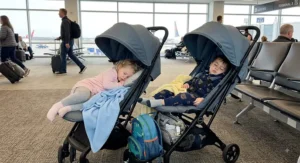
The Joovy Scooter X2 weighs between 32 and 35 pounds depending on configuration, making it the heaviest stroller on this list — but that weight buys a genuinely enormous under-seat storage basket, two zippered parent pockets, and two child snack trays with their own cup holders, none of which the ultralight picks above can match. At a 30-inch width, it still fits standard doorways, and the one-hand fold is a frequently cited strength in independent testing.
Based on the spec comparison, this is the stroller for parents who’ve decided that “lightweight” and “roomy” are on a spectrum, and they’d rather trade a few pounds for genuinely usable storage on a longer trip. Reviewers consistently note the sealed bearing wheels deliver a smoother ride than budget competitors, though independent lab testing has flagged that maneuverability lags slightly behind lighter, narrower doubles — a fair trade given the extra frame material. What most buyers overlook is that the recline system, while comfortable once set, requires two hands to adjust, which is a minor annoyance mid-flight-delay when one hand is occupied with a bag or a bottle.
Pros:
- ✅ Largest storage basket and only pick here with built-in kid trays
- ✅ One-hand fold despite the heavier overall frame
- ✅ Sealed bearing wheels for a noticeably smoother ride
Cons:
- ❌ Heaviest option on this list at 32–35 lbs
- ❌ Recline adjustment requires two hands to operate
In the $300–$350 range, the Joovy Scooter X2 is a bargain relative to comparably-sized all-terrain doubles, and it’s the right call for trips where you’re checking the stroller rather than gate-carrying it solo through a packed terminal.
7. Delta Children LX Plus Side x Side — tightest travel budget
The Delta Children LX Plus Side x Side weighs just 18.3 to 18.7 pounds — technically the lightest stroller on this entire list — and uses a compact umbrella-style fold that collapses to roughly 13 x 11 x 42 inches. It’s JPMA (now Baby Safety Alliance) certified, meets ASTM and CPSC standards, and fits through standard 30-inch doorways with each seat holding up to 35 or 36 pounds.
Here’s the honest analytical take: at this price, you’re trading premium materials and deep recline for pure portability, and that’s a completely reasonable trade for a family that flies occasionally rather than constantly. Based on independent lab review, the LX Plus scores well above average on weight and folded size but below average on recline depth and storage, meaning it’s a strong secondary or backup travel stroller rather than an everyday one. Aggregated review sentiment skews positive for short trips — amusement parks, weekend visits, quick flights — with the most common critique being a stiff foot-operated fold lever that loosens up with continued use.
Pros:
- ✅ Lightest stroller on this list at 18.3–18.7 lbs
- ✅ JPMA certified and meets ASTM/CPSC safety standards
- ✅ Compact umbrella fold ideal for tight overhead storage
Cons:
- ❌ Shallow recline and minimal storage compared to pricier picks
- ❌ Fold lever can feel stiff until it’s broken in
Priced under $150, the Delta Children LX Plus Side x Side is the clear value verdict for budget-conscious families: it won’t replace your everyday stroller, but as a dedicated, ultralight travel-only double, the price-to-weight ratio is hard to beat.
Top 7 Products: Full Specs Comparison
| Stroller | Weight | Seat Capacity | Width | Price Range |
|---|---|---|---|---|
| Silver Cross Jet Double | 19.7 lbs | 50 lbs/seat | 31″ | $700–$900 |
| UPPAbaby Minu Duo | 27.4 lbs | 50 lbs/seat | 29″ | $700–$800 |
| Zoe Twin V2 | 23 lbs | 60 lbs/seat | 29–30″ | $500–$600 |
| Mompush Lithe Double | 25.4 lbs | 40 lbs/seat | 30″ | $250–$300 |
| Beberoad Love R1 | 23.5 lbs combined | 48 lbs/seat | N/A (splits) | $300s |
| Joovy Scooter X2 | 32–35 lbs | 45 lbs/seat | 30″ | $300–$350 |
| Delta Children LX Plus | 18.3–18.7 lbs | 35–36 lbs/seat | 30″ | Under $150 |
Looking at the table above, the Silver Cross Jet Double and Delta Children LX Plus anchor opposite ends of the price spectrum while both landing near the lightest weight in the group, which tells you weight and price aren’t as tightly linked as marketing copy suggests. The Zoe Twin V2 stands out for weight capacity — at 60 pounds per seat, it outlasts every other stroller here as your kids grow, which matters if you’re buying one double stroller to cover several years of trips rather than a single vacation.
✨ Don’t Miss These Exclusive Deals!
🔍 Take your air travel packing list to the next level with these carefully selected strollers. Click on any highlighted item to check current pricing and availability. These picks will help you glide through the airport with your kids in tow, not in your arms!
Practical Usage Guide: Prepping Your Stroller for the Airport
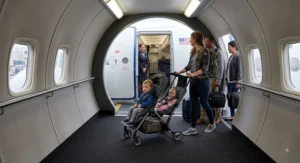
Getting a lightweight double stroller through an airport smoothly is less about the stroller itself and more about your routine. Start the night before: empty every pocket and basket compartment, since a loaded stroller triggers secondary screening far more often than an empty one. Practice the fold at home, ideally while holding something heavy to simulate a child, because the first time you fold a new stroller shouldn’t be at a crowded gate with a boarding announcement playing overhead.
At the airport, keep the stroller assembled through check-in and security, then fold it only at the gate immediately before boarding — most airlines gate-check strollers, meaning ground crew takes it planeside rather than at the ticket counter, and you get it back the same way the moment you land. Bring a lightweight travel bag or cover if your stroller doesn’t come with one; it’s the single best way to prevent belt-scuffing and torn fabric during handling, and several brands on this list, including UPPAbaby, tie their damage-repair programs directly to using the official bag.
For the first 30 days of ownership, resist the urge to skip the manufacturer’s break-in instructions on folding mechanisms — most one-hand folds feel stiff out of the box and loosen with the first ten to fifteen uses. The most common first-month mistake is forcing a fold that isn’t fully engaging the lock, which strains the hinge. If a fold ever feels like it’s fighting you, stop and check that both wheels are aligned rather than pushing harder.
Real-World Scenarios: Matching the Stroller to Your Trip
The layover family with twins under one. Two infants, a long connection, and a need to nurse or bottle-feed mid-terminal call for a stroller with independent deep recline and full car seat compatibility. The Silver Cross Jet Double or UPPAbaby Minu Duo both handle this scenario well — flat recline on demand, car seat adapters available, and light enough that one exhausted parent can manage solo if the other is dealing with bags.
The budget-conscious family flying twice a year. If air travel is occasional rather than constant, spending $700+ on a dedicated travel double is hard to justify. The Delta Children LX Plus or Mompush Lithe Double cover the essentials — under-30-pound weight, standard-doorway width, basic recline — without the investment of a premium pick, freeing up trip budget for the actual vacation.
The Disney or theme-park trip with two toddlers. Long days on foot mean storage and seat comfort start to matter as much as airport weight. The Joovy Scooter X2‘s oversized basket and dual snack trays make it the practical choice once you’re past security and into a full day of walking, even though it’s the heaviest option to gate-check getting there.
Buyer’s Decision Framework
If you fly more than three or four times a year with both kids, prioritize a sub-25-pound stroller with a manufacturer damage program — the Silver Cross Jet Double or UPPAbaby Minu Duo pay for themselves in saved repairs and saved backs. If your budget is the primary constraint and travel is occasional, choose the lightest stroller under $200, which on this list means the Delta Children LX Plus. If you need flexibility to split into two single strollers mid-trip, the Beberoad Love R1 is the only pick built for that specific use case. And if your trip involves more walking than flying once you land — theme parks, long museum days — weight the decision toward storage and seat comfort over the last few pounds of portability, favoring the Joovy Scooter X2.
How to Choose a Lightweight Double Stroller for Air Travel
- Check the weight first. Anything under 25 pounds is genuinely easy to lift solo into an overhead bin or gate-check cart; above 30 pounds, plan on two hands or a second adult.
- Confirm the folded width against your airline’s jet bridge. Most standard doorways and jet bridges accommodate 29–31 inches, which every stroller on this list meets.
- Look for a self-standing fold. A stroller that stands on its own wheels when folded is dramatically easier to roll suitcase-style than one you have to carry under an arm.
- Match seat weight capacity to how long you’ll own it. A 60-pound-per-seat capacity, like the Zoe Twin V2’s, stretches useful life years longer than a 35-pound limit.
- Verify car seat compatibility if you’re traveling with an infant. Not every travel double accepts infant car seat adapters, and retrofitting one later isn’t always possible.
- Ask whether the manufacturer offers gate-check damage protection. As of this writing, only a handful of brands — UPPAbaby among them — explicitly cover damage from official transit bag use.
- Read aggregated review sentiment on wheels and hinges specifically, since those are the components most likely to wear from repeated fold cycles and rough tarmac handling, not the seats or canopy.
Carry-On Double Stroller vs. Gate-Checked Double Stroller
The phrase carry-on double stroller gets used loosely, and it’s worth being precise about what it actually means. A true carry-on stroller fits within an airline’s cabin baggage dimensions and can travel in the overhead bin — realistically, only the smallest umbrella-fold singles achieve this, and even the lightest doubles on this list, including the 18-pound Delta Children LX Plus, are generally too wide when unfolded and often too bulky when folded to qualify as overhead-bin carry-on items in double form. The Beberoad Love R1 is a partial exception: split apart, each individual 11.5-pound single stroller can often be carried into the cabin, even though the combined double cannot.
For nearly every double stroller, including every other pick on this list, “travel-friendly” really means gate-check-friendly: you push it fully assembled all the way to the boarding door, fold it right before stepping onto the jet bridge, hand it to gate agents, and pick it up in the same spot when you land. This is functionally different from checked baggage, which goes through the main luggage system and waits for you at baggage claim — gate-checking is faster and keeps the stroller usable in the terminal until the last possible moment, which is exactly why the strollers above are engineered around a fast, no-tools fold rather than overhead-bin dimensions.
Understanding Gate-Check Policy Before You Fly
Airlines, not the TSA, set the actual rules for what happens to your stroller between the gate and the aircraft, and those rules vary by carrier. In general, strollers are gate-checked for free on U.S. carriers regardless of cabin baggage allowances, because strollers aren’t classified as standard carry-on luggage. The stroller must be folded and stowed — either gate-checked or placed in an overhead bin if it’s small enough — before pushback, and it cannot remain assembled in the aisle or cabin during taxi, takeoff, or landing.
Because policies differ by airline and even by aircraft type on regional routes, it’s worth checking your specific carrier’s current stroller policy before departure rather than assuming last year’s rules still apply, particularly for gate-check weight or size caps on smaller regional jets. A few practical habits reduce friction regardless of airline: tag the stroller with your name and flight number before handing it off, remove any detachable accessories like cup holders or snack trays that could be lost in handling, and photograph the stroller’s condition before boarding in case you need to file a damage claim on arrival.
TSA Stroller Screening: What to Expect at the Checkpoint
Every stroller must be screened before it clears the security checkpoint, and TSA’s own guidance is specific about how that works: strollers, umbrella strollers, and car seats must be screened by X-ray, with any pocket or basket contents placed in a bin or the stroller itself sent through the machine folded. According to TSA’s official guidance for families, equipment too large to pass through the X-ray tunnel gets a visual or physical inspection by an officer instead, and infants or toddlers must be carried in arms through the walk-through metal detector rather than remaining seated in the stroller.
A stroller in the 18–27-pound range that folds genuinely flat, like most of the picks on this list, usually clears the X-ray belt without issue. Bulkier or heavier doubles more often require the hand inspection route, which adds a few minutes but isn’t a mark against the stroller — it simply reflects the physical limits of the X-ray tunnel rather than a security concern. One practical tip that consistently saves time: fold the stroller before you reach the front of the line rather than at the belt itself, so you’re not holding up the queue while wrestling with an unfamiliar mechanism for the first time.
Common Mistakes When Buying a Lightweight Travel Double Stroller
The most common mistake is optimizing purely for the lowest number on the scale without checking how the fold actually performs under load. Independent lab testing has found that some lightweight double strollers marketed heavily toward travel can tip forward unexpectedly on curbs or small bumps, a real stability trade-off that doesn’t show up in a spec sheet or a product photo — it only surfaces in hands-on testing that pushes the stroller over real-world terrain rather than a showroom floor. Reading aggregated stability feedback, not just weight and price, is worth the extra ten minutes before you buy.
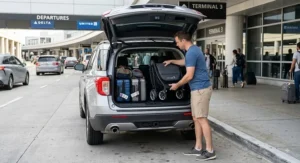
A second common mistake is assuming “fits through doorways” and “fits an airline’s gate-check limits” are the same claim; they usually align, but it’s worth confirming both independently rather than assuming one guarantees the other. A third mistake is buying based on the newborn stage alone and outgrowing the seat weight capacity within a year — this is where the Zoe Twin V2’s 60-pound-per-seat limit becomes a genuine long-term value argument rather than a marketing footnote. Finally, many parents skip reading the folded dimensions entirely and discover at the rental car counter that the trunk-friendly claim didn’t account for their specific vehicle — always cross-check folded dimensions against your actual car, not just “most trunks.”
What to Expect: Real-World Performance
On paper, every stroller on this list clears standard airport doorways and weighs under 35 pounds. In practice, the experience diverges more than the spec sheet suggests. The sub-25-pound strollers — Silver Cross, Zoe, Beberoad, Delta Children — genuinely feel like carrying a piece of light luggage, something one tired parent can manage solo while also holding a diaper bag. The Joovy Scooter X2, at 32–35 pounds, is noticeably more of a two-handed lift, better suited to situations where a second adult or a luggage cart is available.
Fold speed matters more in practice than most buyers expect going in. A stroller that takes fifteen seconds to fold sounds trivial until you’re doing it at a gate with a boarding line building behind you and a toddler trying to climb back into the seat. The self-standing folds on the Silver Cross Jet Double, UPPAbaby Minu Duo, and Mompush Lithe Double meaningfully reduce this stress because you’re not also trying to find somewhere to lean or prop the folded frame while you gather bags and boarding passes.
Long-Term Cost & Maintenance
A travel double stroller’s real cost extends past the sticker price. Wheels and hinges are the components most likely to need attention after a year of repeated fold cycles and rough tarmac handling, and budget picks built around minimal weight — the Mompush Lithe Double is the clearest example on this list — sometimes show wear here earlier than heavier, sturdier frames. Factor in the likely cost of replacement wheel sets or a repair when comparing an entry-level $250 stroller against a $700 premium pick; the gap narrows if the budget option needs a $60 wheel replacement eighteen months in.
Manufacturer support also factors into total cost of ownership. UPPAbaby’s Travel Safe Program effectively insures gate-check damage as long as you use the official bag, which can offset a chunk of that stroller’s higher upfront price over several years of flying. Strollers meeting current ASTM F833 safety and durability standards, which every product on this list is built to, have already cleared baseline structural and stability testing — but that testing doesn’t cover cosmetic wear from baggage handlers, so a protective travel bag is genuinely a maintenance expense worth budgeting for regardless of which stroller you choose.
Features That Actually Matter (And Those That Don’t)
Weight, folded footprint, and fold mechanism speed are the three specs that actually change your day-to-day airport experience — everything else is secondary. A self-standing fold matters more than most buyers initially rate it, because it’s the difference between rolling a stroller like luggage and awkwardly carrying it under one arm through a crowded terminal.
Features that generate marketing buzz but matter less for air travel specifically: oversized parent consoles with multiple cup holders add weight without adding travel utility, since you’re rarely pushing the stroller while also managing four drinks mid-flight. Elaborate multi-position recline systems with a dozen click-stops sound impressive but functionally deliver the same napping comfort as a simpler three-position recline once a child is actually asleep. And all-terrain suspension, while genuinely valuable for jogging strollers, adds weight that’s largely wasted on flat airport floors and paved jet bridges — it’s a feature worth paying for if your trip includes cobblestones or unpaved paths after landing, and skippable if it doesn’t.
Benefits vs. Traditional Double Strollers
| Factor | Lightweight Travel Double | Traditional/Everyday Double |
|---|---|---|
| Typical weight | 18–27 lbs | 30–45 lbs |
| Fold speed | One-hand, 5–15 seconds | Often two-hand, 20–40 seconds |
| Doorway width | 29–31 inches | Often 32+ inches |
| Terrain handling | Best on pavement/flat ground | Often better on grass/gravel |
| Storage capacity | Smaller, trip-focused | Larger, everyday-focused |
The comparison above makes the trade-off explicit: lightweight travel doubles win decisively on weight, fold speed, and doorway clearance — the three factors that determine how smoothly you move through an airport — while traditional everyday doubles generally win on storage and rough-terrain handling. If your stroller’s primary job is getting through airports and hotel lobbies rather than hiking trails, the travel-focused category is the clear structural fit, even accounting for the smaller storage basket most models carry.
Price Range & Value Analysis
Across this list, price correlates more closely with weight-saving engineering and manufacturer support programs than with basic functionality — every stroller here, from the sub-$150 Delta Children LX Plus to the $700-plus Silver Cross Jet Double, folds down, fits standard doorways, and meets current safety standards. What premium pricing actually buys is lower weight per dollar, gate-check damage protection, and materials that hold up to more fold cycles over multiple years of travel.
For a family flying once or twice a year, the budget and mid-range picks on this list deliver essentially the same airport experience as the premium options, just with a shorter expected lifespan on wheels and hinges. For families flying six or more times a year, the math shifts: the time saved by a faster, lighter fold and the money saved by not replacing a worn budget stroller after eighteen months of heavy travel start to justify the higher upfront cost of a premium pick.
✨ Don’t Miss These Exclusive Deals!
🔍 Ready to book your next trip? Check current pricing on the stroller that fits your family best before availability changes. A lighter load through the airport means more energy left for the actual vacation.

Frequently Asked Questions
❓ What is the lightest double stroller for air travel?
❓ Can I bring a double stroller through TSA?
❓ Do airlines charge to gate-check a double stroller?
❓ Will a double stroller fit through an airplane doorway?
❓ Is a lightweight double stroller sturdy enough for daily use, not just travel?
Conclusion
The right lightweight double stroller for air travel comes down to how often you fly and what happens once you land. Frequent flyers who want the lowest possible weight and built-in damage protection should look toward the Silver Cross Jet Double or UPPAbaby Minu Duo. Families balancing value against genuine portability will find the Zoe Twin V2 hard to beat, while the Mompush Lithe Double and Delta Children LX Plus serve tighter budgets without sacrificing the core travel requirements of low weight and a fast fold. Parents who need the flexibility to split into two single strollers mid-trip have a genuinely unique option in the Beberoad Love R1, and anyone prioritizing all-day storage over the last few pounds of portability will get more real-world use out of the Joovy Scooter X2.
Whichever you choose, the TSA and gate-check process itself is the same regardless of stroller: fold before the checkpoint, screen by X-ray, gate-check right up to the jet bridge, and collect it in the same spot on arrival. Match the stroller to your actual travel pattern rather than the lightest number on a spec sheet, and the airport stops being the hardest part of the trip.
Recommended for You
- Lightweight Double Stroller Under $200: 7 Best Picks (2026)
- Tandem Double Stroller for Public Transit Commuting: 7 Top Picks 2026
- 7 Best Tandem Double Strollers for Newborn and Toddler (2026)
Disclaimer: This article contains affiliate links. As an Amazon Associate, I earn from qualifying purchases. If you purchase products through these links, we may earn a small commission at no additional cost to you.
✨ Found this helpful? Share it with your friends! 💬
