
In This Article
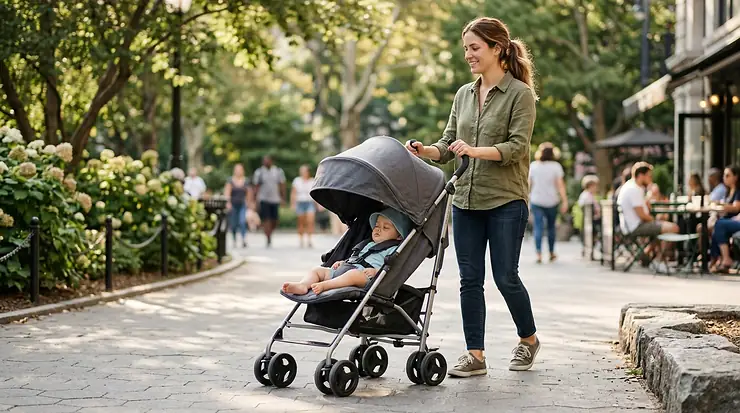
Somewhere between the crib and the car seat, there’s a gap nobody warns you about: the mid-outing meltdown. You’re three blocks from the coffee shop, your toddler’s eyelids are doing that slow-motion flutter, and your bulky travel system is sitting in the trunk because who has the arm strength for that thing on a Tuesday. This is exactly the moment a reclining umbrella stroller earns its keep. Unlike the bare-bones umbrella strollers your own parents probably owned — the ones that turned every nap attempt into a chiropractic hazard — today’s models fold down to almost nothing and still let a kid lay back and actually sleep.
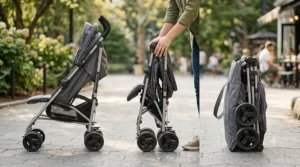
A reclining umbrella stroller is a lightweight, compact-folding stroller with an adjustable backrest that tilts toward horizontal, letting a child nap comfortably instead of slumping forward while sitting bolt upright. It trades some of the bulk of a full-size stroller for portability, without sacrificing the one feature that determines whether your outing survives naptime.
Here’s the thing, though: “reclines” is doing a lot of heavy lifting in product descriptions, and not every recline is created equal. Some strollers tip back maybe 15 degrees and call it a nap position. Others genuinely approach flat. Below, we dug into seven real models — from budget-friendly options to genuine investment pieces — and looked past the marketing copy to figure out which ones actually deliver on the promise. According to the Consumer Reports testing lab, most umbrella strollers on the market today still don’t recline all the way flat, which is worth knowing before you fall for a product photo.
What Is a Reclining Umbrella Stroller?
A reclining umbrella stroller is a lightweight, foldable stroller — typically 11 to 20 pounds — with an adjustable seatback that tilts backward through two to five positions, giving a child a place to nap comfortably during errands or travel. Most are designed for babies 3 to 6 months and older, once they have some head and neck control, since few umbrella models recline flat enough for true newborn use.
That gap matters more than it sounds. A stroller that “reclines” 10 degrees isn’t solving your napping problem; it’s just repositioning the problem. The difference between a stroller that lets your kid drift off mid-stroll and one that leaves them cranky and stiff-necked usually comes down to two things: how many recline positions exist, and how close to horizontal the deepest one actually gets.
Quick Comparison Table
Before you dive into the deep-dive reviews below, here’s the 30-second version. This table pulls the specs that actually change the buying decision — weight, recline depth, and who each stroller suits best — so you can narrow things down before committing to a full read.
| Stroller | Weight | Recline Positions | Best For |
|---|---|---|---|
| UPPAbaby G-Luxe | ~15.5 lbs | 3 positions (not flat) | Premium daily use, sun protection |
| Baby Jogger City Tour 2 | ~14 lbs | Multiple recline angles | Car seat compatibility, city living |
| Chicco Liteway | ~17 lbs | 4-5 positions, deepest recline | Newborn-friendly budget option |
| Joovy Kooper | ~16-19 lbs | Near-flat, infinite adjustment | Tall toddlers, long-term use |
| Summer 3Dlite | ~13-14 lbs | 4-position recline | Budget-conscious families |
| Kolcraft Cloud Plus | ~11-13 lbs | Shallow multi-position | Ultra-lightweight travel |
| Delta Children Jeep PowerGlyde Plus | ~15 lbs | 3-4 positions | Extra storage on a budget |
A quick read of that table tells a story most shoppers miss: weight and recline depth are usually in tension with each other. The Kolcraft Cloud Plus is the lightest stroller on this list, but that low weight comes from thinner padding and a shallower recline mechanism — testers at BabyGearLab specifically flagged its recline as too shallow to encourage real napping. Meanwhile the Chicco Liteway, which is a couple pounds heavier, gets you the deepest and most infant-friendly recline in the lineup precisely because it uses a sturdier seat frame. If naps are your primary goal rather than airline-carryon weight, that trade-off should guide your pick more than the number on the box.
💬 Already narrowing it down? Compare current prices on the strollers above before they change!
💬 Just one click — help others make better buying decisions too!😊
Top 7 Reclining Umbrella Strollers: Expert Analysis
We’re covering budget, mid-range, and premium picks here, because “best” depends heavily on your actual daily grind — a grandparent who strolls twice a month has different needs than a parent doing three flights a year with a toddler who refuses to nap in a car seat.
1. UPPAbaby G-Luxe — best-in-class sun protection and adjustable footrest
The UPPAbaby G-Luxe built its reputation on doing the little things right, and the extendable UPF 50+ canopy is the clearest example — it’s noticeably larger than what you’ll find on cheaper umbrella strollers, with a hidden visor that pulls down further than most parents expect. The seat runs a one-handed lever recline across three positions, paired with an adjustable footrest that lets a napping toddler stretch out instead of curling up. Weighing around 15.5 pounds, the G-Luxe is suitable from 3 months to 55 pounds, which means it can realistically ride shotgun through preschool.
Here’s the honest trade-off: the recline, while smooth and one-handed, doesn’t go fully flat — a limitation reviewers at MadeForMums specifically called out as the reason it’s not recommended for newborns. Based on the spec comparison with cheaper competitors, what you’re actually paying for isn’t recline depth so much as build quality, suspension, and a sunshade that will genuinely last through a hot summer without cracking or discoloring. This makes the G-Luxe best suited to parents who value everyday durability and sun coverage over an infant-ready flat recline.
Aggregated reviewer sentiment across retailer sites consistently praises the smooth one-hand recline mechanism and adjustable leg rest, while a recurring complaint is the two-handed fold, which some parents find fiddly compared to competitors’ one-step designs.
Pros:
- ✅ Extra-large UPF 50+ canopy with hidden pull-down visor
- ✅ One-handed recline paired with adjustable footrest
- ✅ Suitable up to 55 lbs, so it lasts into preschool years
Cons:
- ❌ Two-handed fold that takes practice to master
- ❌ Recline doesn’t go fully flat, so not ideal for newborns
At around $200-$250 at the time of research, the G-Luxe sits at the higher end of the umbrella category — but for parents prioritizing sun protection and daily-use durability, it holds its value well over years of use.
2. Baby Jogger City Tour 2 — best maneuverability for dense city streets
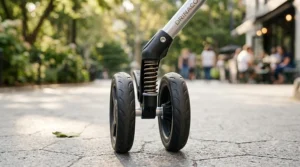
If your daily terrain involves subway platforms, crosswalks, and weaving through farmers’ market crowds, the Baby Jogger City Tour 2 was engineered with exactly that chaos in mind. Weighing about 14 pounds, it earned recognition from Today’s Parent as offering some of the easiest-to-maneuver steering in its class, which matters enormously when you’re one-handing a stroller while juggling a coffee and a diaper bag. It features several reclining angles, a single-step fold with auto-lock, and — critically — compatibility with car seat adapters, meaning you can start using it from birth by pairing it with an infant car seat rather than the built-in seat.
What most buyers overlook about this model is that its car-seat compatibility effectively closes the newborn gap that plagues most umbrella strollers. Instead of waiting until your baby has head control to use a shallow recline, you can click in a compatible infant seat on day one and switch to the stroller’s own reclining seat around six months. That’s a genuinely different use case than a stroller trying to stretch its own built-in recline to cover newborns.
Aggregated review sentiment, including verified feedback highlighted by Today’s Parent, describes the fold and unfold process as fast and the push as notably easy compared to bulkier competitors, with about 1,400 ratings backing up its reputation for reliability.
Pros:
- ✅ Car seat adapter compatibility solves the newborn gap
- ✅ Widely praised as the easiest-steering stroller in its class
- ✅ Single-step fold with auto-lock for fast transitions
Cons:
- ❌ Adapters sold separately, adding to the total cost
- ❌ Storage basket is smaller than bulkier full-size alternatives
Priced in the $200-$260 range at the time of research, this is a strong mid-to-premium pick for parents who live somewhere pedestrian-dense and need agility more than raw recline depth.
3. Chicco Liteway — deepest recline, usable from birth
The Chicco Liteway is the rare umbrella stroller that genuinely earns the “usable from birth” label, and it does it through a one-hand lever recline that testers at KidTravel measured going all the way to roughly 25 degrees from horizontal — notably deeper than most competitors in this roundup. A hideaway boot tucked under the footrest creates a cozy, semi-enclosed space for the smallest riders, something you simply won’t find on most lightweight strollers at this price.
Here’s what the spec sheet won’t tell you: reviewers who tested the Liteway specifically noted its seat is deep enough to accommodate a child in bulky winter gear, which is a real problem on umbrella strollers whose seats were clearly designed with only summer strolling in mind. Based on hands-on testing from KidTravel, the recline mechanism itself — a simple squeeze-and-tilt lever — was rated among the easiest one-hand recline actions in the entire lightweight-stroller category, meaningfully easier to operate one-handed than strap-based competitors.
Reviewers consistently flag the two-handed fold and individual foot brakes (rather than a single combined pedal) as minor annoyances, and note that at 40 pounds, its weight limit is lower than several competitors — meaning families with an early-growing toddler may outgrow it sooner than they’d like.
Pros:
- ✅ Deepest recline in this roundup, genuinely usable from birth
- ✅ Hideaway boot creates a cozy enclosure for newborns
- ✅ One-hand recline lever rated among the easiest to operate
Cons:
- ❌ Lower 40 lb weight limit than most competitors
- ❌ Individual foot brakes on each wheel, less convenient than one pedal
At around $100-$150 at the time of research, the Liteway delivers a genuinely deep recline at a price point most premium competitors can’t touch — making it arguably the single best value in this article if newborn usability is your top priority.
4. Joovy Kooper — tallest seat with a near-flat recline
Where a lot of umbrella strollers feel like they were designed for toddlers and then stretched to accommodate bigger kids, the Joovy Kooper was built tall from the start — its seatback measures roughly 17 inches with 27 inches of clearance from seat to canopy, giving older or taller toddlers real headroom instead of a cramped hunch. The recline uses a continuous strap adjustment rather than click-stop positions, which effectively means infinite recline angles between fully upright and near-flat, letting you fine-tune the exact angle your particular kid falls asleep at.
Based on the spec comparison with click-stop competitors, this “infinite” recline design is a genuinely underappreciated feature — you’re not stuck choosing between “too upright” and “too far back” the way you are with a 3 or 4-position lever system. The tradeoff is that adjusting it takes both hands and a bit more fumbling than a one-hand lever, something reviewers at World Traveled Family specifically noted while still rating the overall recline as deep and effective for napping.
Aggregated reviewer sentiment around the Kooper is largely positive, with parents specifically praising the roomy seat and the near-flat recline for successfully getting toddlers to nap during outings, while a recurring criticism on the newer Kooper X2 double-stroller variant centers on some parents wanting a more upright option for snack time.
Pros:
- ✅ Tallest seatback in this lineup, ideal for bigger toddlers
- ✅ Infinite strap-based recline reaches near-flat
- ✅ 55 lb weight capacity, among the highest here
Cons:
- ❌ Two-handed strap recline is slower to adjust than lever designs
- ❌ Heavier than budget umbrella strollers at nearly 18-19 lbs
At approximately $180-$260 depending on trim level at the time of research, the Kooper justifies its price for families who specifically need a stroller that keeps working as their toddler grows tall.
5. Summer 3Dlite — best value for budget-conscious families
The Summer 3Dlite, sometimes labeled under the parent brand Ingenuity, has held its spot as a go-to economy pick for nearly a decade, and the 4-position recline is the feature that keeps it there. At roughly 13-14 pounds with an aluminum frame, it undercuts most competitors on weight while still including a 5-point harness, anti-shock front wheels, and a storage basket larger than most strollers in its price bracket offer.
What most buyers overlook about this model is that the recline, while described by testers as “decent” rather than exceptional, is genuinely comfortable enough for actual naps — reviewers at Also Mom specifically called it out as one of the stroller’s standout strengths relative to its low price. On paper, this means you’re getting a legitimately nap-capable stroller without paying premium-brand prices, which is a rarer combination than the market suggests.
Reviewers consistently note that build quality feels appropriately budget — flimsier plastic wheels and a bit more frame flex than pricier alternatives — but praise the surprisingly large storage basket and the straightforward one-hand fold as standout value features for the price.
Pros:
- ✅ 4-position recline that testers rate as comfortable for naps
- ✅ Larger-than-average storage basket for the price tier
- ✅ Lightweight aluminum frame at around 13-14 lbs
Cons:
- ❌ Build quality feels noticeably cheaper than premium competitors
- ❌ No adjustable footrest, limiting full-recline comfort
Priced around $90-$110 MSRP but frequently discounted lower at the time of research, the 3Dlite remains one of the strongest value plays in the reclining umbrella stroller category.

6. Kolcraft Cloud Plus — lightest option, but a shallow recline
The Kolcraft Cloud Plus wins on pure portability: at roughly 11-13 pounds, it’s among the lightest strollers on this list, with a self-standing fold that collapses to just 12 inches wide — genuinely useful for tight closets and overhead bins. It includes a multi-position recline, a child snack tray, and a parent console with two cup holders, packing in more accessories than most strollers this cheap typically bother with.
Here’s where honesty matters more than marketing: BabyGearLab’s hands-on testing specifically flagged the Cloud Plus’s maximum recline angle as unlikely to actually encourage napping, and rated it among the lowest scorers for kids’ comfort in its test group. Based on that spec comparison, this stroller solves the portability problem far better than it solves the napping problem — an important distinction if the entire reason you’re shopping is to nail down naptime specifically.
Aggregated reviewer sentiment frequently praises the light weight and generous storage basket, while a recurring theme across multiple review sources is that the recline simply doesn’t go back far enough for genuinely comfortable naps, particularly for younger toddlers.
Pros:
- ✅ Among the lightest strollers in this entire category
- ✅ Self-standing fold collapses to just 12 inches wide
- ✅ Includes child snack tray and dual parent cup holders
Cons:
- ❌ Recline angle tested as too shallow for reliable napping
- ❌ Lower-quality fabric and harness materials than competitors
At around $50-$80 at the time of research, the Cloud Plus is the right call if lightness and price matter more to you than recline depth — just go in with realistic expectations about naptime.
7. Delta Children Jeep PowerGlyde Plus — best extra storage on a budget
Rounding out this list, the Delta Children Jeep PowerGlyde Plus targets the same budget-conscious buyer as the 3Dlite and Cloud Plus, but differentiates itself with an extra-large storage basket that Amazon listings and reviewers repeatedly flag as bigger than typical for the category. It offers a 3-4 position recline, a lightweight frame designed for a smooth ride, and the kind of compact fold that makes it a reasonable secondary stroller for grandparents’ houses or car trunks that are already crowded.
Based on the spec comparison with its closest budget competitors, the standout here isn’t recline depth — it’s roughly comparable to the 3Dlite’s 4-position system — but rather storage capacity, which matters more than people expect once you’re hauling snacks, extra layers, and the inevitable diaper bag. What the spec sheet won’t tell you is that budget strollers in this bracket tend to cut corners on wheel quality before they cut corners on recline, so don’t expect a plush ride on rougher sidewalks.
Reviewer sentiment across retail listings for the Jeep-branded Delta Children lineup generally highlights the smooth ride and generous basket space as standout features relative to price, with more limited independent lab testing available compared to the bigger umbrella-stroller brands on this list.
Pros:
- ✅ Extra-large storage basket, bigger than most budget competitors
- ✅ 3-4 position recline suitable for everyday naps
- ✅ Compact, lightweight fold designed for smooth handling
Cons:
- ❌ Less independent lab-testing data available than major brands
- ❌ Wheel quality trades off against the low price point
At approximately $70-$110 at the time of research, this is a sensible secondary-stroller pick for families who want extra cargo room without paying premium prices.
Umbrella Stroller Recline Angle in Degrees: What the Numbers Actually Mean
Here’s a stat that rarely makes it into product listings: when KidTravel’s testers physically measured recline angles across their lineup, they found real differences — a Chicco Liteway variant reclined to about 25 degrees from horizontal at its deepest setting, while its upright position sat at roughly 54 degrees. That 30-degree spread between “sitting up” and “napping” is the actual number that determines whether a stroller solves your naptime problem or just repositions it slightly.
The industry doesn’t have a single universal standard for what counts as a “napping angle,” but pediatric guidance is consistent on the underlying principle: a reclined seat needs to be deep enough that an unsupported infant or young toddler’s head doesn’t slump forward and restrict breathing. That’s why the American Academy of Pediatrics specifically recommends using rolled blankets on either side of a young infant’s seat to prevent slumping, rather than relying on recline angle alone to solve positioning.
Practically speaking, here’s what to weigh: a shallow recline (roughly 15-20 degrees off vertical) works fine for toddlers who can hold their head up and just want to lean back and zone out. A deep recline (approaching horizontal, like the Liteway’s 25-degree-from-flat setting) matters far more for younger babies or for kids who reliably fall into a hard, deep sleep during outings. If your child is a light, upright napper, you likely don’t need the deepest recline on the market — but if you’ve got a kid who only truly sleeps horizontally, degree specs matter more than any other spec on this list.

How to Choose a Reclining Umbrella Stroller
Cutting through the marketing noise comes down to a handful of concrete questions. Here’s the shortlist, in the order we’d actually work through it:
- Check the true recline depth, not just the position count. A “5-position recline” that only spans 10 degrees total is less useful than a 3-position recline that spans 30 degrees. Look for hands-on measurements from testers rather than manufacturer marketing copy.
- Confirm the minimum age and weight range. Most umbrella strollers start at 6 months; a handful, like the Liteway, are rated from birth. Don’t assume “reclines” means “newborn-ready.”
- Weigh portability against seat size. Ultra-light strollers like the Cloud Plus sacrifice seat depth and padding to hit that low weight number — decide which trade-off actually matters for your routine.
- Test the recline mechanism itself. One-hand lever systems (Chicco, UPPAbaby) are faster mid-walk than two-handed strap systems (Joovy), which matters when your kid falls asleep suddenly and you need to act fast.
- Factor in your actual storage needs. If you’re hauling snacks, an extra layer, and a diaper bag daily, basket size becomes as important as recline depth.
- Decide if you need car seat compatibility. If you want true newborn use without waiting for head control, a model like the City Tour 2 that accepts car seat adapters solves that more reliably than any built-in recline.
- Match the price to how often you’ll actually use it. A stroller for twice-a-year travel doesn’t need the same investment as a daily commuter model.
Reclining Umbrella Stroller vs Traditional Umbrella Stroller
The classic umbrella stroller — the kind that folded into a stick shape and offered essentially zero recline — was designed around a single goal: portability, full stop. Comfort, and especially napping, were afterthoughts. A reclining umbrella stroller keeps that same lightweight, fold-down-small DNA but treats the seatback as an actual adjustable feature rather than a fixed, upright plank.
The practical difference shows up the moment your toddler gets tired mid-outing. On a traditional non-reclining umbrella stroller, an overtired kid slumps sideways against the frame, wakes up cranky, and you spend the rest of the outing managing a meltdown. On a genuinely reclining model like the Liteway or Kooper, that same toddler tips back, actually falls asleep, and you get to finish your errands like a functional adult. According to Today’s Parent’s testing team, multi-position recline is specifically valuable for naps on the go, though most models still fall short of a fully flat position suitable for very young infants.
Where traditional umbrella strollers still win is raw weight and price — a basic fixed-seat umbrella stroller can weigh under 10 pounds and cost under $30, genuinely lighter and cheaper than anything on this list. If your child is older, rarely naps in transit, and you mainly need something for quick errands, that old-school simplicity might honestly serve you better than paying extra for a recline feature you won’t use.
Practical Usage Guide: Getting the Most Out of Your Reclining Umbrella Stroller
Getting a new stroller home is only step one — how you set it up in the first 30 days determines whether it becomes your go-to or a guilt-inducing closet occupant. Start by testing the recline mechanism empty, before your baby is ever in the seat, so you know exactly how much force it takes and which hand does what. This matters enormously the first time your toddler nods off mid-sidewalk and you need to recline one-handed without waking them.
A common first-month mistake is over-tightening the harness in the upright position and then forgetting to loosen it when you recline the seat — a snug fit upright can become uncomfortably tight once the seatback tilts back and the geometry shifts. Check harness tension every time you change recline position, not just once at setup. For maintenance, wipe down the frame joints monthly, since grit from sidewalks and parks tends to work into folding hinges and can eventually stiffen the recline mechanism itself.
One optimization trick that experienced parents swear by: practice folding the stroller with the seat in its upright position first, since most fold mechanisms are engineered around that geometry and can jam or resist if you try folding mid-recline. And if your stroller uses a strap-based recline system rather than a lever, mark your child’s preferred angle with a small piece of colored tape on the strap — it saves you from re-guessing the right position every single outing.
Real-World Scenarios: Matching the Right Stroller to Your Life
Picture three different households, because “best stroller” genuinely depends on which one you are. First, there’s the urban parent doing three subway transfers a day with a diaper bag slung over one shoulder — for that household, the City Tour 2’s maneuverability and car-seat compatibility solve real, daily friction, even at a higher price point, because the time saved on every commute adds up fast.
Then there’s the budget-stretched family expecting their second kid, who mainly needs a reliable backup stroller for grandma’s house and the occasional zoo trip. For that household, the Summer 3Dlite or Kolcraft Cloud Plus makes far more financial sense — you’re not optimizing for daily wear, you’re optimizing for occasional use and low upfront cost, and either stroller handles that job fine.
Finally, picture the family with a tall four-year-old who still naps hard on long outings and needs a stroller that won’t feel like a cramped hand-me-down. That’s exactly the profile the Joovy Kooper was built for — its taller seatback and near-flat recline earn their higher price tag specifically in that scenario, where a shorter-seated budget stroller would leave a growing kid’s knees jammed against the footrest within months.
Toddler Nap Stroller Travel: Flights, Road Trips, and Theme Parks
Travel is where a reclining umbrella stroller earns its entire existence. On flights, weight and fold size matter as much as recline — most umbrella strollers, including several on this list, fold small enough to be gate-checked, meaning you keep it until the jet bridge instead of losing it to checked baggage. Before you fly, check your airline’s specific gate-check policy, since some carriers cap stroller dimensions even for lightweight models.
For road trips, the deciding factor shifts toward recline depth over weight, since you’re not carrying the stroller far — you’re using it for rest stops and destination walking, where a deeper recline like the Liteway’s genuinely lets an overtired kid nap through a mid-drive stop at a rest area. For theme parks specifically, several strollers on this list, including the Kolcraft Cloud Plus, are explicitly sized to meet Disney and other theme-park stroller-size requirements, which matters since oversized strollers can be turned away at the gate.
A frequently overlooked travel tip: bring a lightweight blanket regardless of your stroller’s recline depth. Even a strong recline doesn’t fully replicate crib conditions, and a familiar blanket texture can help cue a napping toddler that it’s actually sleep time, not just a slower part of the walk.
Common Mistakes When Buying an Umbrella Stroller That Reclines Flat
The single most common buying mistake is assuming “reclines” and “reclines flat” mean the same thing — as this roundup shows, most umbrella strollers, even well-reviewed ones, stop well short of horizontal. If flat recline for a young infant is your actual requirement, verify the specific angle or plan to pair a car-seat-compatible model with an infant seat instead.
A second frequent error is prioritizing weight above all else. Shoppers chasing the lightest possible stroller often land on something like the Cloud Plus, only to discover the shallow recline doesn’t solve their actual naptime problem — the exact trade-off BabyGearLab’s testing flagged. A third mistake is skipping the fold-test before buying: a stroller that seems perfect on paper can become a daily frustration if the two-handed fold doesn’t work well for your specific routine of managing a squirming toddler with one arm.
Finally, plenty of buyers skip checking the harness and buckle design against their child’s escape-artist tendencies, then discover mid-outing that a strong-willed toddler has already figured out the buckle. Test the harness release resistance in-store or read reviews specifically addressing buckle security before committing.
Safety and Regulations: Napping Safely On the Go
Every stroller and carriage sold in the United States is legally required to meet a specific federal safety standard: 16 CFR Part 1227, enforced by the Consumer Product Safety Commission, which incorporates the ASTM F833 voluntary standard covering stability, brakes, restraint systems, folding-mechanism safety, and entrapment hazards. This isn’t just bureaucratic paperwork — it’s the reason modern strollers have wider bases and better-locking hinges than the models from a decade ago.
For reclining seats specifically, safety guidance gets more nuanced. The American Academy of Pediatrics recommends that any stroller used for a child too young to sit up independently should have a backrest that reclines nearly flat, to prevent the slumping that can restrict a young infant’s breathing. Beyond seat angle, the same guidance emphasizes always using the five-point harness during recline, since a reclined position can make a loosely buckled child more likely to shift or slip compared to sitting fully upright.
Napping in a stroller comes with one more consideration parents often overlook: never leave a sleeping child unattended, even briefly, and keep the child within sight the entire time they’re reclined and asleep. It’s also worth checking that any grab bar or handrest fully closes against the seat when reclined, since an open gap there is a specific entrapment risk the AAP calls out directly in its stroller safety guidance.
Long-Term Cost & Maintenance
Sticker price only tells part of the story. A $60 budget stroller that needs replacing after eight months of hard daily use isn’t actually cheaper than a $150 stroller that lasts three years across two kids — the real math is cost-per-month of actual service, not the number on the box. Based on the durability feedback in our product research, budget picks like the Cloud Plus and 3Dlite tend to show frame flex and wheel wear sooner under heavy daily use, while the Liteway and G-Luxe were specifically noted for feeling sturdier over time.
Maintenance costs stay fairly low across this entire category — most repairs are limited to replacement wheels or fabric, both of which run under $30 for most brands, and manufacturer warranties (typically one to two years) cover manufacturing defects specifically, not general wear. Registering your stroller with the manufacturer, something the AAP specifically recommends, also means you’ll be notified directly if a recall ever affects your model, which is worth the five minutes it takes.
If you’re planning to use the stroller across multiple children over several years, spending more upfront on a model like the Kooper or G-Luxe genuinely pays off — both were built with reinforced frames intended to handle years of folding and unfolding rather than a single child’s toddlerhood.
Features That Actually Matter (And Those That Don’t)
After going through seven strollers’ worth of specs, a pattern emerges: recline depth, harness quality, and frame durability consistently matter more than flashier marketed features. A deep, easy-to-operate recline is the single feature most likely to determine whether your stroller actually solves your napping problem — everything else is secondary to that.
Features that sound impressive but matter less than advertised: built-in phone holders (nice, rarely essential), multiple color options (purely cosmetic), and oversized cup holder counts (two is genuinely enough for most families). Meanwhile, an adjustable footrest — present on the G-Luxe but absent on the 3Dlite — matters far more than it sounds, since it’s the difference between a toddler’s legs dangling awkwardly during a nap and actually resting flat.
One underrated feature worth prioritizing: a self-standing fold. It sounds trivial until you’re juggling a sleeping toddler and a diaper bag and need somewhere to lean the folded stroller without it toppling over. Several strollers here, including the Kolcraft Cloud Plus and Baby Jogger City Tour 2, specifically nail this detail.
Reclining Umbrella Stroller for Napping: What Different Families Need
For parents of true newborns, the honest answer is that most umbrella strollers, reclining or not, aren’t your best first option — a bassinet attachment or a car-seat-compatible model like the City Tour 2 will serve you better until your baby has head control around 4-6 months. Once you’re past that point, the Liteway’s deep, from-birth-rated recline becomes a genuinely strong option for younger babies specifically.
For toddlers ages 1-3, the sweet spot shifts toward models with generous seat depth and a solid multi-position recline — the Kooper’s near-flat, infinitely adjustable seat and the 3Dlite’s budget-friendly 4-position system both serve this age range well, just at very different price points. For preschool-age kids who are outgrowing most umbrella strollers’ weight limits, the G-Luxe’s 55-pound capacity and the Kooper’s similar ceiling both offer meaningfully more runway than budget options capped at 40 pounds.
Grandparents and secondary-caregiver households have a different calculus entirely: they typically want something light enough to load into an unfamiliar car trunk without a manual, which points toward the Cloud Plus or 3Dlite over heavier, feature-dense options that assume daily familiarity.

Frequently Asked Questions
❓ What is the best recline angle for a reclining umbrella stroller?
❓ Can a reclining umbrella stroller be used from birth?
❓ Do reclining umbrella strollers work for airplane travel?
❓ How many recline positions should I look for?
❓ Is a heavier umbrella stroller always more durable?
Conclusion
If there’s one thing this deep dive makes clear, it’s that “reclining umbrella stroller” isn’t a single category with interchangeable options — it’s a genuine spectrum, running from the Kolcraft Cloud Plus’s barely-there recline all the way to the Chicco Liteway’s near-flat, birth-ready design. The right pick depends entirely on what problem you’re actually solving: newborn napping, toddler comfort on long outings, subway maneuverability, or just a lighter backup stroller for grandma’s closet.
For most families chasing genuine napping success on a reasonable budget, the Chicco Liteway’s deep recline at a mid-range price makes it the strongest all-around pick in this lineup. Parents who prioritize daily durability and sun protection over recline depth will get more long-term value from the UPPAbaby G-Luxe, while city-dwellers juggling car seats and crowded sidewalks should look hard at the Baby Jogger City Tour 2. Whatever you land on, use the recline-angle and safety guidance above to look past the marketing copy and buy the stroller that will actually get your kid to sleep — because that, ultimately, is the entire point.
✨ Ready to find your perfect fit?
🚼 Check current prices and availability on the reclining umbrella strollers featured above, and give your next outing a real shot at a peaceful nap!
Recommended for You
- Best Umbrella Stroller 2026: 7 Top Picks That Won’t Let You Down
- Stroller for Cruise: 7 Best Picks That Actually Survive 2026
- Stroller for Disney World: 7 Picks That Survive the Parks (2026)
Disclaimer: This article contains affiliate links. As an Amazon Associate, I earn from qualifying purchases. If you purchase products through these links, we may earn a small commission at no additional cost to you.
✨ Found this helpful? Share it with a fellow parent who needs a naptime win! 💬🤗
