
In This Article
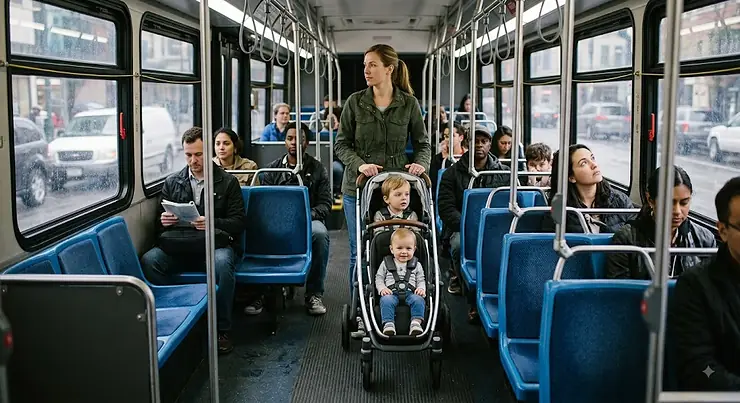
Anyone who has tried to wrestle a wide double stroller through a subway turnstile while a train doors-chime countdown ticks toward zero already knows the truth: not every double stroller belongs on public transit. A tandem double stroller for public transit commuting is, put simply, a front-and-back (rather than side-by-side) two-child stroller narrow enough — typically 20 to 26 inches wide — to pass through standard turnstiles, bus aisles, and elevator doors without turning sideways or apologizing to every rider you pass. That narrow footprint is the whole point, and it’s the difference between a smooth commute and a daily obstacle course.
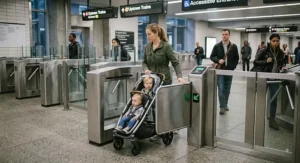
We dug into real product specs, verified measurements, and aggregated review sentiment from owners who actually push these things onto crowded 6 trains and articulated buses every weekday. Below you’ll find seven genuine tandem strollers spanning budget to premium, honest commentary on what each one gets right (and where it falls short), and the practical detail Amazon listings tend to skip — like whether a stroller actually clears a subway turnstile or just claims to.
Quick Comparison Table
Before the deep dive, here’s the fast version for anyone reading this on a platform bench with three minutes before the next train.
| Stroller | Width (Open) | Weight | Price Range | Best For |
|---|---|---|---|---|
| Zoe Tandem+ | 20.5″ | ~20 lbs | Budget-Mid | Lightest overall pick |
| Graco DuoGlider | 20.5″ | ~29.5 lbs | Budget | Tightest budget |
| Joovy Caboose UL | 21.25″–22.5″ | ~22.5–26.5 lbs | Budget-Mid | Toddler + infant mix |
| UPPAbaby Vista V2 + RumbleSeat | ~23.5″ (single-stroller footprint) | ~29 lbs + seat | Premium | Long-term, growing family |
Even glancing at this table, the pattern is obvious: the narrower a tandem gets, the more it starts to matter for anyone actually navigating turnstile width restrictions and bus aisles every day rather than just parking in a driveway. Weight and width don’t always move together, either — the Graco DuoGlider is nearly as narrow as the featherweight Zoe Tandem+ but carries almost 50% more frame weight, which matters the moment you’re lifting it up subway stairs. The UPPAbaby Vista V2 proves that “premium” doesn’t automatically mean “wider”; its stacked-seat engineering keeps it commuter-friendly despite costing roughly double the budget options.
💬 Just one click — help others make better buying decisions too!😊
Top 7 Tandem Double Strollers for Public Transit Commuting: Expert Analysis
We chose these seven specifically because they clear (or nearly clear) standard turnstile and doorway widths, fold fast enough for a boarding bus, and have real, verifiable specs and owner feedback behind them — not marketing copy.
1. Zoe Tandem+ — lightest true tandem on this list
The standout here is weight: at roughly 20 pounds, the Zoe Tandem+ is light enough that carrying it up a flight of subway stairs with a toddler on your hip doesn’t feel like a workout. Open, it measures about 20.5 inches wide and folds down to roughly 17.5 inches — narrow enough to glide through nearly any standard turnstile or bus aisle without a sideways shuffle. The aluminum frame keeps weight down without the flimsiness you’d expect at this price, and the seats recline to around 135–165 degrees depending on configuration, which matters for a napping toddler mid-commute. Based on the spec comparison against heavier tandems like the Contours or City Select, the Zoe Tandem+ is the clear choice for anyone prioritizing portability over plush extras — this is a stroller built to be picked up, not just pushed. Reviewers consistently report that the fold, while requiring a slight learning curve in the first week, becomes genuinely one-handed with practice, and several transit-commuting parents specifically cite it as their pick for daily subway use. A recurring complaint in aggregated feedback is that the front dual-wheel design can make sharp turns feel less precise than a single-wheel front axle, and the company itself is a smaller, direct-to-consumer brand without big-box retail presence, so returns and warranty service run through their own channels rather than a familiar chain.
Pros:
- ✅ Lightest true tandem in this roundup at ~20 lbs
- ✅ Narrowest folded profile for tight subway gates
- ✅ Expandable design adds a third or fourth seat later
Cons:
- ❌ Dual front wheels can feel less precise on turns
- ❌ Smaller brand means less familiar customer support
Expect to pay in the budget-to-mid range for the Zoe Tandem+, and given what you get for that price — genuine lightweight tandem engineering — it’s one of the strongest value plays on this list for commuters who fold and carry daily.

2. Graco DuoGlider — most budget-friendly narrow tandem
The Graco DuoGlider opens with a straightforward advantage: at around $150–$200, it’s the least expensive genuinely narrow tandem stroller most parents will find on Amazon, and its 20.5-inch width holds its own against strollers costing three times as much. What that price doesn’t sacrifice is the fold — Graco’s one-hand, standing fold means you can collapse it with a toddler still attached to your other hand, which is exactly the scenario a crowded bus doorway creates. Stadium seating elevates the rear seat slightly so the back-seat rider isn’t staring at a headrest all commute, and both seats accept Graco SnugRide infant car seats for click-in compatibility from birth. On paper this means a family can start using the DuoGlider with a newborn in the front and a toddler in back without buying a separate infant setup. Aggregated review sentiment on Amazon and parenting forums is largely positive on value, though a common theme is that at nearly 30 pounds, the frame itself is heavier than its narrow profile suggests — a trade-off of using steel-reinforced tubing to keep costs down. What most buyers overlook about this model is that the recline is shallower than premium competitors, so it’s a better fit for toddlers who nap sitting up than for very young infants who need a near-flat position.
Pros:
- ✅ Lowest price point of any narrow tandem here
- ✅ Genuine one-hand standing fold
- ✅ Accepts two Graco infant car seats
Cons:
- ❌ Heaviest-per-inch-of-width frame in this lineup
- ❌ Shallower recline than premium alternatives
At under $200, the Graco DuoGlider delivers width and fold speed most competitors charge double for — the honest trade is a heavier carry and a less generous recline.
3. Joovy Caboose UL — best for mixed toddler-and-big-kid commutes
What stands out about the Joovy Caboose UL is flexibility: it’s not just a two-seat tandem, it’s a stand-and-sit hybrid, with a reclining front seat for a younger child and a rear bench-or-standing-platform for an older sibling who’s outgrowing full-time seating but still slows down a sidewalk commute. At roughly 21.25 to 22.5 inches wide and 22.5–26.5 pounds depending on the specific UL trim, it stays comfortably inside turnstile width limits while carrying up to 90 pounds combined (45 per position). The front seat reclines for genuine naps, while the rear platform lets a 3- or 4-year-old stand for the fun parts of a commute and sit when they tire out — a configuration few pure two-seat tandems offer. Here’s what to weigh: reviewers on BabyGearLab and independent blogs note the Caboose folds in two steps rather than truly one-handed, and the storage basket, while roomy, is awkward to access once the rear seat is loaded with a child’s legs hanging over the opening. Families managing a toddler-plus-preschooler age gap — rather than near-twins — tend to get the most mileage from this configuration, since it grows with the older child instead of forcing two full seats indefinitely.
Pros:
- ✅ Rear standing platform frees up an older rider
- ✅ Carries up to 90 lbs combined across both riders
- ✅ Narrow enough for standard turnstile clearance
Cons:
- ❌ Fold requires two hands, not one
- ❌ Storage basket access blocked once rear seat is loaded
Priced in the budget-to-mid range, the Joovy Caboose UL earns its keep for families with an age gap rather than twins, where a standing platform beats a second full seat.
4. Contours Options Elite Tandem V2 — most seating configurations
The Contours Options Elite Tandem V2‘s standout feature is versatility: seven seating configurations, including face-to-face, back-to-back, and both-forward arrangements, mean two children can interact, nap independently, or each get their own view depending on the day. At 26 inches wide, it’s noticeably closer to the upper edge of turnstile-friendly width than the narrowest picks on this list, so it’s worth measuring your specific commute’s tightest pinch point before buying. Each seat supports up to 40 pounds (80 pounds combined), and the reversible stadium-style seats include three recline positions and adjustable footrests — genuinely useful when one child needs to nap while the other stays upright and alert. Based on the spec comparison, the trade-off for all that configurability is weight: at roughly 34 to 37.5 pounds depending on the model year, it’s among the heaviest strollers in this roundup, which matters more on stairs than on flat platforms. Reviewers frequently describe it as a lower-cost alternative to premium modular strollers like the Baby Jogger City Select, delivering comparable seat-swapping flexibility for less money, while a recurring critique is that folding with both seats attached is awkward and best done with the seats removed first — not ideal when a bus is already at the curb.
Pros:
- ✅ Seven seating configurations for face-to-face or independent riding
- ✅ Each seat supports up to 40 lbs (80 lbs total)
- ✅ Lower price than comparable modular competitors
Cons:
- ❌ Heaviest frame in this roundup at 34–37.5 lbs
- ❌ Folding with seats attached is slow and awkward
In the mid-to-premium price range, the Contours Options Elite Tandem V2 is the pick for parents who want maximum seat flexibility and don’t mind the extra pounds it takes to get there.
5. Mockingbird Single-to-Double Stroller 3.0 — best true one-hand fold at full size
The 2026-updated Mockingbird Single-to-Double Stroller 3.0 leads with a genuinely fast, tested one-hand fold — a rarity among full-size modular strollers, and arguably the single most transit-relevant feature on this entire list, since a bus doesn’t wait while you fumble a two-handed collapse. At 25.5 inches wide, it sits mid-pack for turnstile width, narrower than the Contours and about even with the City Select, while weighing around 27 pounds in single mode and 35 pounds once the second seat kit is added. What most buyers overlook about this model is that it offers 44 seating configurations and all-wheel suspension with shock-absorbing, flat-proof tires — genuinely smoother over the potholes and grates typical of a city sidewalk-to-platform commute than lighter budget frames. Reviewers, including hands-on testing from outlets like Forbes and The Bump, consistently praise the fold speed and ride quality, describing it as comparable to premium competitors at meaningfully lower cost. The spec sheet won’t tell you this, but user reports suggest folding is noticeably easier with the second seat removed first when you’re carrying it fully loaded down subway stairs; folded with both seats attached, it’s bulkier than the frame-only fold.
Pros:
- ✅ Tested genuine one-hand fold at full modular size
- ✅ 44 seating configurations for growing families
- ✅ All-wheel suspension smooths sidewalk-to-platform transitions
Cons:
- ❌ Bulkier fold when both seats stay attached
- ❌ Mid-pack width, not the narrowest option here
Sitting in the mid-to-premium range, the Mockingbird Single-to-Double Stroller 3.0 is arguably the best all-around balance of fold speed, ride quality, and width for a daily transit commute.
6. Baby Jogger City Select 2 — most configurations for a growing family
The Baby Jogger City Select 2‘s calling card is adaptability: with 24 published configurations, it converts from single to tandem double to triple (with an added glider board) as your family changes, all while folding roughly 20% smaller than the leading single-to-double competitor when collapsed. At 25.75 inches wide, it clears most turnstile and doorway widths comfortably, and the tandem double configuration keeps that same narrow single-stroller-like profile rather than ballooning outward. Here’s what to weigh: reviewers are split on the fold in double mode — Baby Jogger markets a “one-step” fold, and many owners confirm it collapses in a single motion once seats are positioned correctly, while others note it functionally requires two hands and that the second seat has to come off first if you want the compact folded footprint. Aggregated feedback highlights the telescoping, height-adjustable handlebar as a genuine win for co-parenting households where two adults of different heights share push duty, and the front-wheel suspension smooths out subway grates and cracked sidewalk seams better than lighter budget frames. Where most buyers overlook real cost: the second seat and glider board are sold separately, so the sticker price for “single” mode understates what a full tandem double setup will actually run.
Pros:
- ✅ 24 configurations, grows from single to triple
- ✅ Folds 20% smaller than comparable modular competitors
- ✅ Telescoping handlebar suits multiple caregiver heights
Cons:
- ❌ Second seat and glider board sold separately
- ❌ Two-handed fold in some real-world double-mode reports
In the premium range once the second seat is added, the Baby Jogger City Select 2 rewards families who want one stroller to last from newborn through preschool without repurchasing.
7. UPPAbaby Vista V2 with RumbleSeat — narrowest footprint for a premium double
The UPPAbaby Vista V2, converted to a double with the add-on RumbleSeat, has one job it does better than almost anything else here: it keeps a genuinely single-stroller-sized footprint even in double configuration, thanks to a stacked rather than side-loaded second seat. The base stroller steers with one hand thanks to foam-filled, never-flat tires and a low center of gravity, and the RumbleSeat itself weighs under 7 pounds and reclines multi-position, including a near-flat setting for younger riders in the rear position. Based on the spec comparison, this is the closest thing to a true premium build in this roundup — reinforced aluminum frame, weatherproof fabrics, and a bassinet-compatible upper seat for true newborn use. The trade-off is straightforward: this is the most expensive setup on the list once you add the RumbleSeat attachment, easily running into premium territory that rivals or exceeds a full modular tandem like the City Select. Reviewers frequently note the RumbleSeat’s rear position gives that child a lower vantage point and less airflow than the top seat, and aggregated feedback suggests families with two closely-aged toddlers sometimes find the RumbleSeat’s 40-pound weight limit gets outgrown faster than the primary seat’s capacity.
Pros:
- ✅ True single-stroller footprint even as a double
- ✅ One-handed steering with foam-filled, never-flat tires
- ✅ RumbleSeat reclines near-flat for younger riders
Cons:
- ❌ Most expensive option on this list
- ❌ RumbleSeat’s 40-lb limit outgrown faster than main seat
For families who see this as a long-term investment rather than a stopgap, the UPPAbaby Vista V2 with RumbleSeat justifies its premium price with the narrowest genuinely comfortable double-stroller footprint here.
Full Spec Comparison: All 7 Tandem Strollers Side by Side
| Stroller | Open Width | Weight | Price Range | Fold Type | Best For |
|---|---|---|---|---|---|
| Zoe Tandem+ | 20.5″ | ~20 lbs | Budget-Mid | One-hand | Lightest carry |
| Graco DuoGlider | 20.5″ | ~29.5 lbs | Budget | One-hand | Tightest budget |
| Joovy Caboose UL | 21.25″–22.5″ | ~22.5–26.5 lbs | Budget-Mid | Two-hand | Toddler + big kid |
| Contours Options Elite V2 | 26″ | ~34–37.5 lbs | Mid-Premium | Two-hand | Seat configurability |
| Mockingbird 3.0 | 25.5″ | ~27–35 lbs | Mid-Premium | One-hand | Best overall balance |
| Baby Jogger City Select 2 | 25.75″ | Varies by config | Premium | Mixed reports | Longest family lifespan |
| UPPAbaby Vista V2 + RumbleSeat | ~23.5″ | ~29 lbs + 7 lbs | Premium | One-hand | Narrowest premium double |
Looking at the comparison above, the Zoe Tandem+ and Graco DuoGlider tie for narrowest width but split sharply on weight, which matters most for stair-carrying rather than platform-rolling. If width is your single hardest constraint — say, a station with an especially tight turnstile — the UPPAbaby Vista V2 with RumbleSeat punches above its category by staying narrower than most true tandems despite costing more, because its stacked-seat design doesn’t add width the way a longer wheelbase does. Budget-conscious commuters should note that the Contours Options Elite V2, while the most configurable, is also the widest and heaviest stroller on this list, so it’s a stronger fit for households with a car and occasional transit trips than for daily subway riders.
✨ Don’t Miss These Exclusive Deals!
🔍 Take your daily commute to the next level with these carefully selected tandem strollers. Click on any highlighted item to check current pricing and availability. These picks will help you create smoother, faster public transit routines your whole family will actually enjoy!
Practical Usage Guide: Mastering Your Transit Commute
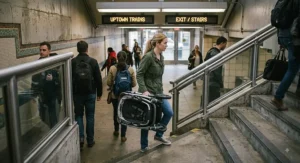
Getting a new tandem stroller doesn’t automatically mean smooth boarding on day one — there’s a learning curve, and most of it is muscle memory. Start by practicing the fold at home, fully loaded with a diaper bag and both seats’ worth of gear, at least five times before your first real commute; nearly every “it doesn’t really fold one-handed” complaint traces back to a parent who never rehearsed the motion under realistic weight. Set up your stroller’s brake pedal and recognize it by feel, not sight — you’ll need to engage it on a moving bus or a sloped platform without looking down. In the first 30 days, the most common mistake is waiting until you’re at the turnstile to test whether the stroller actually fits; instead, measure your specific home station’s narrowest gate (some older stations run tighter than the ADA-standard clearances found in the transit system’s own guidelines) and compare it against your stroller’s folded — not open — width, since some stations require a folded pass-through during rush hour. For maintenance, wipe down wheels weekly if you’re riding through winter salt or wet platforms, since grit accelerates wheel-bearing wear far faster in a transit environment than on suburban sidewalks. A once-a-month check of the frame-lock mechanism (the piece that keeps a folded stroller from popping open mid-carry) prevents the single most jarring transit mishap: a stroller unfolding itself on a crowded escalator landing.
Real-World Scenarios: Which Stroller Fits Your Commute
Picture a Brooklyn parent riding the L train to a Manhattan daycare drop-off every weekday with a 6-month-old and a 3-year-old: budget matters, but so does a near-flat recline for the infant, which points toward the Zoe Tandem+ or Graco DuoGlider for their combination of low cost and genuine recline depth. Now picture a Chicago family who takes the CTA bus twice a day with two kids close in age — both needing full seating rather than a standing platform — and values seat configurability for nap schedules that don’t align; the Contours Options Elite V2 or Mockingbird 3.0 fit that profile better, assuming the household has a car for the heavier, wider days and only needs transit for shorter hops. Finally, picture a Boston professional who bikes, walks, and takes the T interchangeably with a toddler and a preschooler who alternates between riding and walking — that’s the exact use case the Joovy Caboose UL‘s standing platform was built for, letting the older child stretch their legs on platform waits without adding stroller width. Matching your specific commute pattern — frequency, distance, and the ages of your riders — to these profiles will narrow seven options down to one or two realistic finalists faster than specs alone.
Problem → Solution: Common Transit Stroller Headaches
Problem: The stroller won’t fold fast enough before the bus doors close. Practice a “pre-fold” routine — collapse the canopy and remove loose items before you’re actually boarding, so the final fold motion is the only step left; strollers like the Graco DuoGlider and Zoe Tandem+ are built for exactly this quick-motion scenario. Problem: Wheels get stuck in subway platform gaps. Angle the stroller slightly and lead with the rear wheels rather than pushing straight across a gap, and consider models with slightly larger front wheels, like the Joovy Caboose UL, for grated platform surfaces. Problem: Turnstile width is tighter than expected at an older station. Look for the wide accessible AutoGate typically located near a station agent’s booth — most transit systems provide one, and it’s designed for exactly this situation, not just wheelchairs. Problem: A loaded stroller is too heavy to lift up subway stairs. Prioritize weight over configurability if stair-carrying is a daily reality; the Zoe Tandem+‘s roughly 20-pound frame beats the Contours Options Elite V2‘s 34-plus pounds by a wide margin here. Problem: Kids get restless during longer commutes. Face-to-face configurations, available on the Contours Options Elite V2, let siblings interact rather than stare at each other’s backs for a 40-minute ride.
How to Choose a Tandem Double Stroller for Public Transit Commuting
Picking the right tandem double stroller for public transit commuting comes down to seven practical criteria, weighed in this order for most transit-dependent families:
- Measure your tightest turnstile or doorway first. Don’t shop by spec sheet alone — walk your actual daily route and note the narrowest pinch point before comparing stroller widths.
- Prioritize fold speed over fold size. A stroller that folds in one fluid motion beats one that folds smaller but takes two hands and ten seconds you don’t have at a bus door.
- Weigh the frame, not just measure it. If your commute includes stairs without elevator access, a 10-pound difference in stroller weight matters more day-to-day than an extra recline position.
- Check real turnstile and bus ramp compatibility. Some stations and buses have accessible gates or ramps specifically built wider than standard turnstiles — know where they are on your route.
- Match seat configuration to your kids’ ages, not just their number. Two similarly-aged toddlers benefit from face-to-face seating; a toddler-and-preschooler pair often does better with a standing platform option.
- Confirm car seat compatibility if you need it. Families splitting time between transit and a car should verify infant car seat adapters exist for their specific brand.
- Budget for the full setup, not the base price. Second seats, glider boards, and adapters are frequently sold separately, and the true cost of a modular system is higher than the headline price suggests.
Turnstile Width and Bus Ramp Compatibility Explained
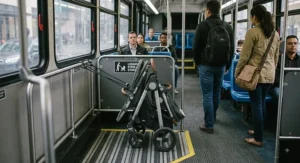
Turnstile width is the single most misunderstood spec in this entire category, and it’s worth getting precise about it. Under the ADA’s design standards for accessible routes, a minimum clear width of 36 inches is required along most accessible paths, though standard turnstiles at many older subway and rail stations were never designed around that figure and can run notably narrower — which is exactly why every tandem stroller on this list targets 20 to 26 inches, well under even the tightest realistic gate. Most transit systems provide a wider accessible gate, often near a station booth, specifically sized for mobility devices, strollers, and luggage; New York’s subway system, for instance, equips ADA-accessible stations with an accessible gate for exactly this purpose, as described on the MTA’s accessibility page. Bus ramp compatibility is a separate consideration entirely — it’s less about your stroller’s width and more about whether local policy requires folding at all. Some transit agencies, including a growing number of MTA routes, now offer a designated open stroller area near the rear door that lets you board with a stroller unfolded, provided it fits the marked space and you fold if that space is already occupied. Because these policies vary block by block and route by route, checking your specific transit agency’s current stroller policy before buying is more useful than assuming any one stroller “works everywhere.”
Narrow Tandem Stroller for Buses vs. Tandem Stroller for Subway
A narrow tandem stroller for buses and a tandem stroller for subway use share a lot of overlapping DNA, but the priorities shift slightly depending on which one dominates your week. Bus aisles are generally a consistent width from route to route within a single transit agency, and the bigger variable is whether that agency requires folding — which puts fold speed, not just width, at the top of the priority list for bus-heavy commuters. Subway use introduces a different variable: turnstile and gate width that can vary meaningfully from station to station, plus stairs at stations without elevator access, which shifts the priority toward overall stroller weight and a narrow folded profile for carrying up flights. A commuter riding buses almost exclusively can lean toward a heavier but faster-folding option like the Graco DuoGlider, since bus floors are flat and folding happens once per trip rather than repeatedly across transfers. Someone navigating multiple subway transfers with stairs, by contrast, benefits more from the Zoe Tandem+‘s lighter frame, since that stroller gets picked up and carried far more often than it gets simply folded and set aside.
One-Hand Fold for Quick Boarding: What Actually Matters
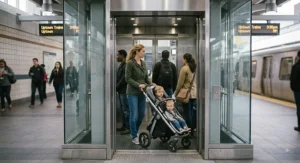
A true one-hand fold for quick boarding is one of the most oversold features in the entire stroller category, so it’s worth separating marketing language from real-world performance. What genuinely matters is whether the fold works one-handed while a child is holding your other hand or sitting on your hip — not whether it’s technically possible with both hands free and full attention on the mechanism. Based on aggregated owner reports, the Mockingbird 3.0 and Zoe Tandem+ both deliver on this in practice, with users specifically praising the fold under real, chaotic boarding conditions. The Baby Jogger City Select 2, despite marketing a “one-step” fold, gets mixed real-world reports — some owners confirm it, others find it functionally two-handed, particularly with both seats attached — which is a meaningful gap between spec sheet and lived experience. A stroller that requires removing a seat before folding, like the Contours Options Elite V2 in most configurations, simply isn’t a realistic quick-boarding option no matter how compact its final folded size ends up being; that trade-off is worth accepting only if your transit use is occasional rather than a daily door-closing-in-ten-seconds reality.
Tandem Stroller for Daily Commuting vs. Side-by-Side: Detailed Comparison
| Factor | Tandem Stroller for Daily Commuting | Side-by-Side Double |
|---|---|---|
| Typical Width | 20″–26″ | 28″–31″ |
| Turnstile Fit | Usually clears standard gates | Often requires accessible gate |
| Maneuverability | Longer wheelbase, harder tight turns | Shorter wheelbase, easier corners |
| Visibility | Rear child has limited forward view | Both children equally visible |
| Typical Price | Roughly $150–$900+ | Roughly $300–$900+ |
| Best For | Turnstiles, bus aisles, narrow city sidewalks | Wide suburban sidewalks, malls, parks |
The core trade-off here is width versus visibility: a tandem stroller for daily commuting sacrifices the rear rider’s forward sightline in exchange for a footprint that actually fits through the infrastructure most transit-dependent families deal with every day. Side-by-side doubles genuinely shine in wide-open suburban environments — malls, parks, and driveway-adjacent errands — but their 28-to-31-inch width regularly forces a detour to an accessible gate on transit, adding friction (and sometimes a longer wait for station staff) to what should be a routine boarding. For a household split between car-based suburban trips and occasional transit runs, the calculus can genuinely go either way; for anyone riding a bus or subway most weekdays, the tandem format’s narrower footprint consistently wins out in practice, even accounting for its slightly trickier tight-corner handling.
✨ Ready to Simplify Your Commute?
🔍 A narrower stroller means fewer stares, faster boarding, and one less thing to think about on your way to work. Compare current pricing on today’s top picks and find the one that matches your specific route.
Common Mistakes When Buying a Tandem Stroller for Daily Commuting
The single most common mistake is buying by open width alone and ignoring folded width, height, and depth — a stroller that clears a turnstile open won’t matter if it can’t be carried up a narrow stairwell when folded. A close second is skipping a real-world test walk with the loaded stroller before committing; showroom floors and living rooms don’t replicate a rush-hour platform, an uneven curb cut, or a bus that’s already three-quarters full. Parents also frequently underestimate frame weight in favor of features, choosing a heavily configurable model like the Contours Options Elite V2 without accounting for the fact that stairs — not sidewalks — are where extra pounds actually hurt. Another overlooked detail: many modular systems sell the second seat, adapters, and glider boards separately, so the sticker price for “single mode” understates the real cost of a functioning tandem double. Finally, some buyers assume any “compact fold” claim means one-handed operation, when in practice many require two hands or a seat removed first — a distinction that only becomes obvious after a few chaotic mornings.
Long-Term Cost & Maintenance for Transit Families
Total cost of ownership for a transit stroller extends well past the purchase price, and it’s worth running the numbers before deciding. A budget pick like the Graco DuoGlider, priced under $200, might need wheel or bearing replacements sooner given daily exposure to platform grit, curb impacts, and winter salt — a maintenance cost that a lighter-use suburban stroller rarely faces. A premium pick like the UPPAbaby Vista V2 with RumbleSeat costs significantly more upfront but is generally built with more durable materials and a longer usable lifespan across multiple children, which can narrow or even close the cost gap over three or four years of daily transit wear. Replacement parts also matter: brands with wide retail distribution, like Baby Jogger and UPPAbaby, tend to have more accessible replacement wheels and fabric than smaller direct-to-consumer brands. For most transit-dependent families, the more useful frame isn’t “cheapest” versus “most expensive” — it’s cost-per-year-of-daily-use, which tends to favor either a genuinely low-cost, easily-replaceable budget stroller or a durable premium one, with the mid-tier sometimes offering the least favorable value if it inherits complexity without matching durability.
Safety & Regulations Guide for Strolling on Public Transit
In the United States, strollers sold at retail are regulated as durable infant products under federal rule, which incorporates the ASTM F833 safety performance standard covering stability, brakes, restraint systems, folding-mechanism safety, and structural integrity. Every stroller featured here meets this baseline, but transit use adds its own practical safety layer beyond what any lab test covers. Always engage the parking brake fully before boarding a stationary bus or train, and never rely on it alone on an inclined platform ramp — hold the handlebar until the vehicle is moving predictably. Escalators are a genuine no-go for strollers, occupied or folded and carried loosely; transit safety guidance consistently instructs riders to use elevators with strollers rather than escalators, since an unsecured stroller on moving stairs is a well-documented tip-and-fall hazard. Keep harnesses buckled at all times while boarding or alighting, since sudden stops are common on both buses and trains and a five-point harness is doing real work in those moments, not just during a full ride.
Frequently Asked Questions
❓ What is the narrowest tandem double stroller for public transit commuting?
❓ Do tandem strollers fit through subway turnstiles?
❓ Is a one-hand fold really necessary for a commuting stroller?
❓ Are tandem strollers harder to push than side-by-side doubles?
❓ How much does a good tandem double stroller for daily commuting cost?
Conclusion
A tandem double stroller for public transit commuting isn’t a luxury upgrade — for families who ride buses and trains daily, it’s the difference between a manageable morning and a genuine daily fight against infrastructure that was never built with strollers in mind. Across the seven strollers here, the honest takeaway is that no single model wins every category: the Zoe Tandem+ wins on carry weight, the Graco DuoGlider wins on price, the Mockingbird 3.0 wins on real-world one-hand fold performance, and the UPPAbaby Vista V2 with RumbleSeat wins on long-term durability and the narrowest genuinely premium footprint. The right pick depends less on which stroller reviews best in isolation and more on your specific commute — how many stairs, how tight your home station’s turnstile actually is, and whether your kids are close in age or spread far enough apart that a standing-platform hybrid like the Joovy Caboose UL makes more sense than a second full seat. Measure your route, weigh fold speed against configurability honestly, and choose the stroller built for the commute you actually have, not the one you’ll take twice a year.
✨ Found Your Match?
🔍 Explore today’s pricing on the tandem stroller that fits your commute best, and start folding faster, boarding smoother, and stressing less about turnstile width every single morning.
Recommended for You
- 7 Best Tandem Double Strollers for Newborn and Toddler (2026)
- 7 Best tandem double stroller under $350 Picks for 2026
- Tandem vs side-by-side double stroller for twins: 7 Picks for 2026
Disclaimer: This article contains affiliate links. As an Amazon Associate, I earn from qualifying purchases. If you purchase products through these links, we may earn a small commission at no additional cost to you.
✨ Found this helpful? Share it with your friends! 💬🤗
