
In This Article
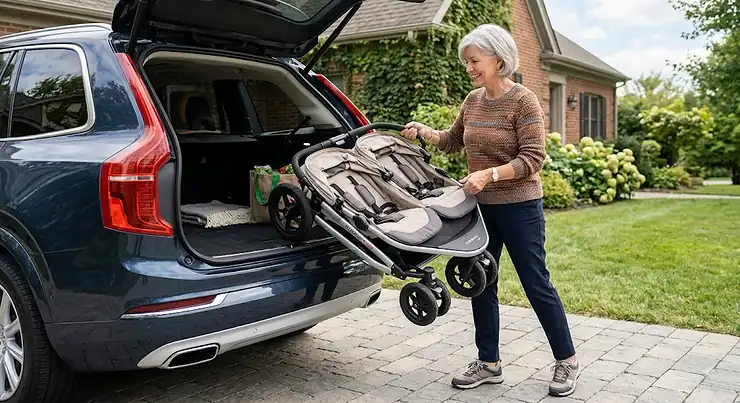
Here’s a scene that plays out in driveways across America every single weekend: a grandparent, diaper bag over one shoulder, wrestling a stroller that weighs more than their carry-on luggage while two grandkids wait impatiently in their car seats. It’s not a great look, and it’s definitely not fun on a Tuesday-afternoon babysitting shift. If you’re shopping for a lightweight double stroller for grandparents, you already know the problem isn’t finding a stroller — it’s finding one that doesn’t require a chiropractor appointment afterward.
Grandparents don’t need the same stroller a full-time parent needs. You’re not pushing it eight hours a day, five days a week, over every terrain a toddler can dream up. What you need is something that folds in seconds, weighs less than a bag of dog food, and doesn’t demand an engineering degree to operate one-handed while holding a sippy cup in the other. That’s a genuinely different set of priorities than what most stroller review sites are optimized for, and it’s exactly why this guide exists.
Below, we’ve researched seven real, currently available double strollers — spanning budget umbrella-style options under $200 to a premium pick that costs more but earns every dollar in ease of use. Each one gets an honest look at its actual specs, what real owners report after months of use, and who it genuinely fits. No fluff, no manufactured hype — just the information a grandparent actually needs before clicking “buy.”
Quick Comparison Table
| Stroller | Weight | Price Range | Best For |
|---|---|---|---|
| Summer Infant 3Dlite Double | ~21.5 lbs | $130-$175 | Lightest budget pick |
| Chicco Echo Twin | ~29.5 lbs | $180-$230 | Simple occasional-use secondary stroller |
| Joovy Scooter X2 | ~32 lbs | $300-$350 | Doorway-friendly one-hand fold |
| Zoe Twin V2 | 23 lbs | $500-$550 | Best all-rounder for regular visits |
| Graco Ready2Grow LX 2.0 | ~33 lbs | $300-$380 | Versatile car-seat compatibility |
| Baby Trend Sit N’ Stand Double | ~33 lbs | $170-$220 | Budget tandem for mixed-age grandkids |
| UPPAbaby Minu Duo | 27.4 lbs | $750-$800 | Premium build quality |
Looking at this lineup, there’s a clear split between ultralight umbrella-style strollers under $200 and the sturdier, better-built options that start around $300. The Zoe Twin V2 stands out as the sweet spot for grandparents who’ll use their stroller regularly, since it combines a genuinely light frame with features full-size strollers typically reserve for pricier models. Meanwhile, the Consumer Product Safety Commission’s voluntary standards program is worth a glance before you buy anything, since it explains exactly which hazards — tip-overs, brake failures, entrapment — every compliant stroller on this list has been engineered to address.
💬 Found a favorite already? Compare current prices before you decide — availability shifts fast on popular models!
Top 7 Lightweight Double Strollers for Grandparents: Expert Analysis
1. Summer Infant 3Dlite Double — lightest budget double on the market
At under 22 pounds, the Summer Infant 3Dlite Double is about as light as a genuine double stroller gets, and that single fact solves 80% of the “can Grandma lift this into the trunk” problem before you even look at anything else.
The aluminum frame, 5-point harnesses on both seats, and 50-pound weight capacity per seat mean it comfortably handles two toddlers well past infancy, while the anti-shock front wheels smooth out sidewalk cracks without adding bulk. Folded dimensions land around 38.5″ x 13″ x 15.5″, which is genuinely closet-friendly rather than “I guess it lives in the garage now” friendly. For a grandparent who watches the grandkids once or twice a week and mostly sticks to paved paths, malls, and driveways, this is about as low-friction as a double stroller gets — you’re not managing a machine, you’re managing an umbrella with wheels.
Reviewers consistently note that the fold-and-carry handle is a genuine convenience, not a marketing afterthought, and that the storage baskets are unusually generous for something this light. A recurring complaint, however, involves the canopy — testers report it’s on the smaller side and doesn’t offer much shade protection, and the stroller can tip backward if a heavy bag is hung on the handles without a child’s weight to counterbalance it.
Pros:
- ✅ Among the lightest true double strollers available
- ✅ Compact fold with built-in carry handle
- ✅ Budget-friendly price for a full double-seat design
Cons:
- ❌ Small canopy offers limited sun coverage
- ❌ Can tip backward with a loaded handlebar and no child aboard
At around $130-$175, this is the stroller to buy if portability and price matter more than plush extras — a smart, honest budget pick rather than a compromise.

2. Chicco Echo Twin — simplest secondary stroller for occasional visits
The Chicco Echo Twin is the double version of Chicco’s long-running single umbrella stroller, and it inherits that same “nothing to figure out” simplicity, which is exactly the point for a stroller that lives at Grandma’s house and comes out twice a month.
Weighing in around 29.5 pounds with a steel-and-plastic frame, it’s not the lightest name on this list, but its compact fold and side-by-side seating (each rated to 40 pounds) make it a reasonably easy lift for most grandparents. Assembly takes about ten minutes out of the box, and the linked brake system stays engaged even when folded, so it won’t roll away while you’re loading grandkids into the car. On paper, this means less troubleshooting during the exact moments — a squirming toddler, a ringing phone — when you have zero patience for troubleshooting.
Aggregated owner sentiment is mixed but instructive: parents and grandparents alike praise the quick assembly and sturdy feel for the price, while a recurring criticism targets the narrow harness straps and modest canopy coverage, which some testers rated below average compared to pricier competitors.
Pros:
- ✅ Fast, tool-minimal assembly out of the box
- ✅ Linked brakes stay engaged even when folded
- ✅ Compact side-by-side fold with carry handle
Cons:
- ❌ Narrow harness webbing feels less premium
- ❌ Canopy coverage is limited compared to full-size strollers
Priced around $180-$230, the Echo Twin earns its spot as the low-drama, low-cost secondary stroller — the kind you keep folded in a closet and forget about until the grandkids show up.
3. Joovy Scooter X2 — best doorway-friendly one-hand fold
If your front door, garage, or storage closet is on the narrower side, the Joovy Scooter X2 was practically engineered with your house in mind. At a slim 30 inches wide, it slides through standard American doorways with room to spare — something wider side-by-side doubles simply can’t claim.
Weighing around 32 pounds with sealed bearing wheels (7″ front, 9.5″ rear), the Scooter X2 rides more smoothly than its price point suggests, and what most buyers overlook is that “sealed bearing” isn’t just a spec-sheet buzzword — it means you’re not re-greasing wheel hubs every few hundred miles like you would with the loose-ball bearings found on cheaper competitors. Each seat holds up to 45 pounds (90 pounds combined), independently reclines, and comes with its own tray and cupholder, which functionally turns snack time from a two-hand operation into a one-hand one.
Real owner reviews are largely favorable on comfort and storage — the under-seat basket is frequently called “enormous” — but several long-term reviewers flag the two-handed recline adjustment as fiddly, and note that maneuverability, while solid on pavement, isn’t built for off-road wandering.
Pros:
- ✅ Narrow 30″ frame fits standard doorways
- ✅ One-hand fold despite the sturdy frame
- ✅ Huge under-seat storage basket
Cons:
- ❌ Two-handed recline adjustment is fiddly
- ❌ Not designed for grass, gravel, or trails
At roughly $300-$350, this is the pick for grandparents whose home layout — not just their arms — is the real obstacle course.
4. Zoe Twin V2 — best all-rounder for regular grandparent duty
The Zoe Twin V2 is the stroller we’d point most grandparents toward first, because it threads a needle few competitors manage: genuinely light at 23 pounds, yet feature-rich enough to function as a primary stroller rather than a stripped-down travel backup.
The four-panel expandable canopy with UPF 50+ protection directly answers the sun-coverage complaints that dog cheaper umbrella doubles, and each seat holds up to 60 pounds, meaning this stroller will comfortably outlast a typical toddler phase rather than getting outgrown in a year. Based on the spec comparison with the similarly priced Joovy Kooper RS2 (31.3 lbs), the Zoe’s nearly 8-pound weight advantage is the difference between a stroller you dread lifting into a trunk and one you genuinely don’t think twice about. At just under 29 inches wide, it clears most doorways, and it’s officially sized within Disney park requirements — a small but telling signal of how seriously the brand takes real-world portability.
Reviewers repeatedly single out the compact fold and the surprisingly large storage basket for a stroller this light, though the fold does require two hands due to the stroller’s width, and the storage bin carries a 10-pound weight limit that’s easy to exceed with a loaded diaper bag.
Pros:
- ✅ One of the lightest full-feature doubles available
- ✅ UPF 50+ canopy with genuine sun coverage
- ✅ Seats rated to 60 lbs each for long-term use
Cons:
- ❌ Fold requires two hands due to stroller width
- ❌ Storage basket limited to 10 lbs
At around $500-$550, it costs more than the umbrella-style options above, but for grandparents logging regular hours with the grandkids, the extra durability and comfort tend to pay for themselves in fewer replacement purchases down the line.
5. Graco Ready2Grow LX 2.0 — most versatile with car-seat compatibility
Family flexibility is the whole pitch behind the Graco Ready2Grow LX 2.0, and for grandparents who might be watching a newborn grandchild alongside an older sibling, that flexibility is genuinely useful rather than a gimmick.
This tandem-style stroller accepts two Graco infant car seats simultaneously, which matters enormously if a daughter or son drops off a car seat along with the baby — no separate infant carrier needed. The rear seat can also be swapped for a fold-out bench seat or a standing platform, so the stroller adapts as grandkids age rather than becoming obsolete. What the spec sheet won’t tell you, but owner reports consistently confirm, is that the one-step self-standing fold genuinely does fold down to roughly the size of a single stroller — a real space-saver for anyone storing this in a car trunk or a small entryway closet.
Aggregated feedback (Graco’s own site shows a 4.1 average across 635 ratings) skews positive on versatility and car-seat compatibility, while a recurring theme in critical reviews is that the stroller feels heavy and somewhat bulky to maneuver despite its compact fold, and cup holder placement draws frequent complaints.
Pros:
- ✅ Accepts two Graco infant car seats at once
- ✅ Configurable bench seat or standing platform
- ✅ Folds down to roughly single-stroller size
Cons:
- ❌ Feels heavy and bulky to push and turn
- ❌ Limited cup holder placement frustrates some owners
Priced around $300-$380, this is the pragmatic choice for grandparents whose grandkids span a wider age range, or who might inherit a car seat mid-visit.
6. Baby Trend Sit N’ Stand Double — budget tandem for mixed-age grandkids
We’re including the Baby Trend Sit N’ Stand Double because honesty matters more than a tidy sales pitch, and this stroller genuinely earns a place on a budget-conscious shortlist — with some real caveats attached.
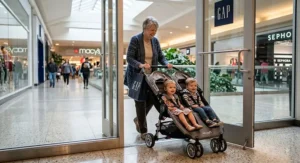
At around 33 pounds, it’s not lightweight by this list’s standards, but its tandem, front-and-back seating (40-pound capacity per seat, 90-100 pounds combined) is purpose-built for children of different ages: an older sibling can stand on the rear platform while a younger one rides up front. The one-hand fold and large storage basket are genuine conveniences, and the stroller can be configured to accept one or two infant car seats depending on the model. Here’s what to weigh honestly, though: professional reviewers who tested this stroller against competitors ranked it toward the bottom of double-stroller lineups specifically due to difficult pushing and below-average maneuverability, which matters more for a grandparent’s wrists and shoulders than it might for a younger parent.
Real owner reviews skew more favorable than lab testing suggests, with many praising the value and functional storage, but the maneuverability complaints are consistent enough across sources to take seriously if you have any wrist or shoulder sensitivity.
Pros:
- ✅ Front-and-back seating suits different-aged grandkids
- ✅ One-hand fold with self-standing lock
- ✅ Compatible with most major infant car seat brands
Cons:
- ❌ Harder to push and turn than side-by-side rivals
- ❌ At 33 lbs, it’s not truly lightweight
At roughly $170-$220, it’s a legitimately good value if your grandkids are different ages and your budget is tight — just go in knowing the maneuverability trade-off.
7. UPPAbaby Minu Duo — premium pick with the lightest luxury build
For grandparents who’ve decided this stroller is a long-term investment rather than an occasional-use item, the UPPAbaby Minu Duo delivers a level of engineering polish the rest of this list simply doesn’t match, at 27.4 pounds with premium materials throughout.
The one-motion standing fold locks into place in a single step, and front wheels click into position without tools — a detail that matters enormously the first time you’re setting this up solo in a driveway with two impatient toddlers. Both seats hold up to 50 pounds and work from birth with the appropriate car seat adapter (one car seat per stroller, since only one side accepts an adapter), and the under-seat basket holds up to 25 pounds, more than double the Zoe Twin’s storage limit. Based on the spec comparison with UPPAbaby’s own larger Vista V3, the Minu Duo is 8.4 pounds lighter and considerably narrower, which on paper means less strain on aging joints during the daily lift-in-and-out routine.
Aggregated reviews are unusually consistent for a stroller at this price point — testers and owners alike describe it as one of the easiest doubles to fold, push, and store, with the leather handlebar and PFAS-free materials frequently cited as unexpectedly premium touches. The most common critique isn’t about function at all — it’s the price tag, and the fact that it doesn’t convert from single to double the way some competitors do.
Pros:
- ✅ Genuinely one-handed, tool-free setup and fold
- ✅ 25 lb storage basket, well above competitors
- ✅ Premium materials built to last years, not seasons
Cons:
- ❌ Highest price point on this list
- ❌ Fixed side-by-side design, no single-to-double conversion
At around $750-$800, this isn’t the pick for occasional babysitting — it’s the pick for grandparents who’ve decided a stroller lives permanently at their house and gets used weekly for years.
Setting Up Your Lightweight Double Stroller: A Grandparent’s First 30 Days
Getting a new stroller out of the box is rarely the hard part — it’s the small habits in the first month that determine whether it becomes a joy or a source of low-grade dread. Start by practicing the fold and unfold sequence at least five times before the grandkids are anywhere nearby; muscle memory matters far more than reading the manual once and hoping for the best. Most folding mishaps happen not because a stroller is poorly designed, but because the first attempt happens under pressure, with a toddler mid-meltdown in the background.
In the first two weeks, check the wheel bolts and any quick-release axles for tightness — shipping vibration can loosen hardware that arrives snug. It’s also worth setting the recline and harness height for your specific grandchildren’s sizes right away rather than leaving factory defaults, since a properly fitted harness is one of the biggest levers you have over ride comfort and safety. A common early mistake is over-tightening the storage basket with heavy bags before understanding a given stroller’s weight limit — as we noted above, some baskets cap out surprisingly low, and exceeding that limit can affect the stroller’s balance point.
Finally, build a simple two-minute maintenance habit: wipe down the wheels after outdoor use, check brake engagement monthly, and store the stroller upright rather than on its side to avoid warping the fabric seats over time. None of this is complicated, but doing it consistently is what separates a stroller that lasts five years from one that needs replacing after eighteen months.
Keeping a Secondary Stroller at Grandparents’ House: Real-World Scenarios
Grandparents aren’t a monolith, and neither is the ideal stroller setup — so let’s walk through a few real-world profiles to help you see yourself in one of them.
The weekly babysitter. If you’re watching two grandkids one or two days a week while parents work, a mid-weight, feature-rich option like the Zoe Twin V2 or Graco Ready2Grow LX 2.0 makes sense — you’re using it often enough to justify the investment, but not so often that portability trumps every other consideration. Budget $300-$550 and expect years of reliable use.
The occasional weekend visitor. For grandparents who see grandkids monthly or during holiday visits, a genuinely secondary stroller — one that lives folded in a closet 90% of the time — is the smarter buy. The Summer Infant 3Dlite Double or Chicco Echo Twin fit this pattern perfectly: cheap enough that the infrequent use doesn’t sting, light enough that pulling it out isn’t a production.
The primary daytime caregiver. According to AARP’s 2026 research on grandparent caregiving, grandparents nationally provide an average of over 500 hours of childcare annually, and a meaningful share provide care daily. If that’s your reality, a stroller isn’t an accessory — it’s daily-use equipment, and the UPPAbaby Minu Duo‘s premium build and easy one-handed operation are worth the higher price tag when you’re logging that kind of mileage.
Common Stroller Problems and Simple Fixes for Grandparents
Even a well-chosen stroller runs into friction points, and most have straightforward solutions once you know what’s happening.
Problem: The fold “locks up” and won’t budge. This is almost always a partially engaged latch rather than a mechanical failure — retract the canopy fully first, then apply steady (not forceful) pressure to the fold mechanism. Forcing a half-locked latch is the most common cause of long-term fold damage.
Problem: One wheel squeaks or drags. Grit in the wheel housing is the usual culprit. A quick wipe-down and a drop of silicone-based lubricant (never oil-based, which attracts more dirt) typically resolves it in minutes.
Problem: The stroller feels unstable on a slight incline. Check that both rear brakes are engaged, not just one — an uneven brake engagement is a surprisingly common oversight, and it’s exactly the kind of hazard the CPSC’s stroller safety standard specifically tests for.
Problem: Grandkids fight over which seat is “better.” For side-by-side models, rotating which child sits on which side each outing sidesteps most of this before it starts.
Problem: Storage basket sags or tears. Respect the posted weight limit — as several models above illustrate, baskets are rated anywhere from 10 to 25 pounds, and consistently overloading a low-capacity basket is the single fastest way to shorten its lifespan.
What Is a Lightweight Double Stroller for Grandparents?
A lightweight double stroller for grandparents is a two-seat stroller, typically weighing between 20 and 30 pounds, designed around occasional-to-regular caregiving use rather than daily parental duty — prioritizing an easy one-hand fold, simple controls, and a manageable lift-and-carry weight over the extensive feature sets found on full-size family strollers.
The category exists because grandparents’ needs genuinely differ from parents’: less frequent use, more emphasis on physical ease, and often a need for the stroller to store compactly between visits rather than living permanently in a car trunk.

How to Choose an Easy-to-Use Double Stroller for Grandparents
Picking the right easy-to-use double stroller for grandparents comes down to a handful of decision points, best worked through in this order:
- Start with weight, not price. Anything under 25 pounds dramatically reduces daily strain — prioritize this before comparing features.
- Test the fold mechanism, ideally in person. A one-hand fold matters enormously when you’re also holding a child’s hand or a diaper bag.
- Match seating style to your grandkids’ ages. Side-by-side works best for close-in-age siblings; tandem or sit-n-stand styles suit wider age gaps.
- Measure your doorways and trunk space before buying. A stroller that’s perfect on paper is useless if it can’t get through your front door.
- Check the harness and recline adjustability. Simpler, fewer-step adjustments reduce frustration during handoffs between activities.
- Confirm car seat compatibility if it applies to you. This matters most if you might be handed an infant car seat along with a baby.
- Read aggregated review sentiment, not just the star average. A 4.5-star stroller with a recurring maneuverability complaint may matter more to your specific situation than the overall score suggests.
Simple Lightweight Double Stroller vs Full-Size Double Stroller
The core trade-off between a simple lightweight double stroller and a full-size family double stroller comes down to durability and features versus daily physical ease — and for most grandparents, that trade-off resolves in favor of lightweight.
Full-size doubles like the UPPAbaby Vista V3 (35+ pounds) or all-terrain jogging strollers are engineered for years of near-daily use across varied terrain, with reinforced frames, larger wheels, and extensive storage. That durability, however, comes at a real cost: more weight to lift, wider frames that struggle with narrow doorways, and bulkier folds that eat up trunk or closet space. A lightweight double, by contrast, sacrifices some of that long-haul durability and off-road capability in exchange for a stroller that’s genuinely easy to lift, fold, and store — which, for someone using it a few days a week rather than every day, is usually the smarter trade.
The exception is the UPPAbaby Minu Duo, which manages to blur this line by delivering near-premium build quality at a lightweight-category weight — proof that the two categories aren’t mutually exclusive, just usually priced that way.
Simplified Controls: Features That Actually Matter (And Those That Don’t)
Marketing copy loves to pile on features, but for a grandparent optimizing for simplified controls, only a handful of them actually move the needle on day-to-day ease.
What matters: a genuine one-hand fold mechanism (not a “one-hand assist” that still needs a knee or a second hand), a single, obvious brake lever rather than dual pedals that require precise foot placement, and harness buckles that click with light pressure rather than requiring a firm two-handed squeeze. This isn’t a small consideration — the CDC reports that diagnosed arthritis affects nearly 54% of U.S. adults age 75 and older, and stiff or painful hands make fussy buckles and multi-step recline levers a genuine daily obstacle rather than a minor inconvenience.
What doesn’t matter as much: built-in speaker systems, elaborate multi-position reclines beyond three or four settings, and oversized parent consoles with more cupholders than hands available to fill them. These features photograph well in product listings but rarely get used in practice, and they typically add weight without adding real-world convenience.
Double Stroller for Occasional Use: Is It Worth the Investment?
Whether a double stroller for occasional use justifies its price tag depends almost entirely on frequency, and the math is worth doing honestly before you buy.
At roughly $150 for a budget umbrella double used twice a month, you’re looking at well under $10 per use over two years — genuinely hard to argue with. A mid-range $400-$500 stroller used weekly works out to a similar or better per-use cost once you factor in years of service rather than a single season. Where the math gets shakier is buying a premium $750+ stroller for truly occasional use — holiday visits, a few weeks each summer — since the cost-per-use climbs steeply and a cheaper, lighter option would likely serve just as well for infrequent outings.
The better question isn’t “can I afford this,” but “will this get used enough to earn its price.” A stroller that sits folded in a closet for eleven months a year doesn’t need premium engineering; one that comes out three times a week absolutely benefits from it.
Stroller Storage Size: Fitting Through Doorways, Trunks, and Closets
Stroller storage size trips up more grandparent buyers than any single spec on a listing page, largely because folded dimensions get less attention than open dimensions when shopping online.
Standard interior doors in most U.S. homes measure around 28-32 inches wide, and per the ADA National Network’s accessibility guidance, a fully accessible doorway provides at least 32 inches of clear width — a useful benchmark even outside formal accessibility contexts, since a stroller that clears 30 inches will fit through the vast majority of American front doors and hallways with room to spare. Several strollers on this list, including the Joovy Scooter X2 at 30 inches and the Zoe Twin V2 at just under 29 inches, were specifically designed with this constraint in mind.
Folded footprint matters just as much for trunk and closet storage. The Summer Infant 3Dlite Double folds to a relatively slim 38.5″ x 13″ x 15.5″, while bulkier tandem designs like the Baby Trend Sit N’ Stand Double take up considerably more depth even when collapsed. Before buying, measure your actual storage spot — closet shelf, trunk floor, hallway corner — rather than relying on a mental estimate, since folded dimensions are one of the few specs that translate directly and literally into whether a stroller fits your specific home.
Safety Regulations & Compliance: What Grandparents Should Know
Every stroller on this list is required to meet the federal safety standard incorporated in 16 CFR Part 1227, which references ASTM F833 — the performance specification covering stability testing, brake reliability, harness integrity, and entrapment prevention. In practice, this means every compliant stroller has been tested against tip-over angles, wheel-detachment resistance, and folding-mechanism safety before it ever reaches a store shelf.
That said, compliance testing covers manufacturing standards, not day-to-day use habits. A few practical safety notes worth internalizing: always engage both brakes (not just one) when stopped, particularly on any incline; never hang bags heavier than the manufacturer’s stated basket limit on the handlebar, since this is a documented tip-over risk; and register your stroller with the manufacturer so you’re notified promptly in the event of a recall. Recalls happen more often than most buyers assume, and registration is typically the only way manufacturers can reach you directly.
Frequently Asked Questions
❓ Are lightweight double strollers safe for two toddlers?
❓ What's the best double stroller weight for grandparents with joint pain?
❓ Can grandparents use a double stroller with two different-aged grandkids?
❓ How much should a secondary stroller for grandparents' house cost?
❓ Do lightweight double strollers fit in a car trunk?
Conclusion
If there’s one theme running through all seven strollers above, it’s this: the “best” lightweight double stroller for grandparents isn’t the one with the most features — it’s the one that matches how often you’ll actually use it and what your body can comfortably manage. A grandparent babysitting twice a month has genuinely different needs than one logging 500-plus hours a year, and pretending otherwise just leads to buyer’s remorse either way.
For most people reading this, the Zoe Twin V2 hits the sweet spot of weight, features, and price for regular use, while the Summer Infant 3Dlite Double remains the smartest low-commitment choice for occasional visits. If budget isn’t the deciding factor and this stroller is going to live at your house for years, the UPPAbaby Minu Duo‘s engineering polish genuinely justifies its price tag. Whichever you choose, prioritize the fold test and the weight number over every other spec on the page — those two details, more than any other, determine whether your new stroller becomes a daily convenience or a closet regret.
✨ Ready to Make Strolling Easy Again?
🔍 Compare current prices and availability on today’s picks before they change. A lighter stroller means more energy left for the fun part — actually being with your grandkids!
Recommended for You
- Lightweight Double Stroller For One-Hand Folding: 7 Picks (2026)
- 7 Best Lightweight Double Strollers for Air Travel in 2026
- Lightweight Double Stroller Under $200: 7 Best Picks (2026)
Disclaimer: This article contains affiliate links. As an Amazon Associate, I earn from qualifying purchases. If you purchase products through these links, we may earn a small commission at no additional cost to you.
✨ Found this helpful? Share it with your friends! 💬🤗
