
In This Article
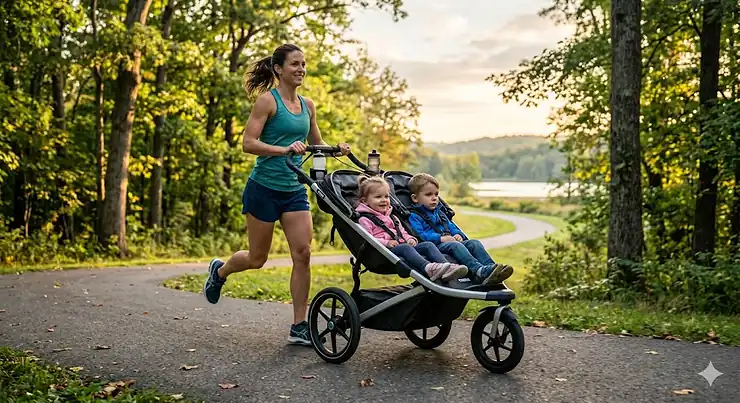
Here’s the truth most parenting blogs won’t tell you: that $200 “jogging stroller” from the big-box store will kill your marathon training faster than a stress fracture. I learned this the hard way during my first attempt at a 10-mile run with twins—three miles in, the front wheel started wobbling like a shopping cart with a broken caster, and by mile five, I was pushing a 70-pound anchor uphill while my pace dropped from 8:30 to 11-minute miles.
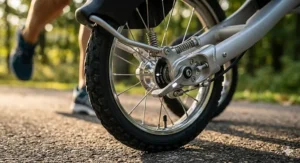
Serious runners need serious equipment. A proper double jogging stroller for serious runners isn’t just about having two seats and three wheels—it’s about suspension systems that absorb trail impacts without transferring shock to your passengers, aerodynamic frames that don’t add 30 seconds per mile to your pace, and ball-bearing wheel systems that actually roll instead of dragging. The difference between a recreational stroller and a performance double jogger is like comparing a cruiser bike to a road racing machine.
According to the CDC, regular physical activity provides numerous health benefits including improved cardiovascular health and reduced disease risk, which is why maintaining your running routine after having kids matters so much. But here’s what separates the contenders from the pretenders: weight distribution, tracking stability at speed, and real-world durability over hundreds of miles. In this guide, I’ll break down seven double jogging stroller for serious runners options that won’t sabotage your training, including models I’ve personally pushed through half-marathons and others that fell apart after 50 miles of moderate use.
Whether you’re logging marathon training with double jogging stroller miles or just trying to maintain a sub-9-minute pace on your morning 5K loop, the right lightweight double jogging stroller makes the difference between sustainable training and constant frustration. Let’s find yours.
Quick Comparison: Top Double Jogging Strollers at a Glance
| Model | Weight | Suspension | Best For | Price Range |
|---|---|---|---|---|
| BOB Revolution Flex 3.0 Duallie | 33.1 lbs | 3-wheel adjustable | Marathon training, rough terrain | $700-$900 |
| Thule Urban Glide 2 Double | 35.3 lbs | Rear-wheel spring | Urban runners, premium features | $800-$950 |
| Baby Jogger Summit X3 Double | 34 lbs | All-wheel independent | Mixed terrain, speed work | $650-$850 |
| Joovy Zoom X2 | 28 lbs | Front & rear coil | Budget-conscious distance runners | $400-$550 |
| Bumbleride Indie Twin | 32 lbs | All-wheel air suspension | Eco-conscious trail runners | $600-$800 |
| Baby Trend Expedition Double | 32 lbs | Basic rubber | Recreational joggers, flat paths | $200-$300 |
| Thule Urban Glide 3 Double | 35 lbs | Enhanced rear spring | Competitive runners, hills | $850-$950 |
Looking at this comparison, the BOB Revolution Flex 3.0 Duallie delivers the best balance of adjustable suspension and proven durability for serious marathon training with double jogging stroller routines. The Joovy Zoom X2’s 28-pound frame is remarkably light for distance work, though the brake issues some users report mean you’ll need to double-check engagement every time. Budget shoppers should note the Baby Trend Expedition sacrifices tracking precision for its lower price—fine for neighborhood loops but problematic for tempo runs above 8-minute pace.
💬 Just one click — help others make better buying decisions too! 😊
✨ Don’t Miss These Exclusive Deals!
🔍 Ready to upgrade your training? Click on any highlighted product below to check current pricing and availability. These high-performance double jogging stroller for serious runners options will transform your workout routine and keep your kids comfortable for every mile!
Top 7 Double Jogging Stroller for Serious Runners: Expert Analysis
1. BOB Gear Revolution Flex 3.0 Duallie — The Marathon Trainer’s Gold Standard
The BOB Revolution Flex 3.0 Duallie is the stroller you see at every major race expo, and there’s a reason it dominates: the three-wheel adjustable Mountain Glide suspension system paired with 16-inch pneumatic tires creates a rolling experience that actually feels smooth at race pace. Unlike cheaper models where you feel every crack in the pavement transmitted through the handlebar, BOB’s suspension absorbs impacts that would otherwise jar your passengers and disrupt your stride.
Here’s what matters for long-distance running with double stroller: the aluminum frame weighs 33.1 pounds but distributes load so efficiently that it pushes more like a 25-pound single. The swivel-lock front wheel includes adjustable tracking—twist the knob on the handlebar to fine-tune alignment instead of fighting a crooked pull every stride. Each seat accommodates up to 50 pounds with near-flat recline positions and magnetic peek windows, while the 10-pocket storage system (including the massive cargo basket) holds race nutrition, diapers, and a hydration pack without affecting center of gravity.
Customer feedback consistently praises the BOB’s stability during trail runs and interval workouts. Parents report logging 500+ miles with zero maintenance beyond tire pressure checks. The main critique? The 40-inch folded length won’t fit in compact car trunks, and the premium you pay over budget models is around $500—but that’s what buys you German-engineered wheel bearings that don’t seize after 100 miles.
✅ Pros:
- Adjustable suspension handles any terrain from bike paths to gravel trails
- Tracking alignment system eliminates constant steering corrections
- Proven durability through marathon-distance training cycles
❌ Cons:
- Premium pricing in the $700-$900 range
- Bulky 40-inch fold requires SUV or minivan storage
This is the competitive running with twins choice for parents serious about maintaining race pace and protecting their investment. The BOB Revolution Flex 3.0 Duallie is worth every dollar if you’re logging 20+ weekly miles. Check current pricing in the $700-$900 range.
2. Thule Urban Glide 2 Double — The Premium European Performer
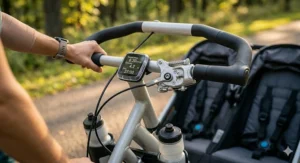
The Thule Urban Glide 2 Double brings Scandinavian engineering to the jogging stroller category with features that reveal themselves during actual performance runs. The hand-operated deceleration brake (mounted on the handlebar) transforms hill training—instead of your quads absorbing all the eccentric load on descents, you control speed precisely without breaking stride. That single feature justifies the premium for anyone training on hilly routes.
At 35.3 pounds, the Thule Urban Glide 2 Double is slightly heavier than the BOB, but the one-handed fold with automatic lock and self-standing position makes post-run transitions dramatically easier. The rear spring suspension system focuses shock absorption where it matters most, and the 16-inch pneumatic tires maintain consistent pressure better than cheaper rubber compounds. The adjustable handlebar (extends from 34.5 to 48 inches) accommodates different running styles without forcing poor posture.
What most reviews overlook: the covered storage basket with zippered access keeps gear protected during rain runs, and the magnetic peekaboo windows use stronger magnets than competitors, so they actually stay closed during rough terrain. The reclining seats offer fully upright positioning, which older toddlers prefer during longer runs. Parents report the Thule tracks perfectly straight with the front wheel locked—no constant micro-adjustments that throw off your form.
The trade-off? The seat backs don’t recline completely flat, so newborns need bassinet attachments. And you’re paying in the $800-$950 range for features like integrated reflective piping and the premium ventilated canopy system that casual joggers might not fully utilize.
✅ Pros:
- Hand brake transforms hill running efficiency
- One-handed fold with self-standing lock (game-changer for solo parents)
- European build quality with limited lifetime warranty
❌ Cons:
- Higher price point ($800-$950 range)
- Seat recline doesn’t go fully flat without accessories
For serious runners prioritizing premium features and long-distance double jogging stroller performance on varied terrain, the Thule Urban Glide 2 Double delivers. Expect pricing around $800-$950.
3. Baby Jogger Summit X3 Double — The All-Terrain Speedster
The Baby Jogger Summit X3 Double occupies the sweet spot between performance and value, offering all-wheel independent suspension and a hand-operated drum brake system typically found on more expensive models. At 34 pounds with air-filled rubber tires on all three wheels, this stroller rolls surprisingly fast on both pavement and hard-packed trails—the independent suspension means each wheel absorbs impacts without transferring bounce to the other sides.
The remote swivel lock (mounted right on the handlebar) lets you switch from locked-straight running mode to swivel-wheel navigation without bending down to touch the front wheel. That’s a real advantage during interval workouts when you’re alternating between speed segments and recovery walks through parking lots. The seats recline to near-flat positions with magnetic side vents that actually improve airflow (not the fake mesh windows on cheaper strollers), and each accommodates up to 50 pounds—plenty of capacity for siblings of different ages.
Here’s what long-distance runners appreciate: the Baby Jogger Summit X3 Double maintains tracking integrity even on cambered roads where cheaper models drift toward the gutter. The one-action compact fold is genuinely one-handed once you learn the sequence, and at around $650-$850, you’re getting premium suspension engineering without the Thule price tag. Customer reviews mention the storage basket is slightly smaller than the BOB’s, and the canopies offer less coverage in direct sun, but neither issue affects running performance.
The drum brake system deserves specific mention—it engages progressively instead of the on/off parking brakes that can lock up your rear wheels mid-stride if you accidentally kick them. Competitive runners using this for long-distance double jogging stroller training report the brake never falters on steep descents, even after 300+ miles of use.
✅ Pros:
- All-wheel independent suspension smooths rough terrain
- Handlebar-mounted swivel lock saves time during interval work
- Excellent value at $650-$850 range
❌ Cons:
- Smaller storage basket than BOB
- Canopy coverage less extensive
The Baby Jogger Summit X3 Double excels as a high-performance double jogger for marathon training that won’t drain your race budget. Look for pricing in the $650-$850 range.
4. Joovy Zoom X2 — The Lightweight Distance Runner
At just 28 pounds, the Joovy Zoom X2 is the lightest legitimate double jogging stroller for serious runners in this roundup—and that weight advantage translates to real pace improvements over long distances. Push a 35-pound stroller for 10 miles, then switch to the Joovy Zoom X2, and you’ll immediately notice the reduced energy expenditure. The aluminum frame achieves this weight without sacrificing wheel size: you still get 16-inch pneumatic rear tires and a 12-inch front for proper jogging geometry.
The locking swivel front wheel and coil suspension (front and rear) handle most running surfaces adequately, though the shock absorption doesn’t match BOB or Thule’s sophisticated systems. Where the Joovy shines is the one-handed fold mechanism—it actually works with one hand, unlike competitors that claim one-handed operation but secretly require two. The extra-large pneumatic tires come with an air pump included, which sounds minor until you’re trying to inflate 16-inch tires with a bicycle pump at 5 a.m.
Customer feedback reveals an important caveat: the parking brake can disengage from light bumps even when it clicks into place. Several reviewers report incidents where the stroller rolled away in parking lots because the brake didn’t fully engage despite the audible click. This isn’t a deal-breaker for running (you’re always holding the handlebar), but it requires extra vigilance during rest stops. Also, the seats recline and the canopies are generous, though fabric quality feels less premium than European competitors.
For budget-conscious serious runners logging consistent miles, the lightweight double jogging stroller advantage of the Joovy Zoom X2 makes it compelling at around $400-$550—literally half the price of premium models. Just develop a habit of testing the brake engagement visually, not just by feel.
✅ Pros:
- Lightest option at 28 pounds reduces fatigue on long runs
- Genuinely functional one-handed fold
- Best value for performance in $400-$550 range
❌ Cons:
- Brake engagement issues require extra caution
- Suspension less refined than premium competitors
The Joovy Zoom X2 works brilliantly as a lightweight double jogging stroller for runners who prioritize weight and value over premium features. Pricing typically runs $400-$550.
5. Bumbleride Indie Twin — The Eco-Conscious Trail Runner
The Bumbleride Indie Twin takes a different approach to the double jogging stroller for serious runners category by prioritizing environmental responsibility alongside performance. The frame uses recycled aluminum, fabrics are OEKO-TEX certified (free from PFAS, PVC, phthalates, and flame retardants), and the entire construction avoids the chemical-heavy manufacturing typical of budget strollers. For parents concerned about what their kids are touching and breathing during runs, this matters.
At 32 pounds with air-filled tires and all-wheel suspension, the Bumbleride delivers a smooth ride on trails and rough pavement where cheaper strollers jar and bounce. The narrow frame (28 inches wide) actually fits through standard doorways, unlike the wider BOB Duallie (30.5 inches), which is surprisingly useful when you need to cut through a coffee shop during a run. Both seats individually recline to completely flat positions and adjust independently—critical for twins or siblings with different nap schedules.
The quick-fold system with auto-lock works smoothly, and the UPF 45+ canopies extend far enough to protect passengers during midday sun exposure. What serious runners notice: the Bumbleride Indie Twin tracks straight with the locked front wheel and maintains stability through tempo runs and interval sessions. Customer feedback praises durability through 400+ miles of mixed-terrain training, with zero issues reported on wheel bearings or suspension components.
The trade-off is the $600-$800 price point without some luxury touches found on the Thule—no hand brake, no adjustable suspension settings. But if you’re training for a high-performance double jogger while also wanting to minimize environmental impact and chemical exposure, the Bumbleride delivers both priorities effectively.
✅ Pros:
- PFAS-free, eco-friendly construction with OEKO-TEX certified fabrics
- Narrower frame (28 inches) fits standard doorways
- Individual seat adjustments for different-age siblings
❌ Cons:
- No hand brake for hill control
- Suspension isn’t adjustable like BOB’s system
The Bumbleride Indie Twin serves eco-conscious runners seeking a clean, sustainable double jogging stroller without sacrificing performance. Expect pricing around $600-$800.
6. Baby Trenrd Expedition Double Jogge — The Budget Entry Point
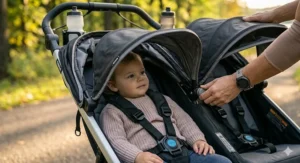
The Baby Trend Expedition Double Jogger occupies the budget tier at around $200-$300, and understanding what you’re getting (and not getting) at this price point is crucial. The basic bicycle-style tires and rubber suspension system mean you’re feeling road imperfections more directly than with air-filled pneumatic systems. The front locking swivel wheel works adequately for straight-line jogging, though the tracking precision isn’t comparable to premium models—you’ll make constant micro-adjustments to maintain your line.
At 32 pounds with a ratcheting shade canopy and five-point safety harnesses, the Baby Trend Expedition Double handles neighborhood jogs on smooth pavement reasonably well. The parent tray with two cup holders and covered storage is convenient, and the large storage basket accommodates typical baby gear. What you won’t get: responsive suspension, precision wheel bearings, or durability beyond 100-150 miles of regular running. Customer reviews consistently mention front wheel wobble developing after moderate use, and the frame flex becomes noticeable when pushing at faster paces.
Here’s the honest assessment: if you’re running 3-4 miles twice weekly on flat bike paths, the Baby Trend Expedition Double Jogger will serve that purpose at minimal investment. But serious runners logging long-distance double jogging stroller training will find the limitations frustrating. The wheel bearings aren’t sealed, so they require frequent cleaning and eventually fail after exposure to dirt and moisture. The suspension doesn’t absorb impacts effectively, which means both you and your passengers feel every crack and expansion joint.
For parents just starting to run casually or needing an occasional-use stroller, the budget-friendly price makes sense. For competitive running with twins or marathon training with double jogging stroller programs, invest in equipment that won’t break down.
✅ Pros:
- Affordable entry point ($200-$300 range)
- Adequate for casual neighborhood jogging
- Lightweight frame for basic use
❌ Cons:
- Front wheel wobble develops with regular use
- Basic suspension doesn’t protect passengers or runner
- Not suitable for serious distance training
The Baby Trend Expedition Double Jogger works for recreational parents but falls short for serious runners. Budget around $200-$300 if this meets your casual needs.
7. Thule Urban Glide 3 Double — The 2026 Performance Upgrade
The Thule Urban Glide 3 Double represents the latest evolution in Thule’s lineup, addressing the few weaknesses of the Urban Glide 2 while maintaining its premium performance characteristics. The upgraded suspension system now provides enhanced rear spring action specifically tuned for high-speed running and rough trail conditions, making this the go-to choice for competitive runners tackling challenging terrain.
At 35 pounds, the Thule Urban Glide 3 Double matches its predecessor’s weight while incorporating meaningful improvements: the seats now sit more upright for better visibility, accessory attachment points are redesigned for easier installation, and the calf rests adjust to accommodate longer-legged toddlers. The hand-operated deceleration brake (still mounted on the handlebar) features improved modulation for even more precise speed control during steep descents—essential for long-distance double jogging stroller training in hilly regions.
The air-filled tires maintain pressure consistency better than previous versions, and the integrated hand brake system continues to set this model apart from competitors lacking hill control. Parents pushing this through marathon training with double jogging stroller routines report exceptional tracking stability and zero maintenance issues through 600+ miles. The one-handed fold with automatic lock and self-standing position remains a standout convenience feature, and the reflective accents throughout the frame improve visibility during early-morning or evening runs.
The premium you’re paying—around $850-$950—gets you the most refined double jogging stroller for serious runners currently available. The trade-offs are minimal: the canopy coverage could extend slightly further, and the price puts this out of reach for budget-conscious runners. But for competitive athletes refusing to compromise training quality, the Thule Urban Glide 3 Double delivers performance that justifies the investment.
✅ Pros:
- Enhanced suspension optimized for high-speed and rough terrain
- Improved seat positioning and accessory mounting
- Industry-leading hand brake with superior modulation
❌ Cons:
- Premium pricing at $850-$950 range
- Minor canopy coverage limitations
The Thule Urban Glide 3 Double is the cutting-edge choice for serious runners demanding absolute best-in-class performance. Expect to invest around $850-$950.
Marathon Training With Double Jogging Stroller: A Practical Week-by-Week Guide
Training for a marathon while pushing a double jogging stroller for serious runners isn’t about lowering your standards—it’s about strategic adaptation that maintains fitness while accommodating 70 pounds of rolling resistance. The key insight most training plans miss: stroller running builds tremendous leg strength and aerobic capacity that translates to faster unencumbered times when race day arrives.
Week 1-4: Foundation Building Phase
Start with 3-4 runs weekly at conversational pace, limiting distance to 4-6 miles per session. Your body needs time to adapt to pushing mechanics—the forward lean changes your center of gravity, and the arm engagement differs from free running. Focus on maintaining proper posture: shoulders back, core engaged, elbows at 90 degrees while gripping the handlebar lightly. Many runners make the mistake of death-gripping and pushing forward with their arms, which creates unnecessary upper body fatigue.
During this phase, test your double jogging stroller for serious runners on different terrain. Flat bike paths teach you the feel of efficient rolling resistance, while slight hills reveal whether your stroller’s suspension and wheel bearings meet marathon training standards. If you’re fighting constant pulling to one side or hearing grinding noises, address those issues now before they become persistent problems at higher mileage.
Week 5-8: Adding Structured Workouts
Introduce tempo runs (1-2 per week) where you maintain a comfortably hard pace for 20-30 minutes. With a stroller, your tempo pace might be 30-45 seconds slower per mile than solo efforts—that’s normal. The cardiovascular stress is equivalent even though the speed differs. Hill repeats become exceptionally valuable: find a 400-600 meter moderate grade and do 6-8 repetitions at 5K effort. The resistance of pushing uphill builds power that makes unencumbered running feel effortless.
Continue one long run weekly, gradually extending to 10-12 miles. Nutrition becomes more complex with stroller running—you’re burning more calories but can’t easily access fuel while maintaining control. Practice grabbing gel packs or hydration during brief walking breaks, and use your stroller’s storage pockets strategically.
Week 9-16: Peak Training and Taper
At this stage, you’re running 35-45 miles weekly with the stroller, including one 16-18 mile long run. Here’s what separates effective marathon training with double jogging stroller from burnout: listen to early warning signs of overuse. The repetitive motion of stroller pushing can create specific strain patterns in shoulders, lower back, and hip flexors. Incorporate dedicated strength work for these areas twice weekly.
Your longest runs should simulate race conditions as much as possible. If your marathon includes hills, practice on similar gradients. Test nutrition timing and experiment with different pushing styles to find your most efficient form. Many serious runners find that slightly shorter strides with higher turnover works better than their natural solo stride when pushing.
How to Choose the Perfect Double Jogging Stroller for Serious Runners
Choosing the right equipment determines whether your training succeeds or stalls. Here’s the systematic approach that separates educated buyers from impulse purchases that end up on Craigslist after 50 miles.
1. Define Your Primary Running Environment
Where you run most frequently dictates required features. Urban runners on maintained bike paths and sidewalks can prioritize lightweight frames and maneuverability—the Joovy Zoom X2 excels here with its 28-pound weight making extended pavement miles more sustainable. Trail runners tackling uneven terrain need robust suspension systems that protect passengers from constant jarring—the BOB Revolution Flex 3.0 Duallie with adjustable Mountain Glide suspension handles technical trails other strollers can’t navigate.
Mixed-terrain runners (combination of road, gravel paths, and light trails) should invest in all-wheel independent suspension like the Baby Jogger Summit X3 Double provides. This system absorbs impacts from multiple directions instead of just vertical bumps. Don’t be swayed by marketing terms like “all-terrain” on budget strollers—check whether the suspension includes actual spring or coil mechanisms, not just rubber bumpers that compress minimally.
2. Calculate Your Weekly Mileage Commitment
Running 10-15 miles weekly? Budget-friendly options in the $400-$550 range like the Joovy Zoom X2 will likely withstand your usage without component failure. Running 25+ miles weekly for marathon training? The wheel bearings, suspension bushings, and tire integrity on cheap models fail rapidly under high-mileage stress. Premium strollers in the $700-$950 range use sealed cartridge bearings and aircraft-grade aluminum that survive 500+ miles before requiring maintenance.
Here’s the calculation budget-conscious runners miss: a $300 stroller that breaks down after 150 miles costs more per mile than a $800 stroller lasting 600+ miles before needing parts ($2.00 vs $1.33 per mile). Plus, you waste money replacing the cheap stroller when it fails mid-training cycle.
3. Assess Terrain-Specific Features
Hilly routes demand hand brakes for controlled descents—the Thule Urban Glide 2 Double and Thule Urban Glide 3 Double both offer handlebar-mounted deceleration brakes that prevent your quads from absorbing excessive eccentric load. Without this feature, downhill running with a stroller becomes quad-shredding punishment that limits your training capacity.
Flat-route runners can skip the hand brake premium but should prioritize tracking alignment systems. The BOB Revolution Flex 3.0 Duallie includes handlebar-adjustable tracking that eliminates constant steering corrections—when you’re running 18 miles, maintaining your line without fighting a crooked pull is the difference between sustainable pace and accumulated fatigue.
4. Match Weight Capacity to Your Timeline
Most double joggers accommodate 100 pounds total (50 per seat), but verify the age range. If you have twins under 1 year old, you’ll use this stroller for 4-5 years of training. Invest in durability and features that grow with your kids. Single large toddler plus infant? Consider whether the younger child’s car seat adapter works with your chosen model—some require separate purchases.
5. Test the Fold Mechanism Before Buying
Marketing claims about “easy one-handed fold” rarely match reality. The Thule models genuinely fold with one hand and stand independently—game-changing when you’re loading kids and gear solo. The BOB requires two hands but folds compactly. The Baby Trend Expedition folds easily but lacks the automatic lock, so it can spring open in your trunk. Physically test this feature at a retailer; watching YouTube demos doesn’t reveal how the mechanism feels with tired arms after a long run.
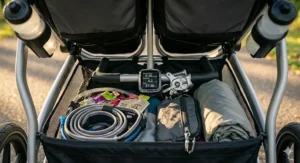
Common Mistakes When Buying a Double Jogging Stroller (And How to Avoid Them)
Mistake #1: Assuming All “Jogging Strollers” Are Suitable for Running
The baby gear industry labels almost anything with three wheels as a “jogging stroller,” but most fail basic performance standards for actual running. True jogging strollers feature: air-filled pneumatic tires (not hard plastic or foam), genuine suspension systems with springs or coils (not rubber bumpers), and locking front wheels that prevent wobble at speed. The ASTM F833 safety standard requires three-wheeled strollers intended for running to include warning labels about locking the front wheel before jogging, but this doesn’t guarantee performance quality.
Before purchasing, search YouTube for actual running footage with your target model. Recreational strolling videos don’t reveal tracking stability or suspension performance at 8-9 minute pace. Read reviews specifically from marathon runners, not casual parents who occasionally walk fast. The difference between a double jogging stroller for serious runners and a “jogging-style” recreational stroller is the difference between running shoes and casual sneakers—similar appearance, completely different performance.
Mistake #2: Prioritizing Features Over Fundamentals
Parents get seduced by gadgets like smartphone holders, built-in speakers, and fancy cup holder configurations while ignoring wheel bearing quality and frame rigidity. Here’s what actually matters: sealed cartridge bearings (not unsealed ball bearings that fail after dirt exposure), aluminum frames with minimal flex (press down on both handlebar and front of the stroller—it shouldn’t twist), and pneumatic tires that maintain pressure for weeks (not cheap rubber that constantly deflates).
The test: push the empty stroller on flat ground and release. A quality lightweight double jogging stroller should roll 15-20 feet before stopping. Budget models barely roll 5 feet because of bearing drag. This rolling efficiency multiplies over every mile you run—poor bearings add 20-30 seconds per mile to your pace through pure friction loss.
Mistake #3: Underestimating Suspension Importance
Many first-time buyers think suspension is a luxury feature rather than a necessity. Without adequate suspension, every road crack, expansion joint, and pavement ripple transmits shock directly to your passengers’ spines and heads. Infants and toddlers lack the neck muscle development to stabilize against repeated jarring, which causes discomfort and potential developmental concerns over thousands of impacts.
For serious runners, suspension also protects your joints and form. When the stroller bounces over bumps, you compensate with altered stride mechanics that increase injury risk. The BOB Revolution Flex 3.0 Duallie features adjustable suspension that you can tune based on passenger weight and terrain—loosened for rough trails, tightened for smooth pavement. This adjustability isn’t marketing fluff; it’s the difference between comfortable 15-mile runs and constant micro-adjustments that disrupt your rhythm.
Mistake #4: Ignoring Wheel Size and Tire Type
Wheel diameter directly affects rolling efficiency and bump handling. The standard configuration for quality double joggers is 16-inch rear wheels and 12-inch front—this geometry provides optimal stability and speed maintenance. Strollers with 12-inch rear wheels (common on budget models) require more pushing effort and struggle with even minor obstacles.
Tire type matters equally. Air-filled pneumatic tires absorb shock, maintain traction on varied surfaces, and roll efficiently when properly inflated (typically 30-35 PSI). Foam-filled “never-flat” tires eliminate puncture risk but add weight and reduce shock absorption. Hard plastic wheels (found on the Baby Trend Expedition Double and similar budget options) provide zero cushioning and create harsh ride quality that limits your running duration before passengers protest.
Mistake #5: Buying Without Testing Maneuverability
A double jogging stroller for serious runners is a significant investment that you’ll use hundreds of times. Testing for five minutes in a store aisle doesn’t replicate real-world performance, but it’s better than blind online ordering. Load the stroller with weight (stores often have weight bags for this purpose) approximating your kids’ combined weight. Push it through turns, practice the fold mechanism, and test the brake engagement.
Specifically check: Does it pull to one side when you release the handlebar briefly? That indicates tracking misalignment that will drive you crazy over miles. Can you operate the fold mechanism while holding a child? Many designs require both hands free. Does the parking brake engage firmly without excessive foot pressure? Weak brakes fail on hills and create safety concerns.
Lightweight Double Jogging Stroller vs Premium Models: The Performance Trade-Off
The lightweight double jogging stroller category promises easier pushing through reduced weight, but physics and engineering impose unavoidable compromises. Understanding these trade-offs helps you choose intelligently based on your actual needs rather than marketing promises.
Weight Reduction Strategies and Their Consequences
Manufacturers reduce stroller weight through three primary methods: thinner-gauge aluminum frames, smaller diameter tubing, and lighter-duty components. The Joovy Zoom X2 achieves its impressive 28-pound weight partly through frame tubing that’s slightly less robust than the BOB Revolution Flex 3.0 Duallie’s heavier-gauge construction. For runners logging moderate weekly miles (10-15), this lighter frame provides significant effort reduction without concerning durability issues.
However, competitive runners pushing 30+ miles weekly may experience frame flex during hard efforts—the lighter tubing allows minimal twist under heavy load that marginally affects tracking stability. Premium models combat this with engineering approaches that add weight but eliminate flex: thicker-walled tubing in stress areas, reinforced joint connections, and dual-density construction that places strength where needed.
Suspension System Simplification
Lightweight models often simplify suspension to save weight. Basic coil springs replace more complex multi-point adjustable systems, and some eliminate suspension entirely from certain wheels. The performance impact: adequate shock absorption on maintained paths, but rough trail running transmits more jarring to both passengers and runner. If your training primarily occurs on smooth bike paths and you value the effort reduction of lower weight, this compromise makes sense.
Serious trail runners should accept the weight penalty of sophisticated suspension. The BOB Revolution Flex 3.0 Duallie weighs 33.1 pounds versus the Joovy Zoom X2’s 28 pounds—that 5-pound difference translates to approximately 10-15 seconds per mile of additional effort on flat ground. But on rough trails, the premium suspension’s superior shock absorption allows you to maintain form and pace that saves 30-45 seconds per mile compared to fighting a bouncing, jarring lightweight stroller.
Component Durability Over Extended Use
Here’s where lightweight strollers often reveal their limitations. The wheel bearings, brake mechanisms, and joint connections endure tremendous stress during running—a 150-pound adult pushing 70 pounds of stroller and passengers at 8-minute pace generates significant force through every component. Budget lightweight models use bearings and bushings with shorter service life than premium strollers’ components.
Practical reality check: the Thule Urban Glide 3 Double with sealed cartridge bearings typically runs 500-600 miles before requiring any maintenance beyond tire inflation. A lightweight double jogging stroller in the $400-$550 range might need bearing replacement or suspension bushings after 200-300 miles of hard use. If you’re a serious marathoner, calculate the cost per mile including maintenance—the initial price advantage of lighter models often disappears over your training timeline.
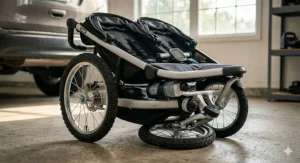
Long-Distance Double Jogging Stroller Training: Real-World Strategy Guide
Distance running with twins or multiple kids requires strategic planning beyond simply pushing harder. The additional load changes your training dynamics in specific ways that smart runners exploit for performance gains.
Reframing Stroller Miles as Strength Training
Every mile pushing a double jogging stroller for serious runners provides resistance training equivalent to running with a weighted vest—except the resistance improves your running-specific strength more effectively. The forward lean required for stroller pushing engages your hip flexors, glutes, and core in patterns that directly transfer to faster unencumbered running.
Research confirms what experienced stroller runners know empirically: regular running programs averaging 3-4 sessions weekly produce significant improvements in cardiovascular fitness, with maximal oxygen uptake increasing by approximately 7.1 ml/min/kg after consistent training. When you add stroller resistance, you’re essentially conducting threshold training at slower absolute speeds—your cardiovascular system works at race effort even though your pace appears recreational.
Smart programming approach: schedule 80% of weekly mileage with the stroller, reserving 20% for “free” running that lets you work on speed and form without resistance. This ratio builds tremendous aerobic capacity and leg strength that manifests as improved performance when you run unencumbered. Many marathoners report their stroller training miles prepared them to run 30-45 seconds per mile faster in races compared to their stroller training pace.
Nutrition and Hydration Logistics
Accessing fuel and water while maintaining control of a rolling 100-pound load challenges even experienced runners. The solution isn’t carrying everything on your body (that adds uncomfortable bouncing weight)—it’s strategically using your double jogging stroller for serious runners storage capacity.
Pre-position gel packs or chews in easily accessible handlebar pockets or storage compartments that you can reach without looking away from your path. Practice the grab-and-consume motion during shorter runs before attempting it at mile 14 of a long run. Hydration systems work best when mounted in cup holders you can access with minimal disruption—test whether you can drink one-handed while maintaining stroller control.
Pro tip: plan routes with water fountain or convenience store locations matching your typical refill intervals. Stopping to walk for 30-60 seconds while you hydrate and grab calories doesn’t sabotage your training—it provides brief recovery that lets you maintain quality for the remaining miles. Attempting to power through dehydration while pushing creates cascading fatigue that ruins the session’s final miles.
Managing Passenger Variables
Your kids’ cooperation determines whether long runs succeed or become frustrated bail-outs. Timing matters enormously: running during nap time transforms your stroller into a motion-induced sleep machine, giving you uninterrupted training time. Running when kids are alert and engaged means bringing entertainment—tablets with downloaded shows, snacks in accessible pouches, and interactive toys that hold attention for 60-90 minutes.
Accept that some runs will get shortened due to passenger meltdowns, and don’t let this trigger frustration. Serious runners maintain perspective: a 10-mile run that becomes 7 miles because a toddler needs a bathroom break still provides valuable training stimulus. Building flexibility into your marathon training with double jogging stroller schedule—planning a 16-miler knowing it might become 14—reduces the stress that makes training unsustainable.
High-Performance Double Jogger Features That Actually Matter
Marketing materials bombard you with features, but most add cost without improving running performance. Here’s what serious runners should prioritize versus what’s essentially noise.
Essential: Handlebar Height Adjustability
Runner height varies from 5’2″ to 6’4″, and handlebar position dramatically affects posture, shoulder strain, and pushing efficiency. The Thule Urban Glide 2 Double features handlebar adjustment from 34.5 to 48 inches, accommodating nearly every adult without forcing poor running form. Fixed-height handlebars (common on budget models) create problems for particularly tall or short runners—you compensate with altered shoulder position that creates tension and reduces efficiency.
Test this specifically: with the stroller loaded to approximate your kids’ weight, push at your normal running pace while evaluating whether your elbows naturally fall at 90 degrees with relaxed shoulders. If you’re reaching forward uncomfortably or bending your arms at acute angles, the handlebar height doesn’t match your mechanics. This matters more on long runs where poor position accumulates into significant fatigue and potential injury.
Essential: Wrist Strap Safety Tether
Every double jogging stroller for serious runners should include a wrist strap that prevents runaway situations if you trip or lose grip. This seems obvious, yet budget models occasionally omit this basic safety feature. The strap should attach to the frame via a coiled cord that allows natural arm swing without yanking, and it should be long enough to accommodate your running motion without binding.
Practical consideration: practice emergency stops with the wrist strap engaged. You should be able to brake the stroller quickly using the tether if the handlebar slips from your grasp. The CPSC requires manufacturers to advise using the wrist strap during exercise for safety, but many runners ignore this protection until they experience a near-miss incident. Don’t wait for that wake-up call.
Useful But Not Essential: Hand-Operated Brake
Hill runners benefit enormously from hand brakes like those on the Thule models—they control descent speed without relying entirely on your legs to absorb eccentric load. But if you train primarily on flat terrain, the added cost and weight of hand brake systems doesn’t justify the premium. Evaluate your training environment honestly: if more than 30% of your weekly mileage includes moderate to steep hills, invest in this feature. If you’re running pancake-flat bike paths, save the money for premium suspension or lighter weight instead.
Overrated: Built-In Sound Systems
Some premium strollers include integrated speakers for music or white noise. This sounds appealing but rarely survives real-world use. Speakers add unnecessary weight, draw battery power, and create another electronic component prone to failure. Most runners prefer Bluetooth earbuds (worn with one ear uncovered for safety) that provide better sound quality and don’t add stroller weight. Your kids will be fine with tablet audio for entertainment—dedicated stroller speakers solve a problem that doesn’t meaningfully exist.
Overrated: Excessive Storage Pockets
The BOB Revolution Flex 3.0 Duallie’s 10-pocket system borders on overkill for most runners. You need space for keys, phone, diapers, snacks, and maybe a light jacket—that requires 3-4 pockets maximum. Additional pockets add weight through extra fabric and zippers while creating organizational complexity that wastes time. A large cargo basket with one or two handlebar pockets handles 95% of real-world storage needs efficiently.
Focus storage evaluation on accessibility: can you reach essential items (phone, gel packs) without stopping or disrupting your stride? That matters. Having 15 different compartments for optimal organization? That’s solving a non-existent problem.
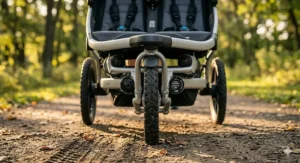
Competitive Running With Twins: Maintaining Race Performance
Training for competitive races while parenting twins presents unique challenges, but thousands of runners prove it’s achievable with intelligent programming. The key is accepting that training will look different than your pre-kids approach while understanding that different doesn’t mean inferior.
Adapting Volume and Intensity
Competitive runners typically follow training plans prescribing 50-70 weekly miles during marathon preparation. With twins and a full-time job, hitting 50 miles becomes logistically unrealistic for most parents. The solution isn’t abandoning racing goals—it’s restructuring training around higher-intensity, lower-volume weeks that build similar fitness.
Research into endurance training shows that intensity matters more than pure volume for maintaining race performance. A well-designed 40-mile week with two quality workouts and one long run produces better race results than a 55-mile week of all easy running. For stroller-bound parents, this means maximizing the training stimulus from every run through strategic intensity distribution.
Practical implementation: run 3-4 times weekly with the double jogging stroller for serious runners, programming one tempo run (20-30 minutes at comfortably hard pace), one hill repeat session (6-8 reps), and one long run (progressively building to 16-18 miles). The remaining 1-2 runs are easy-pace recovery miles that maintain aerobic base without excessive fatigue accumulation. This 35-40 mile structure, executed consistently, prepares you for marathon completion and potentially faster times than expected given the reduced volume.
Finding Solo Speed Work Opportunities
While 80% of your training can occur with the stroller, the remaining 20% of solo running shouldn’t be random easy miles. This is where you work on race-specific speed and form without resistance. Partner with your spouse for one early-morning or evening session weekly where you run track intervals or race-pace miles that calibrate your goal pace.
These sessions don’t need to be long—a 6-mile run with 3 × 1 mile at marathon pace (5 minutes of total work) provides crucial neuromuscular training that stroller running can’t replicate. Your body needs to remember running at race turnover and effort. The combination of high-resistance stroller miles building strength and periodic solo speed work maintaining fast-twitch recruitment creates a powerful hybrid training approach.
Race Day Strategy and Realistic Expectations
Your first race after months of stroller training reveals an interesting phenomenon: running unencumbered feels absurdly easy for the first 10-12 miles. The temptation to surge past your planned pace is overwhelming but dangerous—your aerobic system is ready, but your musculoskeletal system adapted to the altered stride mechanics of stroller pushing. Pushing too hard early creates late-race suffering as your body adjusts to unencumbered running mechanics.
Smart approach: start conservatively for the first half, running 10-15 seconds per mile slower than your goal pace. Your legs need 6-8 miles to remember efficient free-running form. The second half is where stroller-trained runners excel—your leg strength and aerobic capacity shine as competitors fade. Many stroller-trained marathoners run negative splits (faster second half) because their conditioning allows them to accelerate when others tire.
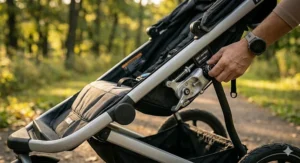
FAQ: Your Most Important Questions Answered
❓ What age can babies go in a double jogging stroller for serious runners?
❓ How much slower will I run pushing a double jogging stroller?
❓ Can I use a double jogging stroller for marathon training?
❓ What's the difference between a recreational and competitive double jogging stroller?
❓ How do I prevent the double stroller from veering to one side while running?
Conclusion: Choose Your Double Jogging Stroller for Serious Runners Wisely
The decision between models ultimately comes down to three factors: training volume, terrain demands, and budget constraints. If you’re running 25+ miles weekly on varied terrain and budget allows, the Thule Urban Glide 3 Double delivers cutting-edge performance that justifies its premium price through superior hand brake control, refined suspension, and durability through marathon-distance training cycles. The BOB Revolution Flex 3.0 Duallie offers nearly equivalent capability at slightly lower cost, sacrificing only the hand brake and few luxury touches while providing the industry-standard adjustable suspension system serious runners trust.
Budget-conscious distance runners logging consistent training miles should strongly consider the Joovy Zoom X2—its 28-pound weight and $400-$550 price point deliver remarkable value despite brake engagement issues requiring extra vigilance. The lightweight double jogging stroller advantage becomes increasingly apparent as weekly mileage climbs; that 5-7 pound difference versus premium models translates to measurably reduced fatigue over marathon training.
For eco-conscious families prioritizing chemical-free construction without sacrificing performance, the Bumbleride Indie Twin provides PFAS-free, sustainably manufactured quality that performs admirably on trails and pavement alike. The narrower frame (28 inches versus 30+ inches on competitors) adds surprising versatility for urban running through doorways and tight spaces.
Remember that the best double jogging stroller for serious runners is the one you’ll actually use consistently. A slightly less-than-optimal model that gets you out the door for 30-40 weekly miles beats the theoretically perfect stroller sitting unused because it’s too heavy, too cumbersome, or too complicated for your real-world circumstances. Match your equipment to your actual training patterns and environment, not aspirational goals that rarely materialize.
The investment in quality equipment pays dividends through injury prevention, sustainable training, and the simple joy of maintaining your running identity while building family memories. Your kids won’t remember whether you ran 8:30 or 9:30 pace—but they’ll remember time spent together exploring trails and neighborhoods from their premium rolling chariot. Choose wisely, train consistently, and enjoy rediscovering your competitive edge through resistance training disguised as parenting.
Recommended for You
- Double Jogging Stroller vs Bike Trailer: 7 Top Picks (2026)
- 7 Best Cheap Double Jogging Strollers Under $300 – 2026
- 7 Best Double Infant Jogging Strollers – 2026
Disclaimer: This article contains affiliate links. As an Amazon Associate, I earn from qualifying purchases. If you purchase products through these links, we may earn a small commission at no additional cost to you.
✨ Found this helpful? Share it with your running friends! 💬🤗
