
In This Article
Here’s the thing nobody tells you before you register for a double stroller: sidewalks were not designed with two toddlers in mind. Old brownstone stoops, subway turnstiles, the single-file gauntlet of a farmers’ market — they all seem to conspire against anyone pushing something wider than a shopping cart. If you’ve ever wedged a stroller sideways into a coffee shop doorway while a line of impatient commuters watched, you already know why a side-by-side double stroller for narrow sidewalks isn’t a luxury search term. It’s a survival skill.
A side-by-side double stroller for narrow sidewalks is exactly what it sounds like: two seats mounted next to each other, built onto a frame narrow enough — usually somewhere between 25 and 30 inches — to clear a standard doorway, an elevator, or a crowded aisle without a three-point turn. Unlike tandem strollers, which stack seats front-to-back and can stretch nearly five feet long, side-by-side models keep both kids at equal height, facing the same direction, with a footprint you can actually judge by eye before committing to a doorway.
We dug into real product listings, lab-style review data, and aggregated owner feedback to build this guide, because “narrow” gets thrown around loosely in stroller marketing and the actual inches matter enormously once you’re navigating a 32-inch bodega aisle. Below, you’ll find seven real, currently sold models spanning budget to premium, a width-by-width breakdown, and the buying logic that actually holds up once you’re three blocks from home with two kids and a diaper bag.
Quick Comparison Table
| Stroller | Width | Weight | Price Range | Best For |
|---|---|---|---|---|
| Mountain Buggy Duet V3 | 25 in | ~29 lbs | $600–$750 range | Narrowest doorways and elevators |
| Bugaboo Donkey 5 Duo | 29.1 in | 32.8 lbs | $1,800–$2,000 range | Growing families who want single-to-double flexibility |
| UPPAbaby Minu Duo | 29 in | ~26 lbs | $600–$750 range | Premium ride quality in a compact frame |
| Baby Jogger City Mini GT2 Double | 29.25–29.5 in | 35.3–36.5 lbs | $650–$750 range | All-terrain families who still need doorway clearance |
| Valco Baby Slim Twin | 26 in | 24 lbs | $550–$650 range | Featherweight everyday pushing |
| Zoe Twin V2 | 29 in | 23 lbs | $400–$500 range | Budget-conscious parents who still want side-by-side seating |
| Joovy Scooter X2 | 30 in | 32 lbs | $300–$400 range | Maximum storage on a tight budget |
Looking at the numbers, the spread is bigger than most parents expect: a full 5 inches separates the Mountain Buggy Duet V3 from the Joovy Scooter X2, and that gap is the difference between “glides through the deli doorway” and “requires a small negotiation.” Price and width don’t move in lockstep either — the Zoe Twin V2 matches the width of stroller costing three times as much, while the Valco Baby Slim Twin proves that a narrower frame doesn’t automatically mean a higher price tag. We’ll unpack why below, but the short version: width comes from engineering choices (seat shape, wheel placement, frame geometry), not just from the price sticker.
💬 Just one click — help others make better buying decisions too!😊
Top 7 Side-by-Side Double Strollers for Narrow Sidewalks: Expert Analysis
We picked these seven because they span the real market — from a $300 workhorse to a $2,000 travel-system chameleon — and because every one of them has a verifiable width under 30.5 inches, the rough ceiling for “doesn’t fight you at every doorway.”
1. Mountain Buggy Duet V3 — narrowest side-by-side on the market
The headline number here is simple: 25 inches wide, which Mountain Buggy achieves by narrowing each individual seat to about 11 inches rather than widening the whole frame to fit two full-size seats. That’s roughly the same width as most single strollers, which means this is the rare double that clears a standard doorway with room to spare rather than by a hair.
At that width, each seat is intentionally snug — this isn’t the stroller for two chunky toddlers who both want elbow room, and Mountain Buggy leans into that trade-off deliberately. What most buyers overlook about this model is that the narrow seats actually work in its favor for infants and younger toddlers, who don’t need the extra hip room older kids do; the tight profile becomes a genuine asset rather than a compromise during the years parents most need to squeeze through doorways one-handed.
Reviewers consistently report that the fold and push feel closer to a single stroller than a double, and that the narrow frame genuinely changes daily logistics — city buses, single-lane store aisles, and older apartment doorways stop being obstacles. The main critique in aggregated feedback is that the narrow seats feel tight once children pass toddlerhood, and that the smaller wheelbase can feel less planted on rough pavement than wider-set doubles.
Pros:
- ✅ Same width as most single strollers at 25 inches
- ✅ Narrower seats mean a genuinely smaller overall footprint
- ✅ Feels closer to pushing one stroller than two
Cons:
- ❌ Individual seats run tight for bigger toddlers
- ❌ Narrower wheelbase can feel less stable on rough terrain
Priced in the $600–$750 range, the Mountain Buggy Duet V3 earns its premium over budget options through width alone — for parents whose single biggest pain point is doorway clearance, this is the category leader, and check current price before buying since retailer promotions shift regularly.
2. Bugaboo Donkey 5 Duo — converts from single to double in three clicks
The standout feature is right in the name: Duo mode measures 29.1 inches wide, but the same frame collapses down to 23.6 inches — as narrow as Bugaboo’s own single stroller — when you only need one seat. That flexibility is the entire pitch, and it’s a real engineering feat rather than a marketing line.
The Duo ships with two seats, one bassinet, and a side luggage basket, and each seat holds up to 48 pounds — enough capacity to carry two kids from early infancy well into preschool without a stroller upgrade. Based on the spec comparison against competitors in this price bracket, the puncture-proof foam wheels and true one-hand steering are meaningful upgrades for parents who regularly navigate curbs, cobblestones, or gravel park paths rather than pure smooth sidewalk.
Aggregated owner sentiment frames this as a “grows with your family” purchase — parents buying it while pregnant with a second child, then converting between single and double as needed, appreciate not re-buying a stroller twice. The consistent critique is the price point, and a secondary complaint that in Duo mode, the handy side luggage basket that exists in single mode becomes unusable, cutting into storage exactly when you need it most.
Pros:
- ✅ Converts between 23.6-inch single and 29.1-inch double
- ✅ Each seat holds up to 48 pounds for long-term use
- ✅ Puncture-proof wheels handle rough city terrain well
Cons:
- ❌ Premium price compared to dedicated double strollers
- ❌ Side storage basket unusable once in double mode
At around $1,800–$2,000 for the full Duo package (prices may vary by retailer and configuration), the Bugaboo Donkey 5 Duo makes the most sense for families who know they’ll eventually need two seats and don’t want to buy — and store — two separate strollers along the way.
3. UPPAbaby Minu Duo — premium ride in a 29-inch footprint
UPPAbaby built the Minu Duo around a 29-inch width specifically engineered to clear a “standard doorway,” and at roughly 26 pounds, it’s noticeably lighter than most side-by-sides carrying real suspension hardware. That combination — narrow and light — is unusual; most brands trade one for the other.
What sets this model apart on paper is the all-wheel suspension and deep, near-flat recline in both seats from birth, features usually reserved for single strollers or much bulkier doubles. Here’s what to weigh: the leather handlebar and foam-filled, flat-proof wheels are clearly aimed at parents who view the stroller as a daily-use investment rather than a short-term twin-years purchase, and the price reflects that positioning.
Reviewers who tested it over multiple weeks describe the fold as genuinely one-handed and the ride as smoother than most competitors in this width class, crediting the suspension system specifically. The consistent knock in aggregated feedback is that, at 29 inches, it’s still wider than the narrowest options on this list, and the non-adjustable handlebar height, while accommodating most adults, isn’t ideal for notably tall or short pushers.
Pros:
- ✅ 29-inch width fits standard doorways with suspension comfort
- ✅ Lightweight at roughly 26 pounds for a full-featured double
- ✅ Deep recline in both seats works from birth
Cons:
- ❌ Not the narrowest option if doorway clearance is the top priority
- ❌ Handlebar height isn’t adjustable
In the $600–$750 range, the UPPAbaby Minu Duo is the pick for parents who want narrow-stroller practicality without stepping down to entry-level ride quality — it’s the mid-range sweet spot on this list.
4. Baby Jogger City Mini GT2 Double — all-terrain grip in a doorway-friendly width
At 29.25 to 29.5 inches wide depending on the retailer’s measurement point, the City Mini GT2 Double manages something genuinely rare: real all-terrain wheels and suspension in a frame still narrow enough for daily doorway use. Most stroller brands treat “narrow” and “all-terrain” as mutually exclusive categories.
Each seat holds up to 50 pounds, giving this stroller real longevity, and the forward-flex suspension is a noticeable upgrade in practice over basic side-by-side frames when rolling over old sidewalk cracks or unpaved park paths. On paper this means fewer jolts transmitted to the kids and less arm fatigue for whoever’s pushing over rough pavement, which matters on longer outings.
A certified child passenger safety technician has called this model a genuine “workhorse” that has stayed on the market this long for good reason, citing its fold quality and wheel durability specifically. The consistent trade-off reviewers report is a smaller-than-expected storage basket with mesh sides that make loading bulky items awkward, and stroller weight that runs heavier than some competitors on this list.
Pros:
- ✅ All-terrain suspension rare in a doorway-width double
- ✅ Each seat rated to 50 pounds for long-term use
- ✅ Praised by child safety experts for fold and wheel quality
Cons:
- ❌ Storage basket runs smaller than competitors
- ❌ Heavier than several other narrow doubles on this list
Typically found in the $650–$750 range, the Baby Jogger City Mini GT2 Double is the strongest choice for families who split time between smooth sidewalks and unpaved park trails without wanting two separate strollers for each terrain.
5. Valco Baby Slim Twin — the featherweight champion
At just 24 pounds and 26 inches wide, the Slim Twin lives up to its name on both dimensions simultaneously — nearly 5 inches narrower than a typical side-by-side double, and light enough that carrying it up a walk-up apartment stairwell doesn’t require a second person.
The narrow profile here comes specifically from Valco’s decision to replace this stroller’s predecessor (the Neo Twin) with a frame purpose-built around width reduction, rather than shrinking an existing wide frame. What most buyers overlook about ultra-light strollers is that reduced weight often means a reduced feature set — fewer suspension components, simpler recline mechanisms — and that trade-off shows up here in a stripped-down but functional design rather than a loaded one.
Aggregated reviews position this as a strong pick specifically for travel and tight urban living — grocery aisles, elevators, and airport gate-checking, where the combination of low weight and narrow width solves two headaches at once. The most common critique centers on a smaller review pool than more established competitors, meaning less long-term durability data exists compared to brands with a decade-plus track record.
Pros:
- ✅ Only 24 pounds — among the lightest side-by-side doubles available
- ✅ 26-inch width, nearly 5 inches narrower than typical doubles
- ✅ Purpose-built narrow frame, not a shrunk-down wide model
Cons:
- ❌ Fewer premium features than heavier competitors
- ❌ Smaller review history than more established brands
Priced around $550–$650, the Valco Baby Slim Twin is the strongest option for parents whose top two priorities are width and weight, in that order, over plush ride features.
6. Zoe Twin V2 — best value under $500
The Zoe Twin V2 weighs just 23 pounds — lighter than the Valco Slim Twin — while still hitting a respectable 29-inch width, and it does this at a price point roughly a third of several premium options on this list. That combination has made it something of a viral favorite among budget-focused parents.
Reviewers frequently point out that this stroller isn’t stripped-down despite its price: independently reclining seats, an expandable frame for accessories, and a fold that most testers describe as manageable solo are all present here. Based on the spec comparison, the main thing you’re giving up compared to the premium picks on this list is suspension sophistication and long-term durability testing, not core functionality.
One parent’s aggregated feedback captured the sentiment well: this stroller works best for families who want all the bells and whistles for stress-free days without the premium price tag, though the width — at 29 inches — still requires real awareness in genuinely tight spaces like older restaurant aisles. Reviewers are clear that its footprint, while good for the price, isn’t the category’s narrowest.
Pros:
- ✅ Only 23 pounds, lighter than several pricier competitors
- ✅ 29-inch width holds its own against premium options
- ✅ Independently reclining seats at a budget price point
Cons:
- ❌ Not the narrowest option despite the lightweight frame
- ❌ Less suspension sophistication than premium picks
At a typical $400–$500, the Zoe Twin V2 is the clear value leader on this list — the width-to-price ratio here is genuinely hard to beat.
7. Joovy Scooter X2 — biggest basket, smallest price
At 30 inches wide and 32 pounds, the Scooter X2 is the widest and heaviest stroller on this list — and also, at roughly $300–$400, the least expensive. Joovy’s pitch is straightforward: a stroller that still clears a standard 36-inch doorway “but not with much room to spare,” in exchange for a genuinely huge canopy, individually reclining seats, and dual snack trays.
Here’s what the spec sheet won’t tell you outright: the sealed-bearing wheels (7-inch front, 9.5-inch rear) are specifically sized for smooth-surface maneuverability rather than true all-terrain use, meaning this model shines on sidewalks and store floors but isn’t built for gravel trails. That’s a deliberate trade-off, not an oversight — Joovy is targeting everyday errand-running rather than weekend hiking.
Reviewers consistently praise the storage capacity as best-in-class for the price, with one tester noting she could navigate an airport solo with four kids in tow thanks to the stable double-front-wheel design. The recurring critique is that at 30 inches, this is the widest stroller on our list — it fits through most doorways but with noticeably less margin than the narrower picks above, and it lacks car seat compatibility entirely.
Pros:
- ✅ Massive storage basket, largest on this list for the price
- ✅ Individually reclining seats with dual snack trays included
- ✅ Stable double front-wheel design, easy for solo parents
Cons:
- ❌ Widest stroller on this list at 30 inches
- ❌ No car seat compatibility for infant use
At around $300–$400, the Joovy Scooter X2 delivers the most stroller-for-the-dollar here, provided your particular doorways and aisles have at least a little breathing room to spare.
What Is a Side-by-Side Double Stroller for Narrow Sidewalks?
A side-by-side double stroller for narrow sidewalks is a twin-seat stroller engineered with a frame width — typically 25 to 30 inches — narrow enough to clear standard residential doorways (usually 32 inches), tight elevators, and crowded urban sidewalks, while still seating both children at equal height and facing forward together.
That last part matters more than it sounds. Most parents assume “narrow” and “side-by-side” are opposites, and for a long time they basically were — older side-by-side models routinely ran 32 to 34 inches wide, wider than a lot of interior doors. What’s changed in the last few stroller generations is seat engineering. Brands have shaved inches off the outer frame by narrowing individual seat widths, angling the wheelbase, or building single-to-double conversion systems that only widen when a second child is actually on board. The Access Board’s accessible-route guidance notes that federal accessibility standards require a minimum continuous clear width of 36 inches on public routes, narrowing to 32 inches at doorways — which is exactly the ceiling a “narrow” double stroller needs to clear to feel effortless in daily life.
How to Choose a Narrow Side-by-Side Double Stroller
Picking the right one isn’t just “grab whichever number is smallest.” Here’s the reasoning we’d walk a friend through:
- Measure your actual bottleneck first. Walk your real route — your building’s elevator, your kitchen doorway, your car trunk opening — with a tape measure before shopping. A stroller that’s “narrow” on paper can still be your tightest squeeze if your apartment building has a 28-inch service elevator.
- Treat width and weight as a package deal. A 25-inch frame that weighs 38 pounds fully loaded is still a workout to lift up a subway staircase. Look at width and stroller weight together, not in isolation.
- Check the weight limit against your timeline. If you’re buying for twins who’ll both hit 35 pounds around the same birthday, a stroller rated to 45–50 pounds per seat buys you real years of use; a 35-pound cap means an earlier upgrade.
- Decide how much recline you actually need. Newborn-ready side-by-sides need near-flat recline in both seats; if your kids are already toddlers, upright, more compact seats can shave off both width and folded bulk.
- Test the fold in a showroom, not just in a photo. A one-hand fold sounds identical across every product listing, but reviewers consistently report real differences in how many steps and how much force it actually takes.
- Factor in storage loss. Side-by-side frames often sacrifice basket space to make room for the second seat, so if you’re a stroller-as-diaper-bag family, check basket dimensions specifically, not just “has storage.”
- Read aggregated review sentiment, not just the star average. A 4.6-star rating built on “great for one season, then the wheels wobbled” reviews tells you something a headline number never will.
Side-by-Side Stroller Width Comparison: The Inches That Actually Matter
A side-by-side stroller width comparison isn’t just trivia — those inches translate directly into which doorways, aisles, and elevators you’ll clear without a fight. Here’s how the width tiers break down in practice:
| Width Tier | Typical Range | Real-World Fit |
|---|---|---|
| Ultra-narrow | 25–26 in | Clears most single-door frames and tight elevators |
| Standard-narrow | 28–29 in | Clears most 32-inch residential doorways with modest margin |
| Wide-but-workable | 30–31 in | Fits standard 36-inch doorways, tight in older 30–32 in frames |
The gap between “ultra-narrow” and “wide-but-workable” sounds small on a tape measure, but it’s the difference between pushing straight through a doorway and stopping to angle the frame sideways. Notably, width doesn’t track neatly with price or seating comfort — the Mountain Buggy Duet V3 and Valco Baby Slim Twin prove that a genuinely narrow frame is achievable at a mid-range price, while a wider stroller like the Joovy Scooter X2 compensates with storage and seat room instead. If your home, workplace, or daily commute involves consistently tight passages, treat the width tier as a harder constraint than the price tag.
Common Mistakes When Buying a Compact Side-by-Side Double Stroller
Even careful shoppers trip over the same handful of errors when buying a compact side-by-side double stroller:
Skipping the tape measure is the big one. Parents read “narrow” in a product description and assume it’ll work, without ever measuring their own elevator, hallway, or car trunk opening — the numbers on this list matter far less than the numbers in your specific building.
A second common mistake is fixating on width alone and ignoring stroller weight. A 26-inch frame that weighs 34 pounds fully assembled is still a chore to lift up subway stairs or into a trunk, and reviewers note that “narrow but heavy” strollers often get used less than expected simply because they’re a hassle to transport.
Buyers also frequently underestimate how quickly kids outgrow a compact seat. The narrowest frames on the market achieve their width partly by shrinking individual seat dimensions, and what fits a 20-month-old comfortably can feel cramped by age three — a genuine consideration if you’re hoping for years of daily use rather than a single toddler season.
Finally, many shoppers skip test-folding a floor model before buying online, then discover the “one-hand fold” advertised everywhere actually requires two hands and a bit of muscle memory in daily reality. Reviewers consistently flag fold difficulty as a frequent gap between marketing copy and lived experience.
Twin Seating Symmetry: Why Equal Seats Change Everything
Twin seating symmetry — both children seated at identical height, facing the same direction, with equal recline capability — is arguably the single biggest functional advantage side-by-side strollers hold over tandem designs, and it’s worth understanding why it matters beyond simple fairness.
With true twin seating symmetry, neither child gets a “better” seat, which matters more than it might sound. Reviewers and parenting experts alike have coined the term “seating inequality” for tandem strollers, where the front seat typically offers a better view and more legroom than the rear — and once toddlers are old enough to notice, usually around age two and a half, that imbalance becomes a real, recurring source of sibling friction on outings.
Symmetrical seating also changes the caregiving experience directly. Both kids can see you, see each other, and see the same view of the world at the same time, which supports more natural conversation and shared attention during a walk. Practically speaking, loading and unloading two children from side-by-side seats also tends to happen simultaneously rather than sequentially, which matters enormously when you’re solo-parenting during a fussy exit from a stroller.
The trade-off, as covered above, is width — achieving genuine seating symmetry in a side-by-side frame inherently costs more inches than stacking seats front-to-back. For twins specifically, where both children are the same age and same size, that symmetry usually outweighs the width cost; for an age-gapped sibling pair, the calculation can go either way depending on how much the older child still relies on stroller time.
Narrow Side-by-Side vs Tandem Strollers: Which Wins on Tight Sidewalks
The core trade-off between these two double-stroller styles comes down to length versus width, and which constraint actually affects your daily life more.
| Factor | Side-by-Side | Tandem |
|---|---|---|
| Typical width | 25–30 in | Single-stroller width (~20–24 in) |
| Typical length | Shorter, easier to turn | Much longer, harder to turn |
| Seating equality | Equal seats, equal view | Front seat usually more desirable |
| Trunk fit | Can be awkward due to width | Often easier due to narrower profile |
A tandem’s real advantage is doorway width — since seats stack front-to-back rather than side-by-side, a tandem is typically the same width as a single stroller, which can beat even the narrowest side-by-side model on this list. What tandems sacrifice in exchange is maneuverability and turning radius; that extra length makes tight U-turns in a small shop or a crowded elevator genuinely harder, and several tandem models struggle to fit into smaller car trunks specifically because of their length rather than their width.
For most families navigating narrow sidewalks specifically — as opposed to narrow doorways — a side-by-side model’s shorter length and tighter turning radius tends to win out in daily use, since sidewalks present a continuous width constraint that a longer stroller can’t simply steer around the way it can navigate a single doorway. If your bottleneck is truly a specific narrow doorway or elevator you cross daily, a tandem is worth serious consideration; if your bottleneck is generally crowded, obstacle-filled sidewalks, the maneuverability of a side-by-side usually matters more.
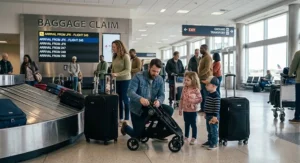
Setting Up and Living With Your New Stroller
Getting the most out of a narrow double stroller starts before the first outing. Unbox it fully and practice the fold and unfold sequence five or six times in your living room before you’re doing it one-handed on a subway platform with a fussy toddler watching — muscle memory here saves genuine frustration later.
Check both seat recline mechanisms and the harness buckles under real weight, not just empty, since narrow-seat strollers sometimes have tighter clearance around buckle mechanisms that only becomes obvious once a squirming toddler is actually seated. In the first 30 days, most reported issues trace back to two causes: wheels not being fully snapped into place during initial setup, and canopy mechanisms being forced past their natural range of motion.
For ongoing maintenance, wipe down wheel axles monthly if you’re regularly rolling through wet conditions, since sealed bearings — a feature on several models covered here — still benefit from occasional debris removal to stay smooth. Check the fold-locking latch periodically for wear, particularly if you’re folding and unfolding daily rather than occasionally, since that mechanism sees the most repeated stress of any moving part.
One optimization trick worth knowing: practicing your doorway approach angle at home matters as much as the stroller’s actual width. Reviewers who report the smoothest daily experience typically describe approaching narrow doorways at a slight angle rather than dead-on, using the frame’s narrowest point to lead through first.
Real-World Scenarios: Matching Families to Strollers
The car-free city family: Two kids, no car, daily subway commute, third-floor walk-up apartment. This household benefits most from prioritizing weight alongside width — something in the 24-to-26-pound range like the Valco Baby Slim Twin or Zoe Twin V2 turns a daily stair-carry into a manageable task rather than a two-person job.
The mixed-terrain suburban parent: Splits time between neighborhood sidewalks, unpaved park trails, and the occasional store run. Here, the terrain versatility of the Baby Jogger City Mini GT2 Double justifies its slightly higher weight, since the all-terrain suspension pays off on rougher surfaces a lighter, city-only model can’t handle as smoothly.
The growing family planning ahead: Expecting a second child but not yet sure about long-term stroller needs, and wants flexibility rather than committing twice. The Bugaboo Donkey 5 Duo‘s single-to-double conversion directly solves this — buy once, use as a single now, expand later — even though the upfront cost is the highest on this list.
Solving the Most Common Narrow-Sidewalk Stroller Problems
Problem: The stroller technically fits the doorway, but only with zero margin for error. Solution: prioritize models rated at least an inch or two under your tightest measured bottleneck, not exactly at it — real-world doorframes, trim, and hardware often eat into the “official” clear width.
Problem: The stroller is narrow but too heavy to lift comfortably. Solution: weigh width and stroller weight together rather than optimizing for width alone; the Valco Baby Slim Twin and Zoe Twin V2 both demonstrate that narrow and lightweight aren’t mutually exclusive.
Problem: Storage space disappears once the second seat is added. Solution: check basket dimensions specifically in double-mode configuration, not single-mode marketing photos, since several models — including the Bugaboo Donkey 5 Duo — lose usable storage space specifically when converted to double mode.
Problem: One-hand fold claims don’t match reality. Solution: read aggregated review sentiment specifically about the fold mechanism rather than trusting spec-sheet claims, and if possible, test-fold a floor model before purchasing online.
Problem: Kids outgrow narrow seats faster than expected. Solution: check the specific seat width dimension, not just overall stroller width, since the narrowest overall frames often achieve that width by shrinking individual seat room rather than the frame structure.
Long-Term Cost & Maintenance
Total cost of ownership on a narrow double stroller extends well beyond the sticker price, and it’s worth running the math before buying. A $300 budget model and an $1,800 premium model can end up costing similarly over a three-year span if the budget option needs wheel or hardware replacement parts along the way, while the premium option holds up without additional spending.
Cost-per-use is the more useful lens than upfront price alone. A stroller used daily for three years amortizes a higher purchase price dramatically better than one used occasionally for a single season — which is part of why the Bugaboo Donkey 5 Duo‘s single-to-double conversion can make long-term financial sense despite its steep initial cost, since it effectively replaces two separate stroller purchases.
Maintenance costs on narrow doubles tend to be modest but real: replacement wheels, canopy fabric, and harness buckles are the most commonly needed parts across this category, based on aggregated owner reports. Brands with wider dealer networks and longer track records, like Baby Jogger and UPPAbaby, tend to have more accessible replacement parts than newer or smaller-batch brands, which is worth factoring in if you expect years of heavy daily use.
Safety, Regulations & Doorway Standards
Every stroller on this list is subject to the same federal baseline: the CPSC’s mandatory safety standard for carriages and strollers, which explicitly covers side-by-side and multi-occupant strollers and addresses hazards including hinge pinch points, wheel detachment, parking brake failure, and restraint integrity. That standard incorporates ASTM International’s voluntary specification (ASTM F833) by reference, meaning any stroller legally sold in the U.S. has been engineered against a documented, government-recognized set of failure modes — not just brand-specific internal testing.
Practically, this means shoppers don’t need to independently vet basic safety engineering across every stroller brand; the floor is federally mandated. What’s worth double-checking directly is fit-specific safety: harness adjustability as your child grows, parking brake accessibility given the narrower frame geometry on some models, and whether a specific model has any active recalls, which the CPSC publishes publicly.
On the doorway-width side specifically, it’s worth noting that ADA accessible-route standards require public routes to maintain at least 36 inches of clear width, narrowing to 32 inches only briefly at doorways — which is a useful real-world benchmark. Every stroller on this list clears that 32-inch doorway threshold, though by varying margins, which is exactly why the width comparison earlier in this guide matters as much as it does.

FAQ
❓ What is the narrowest side-by-side double stroller?
❓ How wide should a double stroller be for sidewalks?
❓ Are side-by-side strollers better than tandem for narrow spaces?
❓ Do narrow double strollers fit through standard doorways?
❓ How much do narrow side-by-side double strollers cost?
Conclusion
Choosing a side-by-side double stroller for narrow sidewalks really comes down to identifying your actual bottleneck before you shop, not just chasing the smallest number on a spec sheet. If a specific doorway or elevator is your daily obstacle, the Mountain Buggy Duet V3‘s 25-inch frame is hard to beat. If weight matters as much as width because you’re carrying this thing up stairs regularly, the Valco Baby Slim Twin or Zoe Twin V2 solve that dual problem without stretching your budget. Families who need genuine all-terrain capability alongside doorway clearance should look hard at the Baby Jogger City Mini GT2 Double, and anyone planning for a growing family without wanting to buy twice should weigh the Bugaboo Donkey 5 Duo‘s conversion flexibility against its higher upfront cost.
None of these seven strollers is a universally “best” pick — the right one depends entirely on which specific inch, pound, or dollar constraint actually governs your daily life. What all seven share is a genuine, verifiable width under 30.5 inches and real, sourced specs rather than marketing fluff, which is the actual homework this guide was built to do for you.
✨ Don’t Miss These Exclusive Deals!
🔍 Take your narrow-sidewalk strolling to the next level with these carefully selected picks. Click on any highlighted stroller above to check current pricing and availability. The right narrow double stroller turns daily obstacle courses into smooth, stress-free walks your whole family will enjoy!
Recommended for You
- 7 Best Double Strollers for Airport Travel With Two Kids (2026)
- 7 Best Double Stroller for Narrow Doorways and Elevators (2026)
- Double Stroller for One Infant and One Toddler: 7 Best Picks (2026)
Disclaimer: This article contains affiliate links. As an Amazon Associate, I earn from qualifying purchases. If you purchase products through these links, we may earn a small commission at no additional cost to you.
✨ Found this helpful? Share it with your friends! 💬🤗
