
In This Article
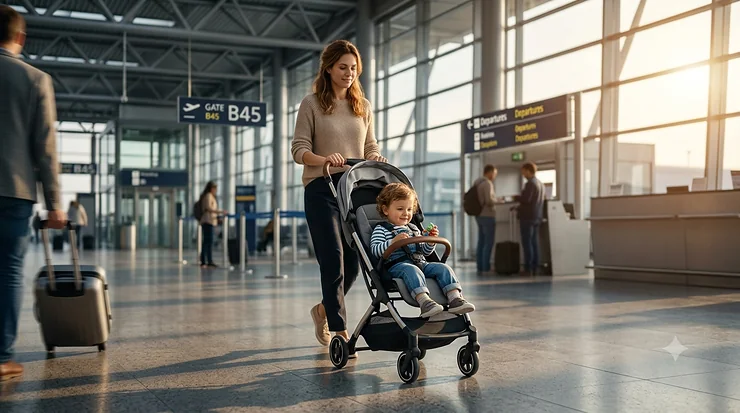
If you’ve ever stood at a gate juggling a diaper bag, a boarding pass, and a toddler who has chosen this exact moment to go limp like a sack of potatoes, you already know why picking the right stroller for flying with a toddler matters more than almost any other piece of travel gear you’ll buy. It’s not just about comfort. It’s about whether you’re sprinting to catch a connection with a 28-pound stroller hanging off your shoulder, or calmly folding a 13-pound frame with one hand while your other arm is full of kid.
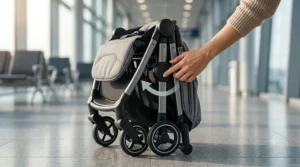
We dug through real, currently sold listings, manufacturer spec sheets, and a stack of parent reviews to find seven strollers that actually hold up to airport life — not just ones with pretty marketing photos. Some of these fold down small enough to ride in the overhead bin next to your carry-on. Others are better suited to gate-checking but cost a fraction of the price. We cover all of it.
Before we get into the lineup, here’s the short version: a good stroller for flying with a toddler needs three things — a fold that fits airline cabin guidelines (or close to it), a weight you can actually carry one-handed through a terminal, and a seat that reclines enough for an airport nap. Everything else (cup holders, basket size, color options) is a bonus, not a dealbreaker.
We’ll walk through quick-comparison data, then dig into each of our seven picks with the kind of detail you won’t find on the product page itself — who each one is actually built for, where it falls short, and whether it’s worth the money. Stick around for the buying framework and FAQ at the end, too.
Quick Comparison Table: Best Strollers for Flying with a Toddler
| Stroller | Weight | Fold Type | Best For | Price Range |
|---|---|---|---|---|
| Kolcraft Cloud Plus | ~13 lbs | Compact, self-standing | Tightest budgets | Under $100 |
| Peg Perego Volo | 12 lbs | IATA carry-on compliant | Lightest true carry-on | $230–$280 range |
| Inglesina Quid³ | 14 lbs | Removable rear wheels | Smallest overhead bins | $250–$300 range |
| Silver Cross Clic | 13.9 lbs | Lie-flat, self-standing | Newborn-to-toddler use | $260–$320 range |
| Stokke YOYO3 | ~13 lbs | Iconic flat-fold | Style + resale value | $359–$449 range |
| UPPAbaby Minu V3 | 16.7 lbs | One-hand, stands alone | Smoothest ride | Around $500 |
| Bugaboo Butterfly 2 | 16 lbs | One-second fold | Tallest toddlers | Around $600 |
✈️ Looking at the numbers above, the lightest strollers (Peg Perego Volo, Stokke YOYO3) win if your priority is carrying the thing one-handed through a crowded terminal, while the Bugaboo Butterfly 2 and UPPAbaby Minu V3 trade a few extra pounds for noticeably better ride quality once you’re off the plane. Budget shoppers should note that the Kolcraft Cloud Plus is the only pick here that isn’t a dedicated IATA-compliant carry-on stroller — it’s still a smart buy, but plan to gate-check it rather than stash it overhead.
💬 Just one click — help others make better buying decisions too!😊
✨ Don’t Miss These Exclusive Deals!
🔍 Take your next family trip to the next level with these carefully selected travel strollers. Click on any highlighted item to check current pricing and availability. These picks will help you create stress-free airport days your whole family will love!
Top 7 Strollers for Flying with a Toddler: Expert Analysis
1. Kolcraft Cloud Plus Lightweight Stroller
The Kolcraft Cloud Plus stands out as the only stroller on this list priced for a single tank of gas, and it still manages a self-standing one-hand fold that beats plenty of pricier options.
At roughly 13 pounds with a weight capacity up to 50 lbs, the Cloud Plus is light enough for one parent to manage solo, and the multi-position recline plus extendable canopy with a peek-a-boo window genuinely earn their keep on a long layover. What the spec sheet won’t tell you: this stroller is not IATA carry-on sized, so you’ll be gate-checking it rather than wheeling it onto the plane — for a budget pick, that’s a fair trade.
Parents who buy this one consistently mention that it punches above its price point for everyday errands, theme parks, and the occasional flight, though a few note the canopy hardware feels less durable after months of daily folding. It’s best for a family flying once or twice a year who doesn’t want to drop $300+ on a stroller they’ll outgrow.
✅ Self-standing one-hand fold
✅ Large accessible storage basket
✅ Reclines far enough for naps
❌ Not airline cabin-sized
❌ Tray pops off rather than swinging open
Price-wise, this one sits well under $100, and at that price, it’s hard to argue with the value — just budget for gate-checking, not overhead storage.
2. Peg Perego Volo
The Peg Perego Volo is the lightest true carry-on stroller in our lineup, and Peg Perego backs that claim with an included travel bag rather than charging extra for it.
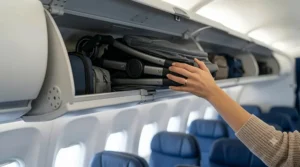
At just 12 pounds and built to IATA carry-on dimensions, the Volo folds to roughly 17.5 x 9.75 x 19.75 inches — small enough that most domestic carriers will let you stow it overhead rather than gate-check it. The all-wheel suspension and ball-bearing wheels matter more than they sound on paper: they’re the difference between a stroller that glides through a terminal and one that drags on uneven tile. The magnetic harness buckle is a small touch that makes a real difference when your toddler is squirming to get out at baggage claim.
Owners frequently highlight how compact the fold is compared with bulkier “travel” strollers that still don’t actually fit overhead. This is the pick for parents who fly several times a year and want the lightest possible bag to carry through security.
✅ Genuinely IATA-compliant fold
✅ Includes a $59.99-value travel bag
✅ Reclines flat enough for newborns
❌ Smaller basket than full-size strollers
❌ No infant car seat compatibility without adapters
Expect to pay in the $230–$280 range, putting it solidly in mid-tier territory for what you get.
3. Inglesina Quid³
The Inglesina Quid³ solves a problem most lightweight strollers ignore: some regional jets have overhead bins too small for even the “compact” competition.
Weighing 14 lbs and rated from birth to 55 lbs, the Quid³‘s party trick is removable rear wheels that pop off with one push, shrinking the folded footprint further for those extra-small bins. The 22-lb basket capacity is the largest of any stroller in this roundup relative to its weight — practically speaking, that means you can stash a full diaper bag underneath instead of carrying it separately through the terminal. The zero-gravity shoulder strap genuinely makes the stroller feel lighter when slung over your shoulder during boarding.
Reviewers consistently call out the smooth ride from the upgraded suspension and the standout basket size for a stroller this size. It’s the strongest all-rounder here for parents who want one stroller that handles both the airport and daily errands equally well.
✅ Largest basket-to-weight ratio on this list
✅ Removable wheels for tiny overhead bins
✅ Full recline range, including near-flat
❌ Car seat adapters sold separately
❌ Bumper bar removal takes practice
Pricing typically lands in the $250–$300 range, depending on color and bundle.
4. Silver Cross Clic
The Silver Cross Clic is the rare lightweight stroller that’s genuinely usable from a newborn’s first flight through a four-year-old’s last stroller ride.
At 13.9 lbs and rated birth to 55 lbs, the Clic‘s lie-flat seat with an included newborn apron means you skip buying a separate bassinet attachment — that’s real savings most buyers don’t factor in upfront. Its bumper bar doubles as the car seat adapter for select Nuna and Joie infant seats, which is a clever way to cut down on extra accessories you’d otherwise need to pack. The pull-out shoulder strap is genuinely padded enough to carry comfortably, unlike some competitors that bolt on a strap as an afterthought.
Feedback on this stroller is split: many parents love the styling and the birth-to-55-lb range, but a handful report the frame feeling less sturdy than its premium price suggests, with occasional wobble reported on uneven ground. It’s best for families who want one stroller to last from the hospital to preschool, not just for a single trip.
✅ Usable from birth without extra accessories
✅ IATA carry-on compatible fold
✅ Highest weight limit (55 lbs) at this size
❌ Small storage basket for the price
❌ Some durability complaints on rough terrain
Budget around $260–$320, depending on color and retailer promotions.
5. Stokke YOYO3
The Stokke YOYO3 — the stroller formerly sold as the Babyzen YOYO2 before Stokke folded the brand into its own lineup — is the one you’ll see in more airport terminals than any other on this list, and that popularity isn’t accidental.
Built for children from 6 months up and weighing in at a featherweight class, the YOYO3 folds and unfolds in a single motion, which matters enormously when you’re holding a toddler in one arm at a crowded gate. What sets it apart isn’t just the fold speed — it’s the accessory ecosystem. The same frame accepts a second seat (YOYO Connect) or a sibling board, so the stroller you buy for one toddler can grow with your family instead of getting replaced. The shock-absorbing front wheel and high-quality wheel bearings are the kind of detail you only notice after months of daily pushing, when cheaper wheels would already be sticking.
Reviewers consistently praise the smooth glide and long-term wheel durability compared with less expensive competitors, though several note the YOYO line skews narrow for taller toddlers nearing the upper age range. This is the pick for parents who travel often enough to justify the price and want a stroller with strong resale value if they sell it later.
✅ One-motion fold, fastest in this lineup
✅ Expandable accessory system for siblings
✅ Strong resale value if you sell later
❌ Not usable before 6 months without a car seat
❌ Premium price for a single-seat stroller
Expect to pay in the $359–$449 range, with occasional seasonal markdowns bringing it toward the lower end.
6. UPPAbaby Minu V3
The UPPAbaby Minu V3 is the stroller for parents who fly often but spend just as much time pushing through cobblestone streets and uneven sidewalks once they land.
At 16.7 lbs with a 50-lb weight limit, the Minu V3 is heavier than the ultra-light carry-on strollers on this list, but that extra weight buys you genuine front-and-independent-rear suspension — the kind that smooths out rough terrain instead of just looking good in marketing copy. The 20-lb basket capacity is the largest of any premium pick here, and the hidden tracker pocket is a thoughtful touch for parents nervous about losing track of gear in a busy airport. From-birth usability with a deep recline and integrated foot barrier means you don’t need a separate newborn insert.
Independent testers and everyday parents alike consistently rank this as the smoothest ride in its category, with the trade-off being it’s not quite as feather-light as competitors focused purely on minimum weight. It’s the strongest pick for families who travel internationally and need a stroller that performs as well in a foreign city as it does at the gate.
✅ Best ride quality of any pick on this list
✅ Largest basket among premium options
✅ Usable from birth with no extra insert needed
❌ Heaviest of the true carry-on strollers
❌ Higher price than most competitors
Pricing sits right around $500, positioning it as a splurge-but-justified pick for frequent flyers.
7. Bugaboo Butterfly 2
The Bugaboo Butterfly 2 is built for the toddler who has outgrown every other stroller’s seatback — literally.
Weighing 16 lbs and rated from birth to 4 years (50 lbs), the Butterfly 2‘s claim to fame is its unusually tall backrest, which gives bigger toddlers far more headroom than competitors at this size. The one-second fold genuinely lives up to the marketing: pull the handle and it collapses instantly, then self-stands without needing a wall or your knee to prop it against. The 17.6-lb basket capacity and new back-seat pocket mean less stuff crammed into your carry-on bag. Bugaboo’s move toward recycled aluminum and bio-based fabrics also trims the stroller’s environmental footprint by over a third compared with the original Butterfly.
The catch is cost: the base price doesn’t include the rain cover, car seat adapters, or bumper bar, so a fully outfitted setup runs noticeably higher than the sticker price suggests. It’s best for families with an older or taller toddler who need legroom more than they need to save every possible dollar.
✅ Tallest seatback in this category
✅ One-second fold that actually works one-handed
✅ Lower carbon footprint than the original Butterfly
❌ Accessories sold separately and add up fast
❌ Highest price point in this roundup
Plan on spending around $600 for the base stroller alone, with adapters and extras pushing the total higher.
Real Families, Real Trips: Which Stroller Fits Your Travel Style
If you fly once or twice a year for a family vacation and don’t mind gate-checking, the Kolcraft Cloud Plus covers you without tying up cash you’d rather spend on the trip itself. If you’re a frequent business-and-baby traveler hopping between cities every month, the Stokke YOYO3 or Peg Perego Volo earn their price tags through sheer fold speed and weight savings, both adding up over dozens of trips.
For a family with a newborn and an older toddler navigating both stages on the same trip, the Silver Cross Clic‘s birth-to-55-lb range and lie-flat seat mean you’re not packing two different strollers. And if your toddler is already pushing the upper end of most stroller weight limits, the Bugaboo Butterfly 2‘s tall seatback solves a real comfort problem the others don’t address as well.
Airport Problems These Strollers Actually Solve
Problem: the overhead bin rejects your stroller. This happens most often on regional jets with smaller bins. The Inglesina Quid³‘s removable rear wheels exist specifically for this scenario — pop them off, and the folded footprint shrinks enough to clear most aircraft.
Problem: your toddler melts down the second you try to fold the stroller. A one-hand, one-motion fold (like the YOYO3 or Bugaboo Butterfly 2) means you can keep your toddler on your hip with one arm while collapsing the frame with the other, instead of needing two free hands and a calm child.
Problem: layover naps turn into a fight because the seat won’t recline far enough. Look for near-flat recline, which several picks here offer, rather than the shallow recline common on cheap umbrella strollers — a few extra degrees make the difference between a toddler who naps and one who fights sleep the whole layover.
Packing and Boarding Day Game Plan
Practice the fold at home at least twice before your trip — doing it for the first time at a crowded gate, one-handed, with a toddler in tow, is not the moment to learn the mechanism. Pack the stroller’s travel bag (included with several picks here) even for carry-on strollers, since scuffed fabric and dinged frames are common after repeated trips through baggage handling.
At the gate, fold the stroller just before boarding rather than at the jet bridge door — most airlines want it folded for the walk down the aisle, and doing it earlier avoids holding up the line behind you. If your airline checks the stroller at the gate instead of letting you carry it on, ask for a gate tag rather than checking it with your luggage; gate-tagged strollers usually come back to you at the door of the plane on arrival instead of waiting at baggage claim.
How to Choose a Stroller for Flying with a Toddler
- Start with the fold dimensions, not the marketing label. “Travel stroller” isn’t a regulated term — check the actual folded measurements against the IATA reference of roughly 22 x 18 x 10 inches before assuming it’ll fit overhead.
- Weigh the stroller against your own strength, not just the spec sheet. A 16-lb stroller feels very different after eight hours of travel than it does in a showroom.
- Check the recline angle for nap potential. Near-flat recline matters far more on a 5-hour flight than a cup holder ever will.
- Confirm the weight limit covers your toddler’s growth, not just their current size. A stroller maxed out at 40 lbs gives you less runway than one rated to 50 or 55 lbs.
- Decide whether you need from-birth use or are buying purely for an already-mobile toddler. This single decision eliminates half the strollers on the market instantly.
- Factor in accessory costs before comparing sticker prices. A cheaper base price with $150 in mandatory add-ons isn’t actually cheaper.
- Read the basket capacity in context of how you actually travel. A small basket matters less if you’re already wearing a backpack; it matters a lot if you’re solo-parenting through a layover.
Carry-On Travel Stroller vs. Your Everyday Stroller
Your daily stroller is built for stability, storage, and a long lifespan pushing over sidewalks, grass, and the occasional curb. A dedicated travel stroller for flying with a toddler is built around a different priority entirely: minimum folded size and minimum weight, often at the cost of a smaller basket, a narrower seat, and smaller wheels that handle pavement fine but struggle on grass or gravel.
Trying to use your everyday stroller as your only travel stroller usually backfires at the gate, where most full-size strollers simply don’t fit the bill for cabin storage and end up checked at the counter — adding handling risk and a wait at baggage claim that a true travel stroller avoids entirely. Conversely, using only a compact travel stroller as your everyday stroller at home often disappoints on long walks, where the smaller wheels and thinner padding show their limits. Most frequent-flying families end up owning both for good reason.
Best Travel Stroller by Toddler Age and Flight Length
For toddlers under 2 on short domestic flights under three hours, almost any pick here works — prioritize fold speed and weight over recline depth, since naps are less critical on a quick hop. For toddlers 2 to 4 on long-haul or international flights, prioritize the deepest recline you can find (the Silver Cross Clic and Peg Perego Volo both lead here) since a multi-hour flight without a real nap option tests everyone’s patience.
For families flying with both a newborn and an older toddler on the same trip, a stroller usable from birth — like the Silver Cross Clic — saves you from packing two separate strollers and two separate sets of accessories.
What to Expect: Real-World Airport and Cabin Performance
On paper, every stroller here “fits overhead bins.” In practice, overhead bin size varies meaningfully between a regional jet and a widebody international aircraft, which is exactly why the Inglesina Quid³’s removable-wheel trick and the YOYO3’s ultra-flat fold matter more than marketing copy lets on.
Once you’re off the plane, ride quality becomes the deciding factor. The smaller, harder wheels that make a stroller airline-friendly tend to perform worse on cobblestones, gravel paths, and grass than the bigger wheels on the UPPAbaby Minu V3 or Bugaboo Butterfly 2. If your trip involves more sightseeing on uneven terrain than it does actual flying, weigh that trade-off before choosing based on weight alone.
Features That Actually Matter (And the Ones That Don’t)
What actually matters: a true one-hand fold you can operate while holding a toddler, a recline deep enough for sleep, and a basket that fits at least a diaper bag. These three features get used on every single trip.
What gets less use than marketing suggests: built-in cup holders (most parents end up using a separate stroller organizer anyway), elaborate canopy windows (nice, but rarely the deciding factor in a purchase), and ultra-premium fabrics like full-grain leather handlebars — pleasant, but they don’t affect how the stroller performs at security or on a layover.
TSA, IATA, and Airline Stroller Rules Explained
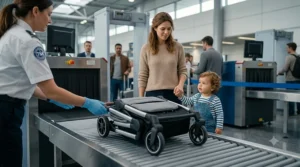
Every stroller on this list will pass through airport security the same way: folded and sent through the X-ray belt, just like a carry-on bag. According to the Transportation Security Administration, strollers, umbrella strollers, car seats, and booster seats all require X-ray screening, and any stroller too large for the machine gets a manual inspection instead — TSA officers will not separate you from your child during this process.
Whether a folded stroller can actually ride in the overhead bin (rather than getting gate-checked) comes down to the airline, not the TSA. The widely cited IATA reference dimension is roughly 22 x 18 x 10 inches, but individual carriers and aircraft types vary, so it’s worth checking your specific airline’s policy before you fly. The Federal Aviation Administration also publishes guidance on child safety seats during flights, which is worth a look if you’re deciding between a lap-held infant and a separately ticketed seat with a car seat.
Long-Term Cost, Durability, and Resale Value
A $600 stroller used for three years of monthly flights costs less per trip than an $80 stroller replaced every six months because the wheels seize up or the fold mechanism breaks. That said, most families don’t fly monthly, which is exactly why the Kolcraft Cloud Plus remains a legitimately smart buy for occasional flyers — the math only favors premium picks when usage is frequent enough to amortize the cost.
Resale value also varies sharply by brand. The Stokke YOYO3 and Bugaboo Butterfly 2 tend to hold value well on the secondhand market thanks to strong name recognition, while budget umbrella strollers typically aren’t worth reselling at all once you’re done with them.

Frequently Asked Questions
❓ What is the best stroller for flying with a toddler?
❓ Do strollers count as a carry-on item on flights?
❓ Can I take my stroller through TSA security?
❓ What is the IATA size limit for airplane strollers?
❓ Is a lightweight umbrella stroller good enough for air travel?
Final Verdict: Our Top Picks by Travel Style
There’s no single best stroller for flying with a toddler — there’s a best one for your specific trip, toddler, and budget. If you’re flying once a year and want to spend as little as possible, the Kolcraft Cloud Plus gets the job done without regret. If you fly often enough that fold speed and weight savings actually matter day to day, the Stokke YOYO3 and Peg Perego Volo are worth the higher price tag.
For families juggling a newborn and a toddler on the same trip, the Silver Cross Clic‘s birth-to-55-lb range solves a real logistics problem most other strollers ignore. And if ride quality on the ground matters as much to you as the flight itself, the UPPAbaby Minu V3 and Bugaboo Butterfly 2 are built to perform well past the jet bridge.
Whatever you choose, the goal is the same: less time wrestling gear at the gate, more time actually enjoying the trip with your toddler in tow.
✨ Don’t Miss These Exclusive Deals!
🔍 Take your next family trip to the next level with these carefully selected travel strollers. Click on any highlighted item to check current pricing and availability. These picks will help you create stress-free airport days your whole family will love!
Recommended for You
- 7 Best Strollers That Fit in the Overhead Bin in 2026
- Best Stroller for Flying: 7 Travel Picks Parents Trust (2026)
- Best One Hand Fold Stroller 2026: 7 Top Picks Reviewed
Disclaimer: This article contains affiliate links. As an Amazon Associate, I earn from qualifying purchases. If you purchase products through these links, we may earn a small commission at no additional cost to you.
✨ Found this helpful? Share it with your friends! 💬🤗
