
In This Article
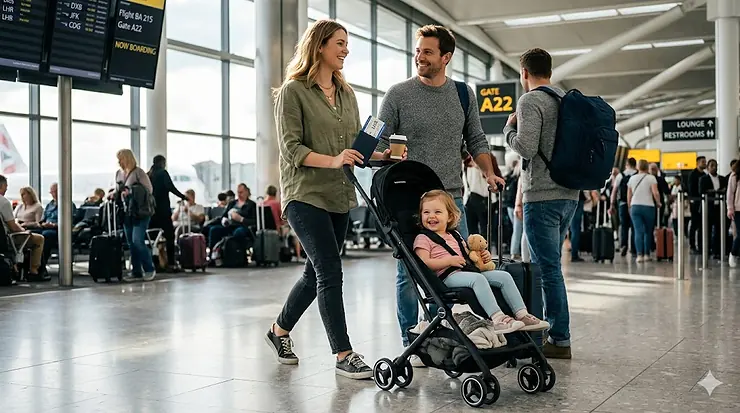
Nobody warns you about the gate-check sprint. You’re juggling a diaper bag, a boarding pass on your phone that keeps dimming, a toddler who has chosen this exact moment to go limp like a sleepy cat, and a stroller that suddenly feels like it was designed by someone who has never been inside an airport. That’s the moment you realize your stroller isn’t just baby gear. It’s a piece of travel equipment, and it’s either working for you or actively sabotaging your trip.
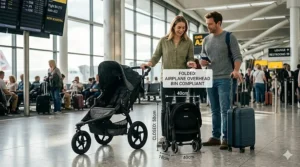
The best stroller for flying isn’t necessarily the one with the prettiest Instagram photos or the longest feature list. It’s the one that folds with one hand while you’re holding a baby, slides into an overhead bin without an argument, and survives being tossed around a cargo hold if you do end up gate-checking it. Weight matters. Fold speed matters. And honestly, how it handles a sprint through a crowded terminal matters more than almost anything in the spec sheet.
I dug into real airplane-friendly strollers currently sold on Amazon, the kind actual parents are buying and reviewing right now, not theoretical “best in class” models that vanished from shelves two years ago. Below you’ll find seven strollers that genuinely hold up to air travel, from budget-friendly options under $100 to premium picks that cost as much as a decent hotel night. Whichever one you land on, you’ll walk away knowing exactly why it made the cut and exactly who it’s wrong for.
Quick Comparison Table
| Stroller | Weight | Fold Type | Price Range | Best For |
|---|---|---|---|---|
| Babyzen YoYo2 | ~14 lbs | One-hand compact fold | $300–$500 | Frequent flyers who want one stroller from newborn to toddler |
| UPPAbaby Minu V3 | 16.7 lbs | One-hand, IATA-certified | Around $500 | Parents who want premium comfort without sacrificing portability |
| Joolz Aer2 | 14.3 lbs | Sub-2-second one-hand fold | Around $579 | Connecting flights, layovers, and zero patience for fumbling |
| Graco Ready2Jet | 13.2 lbs | Automatic self-fold | $160–$220 | Best value for an automatic, overhead-friendly fold |
| Munchkin Sparrow | 12.8 lbs | Forward-fold, ultra-compact | $100–$150 | Smallest folded footprint, ideal as a backup or stroller-bag option |
| Summer Infant 3Dlite | 13–14 lbs | Umbrella fold | Under $100 | Tightest travel budgets and occasional flyers |
| Mountain Buggy Nano Urban | 13 lbs | Compact carry-bag fold | $300–$390 | One frame from newborn lie-flat through toddler years |
Looking at this lineup, weight and price track together almost perfectly, but fold speed doesn’t always follow the same curve. The Graco Ready2Jet proves you don’t need to spend $500 to get a fold that works with one hand and a baby on your hip, while the Mountain Buggy Nano Urban earns its higher price by doubling as a newborn-ready travel system instead of just a toddler stroller. If your flight involves a tight connection, prioritize fold speed over basket size; if you’re flying once a year to visit grandparents, the Summer Infant 3Dlite will get the job done without draining your vacation fund.
💬 Just one click — help others make better buying decisions too!😊
✨ Don’t Miss These Exclusive Deals!
🔍 Take your next trip to the next level with these carefully selected travel strollers. Click on any highlighted pick to check current pricing and availability before you book. These strollers will help your family move through airports with way less chaos!😊
Top 7 Strollers for Flying: Expert Analysis
1. Babyzen YoYo2
The Babyzen YoYo2 is the stroller other travel strollers get compared to, and there’s a reason for that. It’s been the default recommendation in expat parenting groups and frequent-flyer forums for years, long before “travel stroller” became its own crowded category.
What stands out isn’t a single spec. It’s the combination: a frame that accommodates newborns through toddlers up to 48.5 pounds, a one-hand fold that genuinely works one-handed (a rarer feature than marketing copy suggests), and a footprint compact enough to stand upright in most overhead bins. In my experience, what most buyers overlook about the YoYo2 is that the frame and seat textile are sold somewhat modularly — you’re not just buying a stroller, you’re buying into an accessory ecosystem (parasol, footmuff, cup holder) that can add up fast if you want the full setup.
This is the pick for parents who fly often enough that stroller reliability matters more than upfront cost. Customer feedback consistently praises the steering and the fact that it can be carried on one shoulder through a terminal like an oversized purse, though a handful of reviewers note the learning curve before the one-hand fold feels truly automatic.
✅ Pros: Compact overhead-bin fit, grows with your child, strong resale value
❌ Cons: Accessories add up, frame/seat sometimes sold separately
Price range: roughly $300–$500 depending on bundle. For families who fly multiple times a year, the YoYo2 earns its keep.
2. UPPAbaby Minu V3
The UPPAbaby Minu V3 takes the “compact travel stroller” idea and adds the comfort details UPPAbaby is known for. At 16.7 pounds, it’s heavier than the ultra-light category leaders, but that extra weight buys you all-wheel suspension and a frame built to last several kids, not just one trip.
The practical detail that matters here: UPPAbaby specifically markets the Minu V3 as IATA-certified for overhead bin dimensions, which takes the guesswork out of “will this actually fit.” What most buyers overlook is the basket capacity — at 20 pounds, it’s genuinely usable for diaper bags and duty-free bags, not just decorative. Customer feedback highlights the one-second fold-and-stand feature, where the stroller balances on its own once folded, which is a small thing that becomes enormous when you’re also holding a baby and a boarding pass.
This is the stroller for parents who want a “real” stroller experience (suspension, a tall seat back, premium fabrics) without checking a full-size model.
✅ Pros: IATA-certified fold, large basket, GREENGUARD Gold certified fabrics
❌ Cons: Heavier than ultra-compact rivals, premium price
Price range: around $500. Best for travelers who want one stroller to handle both daily life and flights.
3. Joolz Aer2
If speed is your priority, the Joolz Aer2 is hard to beat. Independent testers who’ve put more than a dozen travel strollers through real airport use have singled it out specifically for flying, citing a one-handed fold that closes in under two seconds and packs down to roughly nine inches wide.
The real-world meaning here: nine inches wide isn’t just a number on a spec sheet, it’s the difference between squeezing past a beverage cart in the aisle and getting stuck behind one. The Aer2 also accepts car seat adapters from birth, so it functions as a travel system rather than a toddler-only stroller. What the spec sheet won’t tell you is how much that fold speed matters during boarding-group chaos, when gate agents are rushing and your hands are full.
This is the choice for parents managing tight connections or solo travel with an infant, where every extra second fumbling with a stroller is a second you don’t have.
✅ Pros: Fastest fold in this lineup, accepts car seat adapters, fits most overhead bins
❌ Cons: Among the pricier options here, narrower seat than full-size strollers
Price range: around $579. Worth it if your trips involve layovers and connections rather than direct flights.
4. Graco Ready2Jet
The Graco Ready2Jet is proof that an automatic fold doesn’t have to cost premium-stroller money. At 13.2 pounds, it self-folds with one-hand activation and then stands on its own, which means you’re not bending over to wrestle a frame while a toddler tries to make a break for the gate agent’s podium.
What most buyers overlook about automatic folds in general is the trade-off: they’re faster, but the mechanism adds a bit of bulk compared to manual umbrella folds. In practice, that bulk barely shows up here, since the Ready2Jet still markets itself as overhead-bin friendly. It also accepts Graco SnugRide infant car seats, turning it into a real travel system rather than a toddler-only ride. Customer reviews consistently call out how convenient and lightweight it feels in daily use, not just on trips.
This is the value pick for parents who want the convenience of an automatic fold without paying Joolz or UPPAbaby prices.
✅ Pros: True one-hand automatic fold, accepts infant car seats, genuinely lightweight
❌ Cons: Smaller canopy than premium competitors, basket isn’t huge
Price range: roughly $160–$220. The best fold-to-dollar ratio in this entire list.
5. Munchkin Sparrow
The Munchkin Sparrow takes a different approach entirely: forget suspension and premium fabric, just make the smallest possible folded package. Folded down to about 15 x 14 x 6.25 inches and weighing 12.8 pounds, it’s one of the smallest strollers that still counts as a real stroller rather than a glorified umbrella frame.
The practical interpretation: that tiny folded size means it tucks into an included zip bag and can ride in an overhead bin alongside your carry-on, no gate-checking required even on smaller regional jets. What the spec sheet doesn’t emphasize is the trade-off — at 25 pounds max recommended weight per the included organizer’s labeling and a simple frame, this isn’t built for rough sidewalks or years of daily abuse. It’s built to disappear into a closet between trips and reappear exactly when you need it.
This is the smart second-stroller pick: keep a full-size model at home and let the Sparrow live in a suitcase.
✅ Pros: Smallest folded footprint here, genuinely fits overhead bins, no-assembly setup
❌ Cons: Smaller weight capacity than full-size strollers, fewer comfort features
Price range: typically $100–$150. Best as a dedicated travel-only stroller rather than an everyday one.
6. Summer Infant 3Dlite
The Summer Infant 3Dlite is the budget anchor of this list, and it earns that spot honestly rather than apologetically. At 13 to 14 pounds with an aluminum frame, a 4-position recline, and an oversized storage basket, it covers the basics that actually matter for a once-or-twice-a-year flyer.
Here’s the practical trade-off, stated plainly: independent testing has flagged the 3Dlite for a smaller canopy and harness webbing that feels rougher than pricier competitors, plus a storage basket that some reviewers find harder to access mid-stroll. What most budget buyers overlook is that none of those issues affect the thing you actually need at the airport — a stroller that folds down small, weighs almost nothing, and won’t break your heart if an airline scuffs it up in cargo.
This is the right call for a beach vacation, a once-a-year grandparent visit, or any family who doesn’t want to spend $300+ on something that’ll mostly sit in a closet.
✅ Pros: Lowest price by a wide margin, genuinely lightweight, decent recline positions
❌ Cons: Smaller canopy and storage access than pricier rivals, harness feels basic
Price range: typically under $100. The realistic pick for tight budgets and infrequent flying.
7. Mountain Buggy Nano Urban
The Mountain Buggy Nano Urban modernizes a stroller that’s been a travel-parent favorite for over a decade, and it’s the only pick on this list designed to genuinely work from newborn through toddler without buying a second stroller.
The key practical detail: it ships with a universal car seat adapter and an optional lie-flat carrycot accessory, so newborns can ride properly reclined rather than propped up too early. At 13 pounds with a compact carry-bag fold, it meets typical airline carry-on guidelines while still offering a full-size seat once unfolded — something a lot of ultra-compact strollers sacrifice for the sake of folded dimensions. What most buyers overlook is the interchangeable wheel sets on newer Nano models, which let you swap to a travel-specific wheel configuration that shaves off extra ounces.
This is the pick for families who want exactly one travel stroller to last from the hospital car ride home through years of vacations.
✅ Pros: Newborn-ready with proper recline, full-size seat in a compact fold, durable build
❌ Cons: Carrycot sold separately, pricier than other 13-pound options here
Price range: roughly $300–$390. Best long-term value if you’re not buying a second stroller later.
✨ Don’t Miss These Exclusive Deals!
🔍 Compare these picks side by side and grab the one that matches your next trip. Click through to check today’s availability before prices shift!😊
How to Pack and Use a Travel Stroller Without Losing Your Mind
A great travel stroller still needs a system, or it’ll fail you at the worst possible moment. First, practice the fold at home, fully loaded with whatever bag or car seat you’ll actually be carrying, at least three times before your trip. Airports are not the place to discover your stroller needs two hands and a flat surface.
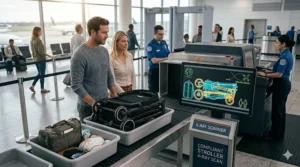
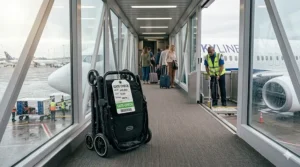
Second, invest in a basic gate-check travel bag, even for strollers marketed as overhead-friendly. Gate agents handle items roughly, wheels get caught in jet bridge gaps, and a $20–$40 padded bag protects a $300+ investment. Third, remove anything from the storage basket before security; X-ray screening goes faster, and you avoid digging through a basket while a line forms behind you.
Finally, label your stroller with your name and phone number on a visible tag. If it’s gate-checked, it returns to the jet bridge with everyone else’s, and a label saves the awkward moment of two identical gray strollers showing up at once.
Matching the Right Stroller to Your Travel Style
If you’re a parent flying solo with an infant on a connecting itinerary, prioritize fold speed above everything else — the Joolz Aer2 or Graco Ready2Jet make boarding-group chaos manageable with one hand free.
If you’re traveling with a newborn and planning multiple trips over the next two to three years, the upfront cost of the Mountain Buggy Nano Urban or Babyzen YoYo2 pays off because you’re not replacing the stroller as your child grows. And if you’re a once-a-year flyer visiting family, there’s genuinely no reason to overspend; the Summer Infant 3Dlite or Munchkin Sparrow will handle a week-long trip just fine, then go back in the closet until next time.
How to Choose the Best Stroller for Flying
Picking the right travel stroller comes down to a short list of priorities, ranked by how much they actually affect your travel day:
- Folded dimensions over marketing claims. “Overhead-bin friendly” varies by aircraft. Check the actual folded measurements against your airline’s stated bin size if you have a connecting flight on a smaller plane.
- One-hand fold capability. You will, at some point, be holding a baby. A stroller that requires two free hands to fold is a stroller you’ll end up fighting with at the worst moment.
- Weight under 15 pounds. Anything heavier becomes a genuine workout after a few hours of terminal walking, especially up jet bridge ramps.
- Car seat compatibility. If you’re traveling with an infant, a stroller that accepts your specific car seat brand turns two pieces of gear into one smooth system — and matters even more if you’re following the FAA’s recommendation to secure young children in an approved car seat for the entire flight rather than as a lap child.
- Recline depth for naps. Layovers happen. A stroller that reclines enough for a real nap saves your back from baby-wearing through a four-hour delay.
- Basket size for realistic carry-on needs. Diaper bags, snacks, and duty-free purchases all need somewhere to go that isn’t your shoulders.
- Budget relative to flight frequency. A $500 stroller makes sense for ten flights a year. It doesn’t make sense for one trip to visit grandparents.
Travel Stroller vs. Full-Size Stroller for Air Travel
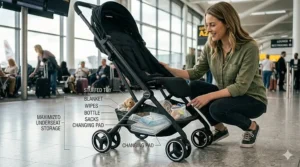
The instinct to just bring your everyday full-size stroller is understandable, but it usually backfires at the airport. Full-size strollers typically weigh 20 to 30 pounds and don’t fold small enough for overhead bins, meaning they must be gate-checked every time, with no exceptions. That’s not inherently bad, but it does mean you’re without a stroller from the moment you reach the jet bridge until baggage claim or the connecting gate, sometimes for hours during long layovers.
Travel strollers, by contrast, trade some comfort and storage capacity for a fold that keeps the stroller with you longer, sometimes all the way to your seat. The honest trade-off: full-size strollers ride smoother on rough city sidewalks, while travel strollers are built around airports and hotel hallways. If your trip involves a lot of stroller-dependent sightseeing once you land, a hybrid approach works well — gate-check a full-size model for comfort at your destination, or just commit to one excellent travel stroller and skip the second piece of gear entirely.
Common Mistakes When Buying a Travel Stroller for Flying
The most common mistake is buying based on weight alone. A 12-pound stroller with a clunky two-handed fold is often more frustrating at security than a 14-pound one that folds in two seconds flat. Fold mechanism matters as much as raw weight.
The second mistake is skipping the car seat compatibility check. Parents traveling with infants frequently buy a stroller and a car seat from different brands, then discover at the store (or worse, at the airport) that they don’t connect without an extra adapter purchase. Check compatibility before you buy, not after.
The third mistake is assuming “fits in overhead bin” means it fits on every aircraft. Regional jets and smaller planes have notably smaller overhead bins than standard narrow-body aircraft. If your itinerary includes a regional connection, lean toward the most compact options on this list — the Munchkin Sparrow or Babyzen YoYo2 — rather than borderline-sized models.
Airport and Airline Rules: What Actually Happens
Security screening for strollers is more predictable than most parents expect. According to TSA’s official guidance on traveling with children, strollers, umbrella-strollers, baby carriers, car and booster seats, and backpacks must all be screened by X-ray, with parents placing loose items from stroller baskets either in a carry-on bag or directly on the X-ray belt. Equipment too large for the X-ray tunnel gets a visual or physical inspection instead — it’s a normal part of the process, not a red flag.
Gate-checking strollers is free on virtually every major airline, and policies are broadly consistent across carriers, as outlined in Wikipedia’s overview of gate-checking practices for strollers and car seats. The practical tip: fold your stroller before you reach the jet bridge line, not while standing in it, since gate agents are often working against a tight boarding window.
Features That Actually Matter (and Those That Don’t)
A five-point harness and a reliable parking brake aren’t optional extras, they’re the baseline safety features every stroller on this list includes, and they matter more than any cosmetic detail. According to pediatric safety guidance from HealthyChildren.org, published by the American Academy of Pediatrics, strollers should have easy-to-operate brakes that lock two wheels rather than one, plus a harness used every single ride, not just on bumpy terrain. In the U.S., these basics aren’t just best practice — they’re backed by a federal safety standard for carriages and strollers enforced by the Consumer Product Safety Commission, which every stroller sold legally in the U.S. has to meet.
Suspension systems matter less for airport floors (which are flat) and more for cobblestone streets at your destination — worth prioritizing if you’re flying somewhere historic. Cup holders, snack trays, and matching accessory colors are nice-to-haves that don’t affect your travel day in any meaningful way; don’t let them sway a decision between two otherwise similar strollers.
Frequently Asked Questions
❓ What is the best stroller for flying with a newborn?
❓ Do airlines charge extra for bringing a stroller?
❓ Can a stroller go through TSA security without being folded?
❓ How heavy should a stroller be for air travel?
❓ Will my travel stroller fit in every plane's overhead bin?
Conclusion
There’s no single “best” stroller for flying, just the best one for how often you travel, how old your child is, and how much you’re willing to spend on convenience. If you fly constantly, the Babyzen YoYo2 or Joolz Aer2 will pay for themselves in saved frustration. If you’re outfitting a newborn for the long haul, the Mountain Buggy Nano Urban covers years, not just one trip. And if you just need something reliable for an occasional flight, the Summer Infant 3Dlite or Munchkin Sparrow will do the job without guilt-tripping your budget.
Whichever one you choose, the real win isn’t the stroller itself, it’s what it buys you back: one free hand, a sleeping toddler who stays asleep through boarding, and a few less minutes of standing in a security line wrestling with a frame that won’t cooperate. That’s worth paying for, at whatever price point fits your family.
✨ Found a pick that fits your next trip? Check today’s price before you book your flight — availability shifts fast on the most popular travel strollers!💬🤗
Recommended for You
- Best One Hand Fold Stroller 2026: 7 Top Picks Reviewed
- 7 Best Compact Fold Strollers of 2026 That Actually Fit Everywhere
- Best Stroller Under 10 lbs in 2026: 7 Featherweight Picks
Disclaimer: This article contains affiliate links. As an Amazon Associate, I earn from qualifying purchases. If you purchase products through these links, we may earn a small commission at no additional cost to you.
✨ Found this helpful? Share it with your friends! 💬🤗
